WHRDs are self-identified women and lesbian, bisexual, transgender, queer and intersex (LBTQI) people and others who defend rights and are subject to gender-specific risks and threats due to their human rights work and/or as a direct consequence of their gender identity or sexual orientation.
WHRDs are subject to systematic violence and discrimination due to their identities and unyielding struggles for rights, equality and justice.
The WHRD Program collaborates with international and regional partners as well as the AWID membership to raise awareness about these risks and threats, advocate for feminist and holistic measures of protection and safety, and actively promote a culture of self-care and collective well being in our movements.
Risks and threats targeting WHRDs
WHRDs are exposed to the same types of risks that all other defenders who defend human rights, communities, and the environment face. However, they are also exposed to gender-based violence and gender-specific risks because they challenge existing gender norms within their communities and societies.
By defending rights, WHRDs are at risk of:
Physical assault and death
Intimidation and harassment, including in online spaces
Judicial harassment and criminalization
Burnout
A collaborative, holistic approach to safety
We work collaboratively with international and regional networks and our membership
to raise awareness about human rights abuses and violations against WHRDs and the systemic violence and discrimination they experience
to strengthen protection mechanisms and ensure more effective and timely responses to WHRDs at risk
We work to promote a holistic approach to protection which includes:
emphasizing the importance of self-care and collective well being, and recognizing that what care and wellbeing mean may differ across cultures
documenting the violations targeting WHRDs using a feminist intersectional perspective;
promoting the social recognition and celebration of the work and resilience of WHRDs ; and
building civic spaces that are conducive to dismantling structural inequalities without restrictions or obstacles
Our Actions
We aim to contribute to a safer world for WHRDs, their families and communities. We believe that action for rights and justice should not put WHRDs at risk; it should be appreciated and celebrated.
Promoting collaboration and coordination among human rights and women’s rights organizations at the international level to strengthen responses concerning safety and wellbeing of WHRDs.
Supporting regional networks of WHRDs and their organizations, such as the Mesoamerican Initiative for WHRDs and the WHRD Middle East and North Africa Coalition, in promoting and strengthening collective action for protection - emphasizing the establishment of solidarity and protection networks, the promotion of self-care, and advocacy and mobilization for the safety of WHRDs;
Increasing the visibility and recognition of WHRDs and their struggles, as well as the risks that they encounter by documenting the attacks that they face, and researching, producing, and disseminating information on their struggles, strategies, and challenges:
Mobilizing urgent responses of international solidarity for WHRDs at risk through our international and regional networks, and our active membership.
Related Content
Love letter to Feminist Movements #5
Sudanese Feminists: "A Revolution within the Revolution"
"I have been subjected to sexual violence, physical injuries and other forms of violence while protesting at the frontlines. But I will never stop until we achieve complete civilian rule in Sudan. We must stop militarization of the state. Our bodies should not be treated as battlegrounds any longer."
During the last 4 years women led the revolution in Sudan. Their leadership wasn't just on streets, but they were the power driving the consistent resistance at all levels. Women and young feminists became the alerted consciousness of the Sudanese change and democratization movement. Since the first protest against the former regime in Aldmazein town in the conflict area of Blue Nile on December 13th, 2018, young school girls were the voices demanding the end of the rule of the 30 years dictatorship of military and Muslim Brotherhood.
The feminist movement led by young women aging 16 to 35, has established a revolution within the revolution in Sudan in the last 4 years of non stop revolution. The strong voices of young women occupying spaces on streets, social media, civil society and political organizations were high enough to reshape the public opinion and challenge social norms. Discussions of sexual and gender based violence and taboos of domestic violence and male dominant decisions making process became mainstream debates for the first time in Sudan history. Women Football teams appointed spokeswomen for resistance committees, and women led professional unions are part of the manifestation of the new wave of feminist movement in Sudan. Young women identifying as feminist proudly and publicly is the most important achievement in a country ruled by fundamentalist Islam for 3 decades. Young men supporting feminist activism, and identifying as feminist is another progress worth noting.
This progress is not cost free, it is also not perfect. Feminist activists, groups and activists face the same challenges we expect in a conservative, and conflict affected contexts. But the impact of the young feminists movement in Sudan is worth of looking up to. Overcoming internal boundaries of diverse cultures, religions, and conflicts history is a challenge, but young feminists in Sudan seems to work hard to bridge the gaps. Creation of feminist schools in Darfur and Kordofan is something that makes the work of young feminists in Sudan a unique journey worth to learn from.
The young women leading these efforts and the women groups working on the ground cannot be mentioned here due to several security concerns under the current military coup. But their resilience, strength and courage is one for the history books. The audacious young women leading resistance on streets, behind screens, and working in different professions and activism fields are shaping the future of Sudan. The young feminists in Sudan are creating new spaces for a feminist narratives and discourses to restructure the distribution of power at political, economical and social aspects.
Despite the immense violence, reemergence of fundamentalist Islam, militarization and shrinking civic spaces, feminist activists in Sudan remain rooted in their sisterhood. They remain a great inspiration for the feminist movements globally.
Nazik Awad
* Amal is a pseudonym used to protect the young activist quoted. ** Sudan is living under constant revolution since 2018. A new wave started after the military coup on October 25th 2021.
Samira était une activiste syrienne sous le régime de Bachar al-Asad.
Dès son plus jeune âge, Samira s'est opposée à toutes les formes de despotisme et en particulier au régime autoritaire dans lequel elle vivait. Samira a été kidnappée en 2013 avec trois autres activistes de premier plan. Elle aurait été enlevée au Centre de documentation sur les violations à Douma, une ville située en périphérie rurale de Damas.
Le principal suspect associé à sa disparition est le groupe rebelle syrien Jaych al-Islam (l'armée de l'islam), qui nie son implication. Aucune enquête officielle n’a été ouverte sur la disparition de Samira et elle n’a plus donné de nouvelles depuis lors. Samira était attachée à son pays et refusait de quitter la Syrie tant qu'elle estimait que son rôle en faveur de l'émancipation des femmes et la documentation des crimes était utile et nécessaire.
My group or I were supposed to participate in the Forum that was canceled in the pandemic, how can I be engaged in this Forum?
We will reconnect with past partners, to ensure past efforts are honored. If your contact information has changed since the last Forum process, please update us so that we may reach you.
«¿Dónde está el dinero para las organizaciones feministas?»
¿Cuánto sabes sobre financiamiento feminista? 📊 Pon a prueba tu conocimiento sobre la movilización de recursos para el financiamiento de la organización feminista, respondiendo al cuestionario "¿Dónde está el dinero?":
Queremos expresar nuestro más sincero agradecimiento a todos los diversos grupos, colectivos y organizaciones feministas de todo el mundo que respondieron a la encuesta WITM. Su participación y sus puntos de vista han sido inestimables y enriquecerán enormemente nuestra comprensión colectiva de los recursos feministas a nivel mundial.
Lettres d'amour aux mouvements féministes : Une lettre d'Inna et Faye
Chers mouvements féministes,
L'amour est ce qui entretient notre feu féministe. Avec le souci de nos communautés, la colère et la rage face à l'injustice et le courage d'agir.
En septembre 2022, nous sommes entrés avec beaucoup d'enthousiasme dans nos rôles de leadership à l'AWID, en tant que co-directeurs exécutifs. Nous avons ressenti la chaleur et l'étreinte de la fraternité féministe lorsque vous nous avez accueillis.
En réfléchissant à nos souvenirs les plus précieux en tant que féministes, nous nous souvenons de puissants moments de solidarité lors de manifestations de rue, d'analyses pointues et de voix courageuses ébranlant le statu quo lors de rassemblements. Nous avons tenu ces conversations intimes la nuit, ri pendant des heures et dansé ensemble lors de fêtes.
Les feux féministes doivent être alimentés, en particulier dans les moments difficiles où les défis extérieurs ne manquent pas, de la crise climatique et de la montée des forces de droite aux économies d'exploitation et aux schémas persistants d'oppression au sein de nos propres mouvements sociaux. Ce sont ces feux, brûlant partout, qui éclairent nos voies et nous gardent au chaud, mais nous ne pouvons pas ignorer les effets épuisants de la violence politique et de la répression dirigées contre nombre de nos luttes, mouvements et communautés.
Nous comprenons le désir de changer le monde comme un ingrédient essentiel de l'organisation féministe. Nous ne pouvons jamais oublier que nous sommes ceux que nous attendions pour construire des alternatives et façonner notre avenir. Pourtant, l'énergie féministe dynamique ne peut être tenue pour acquise et doit être préservée de plusieurs façons. En cela, nous continuerons d'être vigilants. Un accès plus grand et égal aux soins et au bien-être, à la guérison et au plaisir, ne sont pas seulement des instruments pour prévenir l'épuisement professionnel et soutenir nos mouvements, même si c'est une fonction importante ; d'abord et avant tout, ils sont la façon dont nous espérons vivre nos vies.
"Fierce Feminisms: Together We Rise" reflète notre conviction que le moment est venu pour nous d'être féroces et sans vergogne dans nos agendas tout en faisant un effort pour nous connecter entre les mouvements et vraiment connaître les réalités de chacun, afin que nous puissions nous élever ensemble - car, pour nous, c'est le seul moyen.
Nos plans incluent le Forum de l’AWID tant attendu ! Nous sommes impatients de vous rencontrer tous en personne et en ligne en 2024. Nous entendons de vous le besoin de vous connecter et de vous ressourcer, de vous reposer et de guérir, d'être mis au défi et inspiré, de partager de la bonne nourriture, de rire et de danser ensemble. Peu de choses dans ce monde sont aussi puissantes et transformatrices que des féministes de toutes les régions du monde qui se réunissent, et nous retenons vraiment notre souffle pour ce moment, car nous connaissons la magie que nous pouvons créer ensemble.
L'engagement de nos membres a pris vie grâce àla communauté AWID (notre plate-forme en ligne pour les membres), et notre objectif de créer des liens et de la solidarité trouve un écho chez beaucoup d'entre vous. Rejoignez-nous et connectez-vous avec nous et d'autres dans les mouvements féministes du monde entier. Nous connaissons l'importance de la connexion dans un temps et un espace où les règles ne sont pas faites pour nous, et nous tenons à notre communauté, où chacun de nous compte.
Avec nos fantastiques collègues de l'AWID, nous promettons de faire de notre mieux pour soutenir les mouvements féministes, comme c'est la mission et le but de l'AWID. Veuillez nous demander des comptes.
Au cours des 40 dernières années, vous - les mouvements féministes - avez façonné l'histoire de l'AWID et nous avez poussés à être plus courageuses, créatives et radicales. 40 ans est un âge fabuleux, et nous attendons avec impatience 40 autres années avec vous tous. Nous attendons avec impatience les partenariats, les appels à la justice, la collaboration, l'influence sur les politiques et le pouvoir féministe dur à cuire que vous apportez tous pour naviguer dans le contrecoup toujours croissant de la justice de genre, raciale et environnementale. Nous avons tant à apprendre de vous et les uns des autres, alors que nous construisons collectivement les mondes auxquels nous croyons.
Cindy Clark et Hakima Abbas, merci de nous avoir ouvert la voie et de nous préparer à remplir leurs énormes chaussures. Nous apprécions toujours tous ceux sur les épaules desquels nous nous sommes tenus et continuons de nous tenir debout. Nous nous comprenons comme faisant partie d'un paysage de mouvement plus large, d'histoires féministes, de présents et d'avenirs audacieux.
Et pour le Conseil d'administration de l'AWID, nous vous sommes reconnaissants pour le soutien et l'amour féministe que vous nous témoignez, ainsi que pour votre engagement envers le leadership des pays du Sud et le modèle de co-leadership. Nous envoyons notre amour et notre respect à chaque collègue de l'AWID, nous nous sentons honorées de travailler avec une équipe féministe aussi exceptionnelle de professionnelles dévouées.
C'est la première fois que nous écrivons une lettre d'amour ensemble, comment pourrions-nous la conclure sans exprimer de l'amour, de l'attention et du respect l'un envers l'autre ? C'est une relation assez intense dans laquelle nous sommes entrés! Nous apportons tous deux nos perspectives et compétences différentes et diverses à notre travail, et en tant qu'individus, nous apportons également nos expériences vécues et notre moi authentique.
Avec vous tous, nous sommes une histoire en devenir, une partie d'un beau tissage - et souvent magnifiquement stimulant - une tapisserie qui se poursuit à l'avenir. Nous nous sommes amusés à commencer ce voyage les uns avec les autres et avec vous, et nous espérons vraiment que la romance restera vivante.
En solidarité avec l'amour et les soins Inna and Faye
Réserve cette date!
21 février 2023, membre Mixer 5 sur la politique féministe avec Faye et Inna.
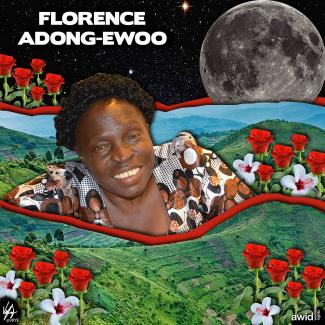
Florence was a disability rights activist who worked with several disabled women’s organizations in Uganda.
She also held the position of Chairperson of the Lira District Disabled Women Association, as well as the Lira District Women Councilors’ caucus. Trained as a counsellor for persons with disabilities and parents of children with disabilities, she supported many projects that called for greater representation of persons with disabilities.
She died of a motorcycle accident.
Mi pregunta no está respondida aquí
Para preguntas adicionales, por favor utiliza nuestro formulario de contacto. ¡Continuaremos actualizando este documento en base a las consultas que vayamos recibiendo de ustedes!
Notre force collective, notre sagesse et notre engagement sont illimités... mais pas nos comptes en banque.
Cette synthèse s’appuie sur les réponses de 1 174 organisations féministes, de défense des droits des femmes, LBTQI+ et alliées (désignées ci-après comme « organisations féministes et de défense des droits des femmes ») issues de 128 pays, ayant participé à l’enquête Où est l’argent pour l’organisation des mouvements féministes ?
Three Boats, a Horse and a Taxi: Pacific Feminists at the AWID Forums
Three Boats, a Horse and a Taxi: Pacific Feminists at the AWID Forums
This story is about how an increasingly diverse group of feminists from the Pacific organized through the years to attend the AWID Forums and how that process changed them personally, as organizations, and as a movement through what they learned, discovered and experienced. It illustrates the importance of the Forums as a space through which a region that tends to be marginalized or ignored at the global level can build a strong presence in the feminist movement that is then replicated at other international women’s rights spaces.
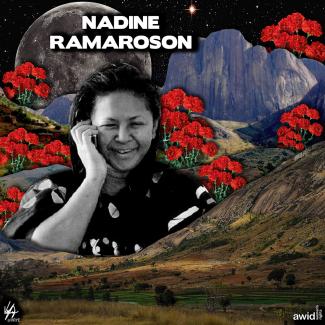
Nadine fue un ejemplo para muchxs por su trabajo en apoyo de las mujeres y lxs más vulnerables de su comunidad. Estaba comprometida con ayudar a l pobres, especialmente a las personas sin techo.
Aunque su muerte se informó como accidente, la familia Ramaroson, encabezada por su padre, André Ramaroson, llevó adelante una investigación que arrojó evidencias de que había sido asesinada. Se informó que había muerto en un accidente fatal ocurrido entre Soanierano - Ivongo y Ste Marie, una historia que fue desmentida por su familia. Ella había recibido numerosas amenazas de muerte por sus audaces posiciones políticas. Su caso todavía está en la corte de Antananarivo (la capital de Madagascar).
CFA 2023 - Online and Hybrid - EN
New
Online & Hybrid
As an online participant, you can facilitate activities, connect and converse with others, and experience first-hand the creativity, art and celebration of the AWID Forum. Participants connecting online will enjoy a rich and diverse program, from workshops and discussions to healing activities and musical performances. Some activities will focus on connection among online participants, and others will be truly hybrid, focusing on connection and interaction among online participants and those in Bangkok.
Feminists have long asserted that the personal is political. Crear, Resister, Transform Festival created spaces for feminists to discuss issues around body, gender and sexualities, and explored the interconnections of how these issues are both deeply embodied experiences, and simultaneously a terrain where rights are constantly disputed and at risk in society.
The power of feminist movements lie in how we organise and take coordinated action, not only amongst our own communities and movements, but with allied social justice causes and groups. This space provided opportunities for movements to share and strengthen organizing and tactical strategies with each other.
The COVID-19 global health pandemic has made the failures of neo-liberal capitalism even more apparent than ever before, exposed the cracks in our systems, and highlighted the need and opportunities to build new realities. A feminist economic and social recovery requires all of us to make it together. This journal edition in partnership with Kohl: a Journal for Body and Gender Research, will explore feminist solutions, proposals and realities for transforming our current world, our bodies and our sexualities.
Salir del clóset en el momento culminante de mi vida: El Foro de Feminismos Negros
Muchxs participantes experimentan los Foros de AWID como un singular espacio de libertad, donde son acogidxs y celebradxs tal como son. En un mundo donde incluso lxs feministas más privilegiadxs a menudo encuentran que no encajan del todo, para aquellas personas cuyas identidades son criminalizadas o de alguna manera condenadas en sus contextos cotidianos esta experiencia de libertad y celebración puede ser profundamente transformadora (y reparadora). La historia de cómo OluTimehin Kukoyi (que participaba por primera vez) vivió el Foro de Feminismos Negros y el Foro de AWID de Bahía (2016) ilustra esto con mucha potencia.
"He dado testimonio de la discriminación que vi en las calles, he sufrido burlas y abusos verbales ahí. También he hecho numerosas amistades y he conocido a mucha gente. Puede que haya peligros ahí fuera, pero soy una sobreviviente y aquí es donde estaré por ahora." - Sainimili Naivalu
Sainimili Naivalu fue una feminista y activista por los derechos de las personas con discapacidades de la aldea de Dakuibeqa en la isla de Beqa, Fiji.
Exigió a las autoridades políticas y a otras partes interesadas que proporcionaran políticas y servicios favorables a la movilidad de las personas con discapacidad, como la construcción de rampas en pueblos y ciudades para aumentar su accesibilidad. Sin embargo, las barreras físicas no fueron las únicas que Sainimili se esforzó por cambiar. Por experiencia propia, sabía que era necesario que se produjeran cambios más complejos en las esferas sociales y económicas. Muchos de los retos a los que se enfrentan las personas con discapacidad tienen su origen en actitudes que llevan a la discriminación y al estigma.
Como sobreviviente y luchadora, Sainimili contribuyó a la creación conjunta de realidades feministas que fomentasen la inclusión y cambiasen las actitudes hacia las personas con discapacidad. Como afiliada a la Asociación de Lesiones de la Espina Dorsal de Fiji (SIA, por sus siglas en inglés) y a través del proyecto del Foro para Personas con Discapacidades del Pacífico “Pacífico Habilita”, Sainimili asistió a la formación de la Organización Internacional del Trabajo "Inicie su Negocio" en Suva, lo que le permitió transformar sus ideas en su propio negocio. Fue emprendedora en el puesto 7 del mercado de Suva, donde ofrecía servicios de manicura, y también se encargaba del puesto del mercado de las mujeres de SIA, donde vendía artesanías, sulus y otros objetos. El plan de Sainimili era expandir su negocio y convertirse en una importante empleadora de personas con discapacidad.
Además de su activismo, también fue medallista y campeona juvenil de tenis de mesa.
Sainimili era única, con una personalidad vivaz. Siempre podías saber si Sainimili estaba en una habitación porque su risa y sus historias eran los primero que notabas. - Michelle Reddy