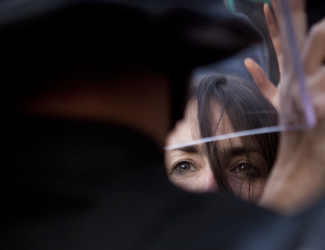
WHRDs are self-identified women and lesbian, bisexual, transgender, queer and intersex (LBTQI) people and others who defend rights and are subject to gender-specific risks and threats due to their human rights work and/or as a direct consequence of their gender identity or sexual orientation.
WHRDs are subject to systematic violence and discrimination due to their identities and unyielding struggles for rights, equality and justice.
The WHRD Program collaborates with international and regional partners as well as the AWID membership to raise awareness about these risks and threats, advocate for feminist and holistic measures of protection and safety, and actively promote a culture of self-care and collective well being in our movements.
Risks and threats targeting WHRDs
WHRDs are exposed to the same types of risks that all other defenders who defend human rights, communities, and the environment face. However, they are also exposed to gender-based violence and gender-specific risks because they challenge existing gender norms within their communities and societies.
By defending rights, WHRDs are at risk of:
Physical assault and death
Intimidation and harassment, including in online spaces
Judicial harassment and criminalization
Burnout
A collaborative, holistic approach to safety
We work collaboratively with international and regional networks and our membership
to raise awareness about human rights abuses and violations against WHRDs and the systemic violence and discrimination they experience
to strengthen protection mechanisms and ensure more effective and timely responses to WHRDs at risk
We work to promote a holistic approach to protection which includes:
emphasizing the importance of self-care and collective well being, and recognizing that what care and wellbeing mean may differ across cultures
documenting the violations targeting WHRDs using a feminist intersectional perspective;
promoting the social recognition and celebration of the work and resilience of WHRDs ; and
building civic spaces that are conducive to dismantling structural inequalities without restrictions or obstacles
Our Actions
We aim to contribute to a safer world for WHRDs, their families and communities. We believe that action for rights and justice should not put WHRDs at risk; it should be appreciated and celebrated.
Promoting collaboration and coordination among human rights and women’s rights organizations at the international level to strengthen responses concerning safety and wellbeing of WHRDs.
Supporting regional networks of WHRDs and their organizations, such as the Mesoamerican Initiative for WHRDs and the WHRD Middle East and North Africa Coalition, in promoting and strengthening collective action for protection - emphasizing the establishment of solidarity and protection networks, the promotion of self-care, and advocacy and mobilization for the safety of WHRDs;
Increasing the visibility and recognition of WHRDs and their struggles, as well as the risks that they encounter by documenting the attacks that they face, and researching, producing, and disseminating information on their struggles, strategies, and challenges:
Mobilizing urgent responses of international solidarity for WHRDs at risk through our international and regional networks, and our active membership.
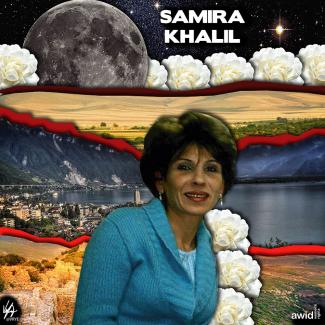
Samira was a Syrian activist under Bashar al-Asad's regime.
From a young age Samira opposed all forms of despotism, particularly vis-a-vis the authoritarian regime in which she lived.
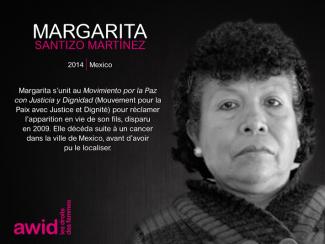
Samira was kidnapped in 2013 along with three other prominent activists. She is believed to have been taken from the Center for the Documentation of Violations in Duma, in rural Damascus.
The main suspect associated with her disappearance is the Army of Islam (which denies its involvement). There has been no formal investigation of Samira’s disappearance and she has not been heard from since. Samira was committed to her country and refused to leave Syria until she felt her role in empowering women and documenting crimes was no longer necessary.
La tendresse est la plus féroce des résistances
Une série de films sur les Réalités féministes dans la région Asie/Pacifique
Préparée par Jess X. Snow
avec l’aide de Kamee Abrahamian et Zoraida Ingles
Révisée par Kamee Abrahamian
Dans toute l’Asie et le Pacifique, et dans sa diaspora tout entière, des femmes et des trans farouches se battent pour un avenir où iels pourraient être libres. Alors que l’élévation du niveau des mers menace les îles du Pacifique et les côtes de l’Asie continentale, la lutte pour protéger la Terre et les océans s’intensifie dans le monde entier. La mémoire géologique de notre planète enregistre toutes les expériences qu’elle a vécues : la montée des colonisations, de l’industrialisation et de la destruction de l’environnement est liée à la montée de l’État-nation patriarcal binaire. Le pouvoir au sein de la Terre de se réincarner et d’éclore face à la violence doit alors être mis en lien avec les femmes, la maternité, l’indigénéité et toutes les forces expansives, sacrées et queer. Les Réalités féministes unissent la lutte pour la protection des droits des femmes, des trans et des personnes LGBTQ+ avec celle pour la protection de la Terre, et ce n’est pas une coïncidence. Des mères et filles protégeant le Mauna Kea au Royaume de Hawai’i aux relations complexes entre mères et enfants chez les réfugié·e·s du Vietnam, en passant par les réveils sexuels de personnes queer dans l’Inde conservatrice, la réclamation de la construction de maisons en Mongolie intérieure et la lutte pour la libération des personnes LGBTQ aux Philippines, cet ensemble de films est une constellation des manières selon lesquelles les femmes, personnes queer et trans en Asie-Pacifique défendent de nos jours les multiples voies vers notre libération collective, au-delà des océans et des frontières.
Tous ces films témoignent du sens fort accordé aux lieux : des activistes autochtones protègent leurs terres sacrées, des jeunes déconstruisent les récits coloniaux sur leurs terres et découvrent des vérités cachées, les liens complexes de maternité et de soins sont examinés, et des personnages se tournent vers leur propre corps et leur sexualité comme autant de sanctuaires, lorsque la famille et la ville qui les entourent menacent leur sécurité.
AFTEREARTH
De Jess X. Snow
« Un film envoûtant avec des plans époustouflants qui invoquent la résistance écologique féministe et comment elle prend directement source dans l'histoire culturelle et la terre… »
- Jessica Horn, stratège féministe panafricain·e, écrivain·e et cocréateur·rice de The temple of her skin (Le temple de sa peau)
Dans le documentaire expérimental Afterearth, quatre femmes se battent pour protéger les volcans, les océans, la terre et l’air pour les générations futures. En s’appuyant sur de la musique, de la poésie et le témoignage poignant qui rend honneur aux lieux qu’atteint l’océan Pacifique – Hawai’i, les Philippines, la Chine et l’Amérique du Nord, Afterearth est une méditation poétique sur la relation intergénérationnelle et féministe de quatre femmes avec les terres et les plantes dont elles sont issues.
STANDING ABOVE THE CLOUDS
De Jalena Keane Lee
Dans Standing Above the Clouds, des mères et filles activistes indigènes de Hawai’i se tiennent côte à côte pour protéger leur montagne sacrée, Mauna Kea, contre sa transformation en un site de construction des plus grands télescopes au monde. En tant que protectrices de Mauna Kea, ce film souligne l’interconnexion entre Aloha ʻĀina (l’amour de la terre) et l’amour pour ses aîné·e·s et les générations à venir.
NƯỚC (EAU/TERRE NATALE)
De Quyên Nguyen-Le
Dans ce court-métrage narratif expérimental, Nước (Eau/Terre natale) un·e ado genderqueer vietnamo-américain·e questionne les récits dominants sur la guerre du Vietnam à Los Angeles, Californie. Par le jeu de séquences oniriques fortes et d’intrusions de la réalité, ce film suit le parcours qui lui permet de recomposer et de comprendre l’expérience de sa mère, réfugiée de la guerre du Vietnam.
KAMA’ĀINA
De Kimi Lee
Dans Kama’āina, une jeune queer de seize ans doit se débrouiller pour vivre dans les rues de Oahu, jusqu’à ce qu’elle finisse par pouvoir se réfugier, sur les conseils d’une tata, à Pu’uhonua o Wai’anae, le plus gros camp organisé de sans-abris de Hawai’i.
DEVI
By Karishma Dev Dube
Dans Devi (« déesse » en hindi), Tara, une jeune lesbienne « dans le placard », s’oppose à la fois à sa famille et à la tradition pour vivre son attirance pour la servante de la maison. Située à New Delhi, Devi est une histoire de révélation tout autant qu’un commentaire sur les lignes sociales et de classe qui divisent les femmes de l’Inde contemporaine.
HEADING SOUTH
De Yuan Yuan
Dans Heading South, Chasuna, une fillette de 8 ans élevée par sa mère sur le Plateau de la Mongolie intérieure, rend visite à son père abusif à la grande ville. Pendant qu’elle est chez son père, on lui présente une nouvelle venue dans la famille. Elle doit alors reconnaître et accepter que sa véritable maison est inséparable de sa mère et de la terre.
Outrun
De Johnny Symons & S. Leo Chiang
Dans le long métrage Outrun, nous suivons le parcours de la première femme transgenre au Congrès des Philippines. Face à l’oppression d’une nation majoritairement catholique, son parcours victorieux devient un cri de victoire pour les droits des personnes LGBTQ+ du monde entier.
Alliant le documentaire, le récit et des formes expérimentales, ces films illustrent que l’attention de la communauté, l’amour de soi et une écoute profondément transformatrice entre celleux que nous aimons sont une entrée dans les Réalités féministes auxquelles nous donnons vie aujourd’hui. De toute l’Asie Pacifique et sa diaspora, ces histoires nous montrent que, face à la violence, la tendresse est la plus féroce des résistances.
Jess X. Snow est réalisateur·rice de films, artiste, poète nominé·e au Pushcart, auteur·e de livres pour enfants et éducateur·rice artistique communautaire qui crée des histoires d'immigrant·e·s asiatiques queers qui transcendent les frontières, les binarités et le temps
Suivez-nous sur les réseaux sociaux pour recevoir des informations sur les prochains événements et projections :
nous estimons que pour être transformateurs et forts, les mouvements féministes doivent continuer à travailler au-delà de leurs similitudes et de leurs différences. Nous devons également interroger le pouvoir et les privilèges, tant au sein qu'à l'extérieur de nos mouvements.
Должен ли я отвечать на все вопросы сразу или я могу делать это с перерывами?
При необходимости, вы можете сохранить свои ответы и вернуться к опросу позже. Eсли Вы хотите сохранить ответы и вернуться к опросу позже, это можно сделать при условии, что Вы продолжите работу на том же устройстве. KOBO сохранит Ваши ответы в левом верхнем углу страницы опросника и подгрузит Ваш черновик, когда Вы вернетесь к опросу.
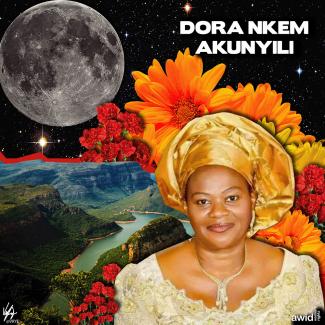
Dora nació en el estado de Benue, Nigeria. Fue una farmacéutica, tecnócrata, investigadora erudita y líder comunitaria reconocida mundialmente.
El trabajo revolucionario de Dora produjo un cambio de paradigma en el servicio público nigeriano cuando se desempeñó como Directora General de la Agencia Nacional para la Administración y Control de Alimentos y Medicamentos, entre 2001 y 2008. Encabezó reformas en la aplicación de políticas y regulaciones que redujeron drásticamente la cantidad de drogas falsas que asolaban el sector farmacéutico nigeriano cuando asumió su cargo.
Se convirtió en un ícono del empoderamiento de las mujeres, porque fue un ejemplo real de mujer valiente y competente que desafió los males de una sociedad predominantemente patriarcal. Fue nombrada Ministra de Información y Comunicación entre 2008 y 2010.
Murió luego de una batalla contra el cáncer, y le sobreviven su esposo, seis hijxs y tres nietxs.
Anti-Rights Discourses
Chapter 3
Anti-rights discourses continue to evolve. As well as using arguments related to religion, culture, and tradition, anti-rights actors co-opt the language of social justice and human rights to conceal their true agendas and gain legitimacy.
Three decades ago, a US television evangelist and Republican candidate famously said that feminism is an “anti-family political movement that encourages women to leave their husbands, kill their children, practice witchcraft, destroy capitalism and become lesbians.” Today, this conspirative notion gains unprecedented grasp and legitimacy in the form of “gender ideology” discourse, a catch-all bogey-man created by anti-rights actors for them to oppose.
Across a range of discourses employed by anti-rights actors - including notions of “cultural imperialism” and “ideological colonization”, appeals to “conscientious objection” and the idea of a “pre-natal genocide” - a key theme is co-optation. Anti-rights actors take legitimate issues, or select parts of them, and twist them in service of their oppressive agenda.
Table of Contents
Gender Ideology
Cultural Imperialism and Ideological Colonization
Abortion: Conscientious Objection
Abortion: Prenatal Genocide
Exercise: Let’s Take Back the Narrative
Movement Resistance Story: The Nairobi Principles: Cross-Movement Commitments on Disability and SRHR
"I participated in a member-only activity and I was particularly moved to see how there was space for everyone to share and that there was no judgment whatsoever. The entire session was energetic and vibrant."
- Kirthi Jayakumar, Founder, The Gender Security Project, India
Respondi ao inquérito, mas mudei de ideias e quero que a nossa resposta seja eliminada. Como devo proceder?
Tem o direito de eliminar a sua resposta, por qualquer motivo e se assim o desejar. Queira entrar em contacto connosco através deste formulário, ao indicar "WITM Survey" ("Inquérito WITM") no título da sua mensagem, e iremos proceder à eliminação da sua resposta.
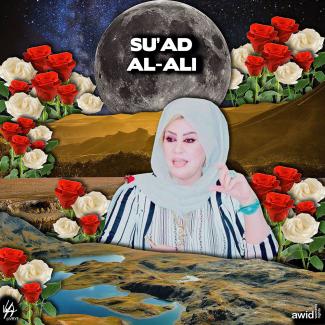
Ardente défenseure des droits des femmes et des enfants, Su’ad dirigeait Al-Weed Al-Alaiami, une organisation irakienne de défense des droits humains.
Elle a participé aux manifestations de juillet 2018 qui ont eu lieu à Bassorah et dans plusieurs autres villes irakiennes pour protester contre le chômage, réclamer des emplois et des services publics appropriés pour les citoyen-ne-s, ainsi que pour exiger l'élimination de la corruption endémique. Le 25 septembre 2018, Su’ad a été assassinée dans le quartier d’Al-Abbasiyah, dans le centre-ville de Bassorah.
Une vidéo de l’incident a montré une personne qui s'est approchée d'elle alors qu'elle montait dans sa voiture, et lui a tiré une balle dans la tête avant de pointer son arme sur son chauffeur, Hussain Hassan, qui a été blessé à l'épaule. Su’ad Al-Ali avait 46 ans et était mère de quatre enfants.
Celluloid Ishtar
Hind and Hind were the first documented queer couple in Arab history. In today’s world, they are a queer artist from Lebanon.
Sequence 1
When I was 6, I learned that my grandfather owned a movie theater. My mother recounted to me how it had opened in the early 1960s, when she was also about 6 years old. She remembered that they screened The Sound of Music on the first night.
I would pass by the theater every weekend and watch my grandfather play backgammon with his friends. I didn’t know he was living in the theater, in a room right under the projection booth. I later learned that he moved there after he and my grandmother separated and after the theater closed, in the 1990s, shortly after the Lebanese civil war had ended.
For years and until he passed away, I would mostly see my grandfather play backgammon in the unmaintained reception area of the movie theater. Those repeated scenes are all I remember of him. I never got to properly know him; we never talked about cinema, even though he spent all his time in a run-down movie theater. I never asked him what it was like to live in a place like this. He died when I was 12, on Christmas Eve, from a fall down the spiraling steps that led to the projection booth. It is almost poetic that he passed away in movement, in a house where moving images are perpetually suspended in time.
Sequence 2
In the spring of 2020, my cousin called me to say he had cleaned up my grandfather’s movie theater and asked me to meet him there. The two of us had always dreamed of renovating it. I got there before he did. In the reception area, the film poster frames were still there but the posters were gone. I knew there must have been some ticket stubs left somewhere; I found them stacked away in a small rusty tin box, on a shelf in the ticketing booth, and I pocketed some.
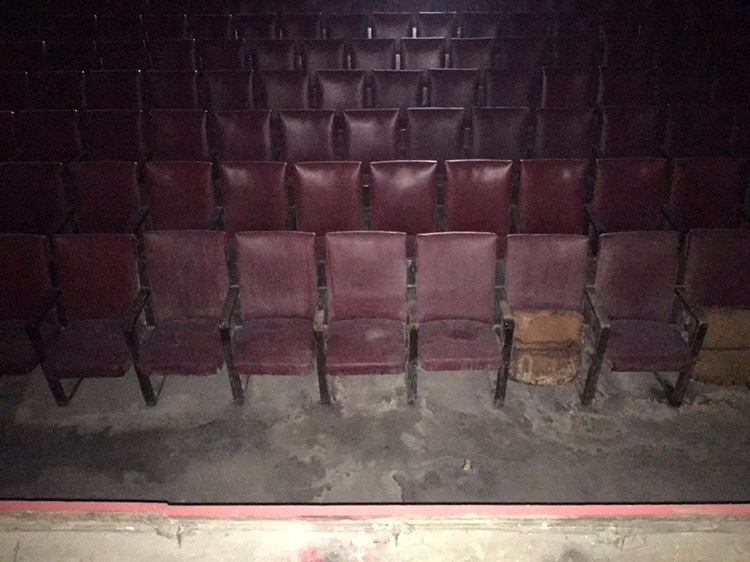
I began to walk around. On the main stage, the projection screen was quite dirty and a little torn on the side. I glided my index finger on the screen to remove a patch of dust and noticed that the screen was still white underneath. The fabric seemed to be in good shape too. I looked up to see that my grandmother’s curtains were still in place. They were made of white satin with a little embroidered emblem over the bridge of the curtain, representing the theater. There was a main seating area and a gallery. The chairs seemed to be very worn out.
I noticed the projector peeking out of a small window at the very end of the balcony seating area. I led myself up the spiraling steps of the projection booth.
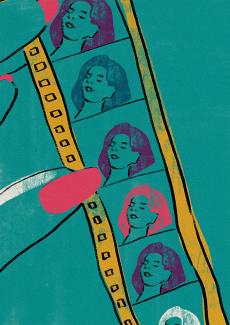
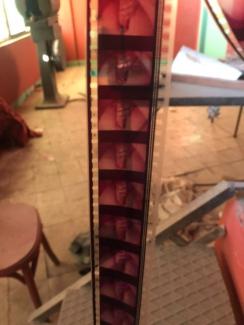
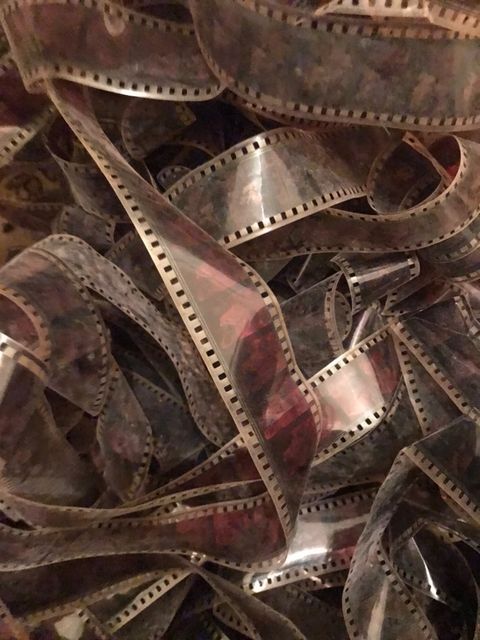
The room was dark, but a source of light coming from the dusty windows revealed a stack of film reels tossed in a corner. Lifeless celluloid strips were tangled up against the foot of the film projector. The dusty reels were all Western, Bollywood, and Science-Fiction genre films with bad titles like The Meteor that Destroyed Earth, or something of the sort. My attention was caught by the dusty film strips – mostly snippets cut out from reels. One by one, the short strips depicted different kissing scenes, what seemed like a suggestive dance, a nondescript scene of a gathering, a close-up of a woman lying down with her mouth open, opening credits to a Bollywood film, and a “Now Showing” tag that went on for several frames.
The Bollywood film credits reminded me of my mother. She used to tell me how they would hand out tissues to audience members on their way out of screenings. I kept the kissing scene and suggestive dance strips; I assumed they had been cut out for censorship reasons. The close-up of the woman reminded me of an excerpt from Béla Balázs’ Visible Man, or The Culture of Film, The Spirit of Film, and Theory of the Film. He said that close-ups in film provided a
silent soliloquy, in which a face can speak with the subtlest shades of meaning without appearing unnatural and arousing the distance of the spectators. In this silent monologue, the solitary human soul can find a tongue more candid and uninhibited than any spoken soliloquy, for it speaks instinctively, subconsciously.
Balázs was mostly describing the close-ups of Joan in the silent film La Passion de Jeanne d’Arc. He pointed out how, “...in the silent (movie), facial expression, isolated from its surroundings, seemed to penetrate to a strange new dimension of the soul.”
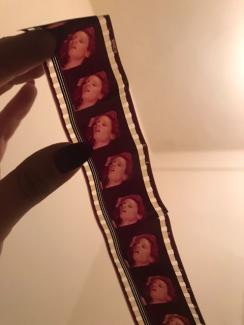
I examined the film strip further. The woman looked dead, her face almost mask-like. She reminded me of Ophelia by the painter John Everett Millais. In her book On Photography, Susan Sontag says a photograph is “a trace, something directly stenciled off the real, like a footprint or a death mask.” These death masks are like a presence that reminds of an absence.
I remembered encountering a discourse between death and photography in Roberto Rossellini’s forgotten film The Machine that Kills Bad People. In this film, a cameraman goes around taking photographs of people, who would in turn freeze, and are later suspended in time. French film critic André Bazin used to say that photography snatches bodies away from the flow of death and stores them by embalming them. He described this photographic mummification as “the preservation of life by a representation of life.”
This projection booth, its whole layout, all the things that looked like they were moved, the celluloid strips on the ground, everything my grandfather left a mark on – I felt very protective of.
Underneath the strips was an undone dusty film reel. It seemed like someone had been watching the reel manually. At that moment, my cousin made his way up the spiraling steps to find me examining it. He rubbed his fingers along his chin and, in a very-matter-of-fact way, said, “You found the porn.”
Sequence 3
I looked at the film strip in my hand and realized it was not a death scene. The strip was cut out of the porn reel. The woman was moaning in ecstasy. Close-ups are meant to convey feelings of intensity, of climax, but I had never really used Balázs’ theories to describe a porn scene. He wrote how “the dramatic climax between two people will always be shown as dialogue of facial expressions in close-up.” I pocketed the film strip and I named the woman Ishtar. She has lived in my wallet ever since. It seemed strange to compare the close depiction of Joan’s fears and courage with Ishtar’s facial expression in ecstasy.
According to my cousin, my grandfather’s brother would wait until my grandfather left the theater and, instead of closing, invite his friends for some after-hour private screenings. I didn’t think much of it. It was a common practice, especially during and after the Lebanese civil war. After the war, television sets were almost in every Lebanese household. I even remember having one in my bedroom in the late 1990s, when I was around 6 years old. I was told that buying porn films on VHS was popular at the time. Mohammed Soueid, a Lebanese writer and filmmaker, once told me that movie theaters used to screen art films and pornography from the mid-1980s to the mid-1990s, so that they could survive. I also heard that projectionists would cut up porn reels to make different montages, so that they could screen something different every night. Eventually, people stayed within the comforts of their homes to watch VHS tapes on their televisions, and movie theaters began to run out of business.
Sequence 4
My cousin went back downstairs to go through an archive of paperwork in the office space. I stayed in the booth and began to slip the film strip between my index and middle finger, sliding it up with my thumbs and slowly running the frames through my hands. I lifted the strip against the dusty window and squinted to make sense of the monochrome vignettes. In this series of frames was an extreme close-up of a dick shoved into a vagina. It went on for several frames until I came across a knot in the film, and I imagined the rest.
Sequence 5
Hank is showcasing his hard-on in front of Veronika who is lying in bed across a Louis XIV secrétaire knockoff. She gets up slowly and slides the thin strap of her see-through négligé off her left shoulder. Hank unties her veiled robe, turns her around, slaps her ass, and pushes her down against the secrétaire. He thrusts his dick inside her pussy repeatedly as the back of the furniture bangs against the wallpaper-adorned wall.
Sequence 6
I was always attentive to the interior décor, ever since I was told by my Women in Porn Studies professor that the largest porn archives in North America are interestingly used to examine the middle-class furniture of that epoch. So, while Veronika is bending over and being taken from behind by Hank, a university research assistant could very well be trying to guess the design of the gold motif on the secrétaire, or study the rococo relief on a wooden chair in some corner.
For a moment, the booth became a space for female sexual imagination, disrupting a space otherwise promised for the freedom of male sexuality. I was sure that only men were able to access movie theaters that screened porn films. The film reel was too entangled to undo in a projection booth where dust had accumulated for over a decade, so I stuffed it into my duffle bag and walked out of the theater.
I am not sure what came over me, but I felt compelled to keep it. I wanted to feel the thrill of safeguarding something mysterious, something unorthodox. In my mind, I was sure people knew I was hiding something as I walked down the street. A feeling of guilt intertwined with pleasure came over me. It felt kinky.
Sequence 7
I got into the house, preoccupied with the thought of having a porn reel in my duffle bag and the stream of thoughts that had unfolded on my walk home. I immediately went to my bedroom. In some distant part of my mind, I remembered that I shared a wall with Layla’s room next door. She was probably not home, but the possibility of being heard excited me. I closed my bedroom door and I took the film strip of Ishtar out.
I imagined her dressed in a light green veiled dress, dancing seductively in front of me, swinging her hips sideways and smiling with her eyes. I got onto my bed. I slipped my fingers into my panties. I lifted my hips. I trailed my hand down my thighs to part them, and slid two fingers in. I tensed up as I palpated my various creases. I moaned before I could stop myself. I panted and swayed. The rays of sun coming through my window planted reluctant kisses onto my skin. I held my breath in and my limbs quivered. I swallowed my breath and laid flat on the mattress.
Sequence 8
When I was an undergraduate student, I had taken an introductory film class and Professor Erika Balsom had scheduled a screening of Bette Gordon’s Variety. I was excited to watch producer Christine Vachon’s first film before she moved onto producing films that are now part of the New Queer Cinema movement. Variety was described as a feminist film about Christine, a woman who begins to work as a ticketing clerk in a porn movie theater in New York city called The Variety Theater. Christine overhears the films at the theater but never goes in. Eventually, she becomes interested in a regular customer, whom she watches closely. She follows him to an adult shop where she stands aside and flips through adult magazines for the first time.
Christine’s voyeurism was displayed in different ways throughout the film. The script was also ridden with excess, and erotic monologues that would be considered obscene or vulgar.
In a scene set in an arcade, she reads erotica to her boyfriend. The camera goes back and forth between a close-up of her boyfriend Mark’s butt as he was playing pinball, swinging his hips back and forth against the arcade machine, and a close-up of Christine’s face as she recited her monologue.
Sequence 9
“Sky was hitchhiking and he got a ride from a woman in a pick-up truck. It was late at night and he needed a place to stay, so she offered him her place.
She showed him to his room and offered him a drink. They drank and talked and decided to turn in. He couldn’t sleep, so he put on his pants and walked down the hall to the living room. He was a stop short of being seen, but he could see. The woman was naked and spread on the coffee table with only her legs dangling over. Her whole body was excitingly white as if it’d never seen the sun. Her nipples were bright pink, fire-like, almost neon. Her lips were open. Her long auburn hair licking the floor, arms stretched, fingers tickling the air. Her oiled body was round with no points, no edges. Slithering between her breasts was a large snake curving up around one, and down between the other. The snake’s tongue licking toward the cunt, so open, so red in the lamp light. Hot and confused, the man walked back to his room, and with great difficulty, managed to fall asleep. The next morning, over strawberries, the woman asks him to stay another night. Again, he couldn’t sleep […]”
Sequence 10
When I was 23, Lynn, the girl I was dating from film class, surprised me by taking me to watch erotica short films on Valentine’s Day. The event took place at The Mayfair Theater, an independent old movie theater. The architecture of the theater recalled North American Nickelodeons, but with a campy touch. Its balconies were decorated with life-size cardboard cutouts of Swamp Thing and Aliens.
That year, the festival was judged by adult star Kacie May and the program consisted of an hour and a half of short films. The content ranged from soft-core machismo-ridden shorts to scat fetish films. We watched a few minutes of what seemed to be heterosexual soft porn. It followed a couple who start making love in a modern living room space, then move to the bedroom. It was mostly footage of them kissing each other, touching each other, and making love missionary-style. Then a woman with a short brown bob crawled onto the bed, licking the back of her own hand in short strokes. She meowed and crawled over the unconcerned couple. They continued to make love. She crawled out to the kitchen, picked up her empty bowl with her teeth, and placed it onto a pillow. She kept walking over them until the end of the short. It seemed quite absurd. I began to laugh, but Lynn looked a bit uncomfortable. I then looked to our left, watching other audience members chugging beers and inhaling popcorn while laughing hysterically. Their uninterrupted laughter and loud comments really set the tone of the festival. Watching the audience became more interesting than watching the erotic films. The Mayfair Theater often showed cult films, and watching cult films is a communal experience.
It’s not exactly how I imagined my mother’s uncle watching porn in my grandfather’s theater. Movie theaters were openly screening porn films at that time, but I could not picture it happening within my mother’s hometown. I pictured him watching the film from the projector in the booth, so he could quickly stop the screening in case any unexpected guests decided to stop by. His friends sat on the balcony in the back. No one could get in from there unless they had a key, so it was safe. They had to think of everything. It was a conservative Christian neighborhood and they would not want to cause any trouble. They were most likely overcome with excitement and guilt. The voices of loud homoerotic banter merged with sound bites of grunting and moaning, but they reminded each other to keep it down every few minutes. They took turns to check the windows to make sure the sound was not loud enough to alarm any neighbors. Sometimes, they would turn off the speaker and there would be no sound.
Sequence 11
After a political protest in 2019, I came across a bookstand on Riad El Solh street, close to Martyr’s Square in downtown Beirut. Towards the end of the table, past the copies of Hugo and de Beauvoir, I found a stack of erotica novels and adult magazines. They were all translations of Western publications. I really did not care which one I picked; I just knew I wanted to own a copy for the thrill of it. I looked for the most interesting cover art.
As he was giving me my change back, the vendor asked me, “Don’t I know you from somewhere?”
He scanned my breasts, gliding his eyes downwards. He probably assumed I worked in the porn or sex industry. I looked into his eyes and said, “No.” I turned around, ready to walk away with my magazine. He then stopped me to say that he had a large archive in his basement, and that he regularly sold porn collections and publications on EBay, to Europe and the USA. Although I was interested in rummaging through that archive, I was not comfortable enough to take his offer. It did not feel safe. I asked him where he found these novels. To my surprise, they were produced in Lebanon.
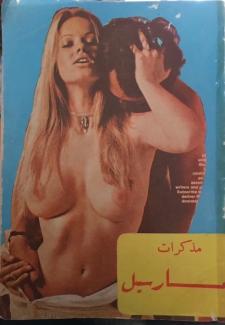
Walking towards the Riad El Solh statue, I read through the journal I had bought and found the format of the text somewhat canted; the font was a bit smudged, making it illegible. The photographs inside were comprised of faded pornographic collages. It looked raw; I liked that. The title of the novel read, Marcel’s Diaries.
The cover art was clearly a magazine cut-out pasted over a blue sheet. In the picture, a shirtless woman is grabbing her lover’s head, digging her fingers in his hair, while he is kissing her neck from behind. Her skirt is zipped down. Her lover has his hand on her lower right hip. She has her hand over his. Her lips are puckered up and open, almost like she is moaning with pleasure, her 1970s straight blonde hair running down her chest and partially covering her nipples.
I opened the first page. The preface read
شهوات”
“وشذوذ
which either translates to
“Desire
and deviance”
or to
“Desire
and kink”
I read through the first chapter and I found that whoever translated the text had changed the main character’s name to Fouad, an Arabic name. I assumed they wanted their Lebanese male audience to identify. As I read through, I found that all of his lovers had foreign names like Hanna, Marla, Marcel, Marta.
Sequence 12
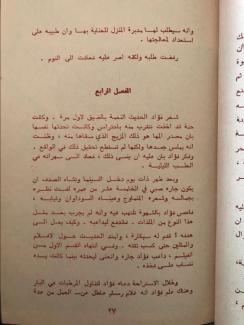
I realized on page 27, chapter four, that Marcel was one of Fouad’s lovers.
Sequence 13
The scene took place in a movie theater. Movie theaters were often spaces for sexual freedom in North America, especially since the 1970s after the sexual revolution.
I also assumed they kept all the other foreign names so that it sounds exotic and less taboo. Pornography and erotica were attributed to West Hollywood, despite the fact that the Arab world historically produced erotic texts. Erotica became taboo, and the only way to safely produce it was to market it as foreign, as exotic.
It is interesting how the exotic covers for the erotic. The difference between the two adjectives is rooted in their Greek etymologies: exotic is from exo, “outside,” meaning alien or foreign. Erotic is derived from Eros, the god of sexual love. So, what’s exotic is mysterious and foreign – what’s erotic is sexy.
In Lebanon there is a thin line between the exotic and the erotic in cinema, like the thin line between art films and porn films. In 2015, during a conversation with filmmaker Jocelyne Saab in a Vietnamese restaurant in Paris, I learned that she had to shoot her art film Dunia a second time to change the dialect from Egyptian to Lebanese. She told me that her actors were Egyptian, and that she wasn’t strict about the script. She was not allowed to use Egyptian dialect. It had to be in Lebanese because the producers were concerned about the borderline erotic scenes in the film. So, they made it foreign.
Snippet FEA Linda Porn Bio (ES)
Linda Porn es una otra heroína de la organización sindical feminista y del activismo de las trabajadoras sexuales a nivel nacional (en España) y transnacional.
Originaria de México, vive en España desde los años 2000. Es trabajadora sexual, activista, madre soltera y artista multidisciplinar.
Partiendo de estas diferentes identidades, utiliza la performance, el videoarte y el teatro para visibilizar las luchas en las intersecciones del transfeminismo, el trabajo sexual, la migración, el colonialismo y la maternidad. Combina el arte y el trabajo sexual mientras cuida a su hija como madre soltera.
Linda también pertenece a colectivos de trabajadoras sexuales que luchan por sus derechos, como el sindicato OTRAS y CATS Murcia. También cofundó el grupo 'Madrecitas' - que visibiliza y denuncia la violencia institucional racista contra las familias migrantes. Violencia de la que ella y su hija fueron objeto por ser trabajadora sexual y madre soltera migrante.
نعم! الرجاء القيام بذلك! نشجعكم/ن على مشاركة رابط الاستطلاع في شبكاتكم/ن. سيسمح لنا جمع وجهات النظر أكثر تنوعاً، فهم البيئة التمويلية للحركات النسوية بشكل أكبر.
« Après
Après l’amour la première fois,
Nos corps et nos esprits nus
Une galerie des glaces,
Complètement désarmés, absolument fragiles,
Nous nous couchons dans les bras de l’autre
Respirant attentivement,
Avec la crainte de briser
Ces figurines en cristal. » - Fahmida Riaz
Fahmida Riaz a brisé les tabous sociaux en écrivant sur le désir des femmes dans ses poèmes, créant des récits alternatifs à propos du corps des femmes et de leur sexualité, et établissant de nouveaux standards dans la littérature urdu.
Son travail s’est confronté à de sévères critiques de la part des conservateurs, qui l’ont accusée d’utiliser des expressions érotiques et « pornographiques » dans son langage poétique.
Fahmida a finalement été mise sur liste noire et accusée de sédition en vertu de l’article 124A du Code pénal pakistanais sous la dictature de Zia-ul-Haq. Forcée à l’exil en 1981, elle a passé presque sept ans en Inde avant de retourner au Pakistan.
Dans la préface de « Badan Dareeda » (Un corps ravagé), un recueil de poèmes publié en 1974, elle écrit :
Si, en effet, je suis forcée à me tenir aujourd’hui devant ce maqtal et me confronte à la potence, je dois y faire face, la tête haute. Mes poèmes sont la trace d’une tête mutilée : des sons émanant même lorsque suspendue par des cordes… Un corps ravagé a pris la forme de razmia, ou d’un son de rupture. Et si cette rupture est effectivement choquante pour les gens, c’est que la poète a atteint son intention : elle a réussi à la perturber. (traduction de l’urdu vers l’anglais par Asad Alvi)
La splendeur de Fahmida résidait dans sa défiance de toute logique ou toute catégorie particulière de genre, nation, religion ou culture. Elle refusait d’être mise dans le rôle d’une « femme poète », brisant les définitions traditionnelles de la poésie féminine, des concepts et des thématiques (variant entre conscience politique, corps, culture, désir, religion, foyer), et renversant les inhibitions assignées à son genre.
« Il faut que vous compreniez que la culture ne peut avoir d’essence. Les cultures changent, circulent entre elles, formant de nouvelles cultures. La culture est née de cette façon. Il n’y a pas de conflits de cultures. »
Fahmida a écrit plus de 15 livres de poésie et de fiction, dont son poème ‘Taaziyati Qaraardaaden’ («Résolutions de condoléances» en anglais) qui pourrait servir d'hommage approprié à sa vie et à son héritage et de collection de poèmes (Apna Jurm To Saabit He «Mon crime est prouvé») publié en 1988 durant son exil.
Fahmida Riaz est née à Meerut, en Inde, le 28 juillet 1946 et est décédée le 21 novembre 2018 à Lahore, au Pakistan.
La joie dans le monde : six questions à Naïké Ledan
entretien mené par Chinelo Onwualu
Naike Ledan est une défenseuse de la justice sociale, une féministe engagée qui met en avant 20 années d’expérience dans la défense des droits humains et de la justice sanitaire, l’autonomisation des femmes, la lutte pour l’accès universel aux services de base et l’inclusion sociale, ainsi que le renforcement des capacités de la société civile. Elle a réalisé un travail considérable au Canada, en Afrique occidentale et australe, ainsi qu’en Haïti, dans le domaine de la défense des droits civils et du renforcement des capacités des OSC, tout en mettant l’accent sur les déterminants sociaux de l’exclusion structurelle. Elle défend les principes de leadership partagé, ainsi que les espaces anticoloniaux, anti-oppressifs et anti-patriarcaux.
Chinelo On dit que tu es une activiste pour les droits des personnes trans; j’aimerais savoir quel parcours tu as eu.
Naike Alors, j’ai grandi en Haïti jusqu’à mes 18 ans, puis j’ai vécu à Montréal pendant 19 ans. En revenant en Haïti en 2016, je pensais rentrer à la maison, mais le lieu avait changé et j’ai dû me réajuster. Je ne me suis pas vraiment reconnectée à ma famille et mes amis d’enfance comme je l’aurais cru. Je suis revenue en tant qu’expat avec une situation professionnelle confortable, et je me suis sentie comme une étrangère pendant très longtemps. Dans le même temps, je me sentais vraiment à la maison à cause de la langue, des silences entendus, le fait de ne pas devoir tout expliquer quand on chante une pub – tu sais, ce truc qu’on partage, cette énergie, cet espace, cet esprit.
Mon retour à l’amour de moi-même – que j’appellerais une « renaissance » – qui a coïncidé avec l’accouchement de mon premier enfant, l’accouchement de moi-même et le moment où je suis tombée amoureuse avec le queer en moi et mon amour des personnes de même genre. (Crédit
photo : Naïké Ledan)
Ce qui m’a aidée, c’est que j’adorais le travail qui consiste à aller dans les terres et à documenter les connaissances des gens. Donc j’ai quitté le confort. Je suis devenue directrice nationale d’une organisation régionale qui était super mégaqueer! La majeure partie de mon travail consistait à trouver des ressources et à renforcer les capacités de la société civile. Ma stratégie était d’aller dans les campagnes, de chercher toutes ces petites organisations, d’aider à renforcer leurs capacités et de les financer. Je ne cherchais pas à rencontrer des politiciens, à serrer des mains et à prendre des photos <rires>. J’avais un très bon allié, Charlot Jeudy, l’activiste [queer] qui s’est fait tuer il y a trois ans chez lui. Nous nous sommes fortement rapproché·e·s après qu’un festival de films afroqueer que nous planifions en Haïti ait été interdit. Mais ç’a fait beaucoup de bruit et déclenché les conversations à propos du queer partout, et Charlot m’a présentée à toutes les petites OSC dans les moindres recoins du pays. Et moi, j’étais juste là pour aider les organisations à s’enregistrer légalement ou à construire leur plan stratégique. Donc, ce sont tous ces petits boulots qui ont fait de moi une activiste queer et, par extension, une activiste trans, bien que je ne me dise pas activiste. C’est un terme tellement piège, tu ne trouves pas? Et c’est un nom que les autres nous donnent. Moi, je pense que je suis juste une amoureuse et une battante <rires>.
Chinelo Parle-moi de la formation que tu as menée avec l’AWID pour le festival. De quoi ça parlait et quel était le contexte?
Ma profonde conscience de moi-même au cours de mon enfance et ma forte préoccupation à questionner les inégalités et l’injustice à un très, très jeune âge (+/- 4 ans). (Crédit photo : Naïké Ledan)
Naike Les médias internationaux ne parlent pas vraiment d’Haïti, mais avec un environnement politique aussi mauvais que le nôtre, l’environnement économique était encore plus catastrophique. Étant une Haïtienne plutôt de classe moyenne, parlant plusieurs langues et ayant différents passeports, j’étais hésitante au départ à occuper cet espace. Mais je me considère souvent davantage comme un pont que comme une personne qui parle d’elle-même. C’est comme ça que j’en suis venue à inviter Semi, une brillante jeune femme trans d’autour de Port-au-Prince, pour qu’elle vienne occuper cet espace, parler d’elle-même et nous raconter l’écosystème des réalités des femmes trans en Haïti. Nous en sommes venues à faire une séance sur le féminisme non inclusif – ou pour le dire autrement, les espaces féministes officiels – et la manière dont les filles trans en Haïti n’ont pas d’espace au sein desquels elles peuvent contribuer aux connaissances des femmes et au partage de leurs réalités. Donc, le festival de l’AWID a été pour moi l’opportunité de donner l’espace aux femmes qui devraient leur être dédié. Ce fut un super moment; on buvait du vin en ligne tout en modérant la conversation. Ma comodératrice, Semi, nous a fait part de ce que cela signifie que d’être une enfant/une fille/une femme trans à différentes étapes de sa vie. Elle a également parlé des dangers de la rue, de la pauvreté, de l’exclusion, du fait de « ne pas passer » et aussi de ses victoires.
Chinelo Quelle est la relation des femmes trans avec les organisations féministes en Haïti? Quelle expérience en as-tu retirée?
Naike Ç’a été vraiment très difficile – un crève-cœur, vraiment – cette expérience des femmes trans en Haïti. De l’inexistence absolue à une extrême sexualisation. L’autre chose qui se passe aussi c’est la manière dont elles sont tuées, et le fait que ces assassinats ne sont pas rapportés dans les médias. Cela montre la mesure dans laquelle les femmes trans sont non existantes et effacées. Elles sont partout mais non dans les cadres professionnels, non dans les cadres féministes et non dans les cadres organisationnels. Même pas dans les organisations LGBT. Ce n’est que récemment, et suite à un énorme effort de plaidoyer, que certaines de ces organisations se réajustent en quelque sorte. Mais dans les espaces féministes, c’est toujours hors de question. On doit toujours faire avec le vieux discours d’exclusion : « Ce ne sont pas des femmes. Bien sûr, si elles peuvent passer… ». La culture du passing, c’est en réalité une question de gestion des risques – à quel point tu passes et à quel point tu ne passes pas, et ce que cela veut dire pour ton corps et la violence que cela lui inflige. Dans les réalités d’exclusion des trans dans lesquelles nous vivons, qui sont reproduites dans de nombreux espaces féministes, celles qui passent complètement peuvent être considérées être des filles, mais seulement dans une certaine mesure. Mais tomber en amour, avoir une conversation et rester dans le placard, et souhaiter une certaine esthétique ou une carrière? De fait, la conversation sur la thérapie hormonale porte en réalité sur la réduction des risques, comme Semi elle-même l’a mentionné lors de la formation. Mais on n’a pas l’option de la thérapie hormonale ici, on n’a pas le cadre médical ni le système qui soutiendrait celles qui voudraient choisir cette option.
Chinelo Tu parles de la manière dont les trans et les queer sont considéré·e·s dans la société, je trouve que ça pourrait ressembler à la situation au Nigéria, qui peut être un environnement profondément homophobe.
Naike Haïti est un pays très complexe, d’une très belle manière. Rien n’est simple, tu sais, rien ne se fait jamais d’une seule manière. Les Haïtiens et les Haïtiennes sont très tolérant·e·s – et sont également très homophobes. Il y a des coins de campagne où les gens ne sont pas vraiment si homophobes, parce que les temples vaudous sont là, et c’est une religion qui respecte la vie. Un principe essentiel de la religion vaudou est que toutes et tous les enfants sont des enfants. Donc, il n’y a pas de vrai ou faux dans cette religion. Depuis la nuit des temps, les gens considèrent Haïti comme un havre, un lieu où les gens sont tolérants – je te parle là des années 1970, 1980, avant le VIH, les années 1990 même. Puis il y a eu le tremblement de terre [en 2010], dans lequel environ 300 000 personnes ont trouvé la mort. Et alors tout cet argent est arrivé du Sud des États-Unis par le biais des Évangélistes, pour reconstruire le pays et pour trouver Jésus. Donc l’homophobie en Haïti est très récente. Dans le tréfonds, dans le cœur de l’âme de la culture, je ne peux pas vraiment dire qu’Haïti est homophobe. Mais dans la vie de tous les jours, ça colle vraiment à la peau des personnes queer, toute cette violence. Et sur celle des femmes, des femmes pauvres, des femmes à la peau foncée aussi parce que le colorisme est bien ancré dans les Caraïbes.
Chinelo Comment as-tu géré cela? Quelle a été ta stratégie de survie?
Mon retour à Haïti dans le cadre de mon processus de décolonisation, et de mon choix de mettre physiquement, et sans compromis, mes sens et les sens de ma famille en phase avec la magie et la culture noire. (Crédit photo : Naïké Ledan)
Naike J’aime vraiment beaucoup mon travail. J’adore travailler. Au début, quand je suis arrivée, je travaillais avec cette horrible ONG mais je faisais un travail génial. J’étais toujours à la campagne, discutant et apprenant des gens, des femmes. Et ç’a m’a comblée pendant si longtemps, parce que je suis vraiment très amoureuse de ma culture, des personnes noires, des femmes noires – des vieilles femmes noires, des bébés noir·e·s. Ça me nourrit vraiment spirituellement. Quand on était au Canada, mes enfants étaient dans ces écoles où il n’y avait que des blancs et des blanches et iels étaient instrumentalisé·e·s. Iels ne parlaient ni créole ni français. Et maintenant, iels courent librement dans la cour et commencent à se battre en créole. J’ai aussi trouvé des poches de survie auprès des gens que j’ai rencontrés. J’ai créé des liens avec les queer et d’autres qui étaient des bizarres comme moi, et ç’a vraiment été magique. Mais aujourd’hui, j’ai davantage mal parce que je ne me sens plus en sécurité en Haïti. Il y a environ 40 enlèvements par semaine à Port-au-Prince – et c’est ainsi depuis 2018. J’ai commencé à devenir anxieuse et à avoir des attaques de panique. Donc, l’heure est venue pour moi de partir, et je me demande régulièrement « C’est où la maison? ». J’ai passé 19 ans à Montréal mais je ne m’y suis jamais sentie chez moi. Quand je suis partie, cela ne m’a jamais manqué et je ne veux donc pas y retourner. Je pleure beaucoup ces derniers temps parce que j’ai l’impression d’entamer un deuxième exil.
Chinelo Quelle est ta relation au plaisir, aux loisirs et au repos?
Naike Ma relation avec le plaisir, les loisirs et le repos sont une seule et même chose pour moi. C’est le moment vécu où je me laisse aller à profiter de la chaleur du soleil sur mon visage, par exemple. C’est un plaisir, un loisir et un repos en même temps.
Le plaisir : c’est l’espace où je me réfugie, qui se résume généralement à un havre de célébration de moi-même. Je me réserve le pouvoir et le droit d’être bruyante ou calme, alors que je profite du plaisir que j’expérimente. Tout le plaisir auquel je m’adonne vicieusement et abondamment, notamment mais non exclusivement, le plaisir de la solitude et du silence.
Les loisirs : faire du vélo, assister à des festivals de musique, manger, déguster du vin et danser des danses traditionnelles du vaudou haïtien font partie de tout ce à quoi je m’adonne en ce moment.
Le repos : c’est ce pourquoi je vis. En tant qu’hyper performante et que personne qui est littéralement en amour avec son travail, il est paradoxal de voir à quel point je suis paresseuse. Personne ne sait ça parce que tout ce que le monde voit en moi, c’est la bête de travail satisfaite. Personne ne sait à quel point je peux, sans compromis et profondément, me plonger dans l’oisiveté.
Continuez à explorer Incarnations transnationales
Cette édition du journal, en partenariat avec Kohl : a Journal for Body and Gender Research (Kohl : une revue pour la recherche sur le corps et le genre) explorera les solutions, propositions et réalités féministes afin de transformer notre monde actuel, nos corps et nos sexualités.
نصدر النسخة هذه من المجلة بالشراكة مع «كحل: مجلة لأبحاث الجسد والجندر»، وسنستكشف عبرها الحلول والاقتراحات وأنواع الواقع النسوية لتغيير عالمنا الحالي وكذلك أجسادنا وجنسانياتنا.