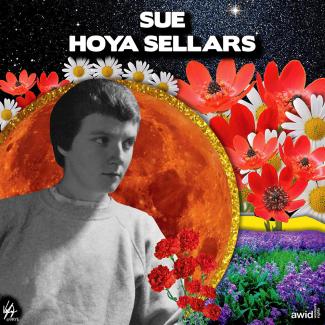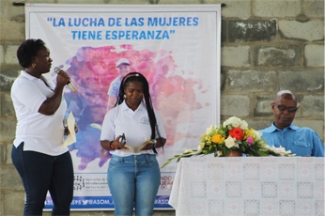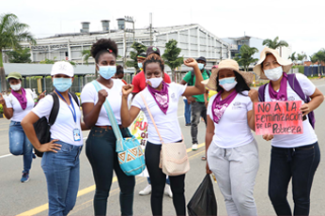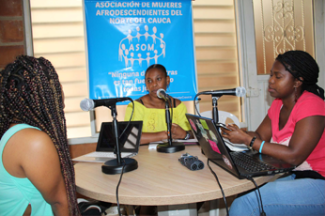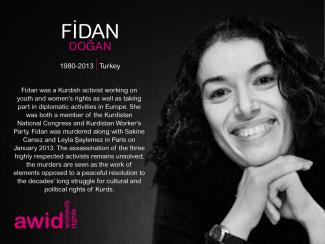
WHRDs are self-identified women and lesbian, bisexual, transgender, queer and intersex (LBTQI) people and others who defend rights and are subject to gender-specific risks and threats due to their human rights work and/or as a direct consequence of their gender identity or sexual orientation.
WHRDs are subject to systematic violence and discrimination due to their identities and unyielding struggles for rights, equality and justice.
The WHRD Program collaborates with international and regional partners as well as the AWID membership to raise awareness about these risks and threats, advocate for feminist and holistic measures of protection and safety, and actively promote a culture of self-care and collective well being in our movements.
Risks and threats targeting WHRDs
WHRDs are exposed to the same types of risks that all other defenders who defend human rights, communities, and the environment face. However, they are also exposed to gender-based violence and gender-specific risks because they challenge existing gender norms within their communities and societies.
By defending rights, WHRDs are at risk of:
Physical assault and death
Intimidation and harassment, including in online spaces
Judicial harassment and criminalization
Burnout
A collaborative, holistic approach to safety
We work collaboratively with international and regional networks and our membership
to raise awareness about human rights abuses and violations against WHRDs and the systemic violence and discrimination they experience
to strengthen protection mechanisms and ensure more effective and timely responses to WHRDs at risk
We work to promote a holistic approach to protection which includes:
emphasizing the importance of self-care and collective well being, and recognizing that what care and wellbeing mean may differ across cultures
documenting the violations targeting WHRDs using a feminist intersectional perspective;
promoting the social recognition and celebration of the work and resilience of WHRDs ; and
building civic spaces that are conducive to dismantling structural inequalities without restrictions or obstacles
Our Actions
We aim to contribute to a safer world for WHRDs, their families and communities. We believe that action for rights and justice should not put WHRDs at risk; it should be appreciated and celebrated.
Promoting collaboration and coordination among human rights and women’s rights organizations at the international level to strengthen responses concerning safety and wellbeing of WHRDs.
Supporting regional networks of WHRDs and their organizations, such as the Mesoamerican Initiative for WHRDs and the WHRD Middle East and North Africa Coalition, in promoting and strengthening collective action for protection - emphasizing the establishment of solidarity and protection networks, the promotion of self-care, and advocacy and mobilization for the safety of WHRDs;
Increasing the visibility and recognition of WHRDs and their struggles, as well as the risks that they encounter by documenting the attacks that they face, and researching, producing, and disseminating information on their struggles, strategies, and challenges:
Mobilizing urgent responses of international solidarity for WHRDs at risk through our international and regional networks, and our active membership.
Related Content
Calendario Feminista AWID 2026
Considera este calendario como un obsequio, que te llega a ti y a 9500 afiliades de nuestra comunidad feminista mundial. Un obsequio de esperanza, conexiones renovadas, acción y comunidad en un momento de inmensas injusticias y violencias.
Que estas historias te recuerden que a través de las fronteras y a lo largo de las luchas, somos muches, somos fuertes y, en conjunto, construimos los mundos que merecemos.
Across the globe, feminist, women’s rights and gender justice defenders are challenging the agendas of fascist and fundamentalist actors. These oppressive forces target women, persons who are non-conforming in their gender identity, expression and/or sexual orientation, and other oppressed communities.
Discriminatory ideologies are undermining and co-opting our human rights systems and standards, with the aim of making rights the preserve of only certain groups. In the face of this, the Advancing Universal Rights and Justice (AURJ) initiative promotes the universality of rights - the foundational principle that human rights belong to everyone, no matter who they are, without exception.
We create space for feminist, women’s rights and gender justice movements and allies to recognize, strategize and take collective action to counter the influence and impact of anti-rights actors. We also seek to advance women’s rights and feminist frameworks, norms and proposals, and to protect and promote the universality of rights.
Our actions
Through this initiative, we:
Build knowledge: We support feminist, women’s rights and gender justice movements by disseminating and popularizing knowledge and key messages about anti-rights actors, their strategies, and impact in the international human rights systems through AWID’s leadership role in the collaborative platform, the Observatory on the Universality of Rights (OURs)*.
Advance feminist agendas: We ally ourselves with partners in international human rights spaces including, the Human Rights Council, the Commission on Population and Development, the Commission on the Status of Women and the UN General Assembly.
Create and amplify alternatives: We engage with our members to ensure that international commitments, resolutions and norms reflect and are fed back into organizing in other spaces locally, nationally and regionally.
Mobilize solidarity action: We take action alongside women human rights defenders (WHRDs) including trans and intersex defenders and young feminists, working to challenge fundamentalisms and fascisms and call attention to situations of risk.
Lindiwe Rasekoala est une coach de vie spécialisée dans ce qui touche à l’intimité et au bien-être relationnel. Elle est passionnée de santé sexuelle et contribue à des contenus en ligne. Au travers de ses propres expériences et de méthodes de recherche non conventionnelles, elle pense pouvoir combler le fossé éducatif et le manque d’accès à l’information qui existent autour du bien-être sexuel. Elle contribue à diverses émissions de radio et de télévision et a suivi une formation de coach auprès de la Certified Coaches Alliance. La mission de Lindiwe est d’éradiquer les obstacles qui entravent les conversations autour du bien-être sexuel et de donner à ses client·e·s les moyens de mieux se comprendre afin qu’ils·elles puissent avoir un mode de vie et des relations plus saines et holistiques.
Snippet 3 - What's happening at HRC61 Intro
Expected Resolutions Relevant to Gender and Sexuality
The rights of the child (EU & GRULAC)
Birth registration and the right of all to recognition as a person before the law (Mexico, Turkiye)
Adequate housing as a component of the right to an adequate standard of living and the right to non-discrimination in this context (Germany, Finland)
Negative impact of unilateral coercive measures on the enjoyment of human rights (Non-Aligned Movement)
Effects of foreign debt and other international financial obligations on the enjoyment of human rights (mandate renewal) (Cuba)
Rights of persons with disabilities, digital technologies, and inclusive disability infrastructure (Mexico, New Zealand)
Rights of the child (focus: Children in armed conflict) (Uruguay on behalf of a group of States from Latin America and the Caribbean and European Union)
Right to work (Egypt, Greece)
Right to food (Cuba)
Promotion of the enjoyment of cultural rights of all and respect for cultural diversity (Cuba)
Human rights situation in the Occupied Palestinian Territory, including East Jerusalem and the obligation to ensure accountability and justice (Organisation of Islamic Cooperation)
Right of the Palestinian people to self-determination (Organisation of Islamic Cooperation)
Israeli settlements in the Occupied Palestinian Territory, including East Jerusalem and in the occupied Syrian Golan (Organisation of Islamic Cooperation)
Con el propósito de cumplir su misión, AWID trabaja a través de programas multianuales interconectados.
Cada programa comprende diversas estrategias que abarcan desde la generación y difusión de conocimientos, investigación aplicada, incidencia política y formación de alianzas, hasta convocatorias a diálogos estratégicos.
En nuestro Informe Anual 2011 encontrarán una síntesis de los principales logros alcanzados en cada una de los programas de AWID durante el año.
زهور محمود، منسّقة التواصل لمجلّة كحل. هي كاتبة ومحرّرة ودي جاي مقيمة في برلين. تركّز في عملها على مقاربات نقدية بين الثقافة والتكنولوجيا والسياسة، ودورة حياتهم في العالم الرقمي.
Clone of Clone of Clone of Publications - Homepage - es
Publicaciones
Enciende tu fuego feminista leyendo nuestras investigaciones y publicaciones varias sobre financiamiento, defensoras de derechos humanos, construcción de movimientos, fundamentalismos, justicia económica, seguimiento y evaluación feminista y más
Nous avons redoublé d’efforts pour préparer le 13e Forum de l’AWID ; nous avons consacré une grande partie de notre énergie au Programme de développement pour l’après-2015 et aux processus des Nations Unies relatifs au financement du développement. Nous avons poursuivi le travail de fond que nous menons dans nos domaines de prédilection.
Nous constatons toujours la dégradation rapide de la démocratie et des institutions démocratiques, ainsi que le rétrécissement concomitant des espaces ouverts à la dissidence.
Des crises systémiques multiples et simultanées (énergétique, alimentaire, financière et climatique) aggravent les inégalités et créent des difficultés majeures Les grandes entreprises jouent un rôle prépondérant dans l’élaboration des priorités du développement.
La violence qui s’exerce contre les défenseuses des droits humains reste un problème à traiter d’urgence.
Les fondamentalismes religieux sont omniprésents et gagnent en puissance.
De nouvelles formes de violences en ligne fondées sur le genre ont fait leur apparition.
En réaction, nous avons choisi de sortir de nos cloisonnements.
De plus en plus, et dans le monde entier, les mouvements de défense des droits des femmes s’allient avec d’autres mouvements pour exprimer la nature systémique et intersectionnelle des problèmes précédemment évoqués et d’autres problématiques.
Notre impact
Pour élaborer des stratégies et des actions de plaidoyer, nous devons connaître les faits
Pour échanger les connaissances et agir solidairement, nous avons besoin d’une solide communauté en ligne
Pour construire notre pouvoir collectif, nous devons collaborer
Pour influencer mes processus internationaux, nous devons améliorer notre accès et amplifier nos voix
Pour reposionner le pouvoir, nous devons rendre visible et souligner l’importance du rôle que jouent d’ores et déjà les mouvements féministes et les mouvements de défense des droits des femmes
Notre rapport annuel 2010 souligne nos réalisations et l’impact de notre travail durant l'année.
Vous pouvez lire comment nous traduisons notre vision et mission en stratégies et en activités entreprises en collaboration avec les membres, partenaires et allié-e-s de l’AWID pour faire la promotion des droits des femmes et de l’égalité de genre à l’échelle mondiale.
Ce rapport comprend égalment des liens vers nos dernières publications.