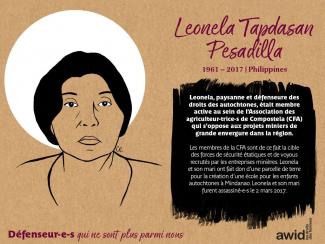
Leonela Tapdasan Pesadilla
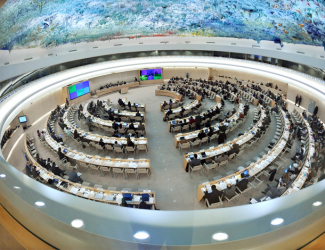
The Human Rights Council (HRC) is the key intergovernmental body within the United Nations system responsible for the promotion and protection of all human rights around the globe. It holds three regular sessions a year: in March, June and September. The Office of the UN High Commissioner for Human Rights (OHCHR) is the secretariat for the HRC.
Debating and passing resolutions on global human rights issues and human rights situations in particular countries
Examining complaints from victims of human rights violations or activist organizations on behalf of victims of human rights violations
Appointing independent experts (known as “Special Procedures”) to review human rights violations in specific countries and examine and further global human rights issues
Engaging in discussions with experts and governments on human rights issues
Assessing the human rights records of all UN Member States every four and a half years through the Universal Periodic Review
AWID works with feminist, progressive and human rights partners to share key knowledge, convene civil society dialogues and events, and influence negotiations and outcomes of the session.
มี! ขณะนี้พวกเรากำลังค้นหานวัตกรรมทางเทคโนโลยีที่จะช่วยให้เกิดการเชื่อมต่อและการเข้าร่วมอย่างมีความหมาย
Check Out our Super Short Guide To Organising Global Feminist Festivals And Online Events!
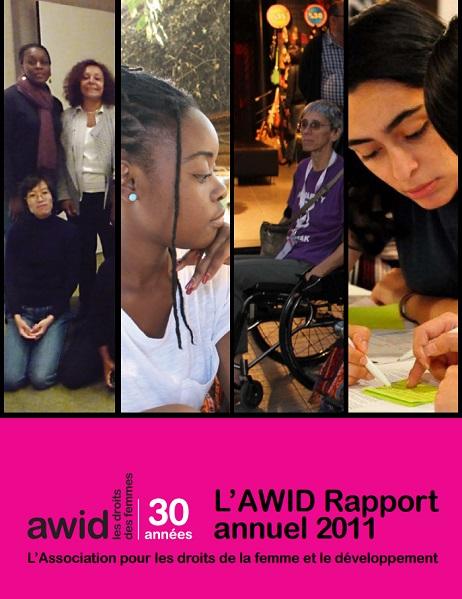
Chaque programme comporte plusieurs volets, y compris le développement et la diffusion de connaissances, la recherche-action, les plaidoyers, l’établissement d’alliances et l’organisation de dialogues stratégiques.
Notre Rapport Annuel 2011 vous proposent un sommaire des principales réalisations pendant l'année, dans le cadre de chacune des programmes de l’AWID.
Ven a conocer las economías feministas que AMAMOS.
Cuando hablamos de economía, hablamos de cómo organizamos nuestras sociedades, nuestros hogares y lugares de trabajo. ¿Cómo vivimos juntxs? ¿Cómo producimos alimentos, organizamos los cuidados y aseguramos nuestra salud? La economía también se trata de cómo accedemos y gestionamos recursos, cómo nos relacionamos con otras personas, con nosotrxs mismxs y con la Naturaleza.
Lxs feministas han estado construyendo alternativas económicas a los sistemas capitalistas explotadores durante siglos. Estas alternativas existen en el aquí y el ahora, y son los pilares de los mundos más justos y más sostenibles que necesitamos y merecemos.
Nos emociona compartir contigo una muestra de alternativas económicas feministas, con colectivos inspiradores de todo el mundo.
AWID is pleased to share our 2016 Annual Report.
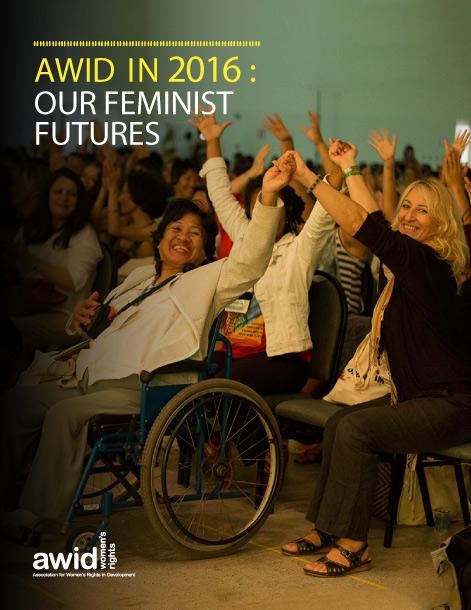
2016 was an incredible year for AWID, we convened the 13th International AWID Forum in Bahia, Brazil, a space for strategizing and alliance building with feminists and other justice movements, which was attended by over 1800 participants from 120 countries and territories across the globe.
We know that women’s rights and feminist movements are key actors in creating sustainable transformative change. Within our movements, organizing, resisting and responding to the challenging context is sharpening, and in our increasingly connected world, the potential for collective action across diverse movements has dramatically grown.
This is the crucial work that AWID seeks to amplify and support every day.
A highlight of 2016 was our ground-breaking 13th International Forum with the theme: “Feminist Futures: Building Collective Power for Rights and Justice”, where we harnessed the thinking and energy of nearly 500 partners, presenters, panelists, moderators, artivists, writers, facilitators, IT innovators, and performers, many of them leaders in their movements. We also supported the convening of the first and historical Black Feminisms Forum (BFF) organised by a working group of Black Feminists from across the world.
AWID, in partnership with other feminist and women’s rights organisations, engaged in advocacy and dialogue to explore better solutions for women’s rights agendas including our work with the Count Me In! consortium .
The experiences of women with disabilities, Black and Afro-descendant women, sex workers, Indigenous women, trans and intersex people, domestic workers and how their lives are impacted by multiple oppressions and violence were placed front and center of the Forum process.
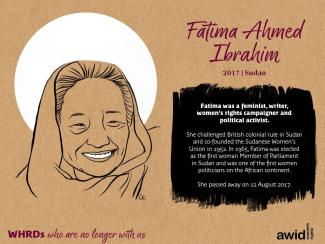
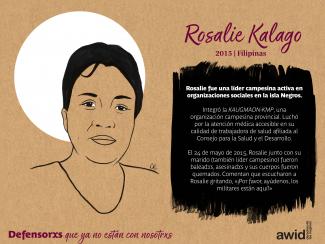
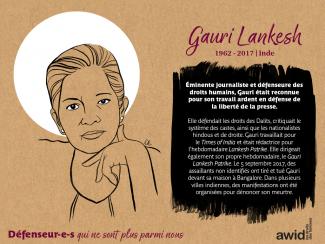
We also launched the 2016 WHRD Tribute to commemorate defenders who are no longer with us, during the 16 Days of activism, and thanks to the contributions from our members,
We drove attention to groups and issues that do not usually receive adequate mainstream media coverage through our partnership with The Guardian and Mama Cash.

Source: Censo De População de Rua, Prefeitura de São Paulo
 |
Bâtiments abandonnés/vacants |
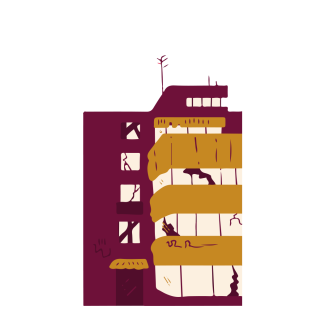 |
||
Personnes vivant dans la rue |
||||
|
31,000 |
40.000 |
In 2021, AWID, along with many other organizations, was coming to grips with the implications of the on-going global pandemic for how we work and our role in this particular time. The year taught us three critical lessons about navigating this moment as a global feminist movement-support organization.
Download the full 2021 Annual review
Our experience in 2021 reaffirmed the importance of building and sustaining a global feminist community, and AWID’s core mission to support feminist movements as a whole. We believe that at this moment, a strong community bound by a shared vision and collective care is the foundation of all social change and transformation.
Contenu lié
Reporters sans frontières: Inde : La journaliste Gauri Lankesh sauvagement assassinée à son domicile
📅Wednesday, March 13 🕒10.30am-12pm EST
Organisers: AWID, ESCR-Net, Franciscan International, Womankind Worldwide as part of Feminists For a Binding Treaty
🏢 Church Center of the United Nations, 777 United Nations Plaza, New York, 11th Floor
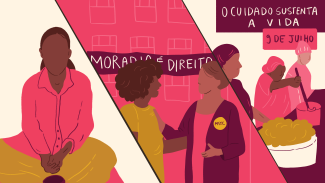
Housing is a right | Care sustains Life
Stephanie Bracken est une féministe qui se consacre à la construction et au soutien de systèmes solides qui répondent aux besoins du moment et des personnes qui interagissent avec eux, tout en servant les principes de justice. Elle est titulaire d'un master en droits humains de l'Université de Sydney et d'une licence en études de genre, histoire et philosophie de l'Université McGill. Elle possède une expérience de travail avec des organisations féministes et de justice sociale dans les domaines du suivi, de l'évaluation et de l'apprentissage, de la planification stratégique du travail, de la gouvernance, de la gestion de projet et de la création de systèmes et de processus opérationnels. Stephanie est basée à Tiohtià:ke/Montréal, où elle aime chanter avec d’autres, camper, pratiquer les arts textiles et passer du temps avec ses enfants et sa communauté.
