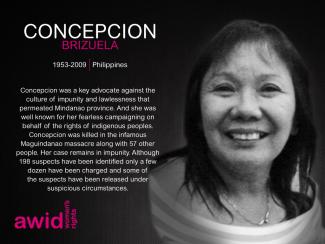
Concepcion Brizuela
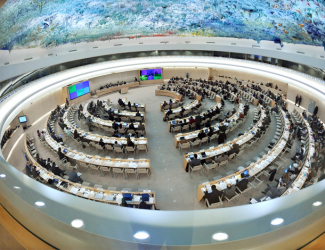
The Human Rights Council (HRC) is the key intergovernmental body within the United Nations system responsible for the promotion and protection of all human rights around the globe. It holds three regular sessions a year: in March, June and September. The Office of the UN High Commissioner for Human Rights (OHCHR) is the secretariat for the HRC.
Debating and passing resolutions on global human rights issues and human rights situations in particular countries
Examining complaints from victims of human rights violations or activist organizations on behalf of victims of human rights violations
Appointing independent experts (known as “Special Procedures”) to review human rights violations in specific countries and examine and further global human rights issues
Engaging in discussions with experts and governments on human rights issues
Assessing the human rights records of all UN Member States every four and a half years through the Universal Periodic Review
AWID works with feminist, progressive and human rights partners to share key knowledge, convene civil society dialogues and events, and influence negotiations and outcomes of the session.
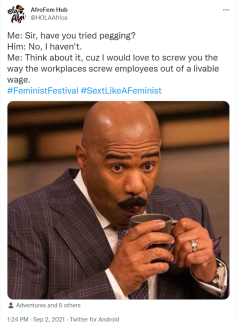
Yo: Señor, ¿probó por el culo?
Él: No, no probé.
Yo: Piénselo, porque me gustaría cogérmelo / joderlo tal como a lxs trabajadorxs nos cogen / joden en los trabajos cuando lo que nos pagan no alcanza para vivir.
Como organizadorx, puedes proponer hasta dos (2) actividades, y también puedes asociarte en otras propuestas.
A nomad of cultures, born in Hong Kong, rooted in Turkish-Pakistani heritage, Fatima’s love for narratives - both in reading and co-creating them - fueled her passion for communications activism. Supported by her education in journalism, Fatima has worked for 7 years in digital and media communications fields with NGOs that provide education opportunities and legal aid to refugee and asylum seekers, as well as with the Muslim feminist movement which applies feminist and rights-based lenses in understanding and searching for equality and justice within Muslim legal tradition. She is a regular op-ed writer on feminist issues in the Global South.
Through storytelling in this hyper-digital age of social media, Fatima continues to collaborate with community organizers and grassroots activists to create audiovisual content with the aim to cultivate bridges of understanding towards collective liberation and decolonization. On days when she’s not working, she intently watches independent feminist films coming from Iran, Morocco and Pakistan and on other days, she performs spoken word poetry with her comrades in Kuala Lumpur.
Moriviví is a collective of young female artists, working on public art since April 2013. Based in Puerto Rico, we’ve gained recognition for the creation of murals and community led arts.
Le processus et la date limite de soumission sont exactement les mêmes. Merci d’utiliser le même formulaire, que l’activité proposée ait lieu en personne, en ligne ou un mélange des deux (format hybride).
Nana es una organizadora feminista e investigadora en derechos reproductivos y políticas demográficas que reside en Egipto. Es miembro de RESURJ (organización feminista por la justicia sexual y reproductiva), del Órgano Asesor del Proyecto A del Líbano y de la Comisión de la Comunidad de Mama Cash. Nana tiene una maestría en Salud Pública del Instituto KIT y la Universidad Vrije de Ámsterdam. En su trabajo, da seguimiento y contextualiza las políticas demográficas nacionales, al tiempo que reúne información para abordar la eugenesia moderna, las ayudas internacionales de carácter regresivo y el autoritarismo. Anteriormente, formó parte de la Fundación de Ginebra para la Educación y la Investigación Médica, la Iniciativa Egipcia para los Derechos Personales y el Colectivo Feminista Ikhtyar de El Cairo.
En colaboración con la artista Naadira Patel, creamos un álbum que resalta algunos momentos de las últimas cuatro décadas de apoyo a los movimientos feministas por parte de AWID.
เวทีการประชุมนานาชาติ AWID เป็นทั้งกิจกรรมชุมชนระดับโลกและพื้นที่ของการเปลี่ยนแปลงของปัจเจก บุคคลอย่างสิ้นเชิง เป็นการประชุมที่ไม่เหมือนใคร คือเป็นที่รวบรวมนักสตรีนิยม นักปกป้องสิทธิสตรี ความยุติธรรมทางเพศ LBTQI+ และพันธมิตรในขบวนการเคลื่อนไหวเพื่อมนุษยชาติอันหลากหลาย เพื่อเชื่อมต่อ เยียวยาและเติบโต เวทีนานาชาตินี้เป็นพื้นที่ที่นักสตรีนิยมจากทั่วทุกมุมโลก รวมถึงจากประเทศในกลุ่มโลกใต้ และชุมชนชายขอบที่ไม่ได้รับการเหลียวแลมาอย่างยาวนาน เป็นศูนย์กลางในการวาง ยุทธศาสตร์ร่วมกัน และเคลื่อนไหวเพื่อความยุติธรรมทางสังคม เพื่อเปลี่ยนอำนาจ สร้างพันธมิตร และ สร้างโลกที่แตกต่างและดีขึ้น
เมื่อผู้คนทั่วโลกมารวมตัวกันทั้งในฐานะปัจเจกบุคคลและองค์กรเคลื่อนไหว เราสามารถสร้างพลังอันยิ่งใหญ่ จึงขอเชิญท่านร่วมกิจกรรมกับเราที่กรุงเทพฯ ประเทศไทยในปี 2567 มาร้องเพลง เต้นรำ วาดฝัน และลุกขึ้นพร้อมกัน
วันที่: 2–5 ธันวาคม 2567
สถานที่: กรุงเทพฯ ประเทศไทย; และทางออนไลน์
ผู้เข้าร่วม: นักสตรีนิยมจากทั่วโลกเข้าร่วมด้วยตนเอง ณ สถานที่จัดงานประมาณ 2,500 คน และเข้าร่วม
ทางออนไลน์ 3,000 คน
AWID surgió en 1982 y se ha ido transformando con el paso de los años en una verdadera organización mundial.
Leer «From “WID” to “GAD” to Women’s Rights: The First Twenty Years of AWID» (en inglés)
L’AWID, le Centre pour le leadership mondial des femmes (CWGL en anglais) et le Réseau de Développement et de Communication des Femmes Africaines (FEMNET), proposent ce document de réflexion pour questionner les concepts traditionnels liés au développement. Il inclut également une série de propositions pour un programme féministe en faveur de la justice de genre, de la justice économique et de la justice en matière de développement.
En savoir plus sur les origines du projet
Ces propositions sont formulées pour être discutées, débattues, mises en pièces, adaptées, adoptées ou encore pour en inspirer d’autres.
L’AWID œuvre à renforcer la justice de genre et les droits humains des femmes.
Nous travaillons à renforcer les voix et l'impact des défenseuses des droits humains, des organisations et des mouvements.
Nos Domaines prioritaires sont étroitement liés aux réalités internationales. Ils sont le reflet de situations de plus en plus précaires qui sapent les droits des femmes à l’échelle mondiale.
Felogene Anumo, AWID
Dr. Vandana Shiva, India
Dr. Dilar Dirik, Kurdistan
Nana Akosua Hanson, Ghana
In fact, 38% of our members are under the age of 30.
We believe that young feminists are both the present and the future of the struggle for women’s rights. We promote young leaders in the global women’s rights movement and our Young Feminist Activism program cuts across all aspects of our work.
At the same time, by defining young feminist activists as one of our Priority Areas, we contribute new analysis to current debates and ensure that young feminist activists are able to articulate their priorities and voice their concerns.