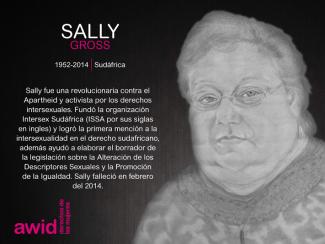
Sally Gross
WHRDs are self-identified women and lesbian, bisexual, transgender, queer and intersex (LBTQI) people and others who defend rights and are subject to gender-specific risks and threats due to their human rights work and/or as a direct consequence of their gender identity or sexual orientation.
WHRDs are subject to systematic violence and discrimination due to their identities and unyielding struggles for rights, equality and justice.
The WHRD Program collaborates with international and regional partners as well as the AWID membership to raise awareness about these risks and threats, advocate for feminist and holistic measures of protection and safety, and actively promote a culture of self-care and collective well being in our movements.
WHRDs are exposed to the same types of risks that all other defenders who defend human rights, communities, and the environment face. However, they are also exposed to gender-based violence and gender-specific risks because they challenge existing gender norms within their communities and societies.
We work collaboratively with international and regional networks and our membership
We aim to contribute to a safer world for WHRDs, their families and communities. We believe that action for rights and justice should not put WHRDs at risk; it should be appreciated and celebrated.
Promoting collaboration and coordination among human rights and women’s rights organizations at the international level to strengthen responses concerning safety and wellbeing of WHRDs.
Supporting regional networks of WHRDs and their organizations, such as the Mesoamerican Initiative for WHRDs and the WHRD Middle East and North Africa Coalition, in promoting and strengthening collective action for protection - emphasizing the establishment of solidarity and protection networks, the promotion of self-care, and advocacy and mobilization for the safety of WHRDs;
Increasing the visibility and recognition of WHRDs and their struggles, as well as the risks that they encounter by documenting the attacks that they face, and researching, producing, and disseminating information on their struggles, strategies, and challenges:
Mobilizing urgent responses of international solidarity for WHRDs at risk through our international and regional networks, and our active membership.
Mariam Mekiwi is a filmmaker and photographer from Alexandria and living and working in Berlin.
Michelle est une féministe d'Asie du Sud-Est qui aime concerterer pour rassembler des gens et susciter des conversations en faveur du changement social et du partage des connaissances féministes, à travers l'art, la poésie, la musique et les jeux. Forte d'une expérience en plaidoyer digital et en développement de stratégies de communication, elle a contribué à des initiatives en matière de droits digitaux, de recherche sur les droits humains et de création de coalitions de la société civile dans toute l'Asie du Sud-Est. Elle est titulaire d'une licence de droit de l'Université nationale de Singapour, aime se balader dans des rues au hasard de la ville et apprécie un peu trop le café.
During her 38-year career, Debbie Stothard, has worked with diverse communities and activists to engage states, IGOs and other stakeholders throughout Asia, Africa, Europe, and the Americas on human rights and justice. Her work is focused on the thematic priorities of business and human rights, atrocity prevention, and women’s leadership. Accordingly, she has either facilitated or been a resource person at nearly 300 training events in the past 15 years. Most of these were grassroots-oriented workshops delivered in the field, focused on human rights advocacy, economic literacy and business and human rights, and transitional justice and atrocity prevention. Her work in transitional justice and atrocity prevention has mainly focused on Burma/Myanmar, however she has provided advice on responses to other country situations around the world.
During 1981 – 1996, Debbie worked as a crime reporter, student organizer, policy analyst, academic, government advisor and food caterer in Malaysia and Australia while volunteering for human rights causes. In 1996, she founded ALTSEAN-Burma which spearheaded a range of innovative and empowering human rights programs. This includes ALTSEAN’s ongoing intensive leadership program for diverse young women from Burma, which in the past 22 years, has helped strengthen and expand women’s leadership in conflict-affected zones. She served as a member of the Board of the International Federation for Human Rights (FIDH) for 9 years as Deputy Secretary-General (2010-2013) and Secretary-General (2013 – 2019) during which she promoted the mission and profile of FIDH at approximately 100 meetings and conferences per year.
« C’est peut-être le moment de repenser à ce à quoi peut ressembler une révolution. Peut-être qu’elle ne ressemble pas à une marche de personnes handicapées en colère dans les rues. Peut-être ressemble-t-elle plutôt à un monde qui s’immobilise parce que tous les corps qui le composent sont épuisés – parce qu’il faut donner la priorité aux soins avant qu’il ne soit trop tard. »- Johanna Hedva
Les hôpitaux sont des institutions, des sites vivants du capitalisme, et ce qui se joue lorsque quelqu’un est censé se reposer est un microcosme du système lui-même.
Les institutions sont conçues pour nous séparer de nos systèmes de soins – nous nous retrouvons isolé.e.s dans des structures rigidement hiérarchisées, et nous avons souvent l’impression que les soins nous sont imposés plutôt que donnés ou pris dans le cadre d’une conversation. Les soins institutionnels, du fait de leur intégration dans la demande capitaliste, sont cloisonnés : une personne s’occupe de votre jambe et uniquement de votre jambe, une autre s’occupe de votre tension artérielle, etc.
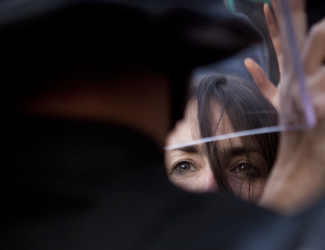
La photographe Mariam Mekiwi a dû subir une opération le mois dernier et documenté le processus. Ses portraits d’environnements aseptisés – néons blancs, rangées et rangées de structures répétitives – dans une palette de couleurs délavées reflètent un lieu vidé de toute vie et de tout mouvement. C’était l’une des façons pour Mariam de garder son esprit vivant. C’était une forme de protestation à l’intérieur des limites d’une institution avec laquelle elle devait s’engager.
Les photos forment le portrait de quelque chose d’incroyablement vulnérable, car regarder quelqu’un·e vivre l’effondrement de son propre corps est toujours un rappel sacré de notre propre fragilité. C’est aussi un rappel de la fragilité de ces systèmes de soins, qui peuvent nous être refusés pour de multiples raisons – allant du manque d’argent au fait de ne pas être dans un corps considéré comme suffisamment précieux, un corps peut-être trop féminin, trop homosexuel ou trop brun.
Des soins vécus comme désincarnés et solitaires, susceptibles d’être révoqués à tout moment, ne nous aident pas à nous épanouir. Et c’est très différent de la façon dont les êtres humains se comportent réellement lorsqu’iels prennent soin les un.e.s des autres. À quoi ressemblerait notre monde si nous nous engagions à démanteler les structures capitalistes actuelles qui entourent notre santé? À quoi ressemblerait-il, si nous le réimaginions radicalement?
Jemimah Naburri-Kaheru est une stratège internationale accomplie en matière de ressources humaines à impact profond dans la région de la Corne de l'Afrique. Jemimah était auparavant responsable régionale des ressources humaines et du bureau de l'Initiative stratégique pour les femmes dans la Corne de l'Afrique (SIHA) . Son influence s’est étendue jusqu’à la direction des ressources humaines de plus de 70 employé·e·s régionaux·ales, alors que l'organisation connaissait une croissance rapide, avec une augmentation de 40 % de ses revenus annuels. Tout au long de sa carrière, Jemimah a orchestré avec succès des efforts de recrutement, introduit des systèmes de performance basés sur le mérite, de même que supervisé les relations avec les employé·e·s et les politiques RH. Elle a joué un rôle central dans le soutien aux stratégies mondiales de personnel. Avec une formation universitaire en Études de Développement de l'Université de Makerere (Ouganda) et un Master en Gestion des Ressources Humaines, Jemimah est évidemment engagée envers le développement professionnel. Sa contribution à des effectifs hautement performants et à un leadership international en matière de ressources humaines la positionne comme un atout inestimable dans toute entreprise mondiale.
|
Co-editeurices Création graphique et illustration Stratège des communications Editrice de la langue arabe Responsable de la traduction
Relecture |
Traduction arabe
Relecture
Relecture |
Khaoula Ksiksi is a passionate advocate for justice, equity, and liberation. As a Gender, Equality, Diversity, and Inclusion (GEDI) Advisor, she works to make inclusivity a lived reality, not just a policy, across humanitarian programs and crisis contexts. She collaborates with teams to challenge structural oppression using bold, transformative tools rooted in lived experience.
Her activism began on the frontlines of Tunisia’s anti-racism movement. With Mnemty, she helped push through the country’s first anti-discrimination law, forcing a national reckoning with racial injustice. She later co-founded Voices of Black Tunisian Women to amplify Black women’s leadership, build solidarity networks, and demand visibility in a society that often silences them.
Khaoula is also a founding member of Falgatna, a radical queer-feminist movement fighting for SOGIESC rights and supporting LGBTQI+ communities through direct action, digital resistance, and survivor-centered advocacy.
Previously, she led regional feminist and climate justice projects at the Rosa Luxemburg Foundation in North and West Africa.
At the heart of her work is a deep belief: no one is free until we all are. Her activism is both a fight and a love letter to her people, her communities, and the world we deserve.
Como organizadorx, puedes proponer hasta dos (2) actividades, y también puedes asociarte en otras propuestas.
ترجمة مايا زبداوي
We work to achieve gender justice and women’s human rights by strengthening the collective voice, impact and influence of global women’s rights advocates, organizations and movements.
Le processus et la date limite de soumission sont exactement les mêmes. Merci d’utiliser le même formulaire, que l’activité proposée ait lieu en personne, en ligne ou un mélange des deux (format hybride).
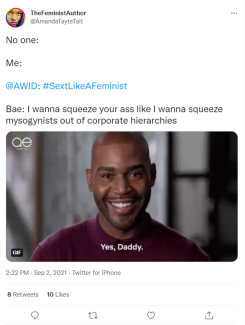
رغبتي في الانقضاض على جسدك تعادل رغبتي بالانقضاض على كراهية النساء المتجذرة في التسلسلات الهرمية للشركات