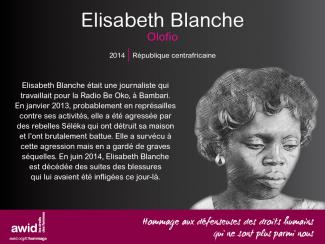
Elisabeth Blanche Olofio
WHRDs are self-identified women and lesbian, bisexual, transgender, queer and intersex (LBTQI) people and others who defend rights and are subject to gender-specific risks and threats due to their human rights work and/or as a direct consequence of their gender identity or sexual orientation.
WHRDs are subject to systematic violence and discrimination due to their identities and unyielding struggles for rights, equality and justice.
The WHRD Program collaborates with international and regional partners as well as the AWID membership to raise awareness about these risks and threats, advocate for feminist and holistic measures of protection and safety, and actively promote a culture of self-care and collective well being in our movements.
WHRDs are exposed to the same types of risks that all other defenders who defend human rights, communities, and the environment face. However, they are also exposed to gender-based violence and gender-specific risks because they challenge existing gender norms within their communities and societies.
We work collaboratively with international and regional networks and our membership
We aim to contribute to a safer world for WHRDs, their families and communities. We believe that action for rights and justice should not put WHRDs at risk; it should be appreciated and celebrated.
Promoting collaboration and coordination among human rights and women’s rights organizations at the international level to strengthen responses concerning safety and wellbeing of WHRDs.
Supporting regional networks of WHRDs and their organizations, such as the Mesoamerican Initiative for WHRDs and the WHRD Middle East and North Africa Coalition, in promoting and strengthening collective action for protection - emphasizing the establishment of solidarity and protection networks, the promotion of self-care, and advocacy and mobilization for the safety of WHRDs;
Increasing the visibility and recognition of WHRDs and their struggles, as well as the risks that they encounter by documenting the attacks that they face, and researching, producing, and disseminating information on their struggles, strategies, and challenges:
Mobilizing urgent responses of international solidarity for WHRDs at risk through our international and regional networks, and our active membership.
Margarita est une militante féministe et LGBTIQA d'Amérique latine. Elle est passionnée de transformation sociale et de bien-être collectif. Elle est titulaire de diplômes en psychologie, communication et en administration publique, ainsi que de certificats en politiques publiques, leadership, gestion et prise de décision. Durant son parcours professionnel, Margarita a acquis une vaste expérience auprès d'organisations de terrain, d'ONG nationales et régionales, d'universités et du secteur public, développant la facilitation, le renforcement des capacités, le plaidoyer politique, la communication et l'évaluation des politiques.
Los hospitales son instituciones, espacios vivientes del capitalismo, y lo que se manifiesta cuando alguien está supuestamente haciendo reposo allí es un microcosmos del sistema en que vivimos.
At the time of her death, following a short but aggressive battle with cancer, Deborah was the Chief Communication and Engagement Officer at the Women’s Funding Network (WFN).
Deborah also worked for the Global Fund for Women from 2008 to 2017. Deborah was extremely loved and respected by board, staff, and partners of Global Fund for Women.
Kavita Ramdas, former CEO of the Global Fund for Women aptly noted that Deborah was “a small package exploding with warmth, generosity, intelligence, style, and a passionate commitment to fusing beauty with justice. She understood the power of story. The power of women’s voice. The power of lived experience. The power of rising from the ashes and telling others it was possible. And, still we rise.”
Musimbi Kanyoro, the present CEO of the Global Fund for Women, added, “We have lost a sister and her life illuminates values that unite and inspire us all. As we all come together to mourn Deborah’s passing, let us remember and celebrate her remarkable, bold, and passionate life.”


Faye is a passionate Pan-African feminist, active in movements for women's rights, racial justice, migrant and labor rights, and environmental justice. Her activism builds on the legacy of the struggle against apartheid in South Africa and the aftermath of the apartheid era in Zimbabwe.
In 2019, Faye joined AWID as the Director of Finance, Operations and Development, and strived to ensure that AWID upholds the feminist principles and values in all of its operations. She brings over 20 years of experience in feminist leadership, strategy, and all aspects of finance and organizational development.
Faye is a committed Board Member of UAF-Africa and other women's rights organizations. She previously held a Head of Finance and Operations roles at Paediatric Adolescent Treatment for Africa and JASS - Just Associates Inc. in Southern Africa. She also held Directorship roles for International Computer Driving Licence (ICDL) in Central and Southern Africa. She holds a Bcompt in Accounting Science from University of South Africa and is a member of the Southern African Institute for Business Accountants.
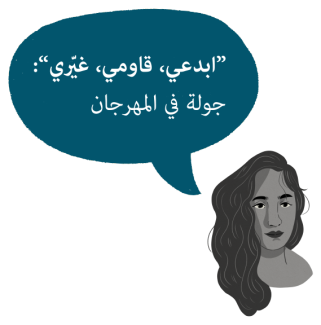
غوى صايغ كاتبة كويرية آناركية، وناشرة مستقلة ومؤرشفة. هي المحرّرة المؤسِّسة لمجلّة “كحل” ومؤسِّسة شريكة لـ”منشورات المعرفة التقاطعية”. حصلت على ماجستير في الدراسات الجندرية من جامعة باريس 8 فينسين - سانت دينيس. إنها شغوفة بنظرية الكوير، والمنشورات الدورية العابرة للحدود القومية، والتاريخ المتخيل أو المجهول. أودري لورد وسارة أحمد هما ملهمتاها.
Carmen encabezaba el Construction Resource and Development Collective (CRDC, Colectivo de recursos para la construcción y el desarrollo) y fue fundamental para apoyar la participación de las mujeres en la industria de la construcción en Jamaica.
También trabajó con mujeres rurales y urbanas en temas relacionados a la preparación para afrontar desastres naturales. Trabajó de manera cercana con mujeres (especialmente madres solteras) enseñándoles cómo usar los cinturones para huracanes y otras tecnologías para poner sus hogares a resguardo. Trabajó en el área de agua y obras sanitarias y fue una fuerte defensora del manejo y desarrollo ambientalmente sustentable.
Fue parte de la Comisión Huairou y realizó incidencia en favor de las mujeres de base en temas vinculados a refugio, energía y medios de vida sustentables.

Juhi es una entusiasta de las tecnologías. Posee una licenciatura en Ingeniería Informática de la Universidad Tecnológica de Gujarat y formación de posgrado en Telecomunicaciones Inalámbricas y Gestión de Proyectos del Instituto Universitario Humber. Apasionada de la resolución de problemas y de mantenerse a la vanguardia en el panorama tecnológico en constante evolución, Juhi se ha encontrado recorriendo diversas industrias como técnica en Tecnologías de la Información. Ha tenido oportunidad de aplicar sus competencias técnicas en distintos entornos, siempre abrazando los nuevos desafíos con entusiasmo. Más allá de los códigos y los circuitos, le encantan las aventuras de la vida. Explorar nuevos lugares y culturas es para ella una bocanada de aire fresco. Ya sea que se trate de descubrir alguna joya oculta en la ciudad, de probar algún plato exótico o de embarcarse en algún deporte de aventura, Juhi siempre está predispuesta a vivir nuevas experiencias.
تشينيلو أونوالو، مستشارة في الشؤون التحرِيرية، مع 10 سنوات من الخبرة في صياغة الاتصالات الاستراتيجية للمنظمات غير الربحية في جميع أنحاء العالم. من بين عملائها منظمة ActionAid Nigeria و BBC World Trust و Open Society Initiative for West Africa و AWID. حائزة على درجة الماجستير في الصحافة من جامعة سيراكيوز. عملت كاتبة ومحررة وباحثة في نيجيريا وكندا والولايات المتحدة. وهي أيضًا محررة في مجلة Anathema والمؤسس المشارك في Omenana، وهي مجلة من قصص الخيال الأفريقي. ظهرت قصصها القصيرة في العديد من المختارات الحائزة على جوائز، ورُشّحت لجوائز الخيال العلمي البريطانية، وجوائز نومو للخيال الأفريقي المضارب، وجائزة يوم القصة الافريقية القصيرة. تشينيلو من نيجيريا لكنها تعيش في تورنتو مع شريكها وطفلها.
Active dans l’organisation Peacebuild, en passant par l'Alliance canadienne féministe pour l'action internationale, Amnesty International et au Centre canadien de politiques alternatives (CCPA), Kate était une passionnée des droits des femmes et de l'égalité de genre qui a consacré sa carrière à lutter contre les inégalités et à faire du monde un lieu plus empathique.
Kate a été membre du comité de coordination de Social Watch et a contribué aux rapports nationaux canadiens de Social Watch. En tant que chercheuse principale du CCPA, Kate a été saluée dans son pays pour ses travaux de recherche, ses écrits et la production du rapport annuel intitulé « Les meilleures et les pires endroits du Canada où vivre en tant que femme ».
Entourée de sa famille, Kate est décédée paisiblement après trois ans de lutte contre le cancer du côlon. Ses proches la décrivent comme une « féministe drôle, sans peur et sans complexes ».

Patience est une professionnelle internationale des ressources humaines avec plus d'une décennie d'expérience dans la gestion des ressources humaines (RH) dans le secteur non lucratif. Elle a travaillé auparavant chez Mercy Corps en tant que responsable générale des ressources humaines pour l'Afrique. Elle y a appuyé le cycle de vie complet des employé·e·s expatrié·e·s dans la région de l'Afrique de l'Est et de l'Afrique australe et fourni des conseils techniques RH aux responsables des ressources humaines dans les bureaux nationaux de la région africaine. Avant de rejoindre l'équipe internationale des ressources humaines, elle agissait en tant que point focal national ressources humaines et protection, et faisait partie de l'équipe de direction qui traitait de toutes les questions de ressources humaines et de protection. Avant de rejoindre Mercy Corps, elle dirigeait le département des ressources humaines et des opérations de l'organisation de développement des Pays-Bas SNV et était membre de l'équipe de direction nationale. Elle possède également une expérience de consultance en ressources humaines qu'elle a acquise alors qu'elle étudiait encore pour sa licence spécialisée en gestion des ressources humaines. Elle est passionnée de RH, aime travailler avec les gens et considère le bien-être et la protection dans ses valeurs fondamentales et son travail professionnel. Amatrice de sport, Patience peut également être aperçue sur un terrain de basket, un court de tennis ou encore un terrain de football.
#MeToo in China Exhibition was first held in 2019 and toured in 5 cities. The aim of the exhibition is to bring the personal experiences of the victims and activists to greater prominence and, through engagement with these stories, to inspire our audience to join in the fight. The exhibition has itself become a part of the #MeToo struggle—the exhibition has been beset by challenges on its tour throughout China, on more than one occasion even facing closure.
An expert on social development and anthropologist by training, Mary was best known as a pioneer in the battle against Female Genital Mutilation (FGM).
Born in Cairo Egypt in 1922, Mary’s work in development started early, as she joined the Youth Women’s Christians’ Association (YWCA). Mary was a member of the World Council of Churches and became increasingly concerned with issues regarding women’s health. Her long struggle against FGM proved fruitful in 2008, when Egypt finally criminalized the practice.
She is remembered as a mentor to many Egyptian feminists and activists.

Ȃurea Mouzinho is a feminist economic justice organizer from Luanda, Angola, with a 10-year career in research, grant-making, advocacy, and movement-building for women's rights and economic justice across Africa and the global south. Currently the Program Manager for Africa at Thousand Currents, she also serves on the Feminist Africa Editorial Board and is a member of Ondjango Feminista, a feminist collective she co-founded in 2016. A new mom to a Gemini boy, Ȃurea enjoys slow days with her young family and taking long strolls by the beach.
She occasionally tweets at @kitondowe.
Ika Vantiani es una artista, curadora y artesana de Yakarta, Indonesia. Su obra explora la idea de ser mujer en la sociedad actual, en la cual los medios de comunicación y el consumo están entretejidos. Ika usa la disciplina del collage, y la expande al arte callejero, a talleres e instalaciones. Integra colectivos artísticos tales como Micro Galleries, The Collage Club y It’s In Your Hands Collective.