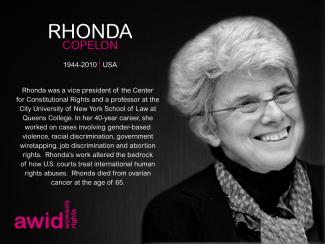
Rhonda Copelon
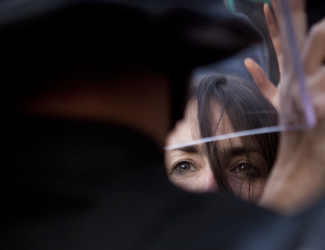
WHRDs are self-identified women and lesbian, bisexual, transgender, queer and intersex (LBTQI) people and others who defend rights and are subject to gender-specific risks and threats due to their human rights work and/or as a direct consequence of their gender identity or sexual orientation.
WHRDs are subject to systematic violence and discrimination due to their identities and unyielding struggles for rights, equality and justice.
The WHRD Program collaborates with international and regional partners as well as the AWID membership to raise awareness about these risks and threats, advocate for feminist and holistic measures of protection and safety, and actively promote a culture of self-care and collective well being in our movements.
WHRDs are exposed to the same types of risks that all other defenders who defend human rights, communities, and the environment face. However, they are also exposed to gender-based violence and gender-specific risks because they challenge existing gender norms within their communities and societies.
We work collaboratively with international and regional networks and our membership
We aim to contribute to a safer world for WHRDs, their families and communities. We believe that action for rights and justice should not put WHRDs at risk; it should be appreciated and celebrated.
Promoting collaboration and coordination among human rights and women’s rights organizations at the international level to strengthen responses concerning safety and wellbeing of WHRDs.
Supporting regional networks of WHRDs and their organizations, such as the Mesoamerican Initiative for WHRDs and the WHRD Middle East and North Africa Coalition, in promoting and strengthening collective action for protection - emphasizing the establishment of solidarity and protection networks, the promotion of self-care, and advocacy and mobilization for the safety of WHRDs;
Increasing the visibility and recognition of WHRDs and their struggles, as well as the risks that they encounter by documenting the attacks that they face, and researching, producing, and disseminating information on their struggles, strategies, and challenges:
Mobilizing urgent responses of international solidarity for WHRDs at risk through our international and regional networks, and our active membership.
نعم، انه متاح للأشخاص أصحاب/ صاحبات الإعاقات السمعية، البصرية، النظرية والفكرية المختلفة.
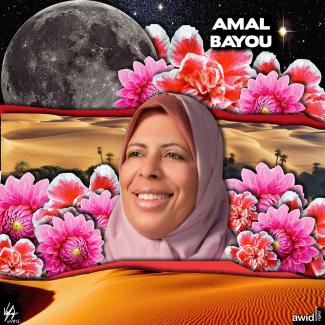
Amal était une femme politique et une parlementaire de premier plan en Libye.
Membre du corps professoral de l'Université de Benghazi de 1995 jusqu’à sa mort en 2017, elle militait par ailleurs au sein de la société civile et était membre de diverses initiatives sociales et politiques. Elle a aidé les familles des martyrs et des disparus et a été l'une des membres fondateurs-trices d'une initiative de jeunesse intitulée « Jeunesse de Benghazi en Libye ».
Lors des élections législatives de 2014, Amal avait été élue à la Chambre des représentants avec plus de 14 000 voix (le plus grand nombre de voix jamais obtenues aux élections de 2014). Amal restera dans les mémoires de beaucoup comme une femme politique qui a œuvré pour assurer un avenir meilleur dans l'un des contextes les plus difficiles et les plus conflictuels de la région.
Linda Porn es una otra heroína de la organización sindical feminista y del activismo de las trabajadoras sexuales a nivel nacional (en España) y transnacional.
Originaria de México, vive en España desde los años 2000. Es trabajadora sexual, activista, madre soltera y artista multidisciplinar.
Partiendo de estas diferentes identidades, utiliza la performance, el videoarte y el teatro para visibilizar las luchas en las intersecciones del transfeminismo, el trabajo sexual, la migración, el colonialismo y la maternidad. Combina el arte y el trabajo sexual mientras cuida a su hija como madre soltera.
Linda también pertenece a colectivos de trabajadoras sexuales que luchan por sus derechos, como el sindicato OTRAS y CATS Murcia. También cofundó el grupo 'Madrecitas' - que visibiliza y denuncia la violencia institucional racista contra las familias migrantes. Violencia de la que ella y su hija fueron objeto por ser trabajadora sexual y madre soltera migrante.
¡No te pierdas su trabajo artístico aquí!
El Foro de AWID estará organizado alrededor de 6 tópicos interconectados. Estos «ejes» se centran en las realidades feministas.
При необходимости, вы можете сохранить свои ответы и вернуться к опросу позже. Eсли Вы хотите сохранить ответы и вернуться к опросу позже, это можно сделать при условии, что Вы продолжите работу на том же устройстве. KOBO сохранит Ваши ответы в левом верхнем углу страницы опросника и подгрузит Ваш черновик, когда Вы вернетесь к опросу.
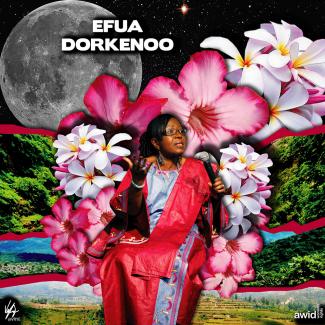
Affectionately known as “Mama Efua”, her work to end Female Genital Mutilation (FGM) movement spanned three decades and helped bring international attention and action to end this harmful practice.
In 1983 Efua co-founded FORWARD (The Foundation for Women’s Health, Research and Development), which became a leading organisation in the battle to raise awareness about FGM. Her 1994 book, “Cutting the Rose: Female Genital Mutilation,” is considered the first on FGM and, featured in Columbia University’s “Africa’s 100 Best Books for the 20th Century”.
Originally from Ghana and a nurse by training, Efua joined the WHO in 1995 and successfully pushed for FGM to go on the agendas of WHO member states. She also worked closely with the Nigerian government in formulating a comprehensive National Policy that laid the groundwork for Nigeria’s anti-FGM laws, still in place today.
Her ground breaking work culminated in an Africa-led campaign, “The Girl Generation,” which is committed to ending FGM within a generation. Efua demonstrated how one person can become the unifying voice for a movement, and her wise words - “shared identity can help bring activists from different backgrounds together with a common sense of purpose” – are more relevant than ever.
Tem o direito de eliminar a sua resposta, por qualquer motivo e se assim o desejar. Queira entrar em contacto connosco através deste formulário, ao indicar "WITM Survey" ("Inquérito WITM") no título da sua mensagem, e iremos proceder à eliminação da sua resposta.
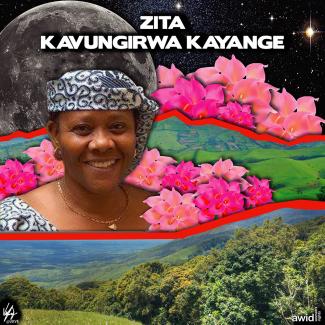
Zita fue una activista por los derechos de las mujeres que defendió los derechos de las mujeres rurales en el Gran Kivu.
Fue la primera directora ejecutiva de UWAKI, una organización de mujeres muy conocida. A través de su trabajo con la Red de Mujeres por los Derechos y la Paz (RFDP) y el Foro de Mujeres por la Paz de Kivu del Sur, dedicó su vida a ayudar a restablecer la paz en la zona oriental de la República Democrática del Congo. Se manifestó firmemente en contra del uso de la violencia sexual como arma de guerra.
En 2006, se propuso como candidata en las primeras elecciones democráticas del país. Aunque no ganó, siguió defendiendo los derechos de las mujeres y la comunidad de Kivu del Sur la recuerda con cariño.
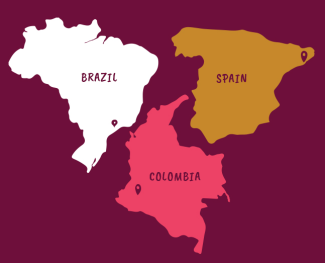
by Amal Amer
I pray with my family for the first time in six years while wrapped in a keffiyah I scavenged from a dumpster. (...)
artwork: “Angels go out at night too” by Chloé Luu >
نعم! الرجاء القيام بذلك! نشجعكم/ن على مشاركة رابط الاستطلاع في شبكاتكم/ن. سيسمح لنا جمع وجهات النظر أكثر تنوعاً، فهم البيئة التمويلية للحركات النسوية بشكل أكبر.
Bessy también fue integrante de Arcoíris, una organización que apoya a la comunidad LGBTI+. También fue una persona de referencia para la Plataforma Derechos Aquí y Ahora de Honduras, y abogó enérgicamente por la ciudadanía plena de las personas trans, y por la aprobación de una ley de identidad de género que permitiera a las personas trans cambiar su identidad de género legalmente.
"Desde principios de año [2019] la comunidad trans ha sufrido una serie de ataques, por defender, por reivindicar derechos". - Rihanna Ferrera (hermana de Bessy)
Bessy era una trabajadora sexual, y a principios de julio de 2019, fue asesinada a tiros por dos hombres mientras trabajaba en las calles de Comayagüela. Quienes la asesinaron fueron posteriormente arrestados.
Bessy es una de las muchxs defensorxs de los derechos LGBTI+ en Honduras que fueron asesinadxs por su identidad y su trabajo. Otras compañeras han sido: Cynthia Nicole, Angy Ferreira, Estefanía "Nia" Zúñiga, Gloria Carolina Hernández Vásquez, Paola Barraza, Violeta Rivas y Sherly Montoya.
El caso de Bessy es emblemático por su injusticia y por reflejar un problema mucho más amplio, que es el de la violencia sistemática a la que se enfrenta la comunidad LGBTI+ en Honduras, ya que el Estado ni garantiza los derechos que ofrece y ni brinda protección. Esto ha creado una cultura de impunidad.
A pesar de los riesgos a los que se enfrentan lxs defensorxs LGBTI+ en Honduras, continúan a diario con su trabajo para desafiar y resistir la violencia, y luchar contra el estigma y la discriminación.
"Si muero, que sea por algo bueno y no por algo inútil. No quiero morir huyendo, como unx cobarde. Si muero, quiero que la gente diga que morí luchando por lo que es mío". - integrante de Arcoíris.
por Fatima B. Derby
En 2017, la campaña de AWID #PracticaSolidaridad destacó cómo lxs jóvenes feministas podían construir un futuro feminista apoyándose mutuamente, participando en conversaciones interregionales entre ellxs, marchando en solidaridad con otrxs activistas y abriendo canales de colaboración entre los movimientos. (...)
< arte: «Let it Grow» [Déjalo crecer], Gucora Andu