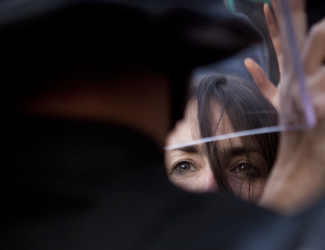
Philippe Leroyer | Flickr (CC BY-NC-ND 2.0)

Women Human Rights Defenders

WHRDs are self-identified women and lesbian, bisexual, transgender, queer and intersex (LBTQI) people and others who defend rights and are subject to gender-specific risks and threats due to their human rights work and/or as a direct consequence of their gender identity or sexual orientation.

WHRDs are subject to systematic violence and discrimination due to their identities and unyielding struggles for rights, equality and justice.

The WHRD Program collaborates with international and regional partners as well as the AWID membership to raise awareness about these risks and threats, advocate for feminist and holistic measures of protection and safety, and actively promote a culture of self-care and collective well being in our movements.


Risks and threats targeting WHRDs  

WHRDs are exposed to the same types of risks that all other defenders who defend human rights, communities, and the environment face. However, they are also exposed to gender-based violence and gender-specific risks because they challenge existing gender norms within their communities and societies.

By defending rights, WHRDs are at risk of:

  • Physical assault and death
  • Intimidation and harassment, including in online spaces
  • Judicial harassment and criminalization
  • Burnout

A collaborative, holistic approach to safety

We work collaboratively with international and regional networks and our membership

  • to raise awareness about human rights abuses and violations against WHRDs and the systemic violence and discrimination they experience
  • to strengthen protection mechanisms and ensure more effective and timely responses to WHRDs at risk

We work to promote a holistic approach to protection which includes:

  • emphasizing the importance of self-care and collective well being, and recognizing that what care and wellbeing mean may differ across cultures
  • documenting the violations targeting WHRDs using a feminist intersectional perspective;
  • promoting the social recognition and celebration of the work and resilience of WHRDs ; and
  • building civic spaces that are conducive to dismantling structural inequalities without restrictions or obstacles

Our Actions

We aim to contribute to a safer world for WHRDs, their families and communities. We believe that action for rights and justice should not put WHRDs at risk; it should be appreciated and celebrated.

  • Promoting collaboration and coordination among human rights and women’s rights organizations at the international level to  strengthen  responses concerning safety and wellbeing of WHRDs.

  • Supporting regional networks of WHRDs and their organizations, such as the Mesoamerican Initiative for WHRDs and the WHRD Middle East and North Africa  Coalition, in promoting and strengthening collective action for protection - emphasizing the establishment of solidarity and protection networks, the promotion of self-care, and advocacy and mobilization for the safety of WHRDs;

  • Increasing the visibility and recognition of  WHRDs and their struggles, as well as the risks that they encounter by documenting the attacks that they face, and researching, producing, and disseminating information on their struggles, strategies, and challenges:

  • Mobilizing urgent responses of international solidarity for WHRDs at risk through our international and regional networks, and our active membership.

Related Content

Body

Nicole Barakat

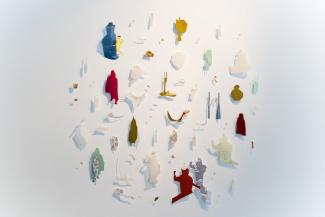
nicole barakat -verge exhibition april 2018
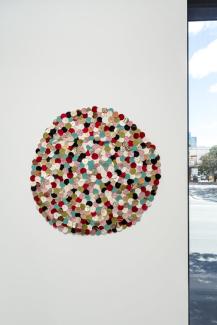
We transcend time and place, Hand cut found paper (2017)
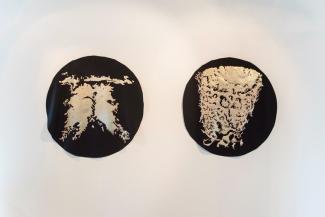
nicole barakat -verge exhibition april 2018
We will remember who we are and We will persist Cotton embroidered hand cut lamé on wool silk cloth (2018)
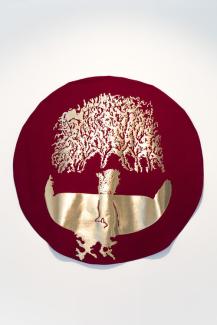
nicole barakat -verge exhibition april 2018
​​We will return home, Silk embroidered hand cut lamé on cotton velveteen (2018)
verge march 18 - document photography
We will heal in the now, Hand cut silk, wool, lamé, cotton, direct digital print silk satin on linen (2018)


we are infinite

An exhibition by Nicole Barakat, embodying her reconnection with the diaspora of objects from her ancestral homelands in the South West Asia and North Africa (SWANA) region.
 
Barakat presents a collection of textile works as manifestations of her practice of engaging with displaced, and often stolen objects held within Western museum collections including the Louvre, British Museum and Nicholson Museum. 
 
To by-pass the gatekeepers and breach the vitrines holding these ancestral objects, Barakat reclaims pre-colonial, non-linear, receptive forms of knowing that are often devalued and dismissed by colonial and patriarchal institutions - engaging with coffee cup divination, dream-work, intuitive listening and conversations with the objects themselves (source).

About Nicole Barakat

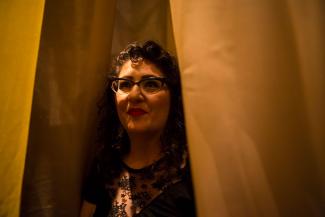
Nicole Barakat portrait
Nicole Barakat is a queer femme, SWANA artist born and living on Gadigal Country (so-called Sydney, Australia). She works with deep listening and intuitive processes with intentions to transform the conditions of everyday life. Her work engages unconventional approaches to art-making, creating intricate works that embody the love and patience that characterises traditional textile practices. 

Her works include hand-stitched and hand-cut cloth and paper drawings, sculptural forms made with her own hair, cloth and plant materials as well as live work where she uses her voice as a material. 

Nicole’s creative practice is rooted in re-membering and re-gathering her ancestral knowing, including coffee divination and more recently working with plants and flower essences for community care and healing. 

Snippet FEA Get Involved Story 4 (EN)

GET INVOLVED!

Follow Solidarity Network Union on Facebook and Twitter

Support the work of Solidarity Network Union donating here

Follow OTRAS on Twitter, Instagram and Facebook

Support the work of OTRAS by donating here

FRMag - United against violence

United against the violence

by Karina Ocampo

In a hidden corner of Chiapas, Mexico, women and sexual dissidents have come to organize our actions. (...)

Read

< artwork by Sonia Carolina Madrigal Loyola

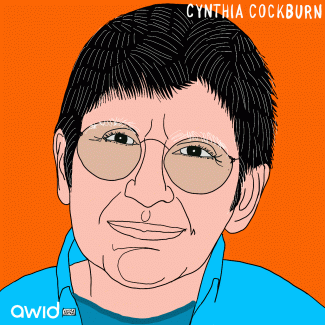
Cynthia Cockburn

Cynthia Cockburn was a feminist sociologist, writer, academic, photographer and peace activist.

She explored the gendered aspects of violence and conflict and made significant contributions to the peace movement through her exploration of the themes of masculinity and violence as well as her local and international activism.

Cynthia brought a feminist power analysis to militarisation and war, and was among the academics whose writings and analysis clearly demonstrated how gender-based violence played a key part in perpetuating war. Working closely with peace activists in countries experiencing conflict, her findings covered diverse contexts including Northern Ireland, Bosnia-Herzegovina, Israel/Palestine, South Korea, Japan, Spain and the UK. She helped bring in her research and academic writings, an understanding that violence was experienced as a continuum of time and scale and perceived very differently when seen from a gendered lens.

In her words, “Gender helps us to see the continuity, the connection between instances of violence.” 

Cynthia bridged her research with the activism she did locally and internationally with movements for demilitarisation, disarmament and peace. She helped start the Greenham Common women’s peace camp, which advocated for universal nuclear disarmament in Britain and was part of establishing the London chapter of Women in Black.

Over the decades, Cynthia organized and participated in local weekly vigils and the political choir Raised Voices, singing in the choir, and writing several of the lyrics to the songs that have made up its repertoire. She was also active in the Women’s International League for Peace and Freedom (WILPF), the European Forum of Socialist Feminists as well as in Women Against Fundamentalism.

“Cynthia shed feminist light, wove together feminist communities, sang songs of peace, listened, listened, listened, watched the birds – and stopped traffic. I’ll be forever and gratefully in her debt, the other ‘Cynthia’” – Cynthia Enloe

Cynthia was born in July 1934 and passed away in September 2019 at the age of 85.
Snippet - Join CSW69 Conversations Intro_ES

Súmate a través de nuestras conversaciones #CongelarFascismos

Mientras atravesamos las múltiples crisis globales, los movimientos infatigablemente construimos el poder más allá de las estructuras de poder tradicionales. La ola de órdenes ejecutivas que ha emitido la presidencia de los EE.UU. tiene la intención de amedrentarnos, pero no hay ideología fascista capaz de borrar nuestra existencia y resistencia.

Te invitamos a formar parte de la campaña de construcción de solidaridad para poner al descubierto y resistir a las fuerzas fascistas que socavan los movimientos feministas y por la justicia de género en tu contexto.

  • Provoca conversaciones en espacios valientes: Comparte historias de lucha y resistencia a los fascismos en tu contexto en la plataforma de la Comunidad de AWID. ¿No te has afiliado aún? Únete aquí.
  • Apoya a los movimientos que se han visto afectados: Amplifica las iniciativas de recaudación de fondos, las oportunidades de dotación de recursos y los esfuerzos de ayuda mutua mediante la etiqueta #CongelarFascismos (estamos en X, Instagram, LinkedIN, y también en Bluesky)
  • Organízate alrededor de distintas alternativas: Hemos construido nuestra comunidad de práctica sobre alternativas económicas feministas y recursos autónomos. Inscríbete para participar aquí. (en inglés)
Body

Tendencias anti-derechos en los sistemas regionales de derechos humanos

Chapter 6

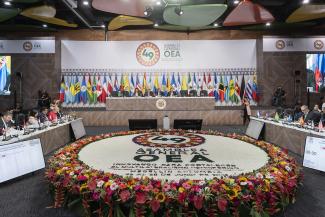
En la Comisión Africana y en el Sistema Interamericano, los actores antiderechos impulsan nociones esencialistas de cultura y género para impedir el avance de los derechos y socavar las responsabilidades. Como vemos, los actores anti-derechos están ejerciendo su influencia sobre los sistemas regionales de derechos humanos, así como en los espacios internacionales.

2019 JUN 27 Meeting of the Summit Implementation Review Group in Colombia
© Juan Manuel Herrera/OAS/Flickr
2019 JUN 27 Reunión del Grupo de Revisión de la Implementación de Cumbres en Colombia

La Comisión Africana de Derechos Humanos y de los Pueblos ha comenzado a definir a los derechos sexuales y de las mujeres como un menoscabo a su capacidad de ocuparse de los «derechos reales» y como contrarios a los «valores africanos», con lo cual se establece un precedente anti-derechos preocupante. La anulación del estatus de observador de la Coalición de Lesbianas Africanas es un ejemplo de esta tendencia y muestra la forma en que el espacio para el involucramiento feminista panafricanista está siendo restringido.

En la Organización de Estados Americanos (OEA) y en el Sistema Interamericano de Protección de los Derechos Humanos, las estrategias anti-derechos incluyen la oenegización de grupos religiosos, la utilización de discursos seculares, y la cooptación de marcos de discriminación. La influencia antiderechos se ha materializado de diversas maneras, que incluyen la intimidación de activistas trans y la obstrucción de la introducción de lenguaje progresista en las resoluciones.

Índice de contenidos

  • Silenciamiento de feministas en el Sistema Africano de Derechos Humanos
  • Grupos anti-derechos en América Latina: Asamblea General de la Organización de Estados Americanos (OEA) y el Sistema Interamericano de Protección de los Derechos Humanos

Leer el capítulo completo

Snippet FEA We are living in a world right (ES)

Incluso en tiempos de crisis climática, los gobiernos continúan alentando el crecimiento de las industrias agrícolas a gran escala. Estas actividades envenenan la tierra, amenazan la biodiversidad y destruyen la producción de alimentos y los medios de vida locales. Mientras tanto, aunque las mujeres producen la mayoría de nuestros alimentos en el mundo, casi no poseen tierra.

¿Qué pasaría si percibiéramos la tierra y la Naturaleza no como una propiedad privada para ser explotada, sino como una totalidad con la cual aprender y coexistir en armonía? ¿Y si repararíamos nuestras relaciones con la tierra y adoptaríamos alternativas más sostenibles que nutran tanto al planeta como a sus comunidades?

Nous Sommes la Solution (Somos la Solución, NSS) es uno de los muchos movimientos liderados por mujeres que se esfuerzan por lograr este objetivo.

Esta es su historia.

FRMag - Resistance from the Kitchen

Nuestra arepa: Cocina en resistencia

por Alejandra Laprea

Vivo en un país de lo imposible, donde no caen bombas pero padecemos una guerra. (...)

Leer

arte: «Entretejidas», Surmercé >

Hevrin Khalaf

Hevrin Khalaf fue una destacada líder política siria-kurda de la región autónoma de Rojava, donde las mujeres kurdas están arriesgando sus vidas para resistir la ofensiva turca y construir un sistema feminista.

Hevrin fue Secretaria General del Future Syria Party [Partido de la Futura Siria] (FSP, por sus siglas en inglés), un grupo que tenía como objetivo la construcción de puentes, la reconciliación entre diferentes grupos étnicos y el trabajo hacia una "Siria democrática, pluralista y descentralizada".

Hevrin fue un símbolo de este esfuerzo de reconciliación. También trabajó para promover la igualdad entre mujeres y hombres y fue una representante para periodistas, trabajadorxs de ayuda humanitaria y diplomáticxs que visitaban la región.

Hevrin era también una ingeniera civil de Derik, y fue una de las fundadoras de Foundation for Science and Free Though [(Fundación para la Ciencia y el Libre Pensamiento] en 2012.

El 12 de octubre de 2019 fue torturada y asesinada por la milicia Ahrar al-Sharqiya, sustentada por Turquía, durante una operación militar contra las Fuerzas Democráticas Sirias en Rojava.

"El asesinato de Khalaf es un punto de inflexión en la historia moderna de Siria. Demuestra una vez más el viejo proverbio kurdo "no hay amigxs sino montañas". Siempre seré amigo[NC1]  de Khalaf y su visión de un mundo mejor." - Ahed Al Hendi

Snippet - Feminist Mixer - ES

Encuentro feminista: Citas rápidas para feministas

✉️ Requiere inscripción previa. Regístrate aquí

📅 Martes 11 de marzo de 2025
🕒 De 06:00 a 08:00 p. m.,

🏢 Chef's Kitchen Loft with Terrace, 216 East 45th St 13th Floor New York

Organiza: AWID

Body

S'inscrire à la liste de diffusion

* indicates required
               
                   
Sélectionnez les thèmes sur lesquels vous souhaitez recevoir des informations :


Snippet - GII Intro (EN)

Gender Impact Investing & The Rise of False Solutions:

An Analysis for Feminist Movements

Gender Impact Investing (GII) is now trending as a solution to gender inequality. Yet, as our report indicates, it is actually part of the problem. Public and private institutions marketing GII equate it with promotion of gender equality and with increased resources for women and girls.

Neither claim is evidence-based.

Rather, GII is another expression of subjecting our lives and societies to the same financial logic that has shaped, and continues shaping, the profound inequalities in our world.

With this report, AWID offers the readers - feminists, gender justice advocates and stakeholders in gender impact investing - a critical analysis and substantiated evidence to understand GII, its narratives, and economic and political implications for feminist movements.

FRMag - Armenians

Arménien·ne·s, le féminisme est notre passé et notre avenir

par Sophia Armen 

Que cela vous plaise ou non, les ungerhouis font partie intégrante de nos histoires de résistance et elles ne disparaîtront pas de sitôt.  (...)

Lire

Diana Isabel Hernández Juárez

Diana Isabel Hernández Juárez était une enseignante, défenseure des droits humains et activiste pour l’environnement et les communautés guatémaltèque. Elle coordonnait le programme environnemental de la paroisse de Nuestra Señora de Guadalupe, sur la côte sud du Guatemala. 

Diana a dévoué sa vie à co-créer des actions de sensibilisation à l’environnement, en étroite collaboration avec les communautés locales, dans le but de résoudre les problèmes environnementaux et protéger les ressources naturelles. Elle a été à l’initiative de projets de pépinières forestières, de fermes municipales, de jardins familiaux et de campagnes de nettoyage. Active dans les programmes de reboisement, elle s’est efforçée de récupérer des espèces locales et de remédier aux pénuries d’eau dans plus de 32 communautés rurales.

Le 7 septembre 2019, Diana a été assassinée par balle par deux hommes armés inconnus alors qu’elle participait à une procession dans sa localité. Diana n’avait que 35 ans au moment de son décès.