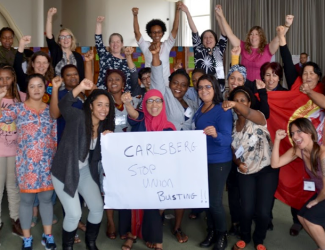
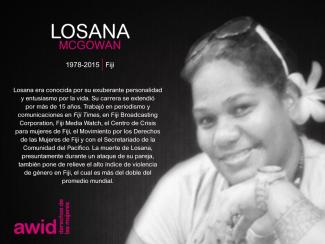
Women human rights defenders (WHRDs) worldwide defend their lands, livelihoods and communities from extractive industries and corporate power. They stand against powerful economic and political interests driving land theft, displacement of communities, loss of livelihoods, and environmental degradation.
Why resist extractive industries?
Extractivism is an economic and political model of development that commodifies nature and prioritizes profit over human rights and the environment. Rooted in colonial history, it reinforces social and economic inequalities locally and globally. Often, Black, rural and Indigenous women are the most affected by extractivism, and are largely excluded from decision-making. Defying these patriarchal and neo-colonial forces, women rise in defense of rights, lands, people and nature.
Critical risks and gender-specific violence
WHRDs confronting extractive industries experience a range of risks, threats and violations, including criminalization, stigmatization, violence and intimidation. Their stories reveal a strong aspect of gendered and sexualized violence. Perpetrators include state and local authorities, corporations, police, military, paramilitary and private security forces, and at times their own communities.
Acting together
AWID and the Women Human Rights Defenders International Coalition (WHRD-IC) are pleased to announce “Women Human Rights Defenders Confronting Extractivism and Corporate Power”; a cross-regional research project documenting the lived experiences of WHRDs from Asia, Africa and Latin America.
We encourage activists, members of social movements, organized civil society, donors and policy makers to read and use these products for advocacy, education and inspiration.
AWID acknowledges with gratitude the invaluable input of every Woman Human Rights Defender who participated in this project. This project was made possible thanks to your willingness to generously and openly share your experiences and learnings. Your courage, creativity and resilience is an inspiration for us all. Thank you!
Related Content
Introducing AWID’s next Co-Executive Directors
Dear Feminist Movements,
On behalf of the AWID Board of Directors, I am proud to introduce AWID’s next Co-Executive Directors: Faye Macheke and Inna Michaeli!
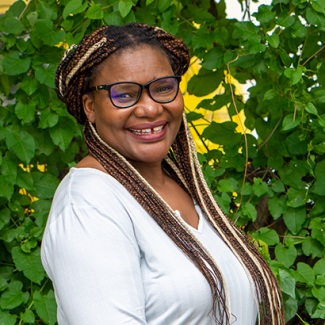
Faye Macheke is a passionate Pan-African feminist, active in movements for women's rights, racial justice, migrant and labor rights, and environmental justice. Her activism builds on the legacy of the struggle against apartheid in South Africa and the aftermath of the apartheid era in Zimbabwe. In 2019, Faye joined AWID as the Director of Finance, Operations and Development. She brings extensive experience in feminist leadership, strategy, and all aspects of organisational development. Faye is a committed Board Member of UAF-Africa and other women's rights organizations. She is based in Cape Town, South Africa.
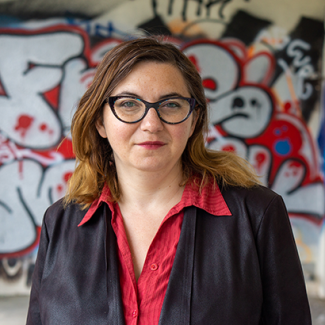
Inna Michaeli is a feminist lesbian queer activist and sociologist with many years of deep engagement in feminist and LGBTQI+ struggles, political education and organizing by and for migrant women, and Palestine liberation and solidarity. Inna joined AWID in 2016 and served in different roles, most recently as the Director of Programs. She brings extensive experience in research and knowledge building, policy advocacy and organizational development. Inna serves on the Board of the Jewish Voice for Peace - Germany. She is based in Berlin, Germany.
This decision is the result of a rigorous process with full participation of the Board and the staff of AWID. The Board recognised and honoured the skills and talents of AWID staff by opening an internal hiring search. As a result, we had two brilliant candidates, who embody the integrity, ethic of care, and feminist intersectional values that drive AWID’s work, apply together as a team. Faye and Inna brought forward a brave and exciting vision to meet the challenges of this moment: building a global feminist community, resisting and disrupting systems of oppression, and supporting feminist movements to thrive.
As AWID celebrates 40 years we are excited for Inna and Faye to co-lead AWID into our next strategy and a new phase of evolving, pushing boundaries, and supporting feminist movements worldwide.
Appointing and supporting AWID’s Co-Executive Directors to lead the organisation is a fiduciary responsibility we take seriously as a Board. How we engage those processes is also a reflection of AWID’s brilliant and diverse membership, which elects AWID’s Board.
As we say good-bye to Cindy and Hakima, we, the Board, unanimously and enthusiastically welcome Faye and Inna as our next Co-EDs as of September 5, 2022. Stay tuned for more updates about our leadership transition in the months ahead.
Most of all, thank you for your ongoing support!
In feminist solidarity and love, Margo Okazawa-Rey
President, AWID Board
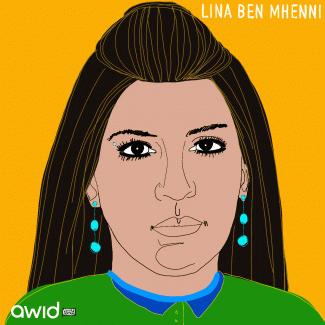
“I want to tell all Tunisians: We have to unite to say no to censorship and opinion trials.” - Lina Ben Mhenni (2013 interview)
Lina Ben Mhenni was a Tunisian blogger, activist and linguistics lecturer. She was vocal against internet censorship, defended the freedom of expression and was an advocate for women’s and human rights. Lina also fought for the release of students arrested under former President Zine El Abidine.
“It’s true that information and the internet are important but being on the ground is crucial for a revolution. Some people here in Tunisia think that change can occur just by clicking like on the internet. I believe you have to be active on the ground. And of course, join actions on the field with the action on the web.” - Lina Ben Mhenni (Interview in POCIT)
In 2010, she co-organized a protest that challenged the government suppression of media and internet censorship. Lina was widely known for her blog “A Tunisian Girl” and recognized for her work during the Tunisian revolution in 2011. In her blog, she reported on the news from the uprising, shared images documenting protests and was among the few voices who spoke about the killings and crackdown on protesters in Sidi Bouzid. Lina blogged using her real name instead of a pseudonym to protect her identity, one of only a few bloggers to do so.
“Our freedom of expression is in real danger. I am afraid that we are losing the unique fruits of the revolution: the disappearance of fear and our freedom of speech. We have to keep on fighting to protect and preserve this right.” — Lina Ben Mhenni (2013 interview)
Lina was only 36 years old when she passed away on 27 January 2020, as a result of complications from an autoimmune disease.
"Freedom, better education and health - that's all we wanted. When we failed, she pushed us." Lina’s school teacher Hala.
The AWID Forum registration fees for all forum participants cover:
Full access to all four days of the Forum
Lunches and coffee/tea breaks during forum days
Resource materials
Simultaneous interpretation during plenaries and some selected breakout sessions/activities (English, French, Spanish, and local language)
Participation in the celebration dinner/party
Mobile app with final program and chat function
Free Wi-Fi service in the forum premises
Airport pick ups and hotel-venue-hotel transportation
Snippet Forum Location Announcement Body (EN)
The AWID Forum is the world’s largest event that wholeheartedly centers feminist and gender justice movements in all their diversity. It is a transformative space created by and for the movements - where Global South feminists and historically marginalized communities take centerstage, strategize to shift power, and connect with allied movements, funders and policy-makers. And so it is with full and fiery hearts that we share…
The 15th AWID International Forum will take place from December 2-5, 2024 in Bangkok, Thailand!
We hope to gather 2,500 in-person and 3,000 online/hybrid participants. When thousands of feminists come together, we create a sweeping force of solidarity that has the power to change the world! We’re excited, and we know you’re excited too - so stay tuned for more
Snippet2 - WCFM Registration status - EN
Registration status:
Search for funders based on their requirements for groups to be registered.
Film club - swana
Ya puedes mirar el programa «Feminist Embodiments of Hope and Power» [«Corporizaciones feministas de esperanza y poder»] del Club de Cine Feminista de AWID, una serie de películas sobre realidades feministas de la región del Sudoeste Asiático y África del Norte, curada por Esra Ozban.
La integro desde que tengo uso de razón. De jovencita, no sabía que existía una palabra — «feminista» — para nosotrxs, quienes aspiramos a superar y desmantelar el patriarcado; quienes buscamos refugio en los brazos de la inclusión y la interseccionalidad; quienes tratamos a las personas como iguales independientemente de su género, raza, sexualidad, religión y etnia; quienes estamos continuamente aprendiendo a obrar mejor, a ser mejores y a usar nuestros privilegios para que otras personas mejoren.
Cuando tenía 14 años, mi profesor de francés de la escuela secundaria, un hombre de 1,80 metros de altura y 30 años de edad, agredió a una alumna de mi clase delante de todxs nosotrxs. La alumna, que era amiga mía desde la infancia, y varias chicas más fuimos a la dirección para denunciarlo, madres y padres se involucraron y toda la clase, treinta alumnxs, expresó su apoyo a la chica. Pero todos nuestros intentos para que el profesor rindiera cuentas por lo que había hecho fracasaron: la administración ocultóó la denunciaa y el profesor nunca fue despedido ni perseguido. Mis compañeras y yo estábamos indignadas, así que hicimos lo que toda joven feminista furiosa haría: LE TIRAMOS HUEVOS A SU AUTO. Si bien los huevos se lavaron con facilidad, costó más sacar la pintura que usamos para escribir las palabras «Cerdo» y «Khamaj» (basura). Nunca olvidaré cómo nos hizo sentir eso: liberadas, enfurecidas, felices, muy unidas y con poder. La misma emoción se repite en todos los ámbitos feministas en los que he estado desde entonces. La feminista adolescente que hay en mí creció y participó en Women Deliver, AWID, Unootha, facilitó talleres feministas en la universidad, e incluso fue perseguida por su filiación feminista a los 19 años, pero esa es otra historia para otra carta.
Los movimientos y espacios feministas me brindan seguridad y empoderamiento. Son las madres que hubiéramos deseado tener y los vínculos que necesitábamos para conectarnos y organizarnos, a pesar de nuestras diferencias, contra un enemigo común, el patriarcado, que nos ha estado perjudicando a todxs. Con ustedes aprendí a ser resiliente y a reunir mis fuerzas y habilidades para estimular a otras personas, para sacar a la luz la situación de las personas marginadas, y dar voz a quienes no la tienen.
Lo que más me gusta de ustedes, movimientos feministas, es que a veces hacen mal las cosas, desprecian y también marginan, tienen prejuicios como cualquier otro movimiento, pero lo que los diferencia es que siempre se esfuerzan por ser mejores. La rendición de cuentas no es algo a lo que le teman, y son un colectivo en constante cambio que refleja cómo el altruismo y la filantropía que se proponen lograr la equidad de género también cambian con el paso del tiempo.
Que crezcan siempre, que obren mejor, que siempre se enfurezcan, que siempre rujan, que siempre amen, que siempre hablen distintas lenguas y que siempre sientan su poder.
Gloria Chicaiza, una activista social y ambiental ecuatoriana, fue una ferviente defensora de la tierra y el agua. Desafió el statu quo, al luchar contra un modelo de desarrollo basado en la extracción, y trabajó incansablemente por la justicia ecológica y los derechos de las comunidades afectadas por la minería.
Gloria participó en las acciones de resistencia para la protección del ecosistema en distintas áreas de Ecuador. Con pasión y dedicación, Gloria apoyó al movimiento indígena y ambiental, a sus comunidades y a las organizaciones que se oponen a los proyectos de minería y protegen sus territorios y sus proyectos de vida colectivos. En foros locales e internacionales, se pronunció contra la criminalización del disenso y la resistencia, contra la presión y la violencia ejercidas contra lxs activistas comunitarixs (y, en particular, contra las defensoras de derechos humanos), y a favor de los esfuerzos comunitarios por la soberanía alimentaria y la sustentabilidad.
Fue Coordinadora del Área de Justicia Minera de Acción Ecológica, participó en la Red Latinoamericana de Mujeres Defensoras de Derechos Sociales y Ambientales, e integró la Junta Directiva del Observatorio de Conflictos Mineros de América Latina (OCMAL).
En 2014 Gloria apoyó la coordinación de una delegación a la Conferencia Internacional sobre Cambio Climático (COP 20) de la ONU. El grupo estuvo integrado por veinticinco mujeres indígenas de América Latina.
Gloria falleció el 28 de diciembre de 2019 por complicaciones de un trasplante de pulmón. Es recordada por su resistencia y su incansable trabajo.
«El camino más rápido para llegar a la sustentabilidad sigue siendo la resistencia.» - Gloria Chicaiza (entrevista de 2010)
«Gracias Glorita, por sostener la esperanza, por mantener el tejido fuerte, por conectar la comunidad, por las manos unidas, por la solidaridad, gracias Glorita por acompañarnos en los momentos más difíciles. Gracias por enseñarnos que, a lo largo de la vida, nadie se cansa.» - Chakana News
«Fue más intrépida, más audaz y más generosa que su cuerpo; ese cuerpo que enfrentó toletes y bombas lacrimógenas, que paseó bajo la cadencia de los tambores y las batucadas, que incubó otra vida, hermosa y digna, como la suya. Haz dejado de toser, querida amiga, pero hoy, más que nunca, tu voz me quema adentro.» - Pablo Ospina Peralta
«Gloria Chicaiza valoraba ser una de muchxs, y así prosperaba. Y, humilde como era, tenía una extraordinaria capacidad para llevar y mantener un ritmo sostenido y estruendoso, un pulso de afirmación de la vida que guiaba, movilizaba e inspiraba a las comunidades y a las redes para la protección de la Madre Tierra. Se oponía a toda forma de violencia contra los cuerpos-territorios. Apoyaba el buen vivir.» - Gabriela Jiménez, Coordinadora de Asociaciones para América Latina, KAIROS
«Gracias Gloria Chicaiza, desde el infinito estamos seguros de que seguirás apoyando nuestra lucha.. Tú, que continuaste acompañándonos en la lucha a pesar de que tu salud fallara. Vivirás en los bosques y en el agua que defendiste con tanta valentía, vivirás en nuestros corazones.» - Comunidad de Intag, Ecuador
More than just an event, the AWID Forum is part of our Feminist Realities Journey, with many spaces to come together, online and offline, for sharing, discussing, strategizing and co-creating feminist realities.
Dans le cadre de l’aventure de l’AWID sur les Réalités féministes, nous vous invitons à explorer notre tout nouveau Club de cinéma féministe : une collection de courts et longs métrages sélectionnés par des programmateurs·rices et narrateurs·rices féministes du monde entier, dont Jess X. Snow (Asie/Pacifique), Gabrielle Tesfaye (Afrique/diaspora africaine) et Esra Ozban (Asie du Sud-Ouest, Afrique du Nord). Alejandra Laprea est responsable du programme Amérique latine et centrale, que nous lancerons en septembre dans le cadre de Crear, Résister, Transformer : un festival pour les mouvements féministes porté par l’AWID. En attendant, surveillez les annonces sur les projections de films spéciaux et les discussions avec les réalisateurs·rices!
Love letter to Feminist Movements #8
Dearest Beloved Feminist Movements,
Hello again, and again, and again. I have known and loved you my entire adult life, since I first met you meaningfully, after graduating from university. I’d seen you one time before then. That was you appearing as Betty Friedan on a local TV talk show in the US Midwest, in the late-1960s. At the time, Mrs. Wells, my other mother, and I commented on what wild, far-fetched ideas this woman was trying to convince us about. Decade after decade since then I have fallen more deeply in love with you, Beloved, and understand and witness your political and theoretical brilliance, ethical and moral authority, creativity, joy, and love, above all. Nearly 60 years later, I know we are partners forever.
The early years of our acquaintanceship was ok. I was quite self-involved--figuring racial, gender, and sexual identity; getting clear on my core politics, values, and ethics; completing my formal education--and you provided numerous settings, intellectual drop-in centers, and comforting holding environments where and through which I was able to craft the young-adult building blocks of the feminist and human being whom I would become.
The predominantly white women’s movement of Cambridge and Boston, including Daughters of Bilitis, was my starting place. That suited me at the time but soon realized I desired something more. Poof! Like magic (serendipity), I connected with a small group of radical, anti-imperialist, Black, socialist lesbian women and we soon became the Combahee River Collective.
That early Combahee experience, combined with critical life lessons and particular African-American/Korean immigrant racial politics of early-1990s in the US, prepared me for the journey that has led me to identify and work as a transnational feminist to address militarism and to dedicate myself to imagining other worlds where all living beings will thrive.
The next two critical women’s-movement moments were decades after Combahee years but deeply linked. First was meeting and being invited into the Korean feminist movement organizing against US military bases and supporting the “kijichon women” the Korean women whose lives, including for some, their mixed-race children, revolved around servicing US military personnel in numerous ways in villages and towns adjacent to the bases. Korean Beloved Feminists, especially Kim Yon-Ja and Ahn Il-Soon, the first sisters I met and traveled with, made me see and understand the critical importance of nation as an analytical and organizing principle. The “capstone” was living, working in occupied Palestine. The late Maha Abu-Dayyeh introduced me to the Palestinian women’s movement, with a profound comment, “you can leave Palestine but Palestine will never leave you.” So true. And, all my work and experiences across many borders brought me to AWID--my second home.
As you know, Beloved, being with you has not been easy or simple. Indeed, you are demanding, consistently riddled with contradictions, and sometimes even hurtful. Nonetheless, you continue to grow and develop, as you are supporting my political, emotional, and spiritual growth and development. I guess we are growing each other--a very profound process to which I will dedicate the rest of my time in my current form.
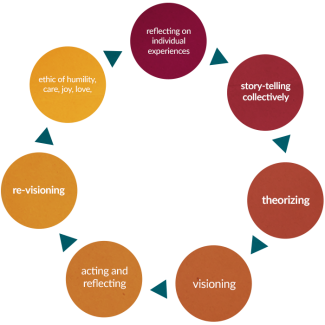
The through-line of being with you all these decades is this:
Feminists Collectively Engaging the Heads, Hearts, Hands, and Spirits to transform our worlds
So much love, Feminist Movements!
Your Margo
AKA DJ MOR Love and Joy
Wellfleet Massachusetts USA
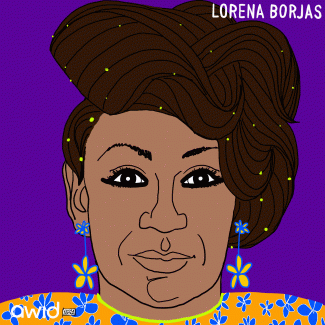
Lorena Borjas, femme trans et activiste latino-américaine, travaillait et vivait dans le quartier de Jackson Heights dans le Queens, à New York. Dans ces rues, pendant des années, elle s’est occupée de sa communauté à plaider en faveur des droits des personnes trans et immigrées, soutenir les individus ayant survécu à la traite des êtres humains et à la maltraitance et défendre les droits des travailleures du sexe et des personnes vivant avec le VIH et le sida.
Lorena se battait avec force, sans relâche, afin d’aider, de défendre et de soutenir les personnes les plus marginalisées et discriminées par la transphobie, la misogynie et le racisme.
« Elle nous a poussé·e·s à briller avec authenticité, à devenir le cri subversif qui affirme “ je suis là et je mérite moi aussi d’être heureux·se ” » - Cecilia Gentili, activiste trans et ami·e de Lorena
Ayant elle-même fait face à de nombreux traumatismes et difficultés en tant qu'immigrée transgenre et victime de la traite des êtres humains, Lorena a puisé dans le puits de ses expériences des connaissances et d’une mémoire émotionnelle afin d'aider à construire et à renforcer la communauté dont elle faisait partie, et qui faisait partie d'elle. Pour ce faire, elle a notamment organisé et mobilisé des aides allant de la fourniture de préservatifs à la mise en relation de femmes trans avec différents services, en passant par la création d'une clinique de dépistage du VIH à son propre domicile.
« C’était une si belle âme qui aidait les autres alors que son parcours d’immigrée, et d’immigrée trans, était difficile et douloureux. Elle était convaincue que la communauté trans avait besoin d’amour, d’acceptation et de compassion, et elle a tout donné. » - Luchia Dragosh, superviseuse de production chez QPTV dans le cadre d’un documentaire sur Lorena
En plus de 25 ans d'activisme, elle a également fondé le Fonds communautaire Lorena Borjas avec Chase Strangio (avocat et activiste des droits des trans), qui aide les nombreux·ses membres de sa communauté (et en particulier les personnes trans) confronté·e·s aux problèmes d'immigration à éviter le cycle arrestation-prison-expulsion.
Lorena est décédée en mars 2020 des suites de complications liées à la COVID-19.
Son oeuvre, gigantesque et merveilleuse, sera poursuivie dans les rues du Queens par le réseau et la communauté qu’elle a cocréés.
« Nous reprendrons son travail là où elle l’a laissé, travail essentiel au bien-être de ses “ pajaras ” (oiselles), comme elle aimait appeler les filles trans du Queens qu’elle avait prises sous son aile. » - Cecilia Gentili
Hommages :
« Lorena nous a apporté de la lumière alors que nous vivions une période très sombre ici à New York. Elle nous a apporté sa lumière alors que nous faisions face à l’ ”épidémie de crack ”, à la crise du sida, aux changements dans les politiques d’immigration. » - Cristina Herrera, fondatrice et directrice générale de Translatina Network et amie de Lorena
« Lorena a fait plus que quiconque pour faire la lumière sur l’épidémie de traite dans les communautés transgenres et permettre à d’autres femmes trans d’échapper à l’exploitation. » - Lynly Egyes (a représenté Borjas pour le compte du Transgender Law Center)
Where is the Money? An Evidence-Driven Call to Resource Feminist Organizing
This new report shines a light on the resourcing realities of feminist and women’s rights organizations amid unprecedented political and financial upheaval. Drawing on over a decade of analysis since AWID last Where is the Money? report it takes stock of the gains, gaps, and growing threats in the funding landscape.