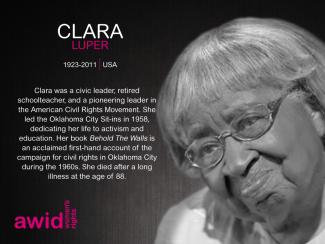
Clara Luper
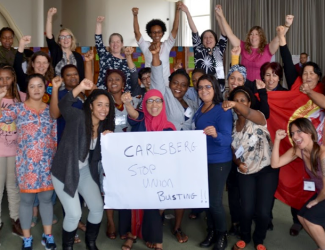
Women human rights defenders (WHRDs) worldwide defend their lands, livelihoods and communities from extractive industries and corporate power. They stand against powerful economic and political interests driving land theft, displacement of communities, loss of livelihoods, and environmental degradation.
Extractivism is an economic and political model of development that commodifies nature and prioritizes profit over human rights and the environment. Rooted in colonial history, it reinforces social and economic inequalities locally and globally. Often, Black, rural and Indigenous women are the most affected by extractivism, and are largely excluded from decision-making. Defying these patriarchal and neo-colonial forces, women rise in defense of rights, lands, people and nature.
WHRDs confronting extractive industries experience a range of risks, threats and violations, including criminalization, stigmatization, violence and intimidation. Their stories reveal a strong aspect of gendered and sexualized violence. Perpetrators include state and local authorities, corporations, police, military, paramilitary and private security forces, and at times their own communities.
AWID and the Women Human Rights Defenders International Coalition (WHRD-IC) are pleased to announce “Women Human Rights Defenders Confronting Extractivism and Corporate Power”; a cross-regional research project documenting the lived experiences of WHRDs from Asia, Africa and Latin America.
"Women Human Rights Defenders confronting extractive industries: an overview of critical risks and Human Rights obligations" is a policy report with a gender perspective. It analyses forms of violations and types of perpetrators, quotes relevant human rights obligations and includes policy recommendations to states, corporations, civil society and donors.
"Weaving resistance through action: Strategies of Women Human Rights Defenders confronting extractive industries" is a practical guide outlining creative and deliberate forms of action, successful tactics and inspiring stories of resistance.
The video “Defending people and planet: Women confronting extractive industries” puts courageous WHRDs from Africa, Asia, and Latin America in the spotlight. They share their struggles for land and life, and speak to the risks and challenges they face in their activism.
Challenging corporate power: Struggles for women’s rights, economic and gender justice is a research paper outlining the impacts of corporate power and offering insights into strategies of resistance.
AWID acknowledges with gratitude the invaluable input of every Woman Human Rights Defender who participated in this project. This project was made possible thanks to your willingness to generously and openly share your experiences and learnings. Your courage, creativity and resilience is an inspiration for us all. Thank you!
Moriviví es un colectivo de jóvenes artistas mujeres que trabajan en arte público desde abril de 2013. Con sede en Puerto Rico, hemos obtenido reconocimiento por la creación de murales y de arte comunitario.
Inglés, francés, español, y chino mandarín.
En collaboration avec l'artiste Naadira Patel, nous avons créé un album qui met en lumière une sélection de moments marquants, représentatifs des quatre décennies de soutien de AWID aux mouvements féministes.
Actualizaremos los resultados de este proceso en el sitio web a su debido tiempo.
La Convocatoria de Actividades enumera una lista de sugerencias para formatos y metodologías. Sé creativx y asegúrate de leer la sección «Lo que debes saber».
Si tienes pasaporte de alguno de los siguientes países (el tiempo de estadía permitido varía según el país), NO necesitas visa para asistir al Foro de Taipéi:
Alemania, Andorra, Australia, Austria, Bélgica, Belice, Bulgaria, Brunei, Canadá, Chile, Ciudad del Vaticano, Croacia, Chipre, Dinamarca, Eslovaquia, Eslovenia, Estados Unidos de América, Estonia, España, Esuatini, Filipinas, Finlandia, Francia, Grecia, Guatemala, Haití, Honduras, Hungría, Irlanda, Islandia, Israel, Italia, Japón*, Letonia, Liechtenstein, Lituania, Luxemburgo, Malasia, Malta, Islas Marshall, Mónaco, Nauru, Nueva Zelanda, Nicaragua, Noruega, Países Bajos, Palaos, Paraguay, Polonia, Portugal, Reino Unido, República Checa, República de Corea, República Dominicana, Rumania, Rusia, San Cristóbal y Nieves, San Marino, Santa Lucía, San Vicente y las Granadinas, Singapur, Suecia, Suiza y Tuvalu.
Las personas con cualquier otro pasaporte NECESITARÁN VISA para ir a Taipéi.
Por favor ten en cuenta:
Es probable que, una vez que te hayas inscripto para asistir al Foro, te llegue un código relacionado con el evento que te permitirá tramitar tu visa en forma electrónica, cualquiera sea tu ciudadanía.
Brindaremos más información sobre este tema cuando se abra el proceso de inscripción.
Felogene Anumo, AWID
Dr. Vandana Shiva, India
Dr. Dilar Dirik, Kurdistan
Nana Akosua Hanson, Ghana
Si votre activité est acceptée, l’équipe de l’AWID vous contactera pour évaluer et répondre aux besoins d’interprétation et d’accessibilité pour votre activités.
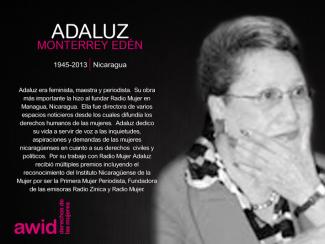
Coumba Toure
Cindy Clark, AWID
DJ Miss Ray
DJ Luana Flores
Phoenix Inana
ฟอรัมแต่ละครั้งถูกจัดขึ้นในภูมิภาคต่างๆทั่วโลก และครั้งนี้ AWID ฟอรัมกลับมาจัดที่เอีเชียอีกครั้ง! เราได้ผ่านการไปเยี่ยมเยือนประเทศต่างๆในเอเชียเพื่อหารือกับขบวนการเฟมินิสต์เพื่อประเมินรายละเอียดด้านโลจิสติกส์ การเข้าถึงง่าย ความปลอดภัย วีซ่า และความพร้อมด้านอื่นๆ โดยคณะกรรมการ AWID ของเรา อนุมัติให้จัดที่กรุงเทพอย่างกระตือรือร้นในฐานะทางเลือกที่ดีที่สุด เราตื่นเต้นที่ได้กลับมากรุงเทพที่ที่เราเคยได้จัด AWID ฟอรัมในปีพ.ศ. 2548