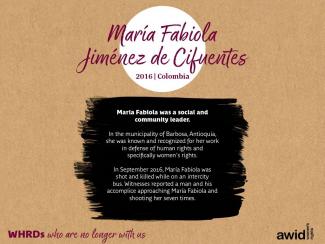
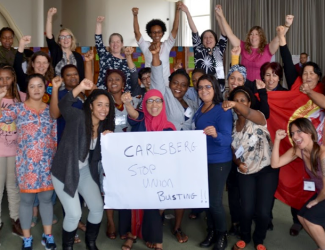
Women human rights defenders (WHRDs) worldwide defend their lands, livelihoods and communities from extractive industries and corporate power. They stand against powerful economic and political interests driving land theft, displacement of communities, loss of livelihoods, and environmental degradation.
Why resist extractive industries?
Extractivism is an economic and political model of development that commodifies nature and prioritizes profit over human rights and the environment. Rooted in colonial history, it reinforces social and economic inequalities locally and globally. Often, Black, rural and Indigenous women are the most affected by extractivism, and are largely excluded from decision-making. Defying these patriarchal and neo-colonial forces, women rise in defense of rights, lands, people and nature.
Critical risks and gender-specific violence
WHRDs confronting extractive industries experience a range of risks, threats and violations, including criminalization, stigmatization, violence and intimidation. Their stories reveal a strong aspect of gendered and sexualized violence. Perpetrators include state and local authorities, corporations, police, military, paramilitary and private security forces, and at times their own communities.
Acting together
AWID and the Women Human Rights Defenders International Coalition (WHRD-IC) are pleased to announce “Women Human Rights Defenders Confronting Extractivism and Corporate Power”; a cross-regional research project documenting the lived experiences of WHRDs from Asia, Africa and Latin America.
We encourage activists, members of social movements, organized civil society, donors and policy makers to read and use these products for advocacy, education and inspiration.
AWID acknowledges with gratitude the invaluable input of every Woman Human Rights Defender who participated in this project. This project was made possible thanks to your willingness to generously and openly share your experiences and learnings. Your courage, creativity and resilience is an inspiration for us all. Thank you!
Considera este calendario como un obsequio, que te llega a ti y a 9500 afiliades de nuestra comunidad feminista mundial. Un obsequio de esperanza, conexiones renovadas, acción y comunidad en un momento de inmensas injusticias y violencias.
Que estas historias te recuerden que a través de las fronteras y a lo largo de las luchas, somos muches, somos fuertes y, en conjunto, construimos los mundos que merecemos.
¿Tendré oportunidad de compartir mi opinión sobre cuestiones que no se hayan incluido en la encuesta?
Sí, invitamos a compartir más impresiones acerca de alguna cuestión que sea de importancia para ti respondiendo a las preguntas abiertas al término de la encuesta.
Across the globe, feminist, women’s rights and gender justice defenders are challenging the agendas of fascist and fundamentalist actors. These oppressive forces target women, persons who are non-conforming in their gender identity, expression and/or sexual orientation, and other oppressed communities.
Discriminatory ideologies are undermining and co-opting our human rights systems and standards, with the aim of making rights the preserve of only certain groups. In the face of this, the Advancing Universal Rights and Justice (AURJ) initiative promotes the universality of rights - the foundational principle that human rights belong to everyone, no matter who they are, without exception.
We create space for feminist, women’s rights and gender justice movements and allies to recognize, strategize and take collective action to counter the influence and impact of anti-rights actors. We also seek to advance women’s rights and feminist frameworks, norms and proposals, and to protect and promote the universality of rights.
Our actions
Through this initiative, we:
Build knowledge: We support feminist, women’s rights and gender justice movements by disseminating and popularizing knowledge and key messages about anti-rights actors, their strategies, and impact in the international human rights systems through AWID’s leadership role in the collaborative platform, the Observatory on the Universality of Rights (OURs)*.
Advance feminist agendas: We ally ourselves with partners in international human rights spaces including, the Human Rights Council, the Commission on Population and Development, the Commission on the Status of Women and the UN General Assembly.
Create and amplify alternatives: We engage with our members to ensure that international commitments, resolutions and norms reflect and are fed back into organizing in other spaces locally, nationally and regionally.
Mobilize solidarity action: We take action alongside women human rights defenders (WHRDs) including trans and intersex defenders and young feminists, working to challenge fundamentalisms and fascisms and call attention to situations of risk.
El término travesti se trata de una identidad de género latinoamericana sin equivalente en otros idiomas, y exclusivamente femenina. Es una persona designada varón al nacer que se identifica como mujer, y siempre deben abordarse con el pronombre “ella”.
Travesti no es solo una identidad de género ubicada fuera del binarismo de género, también es una identidad cultural arraigada en los movimientos latinoamericanos. El término inicialmente fue peyorativo, pero luego fue re-apropiado como símbolo de resistencia y dignidad. Toda travesti es trans porque no se identifica con el género asignado al nacer, sin embargo no toda travesti se considera mujer trans, ya que travesti ya es una identidad de género en sí misma.
Referencia: Berkins, Lohana. (2006). Travestis: una Identidad Política . Trabajo presentado en el Panel Sexualidades contemporáneas en las VIII Jornadas Nacionales de Historia de las Mujeres/ III Congreso Iberoamericano de Estudios de Género Diferencia Desigualdad. Construirnos en la diversidad, Villa Giardino, Córdoba, 25 al 28 de octubre de 2006.
Comment présenterez-vous et traiterez-vous les données collectées pendant l’enquête?
Les données seront traitées à des fins statistiques, pour mettre en lumière l’état du financement de l’organisation des mouvements féministes dans le monde entier, et ne seront présentées que sous forme agrégée. L’AWID ne publiera pas d’informations relatives à une organisation donnée ni ne divulguera d’informations qui permettraient d’identifier une organisation par le biais de son emplacement ou de caractéristiques qui lui sont propres, sans son accord explicite.
L'une des dirigeantes fondatrices de la coopérative était Lohana Berkins, une militante, défenseuse et promotrice de l'identité trans. Lohana a joué un rôle crucial dans la lutte pour les droits des personnes trans et travestis.
Grâce à sa lutte, entre autres choses, l'approbation de la loi sur l'identité de genre a été obtenue. C'est l'une des lois les plus progressistes au monde, garantissant les droits fondamentaux des personnes trans et des travestis. Désormais, les personnes peuvent changer de nom et de sexe avec un affidavit et ont accès à des soins de santé complets sans intervention/approbation judiciaire ou médicale (Outright International, 2012).
How many survey responses are you looking to collect?
Our aim is to reach a total of 2,000 responses, almost double the number from the last WITM survey in 2011.
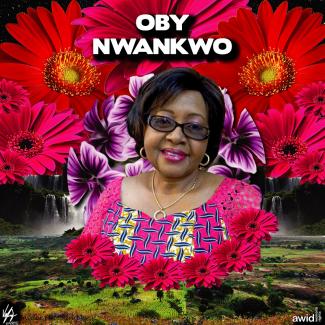
With a legal career spanning more than 30 years, Oby was known across Africa and around the world as a champion for gender justice and human rights.
She founded and served as Executive Director of the Civil Resource Development and Documentation Centre (CIRDDOC), a Nigerian NGO which sponsors trainings and network-building activities for members of civil society, parliamentarians and other key stakeholders to promote human rights, good governance and access to justice and rule of law.
Oby is remembered fondly by activists in Nigeria as an “extraordinary activist who displayed energy and passion towards the fight for gender equality and gender justice in Nigeria and across Africa.”
Only a year after it was founded, the members of Nadia Echazú started to work in haute couture and organized a fashion show in the historic Bauen Hotel.
They showcased five models and some workers of the textile cooperative walked down the runway with their own designs.
This was revolutionary not only because they were designing alternatives to mainstream fashion, but also because they were creating accessible, inclusive clothes for all trans and travesti bodies.
Feminist economies should also be about feeling amazing and comfortable in the clothes we are wearing.
Laura fue una abogada y líder activista que luchó valientemente por la descriminalización del trabajo sexual en Irlanda.
Es recordada como «una combatiente por la libertad de lxs trabajadorxs sexuales, una feminista, una madre para su hija y una amiga necesaria para mucha gente».
Laura promovió el reconocimiento de las personas de la industria del sexo como trabajadorxs merecedorxs de derechos. Presentó demandas por la descriminalización, e inició una revisión judicial en la Corte Suprema de Belfast respecto de las provisiones que criminalizan la compra de servicios sexuales. Declaró que su intención era llevar el caso a la Corte Europea de Derechos Humanos.