Albertina Sisulu
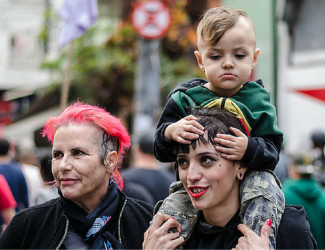
Over the past few years, a troubling new trend at the international human rights level is being observed, where discourses on ‘protecting the family’ are being employed to defend violations committed against family members, to bolster and justify impunity, and to restrict equal rights within and to family life.
The campaign to "Protect the Family" is driven by ultra-conservative efforts to impose "traditional" and patriarchal interpretations of the family, and to move rights out of the hands of family members and into the institution of ‘the family’.
Since 2014, a group of states have been operating as a bloc in human rights spaces under the name “Group of Friends of the Family”, and resolutions on “Protection of the Family” have been successfully passed every year since 2014.
This agenda has spread beyond the Human Rights Council. We have seen regressive language on “the family” being introduced at the Commission on the Status of Women, and attempts made to introduce it in negotiations on the Sustainable Development Goals.
AWID works with partners and allies to jointly resist “Protection of the Family” and other regressive agendas, and to uphold the universality of human rights.
In response to the increased influence of regressive actors in human rights spaces, AWID joined allies to form the Observatory on the Universality of Rights (OURs). OURs is a collaborative project that monitors, analyzes, and shares information on anti-rights initiatives like “Protection of the Family”.
Rights at Risk, the first OURs report, charts a map of the actors making up the global anti-rights lobby, identifies their key discourses and strategies, and the effect they are having on our human rights.
The report outlines “Protection of the Family” as an agenda that has fostered collaboration across a broad range of regressive actors at the UN. It describes it as: “a strategic framework that houses “multiple patriarchal and anti-rights positions, where the framework, in turn, aims to justify and institutionalize these positions.”

Por enquanto, o inquérito no KOBO está disponível em árabe, inglês, francês, português, russo e espanhol. Terá a oportunidade de selecionar um dos idiomas no início do inquérito.
Be part of an international feminist membership organization and community. Our members are based in all regions of the world, learning and supporting each other in a global network based on solidarity.
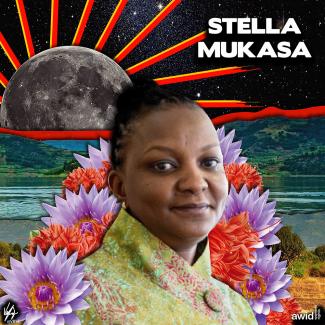
Stella a commencé sa carrière au ministère du Genre et du Développement communautaire en Ouganda. Elle œuvrait auprès des décideurs-euses politiques, pour encourager des réformes législatives, dont celle de la Constitution ougandaise en 1995 qui a entériné certaines des réformes les plus progressives pour les femmes dans la région.
Elle était adorée dans la région tout entière pour ses incessants efforts pour la création et l’application de lois et politiques sensibles au genre. Elle a joué un rôle clé dans l’ébauche de la loi sur les violences domestiques en Ouganda. Elle a aussi contribué à une mobilisation importante en faveur de Constitutions sensibles au genre à la fois en Ouganda et au Rwanda.
Par son travail au Centre international de recherches sur les femmes (International Center for Research on Women, ICRW), elle a abordé les thématiques de la violence à l’égard des enfants. Stella s’est attachée à renforcer les organisations locales qui luttent contre les violences basées sur le genre. Conférencière en Droits genrés et loi à l’université Makerere, elle a également siégé aux conseils d’administration d’Akina Mama wa Afrika, ActionAid International Uganda et l’Open Society Initiative for Eastern Africa.
We strive to make the AWID Forum a truly global gathering with participation from a diverse array of movements, regions and generations. To this end, AWID mobilizes resources for a limited Access Fund (AF) to assist some participants with the costs of attending the Forum.
The 14th AWID International Forum will take place 11-14 January 2021, in Taipei, Taiwan.
For this AWID Forum, there will be no application process.

In addition, AWID will fund approximately 100 participants from the Forum’s location. Forum Committee Members (Content and Methodology, Access and Host) as well as those in the Artists Working Group [link] are also granted Access Fund support.
We have listed other ideas on how to fund your participation at the AWID Forum on the Funding Ideas page.
"Sabemos que todo está en nuestra contra y hay muy pocas posibilidades de cambiar eso. Pero creemos en la intervención y creo que tenemos una oportunidad y deberíamos usarla. Es por eso que estamos haciendo todo lo que estamos haciendo. Estamos dispuestos a presionar por cosas inauditas".
- Sopo Japaridze para OpenDemocracy
Photo @სოლიდარობის ქსელი / Solidarity Network
يركّز استطلاع "أين المال" على وقائع التمويل للتنظيمات النسوية، تسأل أغلبية الأسئلة عن تمويل مجموعتكم/ن بين الأعوام 2021-2023. سوف تحتاجون أن تكون لديكم/ن معلومات معيّنة عند تعبئة الاستطلاع مثل ميزانيتكم/ن السنوية ومصادر التمويل الأساسية.
Participa en el Foro Internacional de AWID - un importante encuentro feminista global—, y accede a descuentos especiales para afiliadxs de AWID y puntos de entrada para el diálogo virtual. Creado en conjunto por los movimientos feministas, el Foro es un espacio único para una discusión profunda y para dejar correr la imaginación, donde desafiamos y fortalecemos nuestros procesos organizativos, donde conectamos nuestras luchas y las realidades feministas.
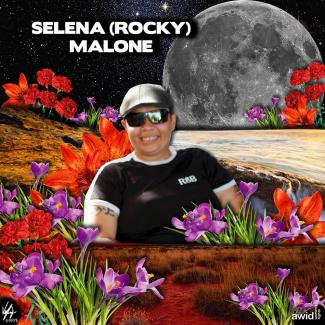
Rocky showed inspirational leadership and direction in working with Lesbian, Gay, Bisexual, Transgender, Intersex, Queer, Brotherboy and Sistergirl (LGBTIQBBSG) youth at risk.
Rocky started her career with the Queensland Police Service as a Police Liaison Officer. Making a difference was important to her. She led an impressive career working with young LGBTIQBBSG people as the Manager of Open Doors Youth Service.
Rocky worked through complex situations with clients relating specifically to gender and sexual identity. She was a natural in this line of work - a strong community leader, a quiet achiever, a loyal friend, a compassionate nurturer, and a change maker. Rocky was a founding member of IndigiLez Leadership and Support Group.
In 2016 at the Supreme Court in Brisbane, Former High Court Justice Michael Kirby mentioned Rocky by name when praising the work of the LGBTI Legal Service over the years. Rocky fought extremely hard for the human rights of the LGBTIQBBSG community, pushed boundaries and created change in a respectful, loving way.
The co-creation of our feminist realities starts with ourselves and how we treat each other. We are dedicated to creating and protecting safe and supportive spaces for our communities both online and in person. We also consider that safe and welcoming spaces are co-owned and co-created.
We expect our members to act in a manner that is ethical, responsible and consistent with the values of AWID and assume collective responsibility to ensure an atmosphere of mutual respect and solidarity.
Connect with others, help break isolation and further solidarity. It’s easy to feel lost and alone, and a little friendliness and responsiveness goes a long way.
Interact and engage peacefully. Differences in opinion will naturally arise, so please think of these differences as useful for expanding your thinking and ways of seeing the world.
Help build a space that recognizes and validates multiple lived experiences and diversities of bodies and gender expressions. Recognize that we all carry intersectional identities.
Use inclusive language. Be respectful of how people want to be referred to in terms of gender identity or expression (like pronouns), and practice inclusive language.
Listen and make adjustments in your behavior and ways of engaging if someone says they feel uncomfortable. Don’t ask others questions that you wouldn't want to be asked yourself.
Help challenge oppressive behavior, which includes harassment, verbal or physical violence, violation of consent, and any action that perpetuates classism, ageism, ableism, racism, misogyny, heterosexism, transphobia and other oppressions. If needed, please reach out to AWID staff.
Practice speaking and listening with an open mind and heart and without judgement.
Be honest, open and heartfelt. Speak and share authentically about your experiences, your challenges, your hopes and dreams, and your vision for your own life and your community.
Practice active listening and self-awareness. Be aware of how much time and space you are taking up- leave room for others, practice active listening and learning.
Be mindful and credit others for their work and activism. Remember that we are all working collectively to contribute to change-- Ensure that you recognize the contribution of others and credit them when appropriate e.g. in discussions, or in articles, pictures etc.
Stay safe! We encourage you to take measures to protect yourself online and in person, especially if you have reason to believe that speaking out will put you in danger. Members may use aliases or profile images that conceal their identity. For more information please refer to the “Digital Security First Aid Kit for Human Rights Defenders” produced by APC - Association for Progressive Communications.
Respect the privacy needs of others! Do not share or forward any information without explicit permission.
We take a position in solidarity with each other and diverse struggles for justice and freedoms. We strive to mobilize and strengthen collective action and practice meaningful ways of working with each other.
We believe in a full application of the principle of rights including those enshrined in international laws and affirm the belief that all human rights are interrelated, interdependent and indivisible. We are committed to working towards the eradication of all discriminations based on gender, sexuality, religion, age, ability, ethnicity, race, nationality, class or other factors.
We strive for transparency, responsible use of our resources, fairness in our collaborations and accountability and integrity with our members, partners, funders and the movements with(in) which we work. We are committed to reflecting on our experiences, sharing our learnings openly, and striving to change our practices accordingly.
We believe that for feminist movements to be transformative and strong we must continue to work across our similarities and differences. We also must interrogate power and privilege both within and outside our movements.
We celebrate everyone's right to choose their identities, relationships, goals, work, dreams and pleasures, and what they do with their mind, body and spirit. We believe in working towards access to resources, information and safe and enabling environments that allow this to happen.
We work towards a world based on social, environmental, and economic justice; and interdependence, solidarity, and respect. We work towards dismantling systems of oppressive power and against all its manifestations, including patriarchy, fundamentalisms, militarisms, fascisms and corporate power that threaten our lives and our world. We want a just world where resources and power are shared in ways that enable everyone to thrive.
Please note:
AWID reserves the right to delete comments, suspend or revoke membership when our community guidelines have been violated. AWID members are not authorised to represent AWID in any official capacity unless stipulated in writing. Members cannot use AWID spaces to proselytize or recruit members to join a religious faith or organisation. Members cannot use AWID spaces to request funds for personal use although links to external fundraising efforts or activism campaigns are permissible.
Мы запрашиваем эти данные, чтобы облегчить просмотр ответов, избежать дублирования и иметь возможность связаться с вашей организацией в случае, если вы не смогли завершить опрос и/или если у вас возникли сомнения или дополнительные вопросы. Здесь вы можете узнать больше о том, как мы используем личную информацию, которую собираем в ходе нашей работы.
Nous nous attachons à faire preuve de transparence, à utiliser nos ressources de manière responsable, à être équitables dans nos collaborations et à faire preuve de responsabilité et d'intégrité envers nos membres, nos partenaires, nos bailleurs de fonds et les mouvements avec lesquels nous travaillons. Nous nous engageons à réfléchir sur nos expériences, à partager ouvertement nos connaissances et à nous efforcer de modifier nos pratiques en conséquence.
Diakite estuvo activamente comprometida con la defensa de las mujeres en la vida política y pública de Mali.
Trabajó para apoyar la capacitación de candidatas electorales y habló en contra de la práctica de la mutilación genital femenina (MGF). Fue una firme defensora de la salud y los derechos reproductivos.