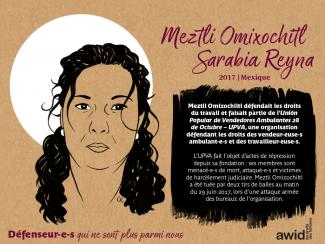
Meztli Omixochitl Sarabia Reyna
Over the past few years, a troubling new trend at the international human rights level is being observed, where discourses on ‘protecting the family’ are being employed to defend violations committed against family members, to bolster and justify impunity, and to restrict equal rights within and to family life.
The campaign to "Protect the Family" is driven by ultra-conservative efforts to impose "traditional" and patriarchal interpretations of the family, and to move rights out of the hands of family members and into the institution of ‘the family’.
Since 2014, a group of states have been operating as a bloc in human rights spaces under the name “Group of Friends of the Family”, and resolutions on “Protection of the Family” have been successfully passed every year since 2014.
This agenda has spread beyond the Human Rights Council. We have seen regressive language on “the family” being introduced at the Commission on the Status of Women, and attempts made to introduce it in negotiations on the Sustainable Development Goals.
AWID works with partners and allies to jointly resist “Protection of the Family” and other regressive agendas, and to uphold the universality of human rights.
In response to the increased influence of regressive actors in human rights spaces, AWID joined allies to form the Observatory on the Universality of Rights (OURs). OURs is a collaborative project that monitors, analyzes, and shares information on anti-rights initiatives like “Protection of the Family”.
Rights at Risk, the first OURs report, charts a map of the actors making up the global anti-rights lobby, identifies their key discourses and strategies, and the effect they are having on our human rights.
The report outlines “Protection of the Family” as an agenda that has fostered collaboration across a broad range of regressive actors at the UN. It describes it as: “a strategic framework that houses “multiple patriarchal and anti-rights positions, where the framework, in turn, aims to justify and institutionalize these positions.”
📅 Martes 12 de marzo
🕒 9:00 a. m. - 5:00 p. m. EST
🏢 Armenian Cultural Center, 630 2nd Ave. esquina con 35th St
La financiación para el desarrollo encierra amenazas y oportunidades concretas para los derechos de las mujeres y los derechos humanos de todas las personas. Una financiación y políticas para el desarrollo que sean transformadoras pueden constituir un aporte importante para los cambios sistémicos que se necesitan a fin de garantizar el respeto, la protección y la realización de los derechos humanos de las mujeres.
El año 2015 es importante en el proceso de la FpD. La tercera Conferencia Internacional sobre la FpD tuvo lugar del 13 al 16 de julio de 2015 en Adís Abeba, Etiopía, y los gobiernos están finalizando la Agenda de Desarrollo Post-2015 que incluye acuerdos acerca de cómo se van a financiar los Objetivos de Desarrollo Sostenible.
En su actual etapa, el proceso de la FpD ofrece una oportunidad importante para fijar un marco de financiación que garantice un apoyo financiero efectivo para la implementación de la Agenda Post-2015 y de los Objetivos de Desarrollo Sostenible (ODS). También constituye una oportunidad para abordar las condiciones estructurales y los cambios sistémicos necesarios para la plena implementación de otras agendas y compromisos como los tratados internacionales de derechos humanos y la Plataforma de Acción de Beijing.
En estos últimos trece años, organizaciones por los derechos de las mujeres y feministas han participado activamente en el proceso de la FpD.
Née à Bahia, dans le nord-est du Brésil, Carmen est une immigrante, militante sociale et mère de 8 enfants.
Carmen a connu l'itinérance à l'âge de 35 ans, après avoir émigré seule à São Paulo. Cela l'a amenée à devenir une ardente défenseuse des communautés vulnérables, marginalisées et invisibles les plus touchées par la crise du logement. Elle est finalement devenue l'une des fondatrices de MSTC en 2000.
En tant qu'organisatrice politique visionnaire et actuelle dirigeante du MSTC, le travail de Carmen a révélé la crise du logement de la ville de São Paulo et inspiré d'autres personnes sur différentes façons d'organiser et de gérer les occupations.
Carmen a été fermement à l'avant-garde de diverses occupations. L'une d'elles est l’Ocupação 9 de Julho, qui sert désormais de scène à la démocratie directe et d'espace où chacun·e peut être soigné·e, entendu·e, apprécié·e et travailler ensemble.
Carmen a longtemps été célébrée pour son audace à redonner vie à des bâtiments abandonnés au cœur de São Paulo.
Pour en savoir plus sur sa vie, vous pouvez la suivre sur Instagram!
Related content
Telesur: Another Activist Murder Linked to Canadian Mining in Guatemala
Guatemala Human Rights Commission: Two Defenders Killed in January
IM Defensoras: Assailants kill territorial defender, Laura Leonor Vásquez

À travers des événements en présentiel, des lives sur nos réseaux sociaux, un stand d'exposition et bien plus encore, nous visons à nous rassembler, amplifier et soutenir les voix et la participation de nos membres et allié.e.s.
Ensemble, nous allons Récuperer Notre Pouvoir Féministe et centrer les alternatives et visions féministes autour d'économies basées sur les soins des personnes et de la planète.
Suivez-nous sur les réseaux sociaux pour plus de détails sur la façon de participer ! Participez aux conversations en utilisant les hashtags #AWIDatCSW68 et #RécupererNotrePouvoirFéministe
Instagram | Facebook | LinkedIn | X (Twitter)
For any questions related to the Call for Forum Activities please contact us, selecting Forum Call for Activities as the subject of your email.
 |
Human and ethnic-territorial rights Ensuring the defense of human rights and Nature’s rights through alliance-building with local, national, regional and global actors and organizations. |
 |
Sustainable development Ensuring all economic, cultural and environmental activities contribute to sustainable development, food security and income generation, while respecting the self-determination and self-government of Afro-descendant communities. |
 |
Education and training Carrying out training for women and empowering them to carry out women’s rights advocacy in different political, social and economic spaces. For more information, see here! |

Pour nous faire part de l’expérience vécue du financement de votre organisation.
This information will only be available when registration opens.
Paseando por el barrio del Raval en Barcelona, puede que te encuentres con Metzineres, una cooperativa feminista por y para mujerxs que consumen drogas y que sobreviven múltiples situaciones de vulnerabilidad.
Imagínate un lugar libre de estigma, donde lxs mujerxs puedan consumir drogas de manera segura. Un lugar que brinda seguridad, apoyo y acompañamiento a mujerxs cuyos derechos son sistemáticamente vulnerados por la guerra contra las drogas y que sufren violencia, discriminacion y represión como consecuencia.
Justo afuera de la entrada, lxs transeúntes y visitantes son recibidxs con una enorme pizarra que describe consejos, trucos, deseos y dibujos de personas que usan drogas. También hay un calendario que cuenta con una serie de actividades auto-gestionadas por la comunidad de Metzineres. Ya sean talleres de peluquería y cosmética, radio, teatro, comidas comunales ofrecidas a la comunidad o clases de defensa personal, ¡siempre hay algo que hacer!
La cooperativa proporciona sitios de consumo seguros, así como servicios que cubren las necesidades básicas de las personas. Hay camas, espacios de almacenamiento, duchas, baños, lavadoras y una pequeña terraza al aire libre donde la gente puede relajarse o hacer un poco de jardinería.
Metzineres opera dentro de un marco de reducción de daños, que intenta reducir las consecuencias negativas del uso de drogas. Pero la reducción de daños es mucho más que un conjunto de prácticas: es una política anclada en la justicia social, la dignidad y los derechos de las personas que consumen drogas.

Los movimientos feministas, por los derechos de las mujeres, la justicia de género, las personas LBTQI+ y demás movimientos aliados de todo el mundo atraviesan un momento crítico en el que se enfrentan a una poderosa reacción contra los derechos y libertades ya conquistados.
Los últimos años han traído el rápido auge del autoritarismo, la represión violenta de la sociedad civil y la criminalización de lxs defensores de los derechos humanos de las mujeres y las personas de género diverso, la escalada de la guerra y el conflicto en muchas partes del mundo, la perpetuación continua de las injusticias económicas y la intersección de crisis sanitarias, ecológicas y climáticas.
Nous sommes ravis de partager notre nouveau Plan stratégique (2023-2027) avec tout le monde. Bien tôt, AWID fera une annonce pour informer notre communauté et nos membres.
L’Association pour les droits des femmes dans le développement (AWID) est une organisation féministe, associative et internationale de soutien aux mouvements.
Depuis plus de 35 ans, l’AWID fait partie d’un incroyable écosystème des mouvements féministes qui oeuvrent en faveur de la justice de genre et des droits humains des femmes à travers le monde.
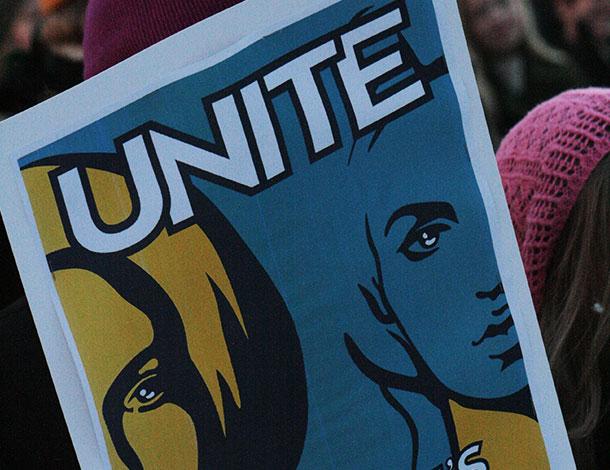
L’AWID imagine un monde où les réalités féministes prospèrent, où les ressources et le pouvoir sont partagés de façon à permettre à chacun-e, y compris aux générations futures, de s’épanouir et de réaliser leur plein potentiel dans la dignité, l’amour et le respect et où la Terre nourrit la vie dans toute sa diversité.
Notre mission est d’aider les mouvements féministes, en faveur des droits des femmes et de la justice de genre à s’épanouir, à être un élément moteur de l’opposition aux systèmes d’oppression et à co-créer des réalités féministes.
Nous promouvons notre travail au travers des stratégies suivantes:
Nous tirons collectivement parti de notre portée, de notre pouvoir, de nos ressources et de nos relations afin d’influencer stratégiquement les politiques et les pratiques. Nous visons à promouvoir les programmes féministes à travers les collaborations que nous menons avec les décideurs politiques, les fonda-trices-teurs et les activistes au sein des espaces régionaux et internationaux. Dans le cadre des efforts que nous déployons pour renforcer notre pouvoir et influence collectifs, nous incitons également les mouvements féministes et de lutte pour les droits des femmes à accorder une place centrale aux mouvements historiquement opprimés.
Nous nous servons de notre pouvoir mobilisateur pour faciliter le dialogue et élaborer des stratégies sur des questions clés. Nous connectons nos membres et nos allié-e-s les une-s- aux autres, et partageons et échangeons nos ressources, nos idées et nos actions sur des questions pertinentes. Nous organisons des rassemblements et mettons à disposition des espaces nous permettant de consolider nos mouvements et de nouer des rapports les un-e-s avec les autres, d’imaginer et d’envisager de nouveaux horizons, de développer des stratégies d’influence efficaces et de créer ensemble des programmes et des processus importants.
Nous mobilisons nos membres et les mouvements que nous soutenons pour consolider l’action collective en solidarité avec les causes et les défenseur-e-s féministes en danger. Nous créons des partenariats, pratiquons l’écoute active et tissons des liens de solidarité continus et sur le long terme. Aux côtés de défenseur-e-s, nous oeuvrons à établir une base de connaissances et à soutenir des réseaux de solidarité autour de la protection et du bien-être.
Nous reconnaissons la valeur unique des stratégies culturelles et créatives dans la lutte contre les oppressions et l’injustice. Nous travaillons avec des artistes qui accordent une place prépondérante aux voix féministes et aux récits des communautés historiquement opprimées. Nous voyons en cette tactique émergente l’art et l’expression créative comme autant de moyens nous permettant d’imaginer un monde où l’on continue de célébrer des réalités féministes, et où ces dernières continuent de prospérer.
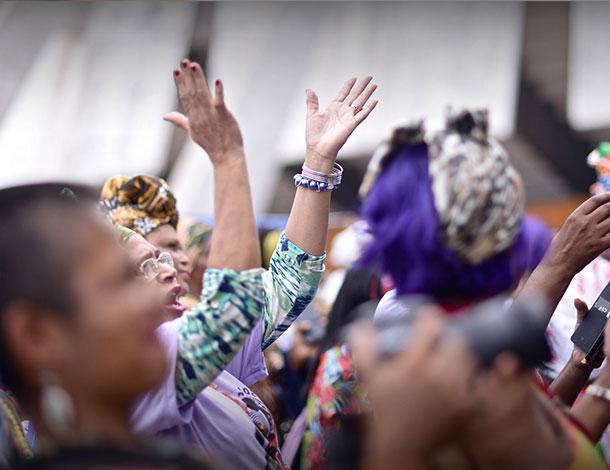
Nos initiatives oeuvrent à l’intersection des zones de changement que nous abordons, des mouvements que nous priorisons et des stratégies que nous déployons:
Nous surveillons, documentons et visibilisons la façon dont les acteurs anti-droits opèrent et conspirent au sein des espaces multilatéraux, et soutenons les mouvements et allié-e-s féministes, oeuvrant en faveur des droits des femmes et de la justice de genre pour contrer leur influence et leur impact.
En travaillant sur l’extractivisme, la justice fiscale et la responsabilisation des entreprises, nous acquérons des connaissances sur le pouvoir des entreprises et leur influence; nous plaidons pour la responsabilisation des entreprises et la distribution équitable des richesses; et amplifions les propositions féministes en faveur d’économies plus justes.
Nous développons des analyses accessibles et orientées vers l’action concernant l’état des ressources attribuées aux mouvements féministes. Nous nous efforçons d’influencer les pratiques et politiques des donateurs, d’approfondir et maintenir les subventions en faveur de changements sociaux féministes et de soutenir les besoins et les stratégies des mouvements.
L’AWID s’engage expressément à avoir de l’impact dans le monde et à renforcer nos propres résiliences et apprentissages organisationnels afin de consolider davantage les mouvements féministes internationaux.
Sans le généreux soutien et le financement de nos donateur-e-s, notre travail ne serait pas possible.