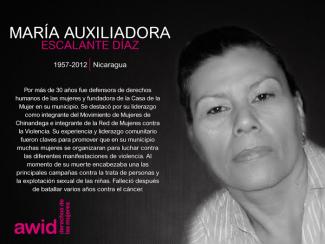
Maria Auxiliadora Escalante Diaz
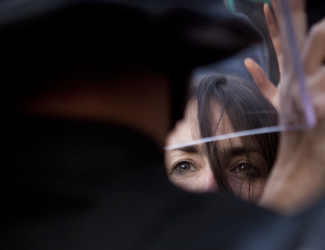
WHRDs are self-identified women and lesbian, bisexual, transgender, queer and intersex (LBTQI) people and others who defend rights and are subject to gender-specific risks and threats due to their human rights work and/or as a direct consequence of their gender identity or sexual orientation.
WHRDs are subject to systematic violence and discrimination due to their identities and unyielding struggles for rights, equality and justice.
The WHRD Program collaborates with international and regional partners as well as the AWID membership to raise awareness about these risks and threats, advocate for feminist and holistic measures of protection and safety, and actively promote a culture of self-care and collective well being in our movements.
WHRDs are exposed to the same types of risks that all other defenders who defend human rights, communities, and the environment face. However, they are also exposed to gender-based violence and gender-specific risks because they challenge existing gender norms within their communities and societies.
We work collaboratively with international and regional networks and our membership
We aim to contribute to a safer world for WHRDs, their families and communities. We believe that action for rights and justice should not put WHRDs at risk; it should be appreciated and celebrated.
Promoting collaboration and coordination among human rights and women’s rights organizations at the international level to strengthen responses concerning safety and wellbeing of WHRDs.
Supporting regional networks of WHRDs and their organizations, such as the Mesoamerican Initiative for WHRDs and the WHRD Middle East and North Africa Coalition, in promoting and strengthening collective action for protection - emphasizing the establishment of solidarity and protection networks, the promotion of self-care, and advocacy and mobilization for the safety of WHRDs;
Increasing the visibility and recognition of WHRDs and their struggles, as well as the risks that they encounter by documenting the attacks that they face, and researching, producing, and disseminating information on their struggles, strategies, and challenges:
Mobilizing urgent responses of international solidarity for WHRDs at risk through our international and regional networks, and our active membership.
No, we appreciate your work but are not asking for responses from individuals at this time.
NOUS SOMMES LA SOLUTION
Somos la Solución

In 2002 AWID celebrated its 20th anniversary. Given the challenging political, economic and funding environment in which women's organizations must survive, a milestone such as this is worthy of recognition.
In the past two decades the geo-political landscape has been transformed and development theories have come and gone, but approaches to ensure women benefit from development processes have endured.
In its twenty-year history, AWID grew from a volunteer organization for U.S. "Women in Development" (WID) specialists to an international network striving to support proactive and strategic gender equality research, activism and policy dialogue.
On the occasion of its 20th anniversary, this paper charts not only the changes in AWID's organizational structure and goals but also the shifts in policy approaches to gender equality in a changing global environment, through the lens of a membership organization committed to improving the lives of women and girls everywhere.
La encuesta está disponible en KOBO, una plataforma de fuente abierta para recopilar, gestionar y visualizar datos. Para participar, simplemente haz clic en el enlace a la encuesta aquí. Sigue las instrucciones para responder la encuesta.
Tenemos el placer de presentarte a Mariama Sonko, inspiradora ecofeminista, campesina y defensora de los derechos humanos y de las mujeres, que vive actualmente en Niaguis, en el suroeste de Senegal.
Al crecer en una familia y comunidad campesina rural, fue testigo del papel esencial de la mujer en la producción de alimentos y el almacenamiento de semillas desde la infancia, mientras estaba inmersa en el trabajo y ritmos de la tierra.
Mariama ha defendido el conocimiento agrícola local y las prácticas campesinas desde los años 1990. Como madre de 5 hijos, los alimentos que ella misma cultiva son la principal fuente de sustento de su familia.
Actualmente es presidenta de Nous Sommes la Solution y está comprometida con la promoción de las prácticas agroecológicas y la agricultura familiar, con el fomento de la soberanía alimentaria, la biodiversidad y la preservación de las semillas campesinas, y con la exigencia del acceso equitativo a los recursos y a la tierra en África Occidenta para las mujeres.
Fuente: AWID’s Feminist Realities Festival Crear | Résister | Transform - 2º día
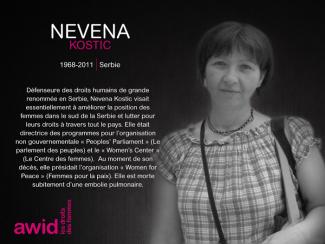
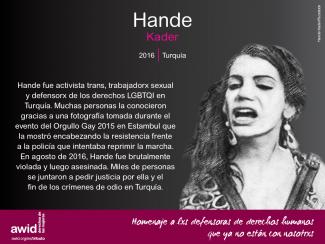
Estas defensoras lucharon por los derechos sobre la tierra, de las mujeres y de los pueblos indígenas; haciendo frente a las industrias extractivas, escribiendo poesía y promoviendo el amor. Una de ellas desapareció hace ya 19 años. Únete a nosotras para recordar y honrar a estas defensoras de derechos humanos, su trabajo y su legado, compartiendo los memes aquí incluidos; y tuiteando las etiquetas #WHRDTribute y #16Días.
Por favor, haz click en cada imagen de abajo para ver una versión más grande y para descargar como un archivo.


Oui, elle est accessible aux personnes ayant une diversité de capacités d’audition, de mouvement, de vision et cognitives.
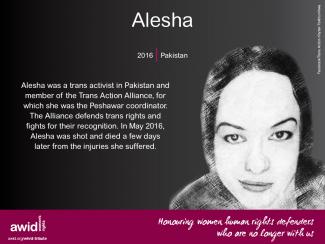

These transgender women were murdered because of their activism and their gender identity. There are insufficient laws recognizing trans* rights, and even where these laws exist, very little is being done to safeguard the rights of trans* people. Please join AWID in honoring these defenders, their activism and legacy by sharing the memes below with your colleagues, networks and friends and by using the hashtags #WHRDTribute and #16Days.
Please click on each image below to see a larger version and download as a file


If you wish to save your responses and come back to the survey later, you are able to do this whenever needed. KOBO will save your draft responses on the top left corner of the survey page and reload your record when you return to the survey. Just make sure to continue from the same computer and browser.