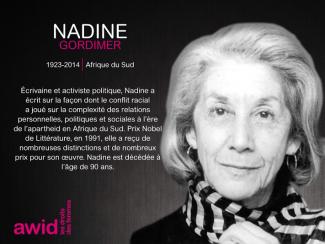
Nadine Gordimer
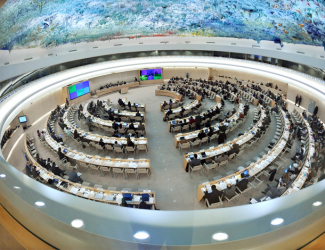
El Consejo de Derechos Humanos (CDH) es el cuerpo intergubernamental del sistema de las Naciones Unidas responsable de la promoción y protección de todos los derechos humanos en todo el mundo. El HRC se reúne en sesión ordinaria tres veces al año, en marzo, junio y septiembre. La La Oficina del Alto Comisionado para los Derechos Humanos (ACNUDH) es la secretaría del Consejo de Derechos Humanos.
Debate y aprueba resoluciones sobre cuestiones mundiales de derechos humanos y el estado de los derechos humanos en determinados países
Examina las denuncias de víctimas de violaciones a los derechos humanos o las de organizaciones activistas, quienes interponen estas denuncias representando a lxs víctimas.
Nombra a expertos independientes que ejecutarán los «Procedimientos Especiales» revisando y presentado informes sobre las violaciones a los derechos humanos desde una perspectiva temática o en relación a un país específico
Participa en discusiones con expertos y gobiernos respecto a cuestiones de derechos humanos.
A través del Examen Periódico Universal, cada cuatro años y medio, se evalúan los expedientes de derechos humanos de todos los Estados Miembro de las Naciones Unidas
Se está llevarando a cabo en Ginebra, Suiza del 30 de junio al 17 de julio de 2020.
AWID trabaja con socios feministas, progresistas y de derechos humanos para compartir conocimientos clave, convocar diálogos y eventos de la sociedad civil, e influir en las negociaciones y los resultados de la sesión.
Ika Vantiani est une artiste, conservatrice et créatrice indonésienne basée à Jakarta. Ses œuvres explorent l'idée d'être une femme dans la société d'aujourd'hui où médias et consommation sont inextricablement liés. Ika utilise le principe du collage et l'étend à des ateliers, des installations et au street art. Ika est membre de collectifs d'artistes dont Micro Galleries, The Collage Club et It's In Your Hands Collective.
Alejandra se passionne pour les droits des femmes et la justice de genre. Elle rêve de créer un monde qui place le soin en son cœur, celui des personnes comme celui de la nature. Experte féministe en droits humains, elle a travaillé dans des domaines en lien avec le genre, le climat, la justice sociale et économique au sein de diverses organisations internationales. Ses domaines d’expertise comprennent le développement des connaissances et la co-création, la recherche, la facilitation et le plaidoyer. Elle est titulaire d’un master en droits humains de l’université d’Essex et a rédigé et co-élaboré de nombreuses publications, dont l’article «Enragée: Femmes et Nature». La campagne Activisme Féministe Sans Peur s’appuie sur des entretiens et des recherches menés par Alejandra.
Originaire d’Argentine, elle a vécu et travaillé dans plusieurs pays d’Europe et d’Amérique latine au cours des vingt dernières années. Alejandra aime la photographie, la mer, préparer des gâteaux avec sa fille et déguster des plats du monde entier. En tant que mère, elle met un point d’honneur à briser le cycle des schémas répétitifs transgénérationnels. Alejandra puise son énergie et son inspiration auprès des femmes extraordinaires qui font partie de sa vie, et qui vivent aux quatre coins du monde.
This project is built in collaboration with:
You can expect all the standard materials for workshops and presentations: flip charts, markers, sticky notes, in addition to projectors and audio-visual equipment. Any additional materials are the responsibility of the activity organizers. AWID’s logistics team will be available to answer questions and advise.
Manal Tamimi Palestine
Bubulina Moreno, Colombia
Karolina Więckiewicz, Poland
Anwulika Ngozi Okonjo, Nigeria
Actualmente contamos en nuestra membresía con cientos de organizaciones destacadas e innovadoras que trabajan en temas relacionados con los derechos de las mujeres y el desarrollo. Los criterios de afiliación son los mismos que para las personas a título individual, aunque las cuotas y los beneficios son diferentes, con el fin de atender a las necesidades de las instituciones afiliadas.
ทุกสามถึงสี่ปี AWID จะเป็นเจ้าภาพงานประชุมนานาชาติที่สำคัญ โดยจะเป็นการประชุมขนาดใหญ่ระดับโลกที่หัวใจหลักอยู่ที่ขบวนการเฟมินิสต์และความเป็นธรรมทางเพศที่หลากหลาย เป็นการรวมตัวกันระดับโลกของนักกิจกรรมเฟมินิสต์ เครือข่ายพันธมิตร นักวิชาการ แหล่งทุน และผู้กำหนดนโยบาย โดยฟอรัมเปลี่ยนสถานที่จัดหมุนเวียนไปในต่างภูมิภาคและในประเทศต่างๆทั่วซีกโลกใต้
 |
Le rassemblement comme plaisir :
|

ไม่ คุณไม่จะเป็นต้องเป็นสมาชิก AWID เพื่อที่จะเข้าร่วมฟอรัม แต่สมาชิก AWID จะได้รับส่วนลดค่าลงทะเบียนรวมถึงสิทธิประโยชน์อื่นๆ เรียนรู้เพิ่มเติมเกี่ยวกับการเป็นสมาชิก AWID
As part of our commitment to engage more deeply with artists and the practice of co-creating Feminist Realities, AWID collaborated with an Artist Working Group to advance and strengthen feminist agendas and realities in their communities and movements through their creative expression. Our intention here is to bring feminist creatives together in a powerful and brave space where they grow and live freely, and where they shatter toxic narratives to replace them with transformative alternatives.
The Monterrey Conference on Financing for Development marked the beginning of discussions on the Financing for Development agenda.