Consejo de Derechos Humanos (CDH)
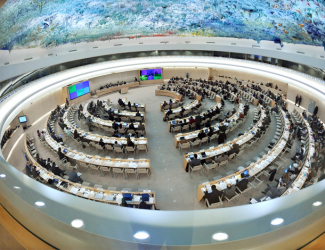
El Consejo de Derechos Humanos (CDH) es el cuerpo intergubernamental del sistema de las Naciones Unidas responsable de la promoción y protección de todos los derechos humanos en todo el mundo. El HRC se reúne en sesión ordinaria tres veces al año, en marzo, junio y septiembre. La La Oficina del Alto Comisionado para los Derechos Humanos (ACNUDH) es la secretaría del Consejo de Derechos Humanos.
El CDH trabaja de la siguiente forma:
-
Debate y aprueba resoluciones sobre cuestiones mundiales de derechos humanos y el estado de los derechos humanos en determinados países
-
Examina las denuncias de víctimas de violaciones a los derechos humanos o las de organizaciones activistas, quienes interponen estas denuncias representando a lxs víctimas.
-
Nombra a expertos independientes que ejecutarán los «Procedimientos Especiales» revisando y presentado informes sobre las violaciones a los derechos humanos desde una perspectiva temática o en relación a un país específico
-
Participa en discusiones con expertos y gobiernos respecto a cuestiones de derechos humanos.
-
A través del Examen Periódico Universal, cada cuatro años y medio, se evalúan los expedientes de derechos humanos de todos los Estados Miembro de las Naciones Unidas
La Sesión actual - CDH44
Se está llevarando a cabo en Ginebra, Suiza del 30 de junio al 17 de julio de 2020.
AWID trabaja con socios feministas, progresistas y de derechos humanos para compartir conocimientos clave, convocar diálogos y eventos de la sociedad civil, e influir en las negociaciones y los resultados de la sesión.
Con nuestrxs socixs, nuestro trabajo será:
◾️ Monitorear, rastrear y analizar actores, discursos y estrategias anti-derechos y su impacto en las resoluciones
◾️ Desarrollar conjuntamente una labor de promoción conjunta para contrarrestar a los actores anti-derechos y debatir más a fondo las conclusiones del Informe de Tendencias de OUR de 2017
◾️ Apoyar, coordinar y desarrollar de manera colaborativa el Caucus feminista emergente en el CDH
Contenido relacionado
Suscríbete para recibir nuestras noticias
Clone of CFA 2023 - Hybrid like never before: in person - EN
In-person
Participants will come together in Bangkok, Thailand. We can’t wait!
Snippet - COP30 Join thousands CTAs - FR
Rejoignez des milliers des personnes qui exigent une véritable justice climatique :
Suivez la campagne:
Rejoignez-nous
Devenir membre| Rejoignez notre communauté
Ne ratez rien des actualités
Abonnez-vous pour les actualités
Des questions ?
Contactez : communications @ awid.org
المانغو
ترجمة رولا علاء الدين
![]() |
جوريما آراوْخو، معلّمة وشاعرة من ريو دي جانيرو. ساهمت في مجلة Urbana التي حرّرها الشاعران برازيل باريتو وسامارال، وفي كتاب Amor e outras revoluções “الحب والثورات الأخرى” مع العديد من الكتّاب الآخرين. بالتعاون مع أنجليكا فيراريس وفابيانا بيريرا، شاركت في تحرير O livro negro dos sentidos “الكتاب الأسود للحواس”، وهو مختارات إبداعية عن الحياة الجنسية للمرأة السوداء في البرازيل. جوريما عمرها 54 سنة. لديها ابنة وثلاثة كلاب وقطة والعديد من الأصدقاء. |

مَن يودّ المصّ معي؟المانغو هي الثمرة المفضّلة عندي. |
تقديم كتاب الحواس الأسود The Black Book of Senses
يومَ دعتني أنجليكا وفابي لأكون القَيِّمة على تشكيلة نصوص شبقية من تحرير نسوة سود لم أكن أعرف ما يعنيه عملُ القيِّم. الشبق ومشتقاته، هذه فهمتها جيداً، لكن عمل القَيِّم... ابتسمت تحت وطأة الخجل والإطراء. أظن أنّي شكرتهما، على الأقلّ آمل أنّي شكرتهما، وقلت في ذاتي: ماذا تعني هذه الكلمة اللعينة؟! حسناً، سأضطر إلى سَبر معاني هذا اللقب المُبهرَج وأنا أطبّقه.
اليوم، أنا على دراية بما يعينه عمل القيِّم. هو بمثابة ممارسة الحبّ مع نصوص شخصٍ آخر، مع فنّ شخصٍ آخر، بغية تجميع كتاب وتنظيمه. وهذا تماماً ما قمت به. عرّيت بشهوانية أدبية كلّ نصّ لكلٍّ من الكاتبات. تعمّقت في كلمات وحواس الآخرين. ولَجَتني قصائدُ لم أكتبها. حكايات ما كنت لأجرؤ على تخيّلها قلبتني رأساً على عقب وأربكت مشاعري وعبثت بشهوتي الجنسية. وكانت نشوةٌ رائعة وفريدة: سماويّة وجسمانيّة وسامية في آنٍ واحد، فكريّة وحسّيّة.
تنبض هذه النصوص كالبظر المنتصب رغبةً، رطبةٌ، ينسال منها الفرح مع كلّ قراءة. كلمات ابتلعتني بإيحاءتها اللعوبة، تأخذني أعمق فأعمق في هذا العالم الرّطب.
غطست هذه النسوة السود إلى قعرِ هَيْجِهنّ وحوّلن أعمق تخيّلاتهنّ الشبقيّة إلى فنٍّ.

أُخْصِبَت هذه الأعمال بأسلوبِ كلٍّ من الكاتبات الخاصّ في التجربة الجنسانية، بحريّة، بسوداوية، بأنفسنا، بطريقتنا الخاصّة، بتمكّن.
اخترت أن أوزّع هذه النصوص في مختلف أجزاء الكتاب ونظّمتها بحسب محتواها الأكثر رقّة أو انفعالية أو بديهية أو ضمنيّة.
استهلالاً لهذا «اللبّ الأسود المفترج»، تأتي أقسام ’التمهيدات‘ (Preliminaries) بنصوصها التي تقدّم لمحةً للقرّاء عن عالم الأطايب هذا، وهي بمثابة لمسَة شاملة رقيقة تُعرِّف بالمواضيع التي تطرحها النصوص في باقي الكتاب.
يلي ذلك لهيبُ ’اللمس‘ (Touch) وهو جزءٌ يُعنى بكلّ ما تشعر به البشرة. تلك الطاقة التي تحرق أو تُثلِج أجسادنا، التي تفجّر هُرموناتنا وتوقظ حواسنا الأخرى. صحيحٌ أنّ كثيرين بيننا يستمتعون بشهوة التلصُّص، لكنّ ملامسة البشرة بالفم الدافئ والرّطب مثيرٌ، وهو كالتطواف في نعومة الآخر. تُغرينا اللمسة اللطيفة أو الحازمة وتجتاحنا القشعريرة، وذلك التوتّر الجميل الذي يسري من العنق إلى الظهر ولا يختفي إلا اليومَ التالي. ودفء الشفاه والفم واللسان الرّطب على البشرة، آه من حلاوة لسانٍ ينساب داخل الأذن، أو احتكاك الجلد بالجلد، والملابس تتموّج على الجسد وكأنّها امتدادٌ لليدّ. ولمّا يكون التروّي جزءاً من المتعة، وتعصف بك الإثارة بفعل قبضة مُحْكَمة وبعضٍ من الألم – أو الكثير منه، من يدري؟
أمّا ’الصوت‘ (Sound) – أو اللحن؟ – فيبيّن لنا أنّ الانجذاب يحصل أيضاً عبر حاسّة السمع: صوت الشخص، الهمسات، الموسيقى التي تشعل التواصل بين جسدٍ وآخر وقد تمسي محورَ الرغبة. فبالنسبة لبعضٍ منّا، لا يتطلّب الأمر إلّا الأوتار الصوتية لشخصٍ ذي صوتٍ جميل، فذاك الصوت الأجشّ أو العميق أو الرخيم يكون كممارسة الجنس سمعياً. أن نسمع سِبابَهم الصارخ أو كلامهم المعسول همساً في الأذن يكفي لتجتاحنا قشعريرة الإثارة من الرأس إلى أخمص القدميْن.
في ’المذاق‘ (Flavor)، نأتي إلى اللسان وهو الخبير في استكشاف الخبايا يجول هائماً على جسد الآخر ويتلذّذ. وأحياناً يُقحَم اللسان قحماً لتذوُّق رحيق الآخر. فكرة أن يُشاركنا أحدٌ فراولته أو مانغته الشهيّة الملأى، بالعضّ واللحس، أو اللحس ثم العضّ، فكرةٌ كفيلة بإذابتنا. لكن لا شيء يعلو على حلاوة تذوُّق جسد الآخر بكهوفه وتلاله. إقحامُ اللسان في العمق لتذوُّق الثمرة، أو قضاءُ ساعاتٍ في تذوُّق رأس القضيب في الفم، أو رضعُ ثدي شهيّ لتذوُّق الحلمة... كلّها أفعال تسعى إلى حفظ ’مذاق‘ الآخر في الذاكرة.
نجد أيضاً نصوصاً تصف كيف تُستثار الرغبة عبر الأنف. ’الرائحة‘ (Smell)، أعزائي القرّاء، قد توقظ فينا شهوات الرغبة. أحياناً نلتقي شخصاً رائحته عبقة لدرجة أننا نودّ التهامه بأنفنا. يريد الأنف أن يجول في أنحاء الجسد ويبدأ من العنق وآهٍ من الرعشة الحلوة التي تصيبنا وتعرّي الروح! يقلّ حياء الأنف فيتعمَّق ويلفّ حول العنق ليلتقط عَبَق رائحة الآخر فيحفظها. وفي غياب هذا الشخص، إن إلتقط الأنف رائحة شبيهة يحضر الشخص في ذاكرتنا، أو إن استحضرته الذاكرة تجتاحنا الرائحة والإثارة.
نصل إلى ’النظر‘ (Look)، وهو برأيي غدّار الحواس، ومن خلاله ندرك الرغبة من وجهة «نظر». هنا النصوص تصف الرغبة والإثارة عبر حاسة النظر التي توقظ باقي الحواس. أحياناً، ابتسامةٌ تكفي لِنُصاب بالجنون. تبادُل النظرات؟ تلك النظرة التي تقول «أريدك الآن». نظرة التملّك تلك التي لا تنكسر إلا مع انتهاء المضاجعة، وقد تدوم بعدها. هذه نظرة فريدة من نوعها، تجذب الآخر فيعجز عن إشاحة نظره لوقتٍ طويل. والنظرات المُسترَقة حيث يشيح واحدٌ بنظره ما أن يلتفت إليه الآخر كأنّهما في مطاردة كالقط والفأر. وما أن تلتقي الأعين وينفضح أمرنا جُلّ ما يمكننا فعله هو أن تنفرج أساريرنا بابتسامة فاغرة.

ختاماً، يأتي الانفجار في جزء ’الحواس كافة‘ (All Senses) حيث النصوص تمزج المشاعر لتبدو كحالة تأهّب لنصل إلى اللذة القصوى، إلى النشوة.
طبعاً، لا شيء يفصل بوضوح بين هذه القصائد والحكايات. بعضها رقيقٌ بتلميحه. الإثارة تُشغِل الحواس كافّة، والأهمّ أنّها تُشغِل الرأس، فهُنا مقام كلّ ما يحدث والجسد بكامله يستجيب. لقد نظَّمتُ القصائد وفقاً لما أثارته فيّ عند قراءتها، ولكم الحريّة في مخالفة رأيي هذا. لكن بالنسبة لي، الرغبة تنبع من حاسّة معيّنة ومن ثم تنفجر، وثمّة لذّة في تتبّع مسار الرغبة وتحديد أيٍّ من الحواس استقلّت.
إنّ القدرة على تحويل الإثارة إلى فنّ تعني تحرير أنفسِنا من الأحكام المسبقة والسجون ووصمات العار كلّها التي حبَسَنا فيها هذا المجتمع المُتمَحوِر حول العرق الأبيض.
كلّما تقوم كاتبة سوداء بتحويل الشبقيّ إلى فنّ فهي تخلع السلاسل العنصرية المؤذية التي تشلّ جسدها وتقمع جنسانيتها وتجعل منّا غرضاً لجشع الآخرين. إنّ كتابة الشعر الشبقيّ هي استعادة لسلطتها على جسدها وهي التنقّل بلا خوف بين ملذّات الرغبة من أجل ذاتها ومن أجل الآخرين ومن أجل الحياة.
الكتابات الأدبية الشبقيّة هي نحن عندما نتّخذ الشكل الفنّي. الشكل الذي يتيح لنا إظهار أفضل ما لدينا وآرائنا في الحبّ الملأى لذّة والمتبّلة بشهوة أجسادنا والتي تُترجَم عبر وَعْينا الفنّي. نحن متنوّعات، وهنا نشارككم هذا التنوّع في الأحاسيس عبر الكلمات المُشبَعَة إثارة. صحيح، حتّى كلماتنا ترشَح برغبتنا الجنسية وترطّب آياتنا وتجعل من شهواتنا قصائدَ. النشوة، بالنسبة لنا، إنجاز.
أن تكون عقولنا وأجسادنا وجنسانياتنا سوداء هو أمرٌ ضروري لاستئناف لذّتنا واستعادة نشوتنا. عندها فحسب نصير أحراراً. هذه العملية برمّتها إنجازٌ وهي لا تخلو من الألم. لكنّه من المفرح أن نجد أنفسنا في مكان مختلف جداً عن حيث تمّ وضعنا.
أشعر أنّي لكنّ/لكم، أنّي لنا. تذوّقوا هذه الكلمات العذبة معنا، تلذّذوا بها، ولْتَكُن وليمة.
هذا النص مقتبس من مقدمة كتاب «O Livro Negro Dos Sentidos» وهي تشكيلة قصائد شبقيّة لثلاثٍ وعشرين كاتبة سوداء.

Explore Transnational Embodiments
This journal edition in partnership with Kohl: a Journal for Body and Gender Research, will explore feminist solutions, proposals and realities for transforming our current world, our bodies and our sexualities.

التجسيدات العابرة للحدود
نصدر النسخة هذه من المجلة بالشراكة مع «كحل: مجلة لأبحاث الجسد والجندر»، وسنستكشف عبرها الحلول والاقتراحات وأنواع الواقع النسوية لتغيير عالمنا الحالي وكذلك أجسادنا وجنسانياتنا.
CFA 2023 - Hubs - thai
ใหม่
จุดศูนย์กลาง: การเดินทางข้ามพรมแดน
ผู้เข้าร่วมประชุมจะได้เข้าร่วมตามสถานที่ต่างๆนอกเพื้นที่ในการจัดงานที่กรุงเทพฯ และตามส่วนต่างๆของ โลกในแต่ละวันของการประชุม สถานที่ประชุมที่ผู้เข้าร่วมจัดการเองทั้งหมดนั้นจะเชื่อมต่อกับสถานที่จัดงาน
จริงในกรุงเทพฯเช่นเดียวกับบุคคลที่เชื่อมต่อทางออนไลน์ ผู้เข้าร่วมในจุดศูนย์กลาง Hub นี้จะสามารถ ดำเนินรายการในหัวข้อกิจกรรมต่างๆ เข้าร่วมอภิปราย แลกเปลี่ยน และเพลิดเพลินไปกับโปรแกรม ที่หลากหลาย
ที่ตั้งจุดศูนย์กลาง Hub จะประกาศในปี 2567
Dr. Nuzhat Amin
#2 - Sexting like a feminist Tweets Snippet FR
Un indice visuel est toujours utile

« La sexualité est fluide, et là mon vagin aussi. »
#FeministFestival #SextLikeAFeminist
Snippet 3 - What's happening at HRC61 Intro
Expected Resolutions Relevant to Gender and Sexuality
-
The rights of the child (EU & GRULAC)
-
Birth registration and the right of all to recognition as a person before the law (Mexico, Turkiye)
-
Adequate housing as a component of the right to an adequate standard of living and the right to non-discrimination in this context (Germany, Finland)
-
Negative impact of unilateral coercive measures on the enjoyment of human rights (Non-Aligned Movement)
-
Effects of foreign debt and other international financial obligations on the enjoyment of human rights (mandate renewal) (Cuba)
-
Rights of persons with disabilities, digital technologies, and inclusive disability infrastructure (Mexico, New Zealand)
-
Rights of the child (focus: Children in armed conflict) (Uruguay on behalf of a group of States from Latin America and the Caribbean and European Union)
-
Right to work (Egypt, Greece)
-
Right to food (Cuba)
-
Promotion of the enjoyment of cultural rights of all and respect for cultural diversity (Cuba)
-
Human rights situation in the Occupied Palestinian Territory, including East Jerusalem and the obligation to ensure accountability and justice (Organisation of Islamic Cooperation)
-
Right of the Palestinian people to self-determination (Organisation of Islamic Cooperation)
-
Israeli settlements in the Occupied Palestinian Territory, including East Jerusalem and in the occupied Syrian Golan (Organisation of Islamic Cooperation)
بصمة حبّ جماعيّة
تصوير مريم مكيوي
ترجمة فيفيان عقيقي
![]() |
![]() |
![]() |
| تُعرَف أيضًا باسم “شبكة تيتا للأبحاث”. دائرة الكتابة: العصبةُ المتآمرة هي مجموعة عابرة للقوميات من الكتّاب الكويريين والنسويين الذين يتشاركون في الكتابة الجماعية والتفكير وصنع العالم. أعضاء المؤامرة هم: أحمد قيس منهزم، أحمد عوض الله، ألينا آخنباخ، باربرا ديندا، سيندي سلامة، دلال الفارس، ديباراتي سركار، فرح جلال عثمان، ج. دانييل لوثر، جان مخلوطة، لينا قليلات، حنا الطاهر، ماريا نجار، مايا بهاردواج، مادوليكا سنكار، ملاك الأكحل، ميريام عمري، نيحاريكا بانديت، نور المزيدي، رؤيا حسن، سارة البنا، سارة تونسي، شيرين شلاح، وازنة زندن، زينب أحمد. | وازنة زندن (wazina.com) أفغانية نشأت في مدينة نيويورك، يركز عملها على جمع ورواية القصص المتعلقة بالذكريات الجماعية وطقوس العبور في الشتات. بصفتها تقدم آداءات روائية غير رسمية ولا تتبع منهجية معينة، تساهم وازنة في تقديم عرض بعنوان الخروج من المختبأ: الأفعال الراديكالية المتعلقة بالحب. يعد هذا العرض آداءًا شخصيًا لسرد قصص تجسد تجربة أن يكون المرء كويريًا ومسلمًا في آن. تقدم وازنة هذا الآداء إلى جانب نظيرتها الإبداعية وأختها الروحية ترنا دلي جيادو. حاليًا، تعمل على “الإيمان: في الحب / الإيمان في الحب” الذي (يعيد) تتبع قصة علاقة والديها ونصوص الحب الموروثة من العائلة. |
الحبّ هروب في الجحيم
الحبّ أسيد يذوِّب الحانات
لكن أنت، أنا والغد
نمسك أيدينا ونتعاهد
بأنّ هذا الكفاح سوف يستمرّ
للمنشار حدّان
للبندقية ماسورتان
نحن حبالى الحرّية
نحن مؤامرة
من واجبنا الكفاح من أجل الحرّية
من واجبنا الفوز
يجب أن نحبّ بعضنا وندعم بعضنا
لا يوجد ما نخسره سوى قيودنا
«الحبّ» لأساتا شاكور

«إذا استطعنا أن نرِث صدمةً، فهل يمكننا أن نرث بصمةً مُرتبطة بالحبّ؟»
هذا هو السؤال الذي تطرحه وازنة زوندُن في مذكّراتها «بصمة حبّ». «بصمة حبّ» هو تطواف، تداخل، انحراف يَخلق (أو يعيد خلق)، عند تقاطع المقابلات والمقالات الشخصيّة، قصص عائلاتنا ورؤىً عن الحبّ والشراكة والرومانسية. بتوجيهٍ من وازنة، اجتمعت مؤامرة كتّاب الدائرة، وحاولت إعادة إنتاج هذا المُخطّط الحرفي على شكل كتابة جماعيّة، حيث تُكمِّل قصصنا وهويّاتنا الجنسية والجندرية المُختلفة بعضها البعض، وتتناقض فيما بينها. مع تداخل أصواتنا، نُكمِّل جُمَلَ بعضنا لنخلق محادثة، تذكاراً، وأجزاء من أنفسنا تتحدّث إلى الـ»نحن».
ما هي أصول «بصمة حبّ»؟
أنا من يُسمّى «حادثة سعيدة». هناك الكثير من الروايات عن الأمر – حياة عرضية، إنّما مطلوبة في الوقت نفسه. أظن أنّ هذه هي طريقتي في الحبّ، فأنا لا أقع في الحبّ فقط؛ أنا أخاطر بانزلاق يؤدّي إلى السقوط. ربّما جعلني الأمر شخصاً قدره الحبّ.
قيل لي إنني طفلة غير مرغوب فيها. لذلك كَبِرت لأصبح شخصًا بالغًا غير مرغوب فيه. أصول «بصمة حبّ» تستند إلى كوني شخص غير مرحّب به بالأساس. أنا لستُ ثمرة حبّ أو أي مشاعر سعيدة، بل ثمرة ألَم وعبء. ليس لديّ بصمة حبّ – أقلّه بهذا المعنى.
أعرف أنّ والديّ كانا في حالة حبٍّ في مرحلة ما، لكنّ الصحّة العقلية شيطان، إلى حين يواجه المرء شياطينه، لا يوجد ربح.
لن أربط أبداً «الحبّ» بوالديّ أو عائلتي. كان الحبّ الذي يكبر مليئًا بالعنف والمسؤوليّات التي لم أشترك بها ولم أكن مستعدّة لها. شعرت لوقت طويل أنّ الحياة والحبّ يدوران حول حِملٍ مُرهِق وشاقّ. بينما كان والدايْ «يحبّان بعضهما البعض»، كانت روحٌ سامّة من العنف والغيرة وانعدام الأمن تنمو أيضاً. نشأتُ وأنا أتوق إلى الاستقرار، وهذا ما أنا عليه الآن. أنا مُجازفة، لكن ليس في «مساحة الحبّ».
لا أعرف لماذا اختارت والدتي استضافة طفل (أنا) في داخلها. هي لا تحبّ بهذا الشكل.
قالت لي والدتي إنّه إذا كان عليّ التفكير في «إيجاد» الحبّ، أن لا أنظر إلى زواجها كنموذج. تأتي «بصمة حبّ» بدلاً من تربية كلب على مدار عقدين ماضيين (18 عامًا لأكون دقيقة). والعكس صحيح أيضًا – لقد ربّوني. بتّ أفهم المزيد عن الحبّ وطبقاته العديدة في صحبتهم.
لم أعرف الحبّ من «بصمة». في منزلنا لا نتحدّث عن الحبّ. كان عليّ أن أعلّم نفسي كيف أحبّ. لقد كان عملاً صعباً. ما زلت أفشل، وما زلت أحاول وأفشل كلّ يوم. ربّما الفشل هو بصمة حبّي.
بصمة حبّي هي الرعاية والدفء والفهم الذي أعطيهم للمُحيطين بي، سواء كانوا غرباء أم أصدقاء أم أقارب أم عشيقاً. بصمة حبّي سياسيّة – غير محسوبة وغير مدروسة.
وُلدتُ تحت قصف عنيف. بصمة حبّي هي بصمة سلبية عن تلك الأحداث.
دروس مُستقاة عن الحبّ
أعرف ما هو ليس حبّاً أكثر ممّا أعرف الحبّ.
الحبّ ليس قلقاً ولا ذعراً.
الحبّ لا يطلب الإذن ليعيش أو يتنفّس. إنه الحبّ، ولا يوجد حبّ من دون حرّية.
كلّ ما تفعله هو استخدام قلبك من دون الحبّ. الحبّ هو أن تستخدم عقلك.
أحيانًا أخشى أن تضيع لغة حبّي في الترجمة.
--- هناك طرق عدّة
لرسم أصول
كيف
وكيف لا
تحبّ
الحبّ
ليس حبّاً
الحبّ كافٍ فقط
الحبّ بعيد جدّاً
بعض الحبّ
بعض الخسارة
لتحبّ
لتحبّ الخسارة ---
لا أستطيع تحمّل فكرة الزوجين. لا يمكنني تحمّل فكرة العيش بمفردي أثناء الشيخوخة أيضًا. لقد سئمتُ من القيام بالأعمال المنزلية بمفردي، والانتقال من منزل إلى آخر بمفردي، ودفع الإيجار والفواتير بمفردي... أتخيّل إصابتي بجلطة دماغية وأنا بمفردي، وهذا يخيفني. ليس لديّ خطّة «شراكة». أريد عالمًا يمكنني فيه الزواج من صديق، وشراء منزل مع صديق، وعدم ممارسة الجنس.
أن نحبّ كثيرين لا يفسد الحبّ المُشترك بين شخصين. سواء كان الحبّ رومانسيًا أم لا فهذا ليس مهمّاً حقًا.
عندما أفكّر في علاقاتي الرديئة، أُدرك أنني مُرتبطة بعلاقة تدرّبتُ لأكون فيها. مع كلّ «راديكاليّتي» لم أتخلّص بعد من الأعراف الجندرية القذرة.
حاجتي إلى الاستقرار «ليست جذّرية» بما فيه الكفاية. أريد الخروج من هذه الوصمة. أريد شيئًا لم أحصل عليه من قبل. أريد أن أجعله جم
--- بصمة حبّ – أحبّ شمّ الكتب لمعرفة مكان طباعتها
أحاول التفكير في أصل فهمي وممارستي الحبّ
هل نحتاج إلى أصول، فهو ليس مثل النقاء؟ لا طهارة ولا أصل للحبّ.
لماذا يتبادر الفهم والممارسة إلى الذهن وليس «العاطفة»؟ ---
عندما أتّصل بوالدَيْ، لا أغلق الهاتف بعد قول الوداع، لكي أتمكّن من سماع أصوات المنزل.
ما الذي نحتاجه لكي نقع في/ نشعر بالحبّ في الموت؟
أثناء دفني وفق طقوس المذهب السنّي، أريد أن يجتمع كلّ الرجال والنساء معاً. لا أفهم سبب عدم القدرة على توديع الموتى من جنس مختلف؟ سوف تكون مراسم دفني وفق الطقوس السنّية لأن والدتي قد ترغب بذلك. سوف يكون دفني صديقاً للبيئة. لا حاجة لوضع شاهد فوق قبري. أنا أحبّ كلّ طقوس الدفن. القرآن جيّد، لكنّي أريد موسيقى أيضًا. أحبّ أسمهان جدّاً، وأم كلثوم، وذا ستون روزيز.s.
لديّ قائمة تشغيل من الاثنين إلى الجمعة، وقائمتان مختلفتان لعطلة نهاية الأسبوع: واحدة ليوم السبت والأخرى ليوم الأحد. أودّ ممّن يحبّوني أن يشغّلوا الموسيقى التي كنت أستمع إليها مع الالتزام بقوائم الأيّام – هناك هامش حرّية في اختيار الأغاني طالما يلتزمون بقوائم التشغيل.
أريد أن أكون مُحاطة بمن أحبّني، ولو للحظة. مع الموسيقى والأزهار المقطوفة. لا أريد أن يشعروا بغيابي. أريد أن أموت على وقع ضحكات من أحبّهم.
أريد أن يتذكّروني كشخص يحبّ.
لست بحاجة للشعور بالحبّ في الموت. أريد ممّن حولي أن يشعروا بأنني أحبّبتهم، حتّى بعد موتي. أن تكون محبوبًا في الموت هو أمر مُرتبط بمَن لا يزالون على قيد الحياة. لذلك أفكّّر أكثر في كيفيّة لقائنا معًا كمجتمع حيّ ومحبّ في موت مَن نحبّهم ونعيش معهم. كيف نأخذ ذكرياتهم معنا. كيف نصبح أرشيفاً لحياتهم.
--- في بعض الأحيان يمكنك أن تحبّ الناس في موتهم فقط --
عليّ التفكير في الجسد المُتّصل بمساحة. عائلتي صغيرة جدًا، وعلى الرغم من أننا نأتي من أماكن مختلفة، لكن يبدو كما لو أن كلّ جيل انتقل إلى مكانٍ جديد. ربّما هذا هو سبب عدم ارتباط الموت بمكان خاص: مقبرة. من الشائع في عائلتنا دفن الموتى من دون أسماء أو شواهد قبور، أو ترك الرماد يتحرّر بتطايره مع الريح. أشعر بسلام إذا كان ذكري مُنفصلاً عن المكان. مجرّد التفكير بأن رمادي يُخصّب حياة جديدة، وأنّه يتمّ ذكري في أوقات التسلية والفرح، يعطيني إحساسًا بأنني محبوبة. توفّيت جدّتي في وقت سابق من هذا العام بسبب مضاعفات اللقاح. بعد ساعتين من وفاتها، جلست عائلتي تضحك على نكاتها، وطريقتها المُضحكة في سرد القصص. ضحكنا وشعرنا بالحبّ وكأنّها تجلس معنا مرّة أخرى. هذا ما قد يجعلني أشعر بسلام – تخصيب التراب، وتخصيب الأحاديث، والتذكّر الجماعي.
--- هناك
شارعان أسلكهما
للمشي
للهرب
للّعب
للبقاء
هناك
خمس ساعات تكون أشعة الشمس
حادّة
السماء زرقاء
الأرض خضراء
هناك
زهرة أستطيع
شمّها
لمسها
عصرها
واقتلاعها
هناك
أصدقاء أستطيع
ضمّهم
طعام
أستطيع
ابتلاعه
لغة
تخرج
عبر شفتيّ
ربّما لا يزال هناك
أماكن عدّة
وأشياء
وناس
من بعدي ---
ربّما يكفيني وعد بـ»الاحتفاء بذكري مكانياً» كما لو أنني نبتة يجري الاعتناء بها حتّى تصبح شجرة. لا إسم ولا لوحات تعريفيّة – النبتة/ الشجرة فقط مع عِلمٍ مُسبق بأنّه سوف يتمّ الاعتناء بها. بالنسبة لجسدي، أريد أن أُحرَق من دون أي طقوس، وأن يُرمى رمادي في بحر العرب.
أريد أن يتمّ التعامل مع جسدي بشكل تخريبي كما لو أنّه على قيد الحياة.
لا أريد أن أدفن إلى جانب عائلتي. في هذا الدُرج الصغير إلى جانب كلّ الأشخاص الذين لم يعرفوني أبدًا. محاصرة بالموت كما كنت في الحياة. أريد أن أُحرَق، وأن يتمّ تحرير رمادي أخيراً.
أريد أن يُسمح لي بالمرور، لا الوقوف ما بين بين، لكي يكون ذلك وجوداً، عملية نشطة، تجاوز.
سأطلب منكم:
- إطلاق سراحي والسماح لي بالمرور
- عدم السماح للحنين بتعكير هذه اللحظة لأنني لن أطلب سوى عودة تعابيركم إلى طبيعتها
- لقد اقتنصت اللمحات اللطيفة، وتخلّصت من الطرق الصغيرة والكبيرة التي أحبّبتموني بها سعياً للخلود. أبقيت نفسي على قيد الحياة بهذه الطريقة
- تحديد وقت للحزن
- تذكّر أنّه لا يوجد فراق في جمال الحبّ؛ إنه لا نهائي ويتجدّد من دون الجسد
أريد أن يتذكّروني من خلال الحبّ الذي تركته. أريد التخلّي عن جسدي وأعضائي لتغذية الحبّ في حياة أو حياوات أخرى.
--- رائحة الياسمين ---

Explore Transnational Embodiments
This journal edition in partnership with Kohl: a Journal for Body and Gender Research, will explore feminist solutions, proposals and realities for transforming our current world, our bodies and our sexualities.

التجسيدات العابرة للحدود
نصدر النسخة هذه من المجلة بالشراكة مع «كحل: مجلة لأبحاث الجسد والجندر»، وسنستكشف عبرها الحلول والاقتراحات وأنواع الواقع النسوية لتغيير عالمنا الحالي وكذلك أجسادنا وجنسانياتنا.
CFA 2023 - breadcrumbs Menu _ cfa-thai
Teresita Navacilla
Communicating Desire | Content Snippet
Communicating Desire
and Other Embodied Political Praxes
Communicating Desire
Host: We tend to think about communicating desire as something that is limited to the private intimacy of the bedroom and our personal relationships. But can we also think of this kind of communication as a structure, a praxis that informs our work, and how we are, how we do in the world?

Lindiwe
I believe that unfortunately in the past, expressing your sexuality has been limited. You were allowed to express it within the confines of your marriage, which was permitted, there have always been taboo and stigmas attached to expressing it any other way. When it comes to communicating, obviously the fact that certain stigmas are attached to expressing your sexuality or expressing your desire makes it a lot harder to communicate that in the bedroom or intimately with your partner. From my personal experience, I do believe that obviously if I feel more comfortable expressing myself outside of the bedroom on other matters or other topics, it’s easier for me to build that trust, because you understand conflict resolution with that particular person, you understand exactly how to make your communication special towards that particular person. It’s not easy. It’s something that is consistently done throughout whatever your engagement is, whether it’s your relationship or whether it’s casual and just in the moment. But I believe that confidence outside can definitely translate to how you communicate your desire.
Manal
Since childhood, a woman is raised with that, “you’re not allowed to talk about your body, you’re not allowed to talk about your desire,” which puts a heavy responsibility on women, especially girls in their teens when they need to express themselves and talk about these issues. So for me I think this is a big problem. You know, I have been married for more than 25 years, but still, until now, I cannot talk about my desires. I cannot say what I want or what I prefer, because it’s like I’m not allowed to go beyond this line. It’s like haram, despite it being my right. This is the case for all my friends, they just can’t express themselves in the right way.
Louise
Personally, I find that expressing our desires, my desires, however that expression comes in hand, has to do with the other, and the gaze that the other would have on me. So this is also something that we can link to cinema. And the gaze I would have on myself as well: what I think I am as an individual, but also what society expects of me and my sexuality. In the past, I somehow did the analogy between what happens in the bedroom and what happens in the workplace, because there is sometimes this dynamic of power, whether I want it or not. And oftentimes, verbal communication is harder than we think. But when it comes to representation in film, that’s a totally different game. We are very far away from what I guess all of us here would like to see on screen when it comes to just communicating sexual desires inside or outside the bedroom.
Online and Embodied
Host: We can think about the digital world as embodied: while it might be virtual, it is not less real. And this was made clear in the context of AWID’s feminist realities festival, which took place entirely online. What does it mean then to talk about sexuality, collectively, politically, in online spaces? Do we navigate virtual spaces with our bodies and affects, and in this case, what are the different considerations? What does it do to communication and representation?

Lindiwe
Social media makes you feel community-based. When you express what it is that you want or like, there is someone who’s either going to agree or disagree, but those who do agree make you feel that you belong to a community. So it’s easier to throw it out into the universe, or for others to see, and potentially not get as much judgment. And I say this very loosely because sometimes, depending on what it is that you’re expressing, it either will get you vilified or celebrated. But when it comes to the bedroom, there is an intimacy and almost a vulnerability that is exposing you and different parts of you that is not as easy to give your opinion on. When it comes to expressing your desire, speaking it and saying it and maybe putting a Tweet or a social media post, or even liking and reading other communities that are same-minded is a lot easier than telling your partner, “this is how I want to be pleasured” or “this is how what I want you to do next,” because of the fear of rejection. But not only that, just the vulnerability aspect – allowing yourself to be bare enough to let the other person see into what you are thinking, feeling, and wanting – I think this is where the difference would come in for me personally. I feel it is a lot more community-based on social media, and it’s easier to engage in discourse. Whereas in the bedroom, you don’t want to necessarily kill the moment. But I think that also kind of helps you understand going forward, depending on the relationship with the person, how you would engage thereafter. So I always know that if I try to communicate something and I fail to do so in the moment, I can always try to bring it up outside of that moment and see what the reaction would be so I know how to approach it going forward.
Louise
You know the question in films is, I don’t know if the male gaze is done intentionally or not. Like we don’t really know that. What we know is that the reason why sexuality in general has been so heternormative and focused on penetration and not giving any space for women to actually ask for anything in films, is because most of the people who have been working in this industry and making decisions in terms of, you know, storytelling and editing have been white men. So rape revenge is this very weird film genre that was birthed in the 70s, and half of the story would be that a woman is being raped by one or multiple people, and in the other half, she would get her revenge. So usually she would murder and kill the people who have raped her, and sometimes other people next to them. At the beginning of the birth of this genre and for 30 years at least, those films were written, produced, and directed by men. This is why we also want so much representation. A lot of feminists and pioneers in queer filmmaking also used the act of filming in order to do that and to reclaim their own sexuality. I’m thinking about Barbara Hammer, who’s a feminist and queer pioneer in experimental cinema in the U.S. where she decided to shoot women having sex on 16mm, and by doing so reclaimed a space within the narrative that was exposed in film at that time. And there is also then the question of invisibilization: we know now, because of the internet and sharing knowledge, that women and queer filmmakers have been trying and making films since the beginning of cinema. We only realize it now that we have access to databases and the work of activists and curators and filmmakers.
Resisting Colonization
Host: And this opens up the conversation on the importance of keeping our feminist histories alive. The online worlds have also played a crucial role in documenting protests and resistance. From Sudan to Palestine to Colombia, feminists have taken our screens by storm, challenging the realities of occupation, capitalism, and oppression. So could we speak of communicating desire – the desire for something else – as decolonization?

Manal
Maybe because my village is just 600 residents and the whole village is one family – Tamimi – there are no barriers between men and women. We do everything together. So when we began our non-violent resistance or when we joined the non-violent resistance in Palestine, there was no discussion whether women should participate or not. We took a very important role within the movement here in the village. But when other villages and other places began to join our weekly protests, some men thought that if these women participate or join the protests, they will fight with soldiers so it will be like they’re easy women. There were some men who were not from the village who tried to sexually harass the women. But a strong woman who is able to stand in front of a soldier can also stand against sexual harassment. Sometimes, when other women from other places join our protest, they are shy at first; they don’t want to come closer because there are many men. If you want to join the protest, if you want to be part of the non-violent movement, you have to remove all these restrictions and all these thoughts from your mind. You have to focus on just fighting for your rights. Unfortunately, the Israeli occupation realizes this issue. For example, the first time I was arrested, I wear the hijab so they tried to take it off; they tried to take off my clothes, in front of everybody. There were like 300-400 people and they tried to do it. When they took me to the interrogation, the interrogator said: “we did this because we want to punish other women through you. We know your culture.” So I told him: “I don’t care, I did something that I believe in. Even if you take all my clothes off, everybody knows that Manal is resisting.”
Lindiwe
I think even from a cultural perspective, which is very ironic, if you look at culture in Africa, prior to getting colonized, showing skin wasn’t a problem. Wearing animal skin and/or hides to protect you, that wasn’t an issue and people weren’t as sexualized unless it was within context. But we conditioned ourselves to say, “you should be covered up” and the moment you are not covered up you are exposed, and therefore it will be sexualized. Nudity gets sexualized as opposed to you just being naked; they don’t want a little girl to be seen naked. What kind of society have we conditioned ourselves to be if you’re going to be sexualizing someone who is naked outside of the context of a sexual engagement? But environment definitely plays a big role because your parents and your grannies and your aunts say “no, don’t dress inappropriately,” or “no, that’s too short.” So you hear that at home first, and then the moment you get exposed outside, depending on the environment, whether it’s a Eurocentric or more westernized environment to what you are used to, then you are kind of free to do so. And even then, as much as you are free, there’s still a lot that comes with it in terms of catcalling and people still sexualizing your body. You could be wearing a short skirt, and someone feels they have the right to touch you without your permission. There is so much that is associated with regulating and controlling women’s bodies, and that narrative starts at home. And then you go out into your community and society and the narrative gets perpetuated, and you realize that you get sexualized by society at large too, especially as a person of color.

Resistance as Pleasure
Host: And finally, in what ways can our resistance be more than what we are allowed? Is there a place for pleasure and joy, for us and our communities?

Louise
Finding pleasure as resistance and resistance in pleasure, first for me there is this idea of the guerrilla filmmaking or the action of filming when you’re not supposed to or when someone told you not to, which is the case for a lot of women and queer filmmakers in the world right now. For example, in Lebanon, which is a cinema scene that I know very well, most of the lesbian stories that I’ve seen were shot by students in very short formats with “no production value” as the west would say – meaning with no money, because of the censorship that happens on an institutional level, but also within the family and within the private sphere. I would think that filming whatever, but also filming pleasure and pleasure within lesbian storytelling is an act of resistance in itself. A lot of times, just taking a camera and getting someone to edit and someone to act is extremely hard and requires a lot of political stance.
Lindiwe
I have a rape support group. I’m trying to assist women to reintegrate themselves from a sexual perspective: wanting to be intimate again, wanting to not let their past traumas influence so much how they move forward. It’s not an easy thing, but it’s individual. So I always start with understanding your body. I feel the more you understand and love and are proud of it, the more you are able to allow someone else into that space. I call it sensuality training, where I get them to start seeing themselves as not sexual objects, but as objects of pleasure and desire that can be interchangeable. So you’re worthy of receiving as well as giving. But that’s not only from a psychological point of view; it is physical. When you get out of the shower, you get out of the bath, and you’re putting lotion on your body, look at every part of your body, feel every part of your body, know when there are changes, know your body so well that should you get a new pimple on your knee, you are so aware of it because just a few hours ago it wasn’t there. So things like that where I kind of get people to love themselves from within, so they feel they are worthy of being loved in a safe space, is how I gear them towards claiming their sexuality and their desire.
Manal
You know we began to see women coming from Nablus, from Jerusalem, from Ramallah, even from occupied 48, who have to drive for 3-4 hours just to come to join the protests. After that we tried to go to other places, talk with women, tell them that they don’t have to be shy, that they should just believe in themselves and that there is nothing wrong in what we are doing. You can protect yourself, so where is the wrong in participating or in joining? Once I asked some women, “why are you joining?” And they said, “if the Tamimi women can do it, we can do it also.” To be honest I was very happy to hear this because we were like a model for other women. If I have to stand for my rights, it should be all my rights, not just one or two. We can’t divide rights.

Clone of Clone of Clone of Publications - Homepage - es
Publicaciones
Enciende tu fuego feminista leyendo nuestras investigaciones y publicaciones varias sobre financiamiento, defensoras de derechos humanos, construcción de movimientos, fundamentalismos, justicia económica, seguimiento y evaluación feminista y más
Depuis le coeur de la communauté
Par María Bonita - Venezuela
Nos ancêtres femmes forment un cercle
Sacré, vivant, puissant
Nous sommes au milieu
Et sentons leur force.
Le tambour bat le son de la terre
Notre peau s’habille de couleurs
Nous sommes vertes, rouges, oranges, bleues, violettes, noires
Le tambour bat le son de la terre
La voix vibre, le cri envahit, le chant retentit, berce le sommeil, éveille la conscience.
Le tambour bat le son de la terre
Et le regard se fait complice, ami, profond.
Le tambour bat le son de la terre
Nous ne sommes qu’un seul cœur battant au rythme de l’âme, il nous invite à bouger, nous inspire le désir, nous montre un chemin
Celle du rassemblement communautaire, celle du pouvoir populaire, celle de l’auto-gouvernement, celle de la révolution des femmes, celle du soin subversif.
Le tambour bat le son de la terre
Et je vous invite à entrer, à être voix, peau, regard, graine, feu, chanson, communion.
Le tambour bat le son de la terre
Et je vous invite à la découvrir, à l’aimer, la connaître et la défendre depuis le coeur de la communauté.
Cela fait 25 ans qu’elles habitent ces mêmes rues poussiéreuses, au sommet d’une colline qui porte le nom d’un lion; elles viennent d’endroits différents, beaucoup ont une tradition paysanne, elles ont la peau couleur rébellion, couleur cactus cardon, parce que l’esprit semi-aride de Lara vit en elles. C’est de là que leur vient leur amour de la vie, leur appréciation, le soin et la protection apportés à l’eau et au territoire, car elles sont les héritières des lignées de Gayón, Ayaman, des communautés autochtones qui ont vécu et vivent dans le nord de l'État de Lara.
Elles ont appris dès leur plus jeune âge que la maternité est un rôle auquel il n’est pas facile d’échapper. S’occuper des enfants, de la maison, du mari, laver, repasser, cuisiner, nettoyer - elles insistent: tout devait être impeccable.
Et c’était ça la vie, ça et la violence, les insultes, la maltraitance, les coups, les réclamations et les reproches auxquels il fallait s’attendre, cela semblait presque naturel, c’est ainsi que se déroulaient leurs journées, leur quotidien. Elles vivaient dans des petites maisons en tôle dans ces rues de terre battue, sans électricité ni eau courante, c’était la pauvreté, la précarité, quand un homme est arrivé, oui, un homme, un projet, une révolution inhabituelle parce qu’elle s’est faite sans guerre.
Alors on les invita à sortir, on les invita à descendre dans les rues et à occuper l’espace public. Au cours de ce processus, elles ont arraché des portes et des fenêtres, elles ont brisé des chaînes, ont lâché leurs cheveux, elles se sont senties libres, libres comme des esclaves en fuite, des rebelles des Caraïbes, des défenseuses de la liberté.
Et ces concepts d'indépendance et de souveraineté sont des notions que celleux qui ont eu la chance d'étudier connaissent, mais le sentir, se sentir comme les protagonistes d'un processus de transformation sociale - c'est une victoire importante que nous nous devons de mentionner et que nous ne pouvons pas oublier.
Au sommet de cette colline, on peut sentir la complicité des femmes, le feu partagé, les années de lutte. On raconte que l'une d'entre elles se promenait avec son ombrelle l'après-midi et s’arrêtait de maison en maison pour prendre un café et parler aux gens, les inviter à se joindre à la cause et les convaincre…
Nous allons créer un conseil communautaire !
Allons de l'avant ensemble en tant que communauté !
Élaborons des plans pour l'éducation, le sport, la santé, la nutrition, un comité pour les femmes et l'égalité des genres, l'économie !
Nous pouvons former notre propre gouvernement populaire pour que notre quartier soit beau !
Et c'est ainsi que les maisons sont arrivées, le cabinet médical, la garderie, l'électricité, l'eau potable. Ce sont là quelques-unes des réalisations de la communauté, quelques-uns de nos rêves communs devenus réalité.
Et vous pourriez vous demander comment une cuentera, une conteuse, est arrivée sur une colline portant le nom d'un lion...
Et je vous répondrai: je suis née turbulente, me battant sans cesse, «tu es née vagabonde» dirait ma grand-mère, «tu es née prête» ajouterait le Comandante Chávez, à force de marcher, de râler, de me battre et douter de cet homme militaire. Son projet communautaire, son concept d’autonomie gouvernementale et le fait que le peuple gère ses propres ressources, que tout le pouvoir aille aux communautés, ont fini par me convaincre.
Mais je savais qu'il manquait quelque chose, parce que les femmes, les femmes de la communauté continuent à construire le pouvoir du peuple et à se battre cœur et âme contre l’impérialisme et le capitalisme, mais il y a quelque chose qui fait mal et qui continue de nous affecter. Les blessures du patriarcat sont toujours présentes.
Alors un jour, je me suis retrouvée à pleurer, le tambour battit le son de la terre et nos ancêtres parlèrent.
Je me suis retrouvée entourée d’un groupe de femmes qui m’ont soutenue, qui m’ont contenue lorsque je débordais devant elles, lorsque j’avais mal et me libérais en même temps. C’est ainsi que j’ai découvert que l’amour entre femmes vous guérit, vous sauve, que notre amitié est profondément politique et que la sororité est une manière d’être, de vivre la vie. À partir de ce moment-là, je ne me suis plus jamais sentie seule, je ne me suis plus jamais sentie comme une île parce que je sais qu’il y a un groupe de femmes qui me portent, m’emmènent, m’aiment, prennent soin de moi et moi d’elles. Je sais que mon féminisme né de l’expérience mystique de femmes pour la vie me permet de me sentir connectée, aimée par des femmes que je ne reverrai peut-être pas. Alors comment ne pas souhaiter que cela arrive aux autres? Cet éveil, cette naissance d’un nouveau cœur est un don des déesses qui doit être partagé.
C'est pourquoi j'ai décidé de me joindre à ces femmes et parcourir les communes, je me suis mise à marcher, à faire d'autres expériences, nous avons commencé à débattre de la santé, de l'éducation, de l'alimentation, nous avons commencé à prêcher le verbe anti-patriarcal et à réclamer des communautés libres de machisme. Nous avons insisté pour récupérer la sagesse ancestrale, l’intuition, nous avons décidé de défendre la vie en parlant de l'avortement et nous nous retrouvons à rire, à pleurer, à débattre, à réfléchir, je retrouve macu, la china, yenni, carolina, maria, ramona, irma et même notre sœur yenifer qui nous a quittées il y a peu.
Ceci est mon hommage à ces femmes, les femmes de la colline, les femmes lionnes, elles qui ont semé leur graine tout au fond de moi avec une telle puissance qu’elles se mêlent dorénavant aux battements de mon cœur.
C’est certain, elles tracent un chemin, et sans elles il n’y aurait ni soins familiaux, ni soins collectifs. Elles sont aussi une force sur ce territoire qui se bat contre l’embargo, la violence patriarcale, la trahison politique, la bureaucratie et la corruption.
C’est certain, elles tracent un chemin
C’est certain, elles sont des boussoles
C’est certain, elles sont le coeur de la communauté
Merci.
Forum 2024 - FAQ - Accessibility and Health EN
Accessibility and Health
Olabisi Olateru-Olagbebi
Transnational Embodiments | Small Snippet FR
Continuez à explorer Incarnations transnationales
Cette édition du journal, en partenariat avec Kohl : a Journal for Body and Gender Research (Kohl : une revue pour la recherche sur le corps et le genre) explorera les solutions, propositions et réalités féministes afin de transformer notre monde actuel, nos corps et nos sexualités.
Snippet - WD2026 - Membership Booth_ES
Stand de Membresía de AWID: Resistir, Descansar, Reimaginar
📅 A lo largo de la conferencia | April 27 - 30
🏢 Melbourne Convention and Exhibition Centre, Booth B17