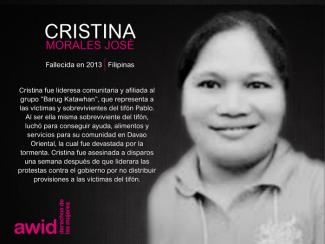
Cristina Morales Jose
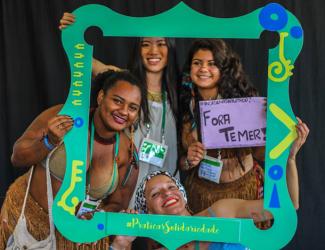
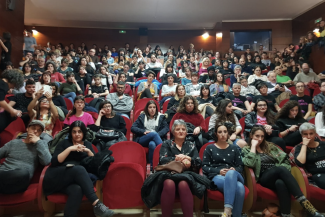
Young feminist activists play a critical role in women’s rights organizations and movements worldwide by bringing up new issues that feminists face today. Their strength, creativity and adaptability are vital to the sustainability of feminist organizing.
At the same time, they face specific impediments to their activism such as limited access to funding and support, lack of capacity-building opportunities, and a significant increase of attacks on young women human rights defenders. This creates a lack of visibility that makes more difficult their inclusion and effective participation within women’s rights movements.
AWID’s young feminist activism program was created to make sure the voices of young women are heard and reflected in feminist discourse. We want to ensure that young feminists have better access to funding, capacity-building opportunities and international processes. In addition to supporting young feminists directly, we are also working with women’s rights activists of all ages on practical models and strategies for effective multigenerational organizing.
We want young feminist activists to play a role in decision-making affecting their rights by:
Fostering community and sharing information through the Young Feminist Wire. Recognizing the importance of online media for the work of young feminists, our team launched the Young Feminist Wire in May 2010 to share information, build capacity through online webinars and e-discussions, and encourage community building.
Researching and building knowledge on young feminist activism, to increase the visibility and impact of young feminist activism within and across women’s rights movements and other key actors such as donors.
Promoting more effective multigenerational organizing, exploring better ways to work together.
Supporting young feminists to engage in global development processes such as those within the United Nations
Collaboration across all of AWID’s priority areas, including the Forum, to ensure young feminists’ key contributions, perspectives, needs and activism are reflected in debates, policies and programs affecting them.
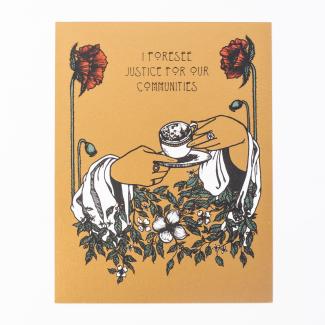
Tasseography is the study of coffee grounds and/or tea leaves for the act of divination. It is a practice that has been passed down through the women on my Armenian side of the family and was taught to me by my mother, she from her mother, and so on. As I would watch my Nana read the coffee grounds from the Armenian coffee prepared for family and friends, I would notice how often times she would see what she would want to say. These prints say some of the things I want to see in the world; I hope you do too.
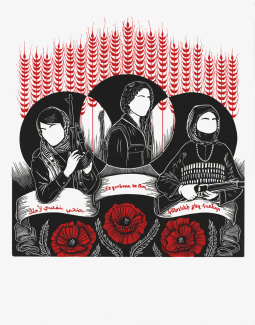
This print celebrates the resilience, sacrifice and strength of SWANA freedom fighters throughout history and the solidarity that exists. It was originally inspired by an article I read about an exhibition held in Tatvan, a district of Bitlis that was highlighting the Armenian presence in the region. My ancestors are from Bitlis, now within the borders of modern day Turkey.

Tasseography (the study of reading coffee grounds) is a cultural practice that Armenian women have used for hundreds of years to speak among and to each other, a coded language to open up conversations, to build inter-relatedness and weave connections.
![]Ali Chavez Leeds portrait](/sites/default/files/styles/max_325x325/public/2021-10/portrait.jpeg?itok=0yU3PqLe)
Dada la situación global, nuestra Junta Directiva tomó la difícil decisión de cancelar el Foro que estaba programado en 2021, enTaipei.
Данные будут обработаны в статистических целях, чтобы осветить состояние ресурсного обеспечения феминистских движений во всем мире, и представлены будут только в обобщенном виде. AWID не будет публиковать информацию о конкретных организациях или отображать информацию, которая позволила бы идентифицировать организации по их местоположению или характеристикам, без их согласия.
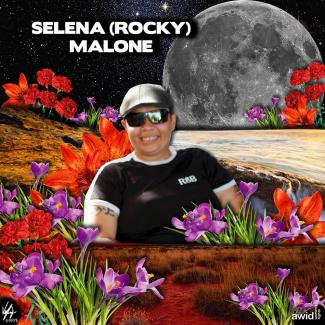
Engagée auprès de jeunes lesbiennes, gays, bisexuels, transgenres, intersexuels, queers, et transgenres (appelés Brotherboys-BB et Sistergirls-SS dans la communauté aborigène en Australie), Rocky faisait preuve de vision et d'un leadership inspirants.
Rocky avait commencé sa carrière auprès de la police du Queensland en tant qu'agent de liaison. Faire une différence était très important pour elle. Elle a mené un travail de soutien impressionnant auprès de jeunes de cette communauté en tant que responsable du service jeunesse « Open Doors » (portes ouvertes). Rocky a œuvré dans des situations complexes liées spécifiquement aux questions de genre et d'identité sexuelle.Elle avait un don naturel dans ce domaine: c’était une leader communautaire solide, une femme sereine, une amie fidèle, une personne aimante et attentionnée ainsi qu’une actrice du changement. Rocky était membre fondatrice d’IndigiLez Leadership and Support Group.
En 2016, à la Cour suprême de Brisbane, l'ancien juge de la Haute Cour, Michael Kirby, a cité le nom de Rocky lorsqu'il a loué le travail du service juridique de la communauté LGBTI au fil des années. Rocky s'est engagée très fermement en faveur des droits humains de la communauté « LGBTIQBBSG », elle a repoussé les limites et induits des changements de manière respectueuse et aimante.
Curado por Jess X. Snow
Con asistencia de Kamee Abrahamian y Zoraida Inglés
Editado por Kamee Abrahamian
A través de Asia y el Pacífico, y de toda su vasta diáspora, mujeres feroces y personas trans han estado luchando por un futuro en el que todxs puedan ser libres. A medida que la subida de los niveles del mar amenaza a las islas del Pacífico y las costas de Asia continental, la batalla por proteger la Tierra y los océanos se intensifica en todo el mundo. Nuestro planeta guarda una memoria geológica de todo lo que ha experimentado. El auge de la colonización, la industrialización y la destrucción ambiental está conectado con el crecimiento del Estado-Nación patriarcal binario. El poder que reside en la Tierra para reencarnar, sanar y florecer a pesar de la violencia debe, por lo tanto, conectarse con las mujeres, con la maternidad, con la indigeneidad, y con todas las fuerzas expansivas, sagradas y queer. No es una coincidencia que las realidades feministas unan la lucha por la protección de los derechos de las mujeres y de las personas trans y LGBTQ+ con la lucha por la protección de la Tierra. Desde las madres-hijas protectoras de Mauna Kea en el Reino de Hawái hasta las complejas relaciones madre-hijx de lxs refugiadxs vietnamitas, los despertares sexuales queer en la conservadora India, la recuperación del hogar en Mongolia Interior y la lucha por la liberación LGBTQ en Filipinas: esta colección de películas es una cosmología de las formas en las que las mujeres y las personas queer y trans contemporáneas de Asia-Pacífico defienden el camino hacia nuestra liberación colectiva, a través de océanos y fronteras.
Todas estas películas tienen un fuerte sentido de lugar: activistas indígenas protegen sus territorios sagrados, lxs jóvenes despejan las narrativas coloniales de su tierra natal para descubrir verdades ocultas, se exploran complejas relaciones de maternidad y cuidados, y lxs personajes recurren a sus propios cuerpos y a su sexualidad como santuario, cuando la familia y la ciudad que lxs rodea amenazan su seguridad.
por Jess X. Snow
«Una película inolvidable, con asombrosas tomas que invocan la resistencia ambiental feminista, y cuán profundamente arraigada está esa resistencia en la historia cultural y en la tierra...»
- Jessica Horn, activista feminista panafricana, escritora y co-creadora del sitio web the temple of her skin
En el documental experimental Afterearth, cuatro mujeres luchan por preservar el volcán, el océano, la tierra y el aire para las generaciones futuras. A través de música, poesía y sentidos testimonios que honran zonas próximas al Océano Pacífico: Hawái, Filipinas, China y América del Norte, Afterearth es una meditación poética sobre la relación intergeneracional y feminista de cuatro mujeres con las tierras y las plantas de las cuales provienen.
por Jalena Keane Lee
En Standing Above the Clouds, dos activistas nativas hawaianas (madre e hija) luchan juntas para proteger su montaña sagrada, Mauna Kea, y evitar que sea utilizada como sitio de la construcción de uno de los telescopios más grandes del mundo. Como protectoras de Mauna Kea, esta película muestra la relación interconectada entre Aloha ʻĀina (amor a la tierra) y el amor a lxs ancianxs y a las generaciones venideras.
por Quyên Nguyen-Le
En el cortometraje narrativo experimental Nước (agua/tierra natal) unx adolescente vietnamita-estadounidense genderqueer desafía las narrativas dominantes sobre la Guerra de Vietnam en Los Ángeles, California. A través de potentes secuencias oníricas y quiebres de la realidad, esta película sigue el camino de lx joven que intenta reconstruir y entender la experiencia de su madre como refugiada de la Guerra de Vietnam.
por Kimi Lee
En Kama’āina, una joven queer de dieciséis años debe pilotear su vida en las calles de Oahu hasta que, finalmente, guiada por una tía, encuentra refugio en el Pu’uhonua o Wai’anae, el campamento organizado de personas sin techo más grande de Hawái.
por Karishma Dev Dube
En Devi (diosa, en hindi) Tara, una joven lesbiana no declarada, arriesga tanto su familia como su tradición al aceptar su atracción por la criada de su infancia. Ambientada en Nueva Delhi, Devi es una historia de transición a la adultez, así como un comentario sobre las distinciones sociales y de clase que actualmente dividen a las mujeres en la India contemporánea.
por Yuan Yuan
En Heading South, Chasuna, una niña de 8 años criada por su madre en la meseta de Mongolia Interior, visita a su padre violento en la gran ciudad. En casa de su padre se encuentra con una nueva incorporación a la familia, y debe aceptar el hecho de que su verdadero hogar es inseparable de su madre y de su tierra.
por Johnny Symons & S. Leo Chiang
El largometraje Outrun sigue la trayectoria de la primera mujer transgénero del Congreso de Filipinas. Confrontando la opresión de una nación predominantemente católica, su viaje triunfal se convierte en un clamor por los derechos de las personas LGBTQ+ de todo el mundo.
Abarcando formas documentales, narrativas y experimentales, estas películas muestran que los cuidados comunitarios, el amor por unx mismx y la escucha transformadora profunda entre nuestros seres amados son un portal a las realidades feministas a las que hoy estamos dando existencia. Desde toda la zona de Asia-Pacífico y su diáspora, estas historias nos enseñan que, frente a la violencia, la ternura es la fuerza de resistencia más intensa.
Mira nuestra conversación con lxs cineastxs
Facebook: @AWIDWomensRights
Instagram: @awidwomensrights
Twitter ENG: @awid
Twitter ES: @awid_es
Twitter FR: @awid_fr
LinkedIn: Association for Women's Rights in Development (AWID)
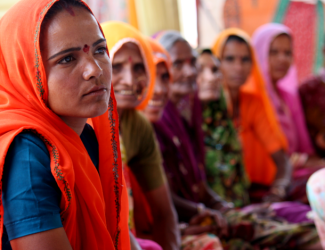
L’AWID propose la Boîte à outils « Où est l’argent pour les droits des femmes? » (« Where Is The Money for Women's Rights? », WITM) pour soutenir les individus et les organisations qui souhaitent mener leur propre recherche sur les tendances de financement en adaptant la méthodologie de recherche de l’AWID à une région, une question ou une population spécifique.
La Boîte à outils WITM de l’AWID est le produit de dix ans de recherches. La rméthologie WITM de l’AWID proposent une démonstration politique et pratique des ressources et des étapes qu’exige une solide recherche-action.
L’équipe 'Ressources des mouvements féministes' offre également un soutien technique et politique, avant et pendant le processus de recherche. Parcourez la boîte à outils et contactez fundher@awid.org si vous souhaitez plus de renseignements.
Não. Tem por base a história de 20 anos da AWID de mobilizar mais financiamento de maior qualidade para mudanças sociais lideradas por feministas e é a terceira edição do nosso inquérito “Onde está o dinheiro para organização feminista?”. O nosso objetivo é repetir o inquérito WITM a cada 3 anos.
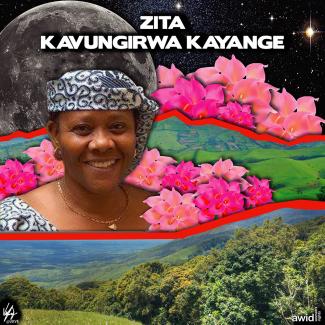
Zita was a women’s rights activist who defended the rights of rural women in Greater Kivu.
She was the first Executive Director of UWAKI - a well known women’s organisation. Through her work with Women's Network for Rights and Peace (RFDP), and the Women's Caucus of South Kivu for Peace, she committed her life to helping to restore peace in the Eastern DRC. She spoke out strongly against the use of sexual violence as a weapon of war.
In 2006, she put herself forward as a candidate in the first democratic elections in the DRC. Although she did not win, she continued to advocate for women’s rights and the South Kivu community remembers her fondly.
Un réseau complexe et mouvant d’antidroits exerce une influence croissante dans les sphères internationales et les politiques locales. Souvent soutenu·e·s par des financements d’origine imprécise, ces acteur·rice·s renforcent leur impact en créant des alliances tactiques entre thématiques, régions et croyances.
Alors que les discours des fascistes et fondamentalistes sont tout à fait nationalistes, leurs assises idéologiques, alliances politiques et réseaux de financement ne connaissent pas de frontières. Parfois soutenus par des flux de financement d’origine obscure, en lien avec de grosses entreprises ou des partis d’extrême droite, ces groupes concluent des alliances stratégiques, voire avec des sous-groupes de mouvements féministes et pour les droits des femmes, dans certains cas, tout en s’éloignant d’éléments ouvertement extrêmes pour acquérir davantage de légitimité. Ces acteur·rice·s diffusent et reproduisent également partout dans le monde leur modèle d’organisation antidroits : leurs manières de faire campagne, de faire pression ou de mener des actions stratégiques en justice.
by Karina Ocampo
In a hidden corner of Chiapas, Mexico, women and sexual dissidents have come to organize our actions. (...)
< artwork by Sonia Carolina Madrigal Loyola
إن كانت لديكم/ن أسئلة أو أمور تثير قلقكم/ن، الرجاء التوجه الينا عن طريق هذا النموذج وكتابة "استطلاع أين المال" في العنوان أو راسلنا على witm@awid.org
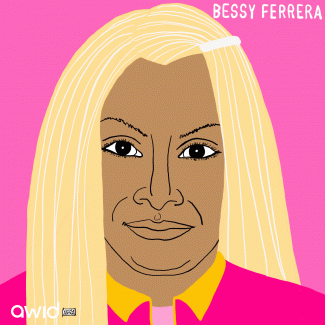
Bessy was also a member of Arcoíris, an organisation which supports the LGBTI+ community. She was also a focal point person for the Right Here, Right Now (Derechos aquí y Ahora) Platform of Honduras, and advocated strongly for full citizenship of trans people, and the passing of a gender identity law that would allow trans people to change their gender identity legally.
"Since the beginning of the year [2019] the trans community has been suffering a series of attacks, for defending, for demanding rights." - Rihanna Ferrera (Bessy’s sister)
Bessy was a sex worker, and in early July 2019, was shot to death by two men while working in the streets of Comayagüela. Her assailants were subsequently arrested.
Bessy is one of many LGBTI+ rights defenders in Honduras, who were murdered because of their identities and work. Other companeras include: Cynthia Nicole, Angy Ferreira, Estefania "Nia" Zuniga, Gloria Carolina Hernandez Vasquez, Paola Barraza, Violeta Rivas, and Sherly Montoya.
Bessy’s case is emblematic of injustice and a much larger problem of the systematic violence the LGBTI+ community faces in Honduras as the state fails to guarantee rights offer and fails to offer protection. This has created a culture of impunity.
Despite the risks LGBTI+ defenders in Honduras face, they continue their work to challenge and resist violence, and fight stigma and discrimination on a daily basis.
“If I die, let it be for something good not for something futile. I don’t want to die running away, being a coward. If I die, I want people to say that I died fighting for what is mine.” - member of Arcoíris