None On Record

Young Feminist Activism

Organizing creatively, facing an increasing threat

Young feminist activists play a critical role in women’s rights organizations and movements worldwide by bringing up new issues that feminists face today. Their strength, creativity and adaptability are vital to the sustainability of feminist organizing.

At the same time, they face specific impediments to their activism such as limited access to funding and support, lack of capacity-building opportunities, and a significant increase of attacks on young women human rights defenders. This creates a lack of visibility that makes more difficult their inclusion and effective participation within women’s rights movements.

A multigenerational approach

AWID’s young feminist activism program was created to make sure the voices of young women are heard and reflected in feminist discourse. We want to ensure that young feminists have better access to funding, capacity-building opportunities and international processes. In addition to supporting young feminists directly, we are also working with women’s rights activists of all ages on practical models and strategies for effective multigenerational organizing.

Our Actions

We want young feminist activists to play a role in decision-making affecting their rights by:

  • Fostering community and sharing information through the Young Feminist Wire. Recognizing the importance of online media for the work of young feminists, our team launched the Young Feminist Wire in May 2010 to share information, build capacity through online webinars and e-discussions, and encourage community building.

  • Researching and building knowledge on young feminist activism, to increase the visibility and impact of young feminist activism within and across women’s rights movements and other key actors such as donors.

  • Promoting more effective multigenerational organizing, exploring better ways to work together.

  • Supporting young feminists to engage in global development processes such as those within the United Nations

  • Collaboration across all of AWID’s priority areas, including the Forum, to ensure young feminists’ key contributions, perspectives, needs and activism are reflected in debates, policies and programs affecting them.

Related Content

Leticia Eulalia Mary Mukasa- Kikonyogo

Leticia fue una abogada y jueza de Uganda.

Antes de retirarse, ocupó muchas posiciones de alto perfil, como por ejemplo miembrx de la Corte de Apelaciones de Uganda y Presidenta Adjunta de la Corte Suprema de Uganda. Fue la primera mujer ugandesa en ocupar el cargo de Primera Magistrada entre 1973 y 1986, y la primera mujer en ser nombrada jueza de la Corte Suprema en 1986.

Fue una de las primeras mujeres investidas como “Caballero Papal” de la historia de la Iglesia Católica en África. Murió de un paro cardíaco.



Leticia Eulalia Mary Mukasa- Kikonyogo, Uganda

Snippet FEA Get Involved Story 3 (FR)

ENGAGEZ-VOUS!

Suivez le travail de la coopérative sur Facebook ou Instagram, partagez leurs campagnes et gardez un oeil sur leurs actions et événements de collecte de fonds!

Protection of the Family - Opposition Views

New conservative alliance:

Conservative organizing and policy

State supporters

Snippet - WITM RESOURCES - PT

Recursos

(Disponível em inglês)

Main image
FFC - Banners.png
Body

The Feminist Film Club

As part of AWID’s Feminist Realities journey, we invite you to explore our newly launched Feminist Film Club: a collection of short and feature films selected by feminist curators and storytellers from around the world, including Jess X. Snow (Asia/Pacific), Gabrielle Tesfaye (Africa/African Diaspora), and Esra Ozban (South West Asia, North Africa). Alejandra Laprea is curating the Latin & Central American program, which we’ll launch in September during AWID’s Crear, Résister, Transform: A Festival for Feminist Movements. In the meantime, look out for announcements on special films screenings and conversations with filmmakers!

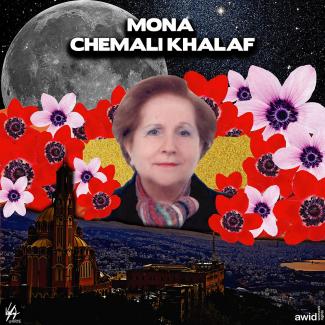
Mona Chemali Khalaf

Mona était économiste et consultante indépendante sur les questions de genre et de développement.

Elle a été professeure d'économie et directrice de l'Institut d'études féminines du monde arabe à l'Université libanaise américaine. Elle est décédée subitement le 6 janvier 2018.

Des amis et d'anciens collègues disent de Mona: « Pour lui rendre hommage, la meilleure chose à faire est de continuer à faire ce qu'elle a commencé: l'égalité de genre, à tout prix. 


Mona Chemali Khalaf, Lebanon

Snippet FEA how important essential workers are (EN)

The COVID-19 pandemic showed the world how important essential workers are. We’re talking about cleaners, nurses, paramedics, domestic workers, transport workers, grocery shop workers, among others. Their work is to tend to and guarantee the wellbeing of others, and they make our economies function.

But while they take care of us…

TEST - MAP

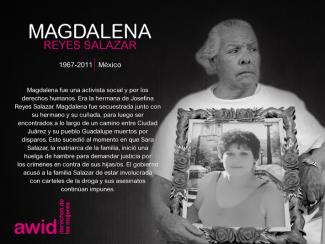
WHRD Tribute - 2017

We can have an intro here

And maybe a little bit more text here

Наша группа, организация и/или движение не зарегистрированы – можем ли мы принять участие в опросе?

Безусловно, мы хотим услышать ваше мнение и о вашем опыте привлечения ресурсов.

Body

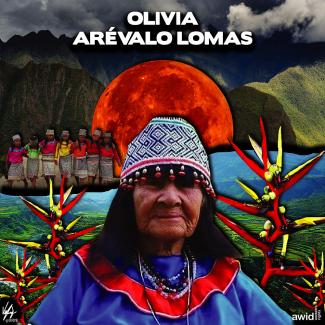
Olivia Arévalo Lomas

Olivia was the spiritual leader of the Shipibo Konibo indigenous peoples.

A wise Indigenous woman and grandmother, she was known for cultivating traditional medicine and the sacred songs of her people (Íkaros). Olivia Arevalo was an active defender of the cultural and environmental rights of her people. Olivia’s murder occurred in a context of territorial conflict between the Shipibo community and companies that desire to take over their land to cultivate palm oil.

Members of her community have said: “Her death is an aggression against the entire Shipibo community. She was the living memory of her people”.


Olivia Arévalo Lomas, Peru

Snippet FEA collaborator and allies Photo 3 (ES)

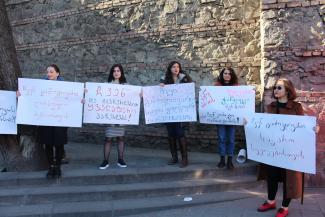
La foto presenta a cinco mujeres (Sopo está en el medio) de pie en lo alto de una escalera, frente a un muro de piedra, sosteniendo carteles en los que están escritos eslóganes georgianos.

The Devil is in the Details

Free ebook on Women's rights and Religious fundamentalisms

Religious fundamentalisms have particularly high costs for women and girls

Download ebook

In a global picture of rising religious fundamentalisms, this ebook details the grave human rights violations, and violations of women’s rights in particular, caused by state-sponsored fundamentalism, as well as by fundamentalist non-state actors such as militias, religious community organizations, and individuals.

It is vital to promote intersectional feminist understandings of power and privilege, and to apply these to questions of religion and culture.

Read more on women's rights

Qual é a definição de financiamento externo?

Financiamento externo inclui subsídios e outras formas de financiamento de fundações filantrópicas, governos, financiadores bilaterais, multilaterais ou empresariais, e doadores individuais, tanto a nível nacional como internacional. Não inclui recursos gerados autonomamente por grupos, organizações e/ou movimentos, como, por exemplo, quotas de membres, contribuições voluntárias de colaboradores, membres e/ou apoiantes, angariações de fundos comunitários, aluguer de espaços ou venda de serviços. Para facilitar a consulta, estão incluídas no inquérito definições dos diferentes tipos de financiamento e descrições resumidas de diferentes doadores.

Body

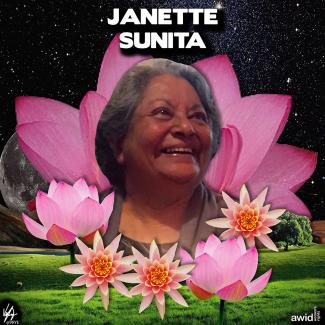
Janette Sunita

De la India, Janette era enérgica, extraordinaria, compasiva y amorosa.

Su intolerancia de la injusticia y su firme compromiso de defender los derechos de todas las personas la llevaron a trabajar en TARSHI (una ONG que trabaja en temas de la sexualidad y la salud y derechos sexuales y reproductivos) durante más de 15 años. Janette dirigió con destreza las finanzas, los recursos humanos y los aspectos operativos del trabajo de TARSHI, atravesando hábilmente la laberíntica burocracia a la que están sometidas las ONG indias.

Lxs integrantes de su equipo recuerdan que «Ella se quedaba vigilando, de manera que pudiéramos seguir el rumbo en aguas abiertas. Mujer de muchos talentos, Janette no sólo nos ayudó a conseguir nuestra propia oficina sino que también la diseñó para una utilización óptima». Amaba viajar y a los animales, y estaba interesada en la terapia asistida por animales.


Janette Sunita, India

Snippet FEA Meet the Solidarity Network (FR)

SYNDICAT RÉSEAU SOLIDARITÉ

Nous vous présentons le syndicat Réseau Solidarité, un syndicat de la santé et des services dirigé majoritairement par des femmes. Émergeant en réponse à la précarité croissante, aux salaires insuffisants et aux environnements de travail hostiles auxquels les travailleur·euses géorgien·es sont confrontés quotidiennement, le Syndicat Réseau Solidarité se bat pour des lieux et des conditions de travail décents.

Son objectif? Créer un mouvement syndical national démocratique. Pour ce faire, il s'est associé à d'autres syndicats locaux et régionaux et a lentement constitué un réseau de syndicats, permettant à de plus en plus de travailleuses de devenir dirigeantes syndicales en cours de route.

Son approche politique est holistique. Pour le syndicat Réseau Solidarité, les questions relatives aux droits du travail sont directement liées aux programmes et réformes politiques et économiques nationaux plus larges. C'est pourquoi iels font pression pour la justice fiscale, les droits des femmes et des personnes LGBTQIA+, et luttent contre le démantèlement de l'État-providence géorgien.

Le syndicat Réseau Solidarité fait également partie de Grève Sociale Transnationale (Transnational Social Strike, TSS), une plate-forme et infrastructure politique inspirée par l'organisation des migrant·e·s, des femmes et des travailleur·euses essentiel·les qui s'efforcent de créer des liens entre les mouvements ouvriers à travers le monde et de fomenter la solidarité globale.