
Rani Jethmalani
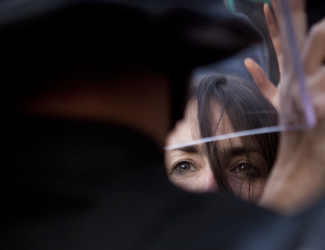
WHRDs are self-identified women and lesbian, bisexual, transgender, queer and intersex (LBTQI) people and others who defend rights and are subject to gender-specific risks and threats due to their human rights work and/or as a direct consequence of their gender identity or sexual orientation.
WHRDs are subject to systematic violence and discrimination due to their identities and unyielding struggles for rights, equality and justice.
The WHRD Program collaborates with international and regional partners as well as the AWID membership to raise awareness about these risks and threats, advocate for feminist and holistic measures of protection and safety, and actively promote a culture of self-care and collective well being in our movements.
WHRDs are exposed to the same types of risks that all other defenders who defend human rights, communities, and the environment face. However, they are also exposed to gender-based violence and gender-specific risks because they challenge existing gender norms within their communities and societies.
We work collaboratively with international and regional networks and our membership
We aim to contribute to a safer world for WHRDs, their families and communities. We believe that action for rights and justice should not put WHRDs at risk; it should be appreciated and celebrated.
Promoting collaboration and coordination among human rights and women’s rights organizations at the international level to strengthen responses concerning safety and wellbeing of WHRDs.
Supporting regional networks of WHRDs and their organizations, such as the Mesoamerican Initiative for WHRDs and the WHRD Middle East and North Africa Coalition, in promoting and strengthening collective action for protection - emphasizing the establishment of solidarity and protection networks, the promotion of self-care, and advocacy and mobilization for the safety of WHRDs;
Increasing the visibility and recognition of WHRDs and their struggles, as well as the risks that they encounter by documenting the attacks that they face, and researching, producing, and disseminating information on their struggles, strategies, and challenges:
Mobilizing urgent responses of international solidarity for WHRDs at risk through our international and regional networks, and our active membership.

Notre rapport annuel 2013 retrace les temps forts du travail que nous avons réalisé au cours de l'année, afin de contribuer à l'avancement des droits des femmes et de l'égalité des genres à travers le monde.
une identité de genre latino-américaine
Le terme travesti désigne une identité de genre latino-américaine sans équivalent dans d'autres langues, et exclusivement féminine. C'est une personne désignée de genre masculin à la naissance qui s'identifie comme une femme.
Elles doivent toujours être adressées avec le pronom “elle”. Travesti n'est pas seulement une identité de genre située en dehors de la binarité de genre, c'est aussi une identité culturelle enracinée dans les mouvements latino-américains.
Le terme était initialement péjoratif, mais a ensuite été réapproprié comme symbole de résistance et de dignité. Chaque travesti est trans parce qu'elle ne s'identifie pas au genre désigné à la naissance, mais toutes les travesti ne se considèrent pas comme femmes trans, car travesti est déjà une identité de genre en soi.
Référence: Berkins, Lohana. (2006). Travestis: una Identidad Política . Trabajo presentado en el Panel Sexualidades contemporáneas en las VIII Jornadas Nacionales de Historia de las Mujeres/ III Congreso Iberoamericano de Estudios de Género Diferencia Desigualdad. Construirnos en la diversidad, Villa Giardino, Córdoba, 25 al 28 de octubre de 2006.
El tiempo estimado para responder la encuesta es de 30 minutos.
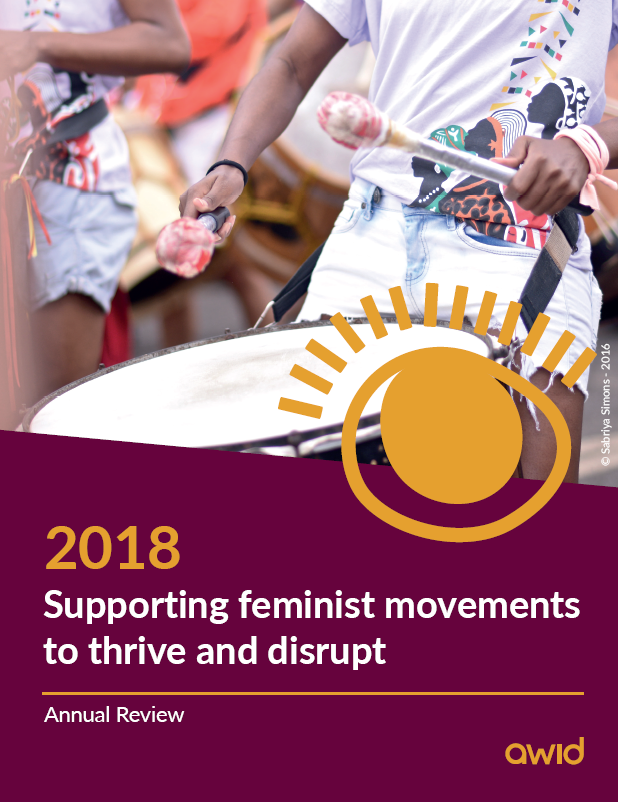
This report looks back and celebrates the first year of AWID’s new strategic plan as we took our first steps towards our desired outcomes of supporting feminist movements to thrive, challenging anti-rights agendas and co-creating feminist realities.
We worked with feminists to disrupt anti-rights agendas, achieving important victories fought and won within the United Nations system when ground-breaking language on structural discrimination, sexual rights, and states’ obligations were included in a number of resolutions. Yes, the multilateral system is in crisis and in need of serious strengthening but these victories are important as they contribute to the legitimacy of feminist demands, providing feminist movements with more pressure points and momentum to advance our agendas.
We tried and tested different ways to build knowledge with feminist movements through webinars, podcasts and ‘live’ conversations. We developed facilitation guides with popular educators to reclaim knowledge in the interest of social and gender justice, even about a topic as seemingly opaque as illicit funding flows. We commissioned blogs and opinions about how feminist groups fund and resource themselves and threw light on the threats facing our human rights systems.
Within AWID, we practiced and learned from our shared leadership approach, and told the story of the trials and tribulations of co-leading a global, virtual organization. We don’t have a definitive answer to what feminist leadership looks like, but we know, a year on, that a continued commitment to collective experimentation and learning has enabled us to keep building an organization that we are all excited to contribute to.
As we look back on this year, we want to thank all our friends and supporters, colleagues and companions, who have given their time and shared their wealth of knowledge and wisdom with us. We want to thank our members who helped frame our strategic plan and joined us to make feminist demands. We could not do this work without you.
Feminist Realities are embedded in the multiple ways that show us that there is a different way of living, thinking and doing - from the daily expressions of how we live and relate to each other, to alternative systems of governance and justice. Feminist Realities resist dominant power systems such as patriarchy, capitalism, and white supremacy.
These are powerful propositions that orient us toward a vision of what is possible, and show how feminist organizing is blazing a path toward justice in movements and communities around the world.
Download your full Magazine (PDF)
Tout à fait, ces questions sont facultatives, et nous reconnaissons votre droit à l’anonymat. Merci de répondre aux questions de l’enquête, peu importe votre décision quant à la mention du nom de votre groupe, organisation et/ou mouvement et de vos coordonnées.
Our strategic plan “Feminist Realities” completed its final year at the end of 2022. For the past five years, this bold framework pushed us to go beyond feminist futures and to recognize the feminist solutions and ways of life that already exist in the here and now. Realities that must be uplifted, celebrated, and popularized. The Feminist Economies We Love multimedia story project and Our:Resource knowledge hub on autonomous ways to resource feminist activism are just two examples of this visionary work, always deeply collective with diverse feminist movements.
Download the full 2022 Annual review
With this reflection on the year, we invite you to celebrate with us beautiful closures and promising beginnings. Change and transitions are an inseparable part of life and movements, which we seek to embrace with intention and care.

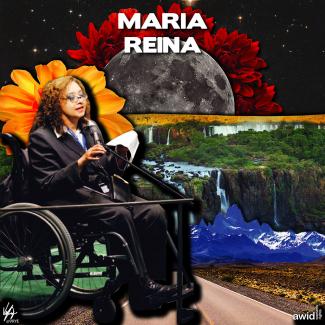
She represented the International Disability and Development Consortium during the negotiation of the United Nations Convention on the Rights of Persons with Disabilities (2001-2006).
Her work was devoted to the implementation of the goal of the Convention - realization of universal human rights by, for and with persons with disabilities for an inclusive, accessible and sustainable world.
In her words, her leadership was about “...serving the disability community, starting with small tasks that others may not wish to do”.
She passed away on October 27, 2017 in her hometown of Rosario, Argentina.
Read more about María Verónica Reina in her own words
Solo un año después de su fundación, las integrantes de Nadia Echazú comenzaron a trabajar en la alta costura y organizaron un desfile de moda en el histórico Hotel Bauen.
Mostraron cinco modelos y algunas trabajadoras de la cooperativa textil desfilaron con sus propios diseños.
Esto fue revolucionario no sólo porque estaban diseñando alternativas a la moda convencional, sino también porque estaban creando ropa accesible e inclusiva para cuerpos trans y travesti.
¡No hay economías feministas sin ropa que nos haga sentir increíbles y cómodxs!
Yes, please do! We encourage you to share the survey link with your networks. The more diverse perspectives we gather, the more comprehensive our understanding of the financial landscape for feminist organizing will be.
Ritu est une technologue féministe qui apporte son expérience au secteur non lucratif, animée par une passion pour l'utilisation d'approches innovantes pour trouver des solutions technologiques féministes. Titulaire d'un master en technologie des applications informatiques de l'Institut indien de technologie, son rôle au sein de l'AWID couvre un large spectre de responsabilités. De la supervision de la sécurité numérique et gestion des serveurs à l'administration des bases de données, en passant par le renforcement des capacités, l'évaluation technologique, la mise en œuvre de logiciels et de solutions cloud, Ritu veille à ce que l'infrastructure informatique de l'AWID soit résiliente et efficace. Avant de rejoindre l'AWID, elle a joué un rôle central dans l'avancement des initiatives technologiques des secteurs de la promotion de la santé et de l'environnement, alimentée par son engagement à tirer parti de la technologie pour le bien social.

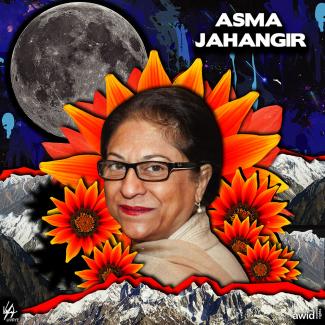
Asma fue una destacada activista pakistaní por los derechos humanos, valiente crítica de la interferencia de los militares en la política, y firme defensora del estado de derecho.
Fue la fundadora y presidenta de la Human Rights Commission of Pakistan [Comisión de Derechos Humanos de Pakistán, un grupo independiente], y una de las administradoras del International Crisis Group. Obtuvo premios internacionales, y fue Relatora Especial de Naciones Unidas sobre derechos humanos y ejecuciones extrajudiciales.
Es recordada con afecto por sus colegas y amigxs de AWID
«Con su vida, Asma reescribió la historia que a muchas nos contaron, como mujeres. Asma cambió el mundo. Lo cambió en Pakistán, y lo cambió en nuestras imaginaciones.»
La lutte pour un monde rempli de lieux de travail exempts de toute forme de discrimination, de stigmatisation et d'exclusion est une lutte noble. Un monde où le travail sexuel est décriminalisé et reconnu comme travail en fait partie intégrante.
Un monde où tous·tes les travailleur·euses ont des conditions de travail sûres, des salaires décents et peuvent jouir des mêmes droits tels que l'accès à la santé, le droit à la retraite, aux congés maladie, aux vacances, à la sécurité de l'emploi et plus encore, quels que soient leur genre, leur race, leur origine ethnique, leur âge ou leurs capacités. Les droits du travail sont des questions féministes, et les syndicats féministes jouent un rôle clé dans la promotion des droits juridiques, du travail et économiques de tous·tes les travailleur·euses, en particulier les travailleur·euses migrant·e·s, les travailleur·euses domestiques, les travailleur·euses informel·les et les travailleur·euses du sexe. Ce sont ces personnes qui ont récemment été touchées de manière disproportionnée par la pandémie, sa crise des soins, les confinements, les couvre-feux ainsi que la surveillance et la répression policière accrue. Nous vous présentons ici les histoires de militantes féministes et syndicalistes qui se battent pour de meilleures conditions de travail et un monde meilleur pour tous·tes.