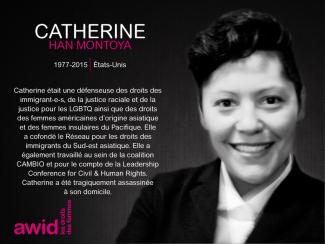
Catherine Han Montoya
WHRDs are self-identified women and lesbian, bisexual, transgender, queer and intersex (LBTQI) people and others who defend rights and are subject to gender-specific risks and threats due to their human rights work and/or as a direct consequence of their gender identity or sexual orientation.
WHRDs are subject to systematic violence and discrimination due to their identities and unyielding struggles for rights, equality and justice.
The WHRD Program collaborates with international and regional partners as well as the AWID membership to raise awareness about these risks and threats, advocate for feminist and holistic measures of protection and safety, and actively promote a culture of self-care and collective well being in our movements.
WHRDs are exposed to the same types of risks that all other defenders who defend human rights, communities, and the environment face. However, they are also exposed to gender-based violence and gender-specific risks because they challenge existing gender norms within their communities and societies.
We work collaboratively with international and regional networks and our membership
We aim to contribute to a safer world for WHRDs, their families and communities. We believe that action for rights and justice should not put WHRDs at risk; it should be appreciated and celebrated.
Promoting collaboration and coordination among human rights and women’s rights organizations at the international level to strengthen responses concerning safety and wellbeing of WHRDs.
Supporting regional networks of WHRDs and their organizations, such as the Mesoamerican Initiative for WHRDs and the WHRD Middle East and North Africa Coalition, in promoting and strengthening collective action for protection - emphasizing the establishment of solidarity and protection networks, the promotion of self-care, and advocacy and mobilization for the safety of WHRDs;
Increasing the visibility and recognition of WHRDs and their struggles, as well as the risks that they encounter by documenting the attacks that they face, and researching, producing, and disseminating information on their struggles, strategies, and challenges:
Mobilizing urgent responses of international solidarity for WHRDs at risk through our international and regional networks, and our active membership.
par Marta Plaza Fernández
Le pouvoir de tisser des réseaux où nous nous soutenons les unes les autres: telle est la réalité féministe dont je veux vous faire part. (...)
illustration : « Guérir ensemble », par Upasana Agarwal >
✉️ Inscripción presencial cerrada. Regístrate para la transmisión en vivo aquí
Evento en inglés
📅 Miércoles 12 de marzo de 2025
🕒 De 12:00 a 01:30 pm, EST
🏢 PNUD, 304 E 45th St. Doha Room, 11th Floor (FF Building)
Organizan: PNUD, Femena, SRI y AWID
¿Qué significa un Foro de AWID para las personas que estuvieron ahí? ¿Qué es esta magia que sucede cuando feministas de todo el mundo se reúnen para celebrar, elaborar estrategias, aprender y compartir la alegría?
AWID habló con más de cuarenta participantes del Foro para oír sus historias de las transformaciones que experimentaron ellxs mismxs como activistas, y que también cambiaron a sus organizaciones y a los movimientos a los que pertenecen. También aprendimos sobre qué cosas deberíamos mantener y desarrollar para que un Foro de AWID sea diferente, y de qué manera podemos mejorar.
Este informe contiene aprendizajes y consejos invaluables para cualquier persona que quiera organizar encuentros presenciales regionales y temáticos, y para nosotrxs en nuestro trabajo de planificación del 15° Foro Internacional de AWID.
Carol Thomas was a trailblazer for women’s sexual and reproductive rights in South Africa. A gifted gynecologist and founder of the WomenSpace, she practiced and advocated for non-traditional ways of delivering healthcare to women, offering services that were high quality, empathetic and accessible.
“She entered into not only the joy of pregnancies and new babies, but the anxieties of infertility and premature deliveries and female cancers, the heartbreak of miscarriages and stillbirths.” Helen Moffett
Carol thought in new paradigms that centered the needs of women with the least access to services and rights in society:
“The prevailing socio-economic environment that we find ourselves in means that women bear a disproportionate burden of disease and unemployment…As a black, previously disadvantaged woman I have a good sense of what is happening in our communities.” - Carol Thomas
Carol’s innovative and multi-award-winning social venture “iMobiMaMa” used mobile kiosks and interactive technology to connect women directly with antenatal and reproductive health services, information and support in communities all over South Africa.
Carol supported women both in wanted and unwanted pregnancies, mentoring many nurses and doctors during her lifetime.
She was also described as the go-to gynecologist “for trans folks who could have affirming care. She got it right when so many did not have the language or pronouns. Her warm blankets, listening and saying just what you needed to hear was so comforting.” -Marion Lynn Stevens
Carol Thomas was described as being at the height of her professional career when she died on 12 April 2019 of complications following a double lung transplant.
The tributes that poured in following her unexpected death referred to her as many things:
“a role model, warrior woman, innovator, dynamic leader, mould-breaker, dynamo, brilliant scientist, compassionate doctor.”
Undoubtedly, Carol Thomas will be remembered and honored for being all of this and much more.
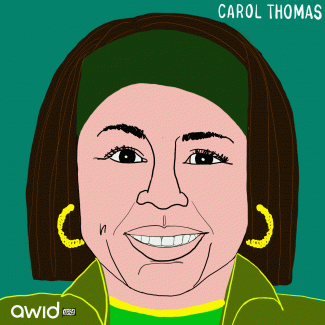
by Gabriela Estefanía Riera Robles
Juliana. How I would love to be called Juliana! The name is full of power and presence, full of force and vehemence. (...)
< artwork by Borislava Madeit and Stalker Since 1993
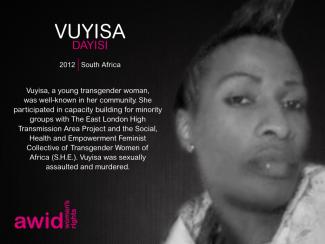
Mereani Naisua Senibici, también llamada "Sua", fue, durante mucho tiempo, integrante del movimiento de la Asociación Cristiana de Mujeres Jóvenes de Fiji (YWCA, por sus siglas en inglés).
Trabajó con diversos grupos de mujeres en entornos multirraciales, rurales y urbanos y se comprometió a apoyar y promover los derechos de las mujeres y las jóvenes.
En el YWCA de Lautoka, Sua trabajó con mujeres de ascendencia india, y se convirtió en una figura destacada en el desarrollo del deporte y de la participación de atletas mujeres y personas trans en Lautoka.
"Sua es muy querida por lxs integrantes del YWCA de Fiji, a causa de su dedicación y apoyo persistente a todo lo que la organización se ha esforzado por hacer". - Tupou Vere
Mereani formaba parte de House of Sarah [La Casa de Sarah] (HoS, por sus siglas en inglés ), una iniciativa de la Asociación de Mujeres Anglicanas (AAW), lanzada en 2009, que tenía por objetivos tanto sensibilizar sobre los problemas relacionados con la violencia de género, como brindar apoyo a las mujeres que sufren violencia. Mereani empezó como una voluntaria comprometida y ofreció apoyo a las mujeres de todo el Pacífico.
Mereani falleció en 2019.
"Una persona con don de gente y una trabajadora todoterreno en el empoderamiento de las mujeres y construcción de movimientos a nivel comunitario. Descansa en paz, Sua". - Tupou Vere
Ya está disponible nuestro primer programa del Club de Cine Feminista: «Tenderness is the Sharpest Resistance» [«La ternura es la resistencia más intensa»], que es una serie de películas sobre realidades feministas de Asia-Pacífico curada por Jess X. Snow.
If the positions advertised have closed, or just don’t match your area of interest and expertise, we suggest the following resources for your job search.
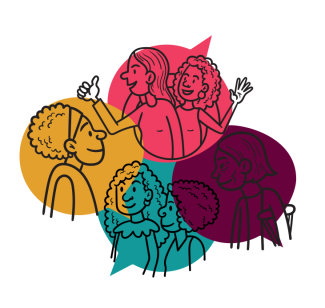
Los movimientos feministas han cambiado y se han adaptado enormemente desde la última vez que nos reunimos de esta manera - así que para recordar por qué son importantes los Foros de AWID, pedimos a activistas de todo el mundo que reflexionaran y compartieran sus historias, impresiones y recuerdos. Esto es lo que aprendimos.
« La vie... c’est vivre dans la joie, se lever avec un but, sentir son énergie créative, répondre à son appel. » – Sylvia Robinson
Cet espace de performances créatrices foisonnantes rassemblait des initiatives d’éducation, d’engagement citoyen, d’arts, de services sociaux et spirituels et de pratiques de développement durable. Sylvia considérait cet endroit comme une maison où « il existe un équilibre et une synergie avec les activités dont les gens ont besoin pour entretenir la vie ».
Elle comptait également parmi les membres fondateur·trice·s du Georgia Avenue Community Development Taskforce, dans le nord-ouest de la capitale, un groupe de quartier actif dans le domaine de la justice sociale et de l’organisation qui veillait à ce que la communauté ait son mot à dire dans le redéveloppement et l’embourgeoisement du secteur.
« Nous demandons des logements abordables. Nous demandons que les petits commerces qui sont ici depuis longtemps ne soient pas balayés par de nouvelles enseignes. Nous demandons des espaces verts et des lieux où les gens peuvent se rencontrer. Nous demandons à ce que le paysage urbain soit amélioré, avec des rues en meilleur état et des éclairages publics. » – Sylvia Robinson, à propos du travail de la Taskforce
Avant de devenir organisatrice, et après avoir obtenu son diplôme en informatique, Sylvia avait travaillé dans le domaine des systèmes de contrôle du trafic aérien pendant plus d’une décennie. Elle s’est ensuite orientée vers le conseil relatif à la consommation d’alcool et de drogue, s’impliquant davantage dans le travail communautaire.
« Cette implication dans la communauté, c’était ma vocation. » – Sylvia Robinson
Née à Washington D.C. le 14 août 1961, Sylvia est décédée le 18 septembre 2017 après avoir lutté contre le cancer.
« L’esprit et l’héritage de Sylvia continueront d’inspirer cette communauté pour de nombreuses années. » – ECAC
LA CARAPACE DE MON PÈRE raconte l'histoire d'un homme mystérieux dont la vie a été modelée par la fuite, l’expulsion, la vie en exil et un retour raté en Palestine. Le film comporte la quête d’une fille cherchant à obtenir des réponses de la part de son père.