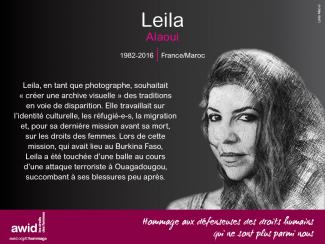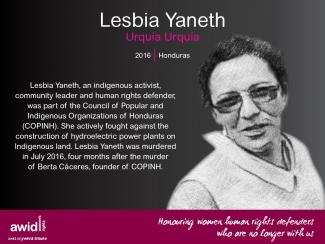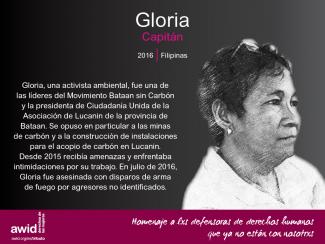
Women Human Rights Defenders
WHRDs are self-identified women and lesbian, bisexual, transgender, queer and intersex (LBTQI) people and others who defend rights and are subject to gender-specific risks and threats due to their human rights work and/or as a direct consequence of their gender identity or sexual orientation.
WHRDs are subject to systematic violence and discrimination due to their identities and unyielding struggles for rights, equality and justice.
The WHRD Program collaborates with international and regional partners as well as the AWID membership to raise awareness about these risks and threats, advocate for feminist and holistic measures of protection and safety, and actively promote a culture of self-care and collective well being in our movements.
Risks and threats targeting WHRDs
WHRDs are exposed to the same types of risks that all other defenders who defend human rights, communities, and the environment face. However, they are also exposed to gender-based violence and gender-specific risks because they challenge existing gender norms within their communities and societies.
By defending rights, WHRDs are at risk of:
- Physical assault and death
- Intimidation and harassment, including in online spaces
- Judicial harassment and criminalization
- Burnout
A collaborative, holistic approach to safety
We work collaboratively with international and regional networks and our membership
- to raise awareness about human rights abuses and violations against WHRDs and the systemic violence and discrimination they experience
- to strengthen protection mechanisms and ensure more effective and timely responses to WHRDs at risk
We work to promote a holistic approach to protection which includes:
- emphasizing the importance of self-care and collective well being, and recognizing that what care and wellbeing mean may differ across cultures
- documenting the violations targeting WHRDs using a feminist intersectional perspective;
- promoting the social recognition and celebration of the work and resilience of WHRDs ; and
- building civic spaces that are conducive to dismantling structural inequalities without restrictions or obstacles
Our Actions
We aim to contribute to a safer world for WHRDs, their families and communities. We believe that action for rights and justice should not put WHRDs at risk; it should be appreciated and celebrated.
-
Promoting collaboration and coordination among human rights and women’s rights organizations at the international level to strengthen responses concerning safety and wellbeing of WHRDs.
-
Supporting regional networks of WHRDs and their organizations, such as the Mesoamerican Initiative for WHRDs and the WHRD Middle East and North Africa Coalition, in promoting and strengthening collective action for protection - emphasizing the establishment of solidarity and protection networks, the promotion of self-care, and advocacy and mobilization for the safety of WHRDs;
-
Increasing the visibility and recognition of WHRDs and their struggles, as well as the risks that they encounter by documenting the attacks that they face, and researching, producing, and disseminating information on their struggles, strategies, and challenges:
-
Mobilizing urgent responses of international solidarity for WHRDs at risk through our international and regional networks, and our active membership.
Related Content
Clone of Snippet - WITM About the survey - FR
In 2023, feminist and
women's rights organizations
had a median annual budget of $22,000
In contrast, over $1 billion went to three anti-rights groups 2021-2022, with funding for anti-gender networks still rising.1
1 Global Philanthropy Project, 2024
Rosa Candida Mayorga Muñoz
Rosa Cándida Mayorga Muñoz fue una trabajadora social guatemalteca, líder sindical y defensora de los derechos laborales. La llamaban cariñosamente «Rosita».
En la década de 1980, Rosa se convirtió en la primera mujer integrante del Comité Ejecutivo del Sindicato de Trabajadores del Instituto Nacional de Electrificación (STINDE), un sindicato al que se había incorporado originalmente para defender los derechos laborales de las mujeres. Para ella, esto significaba luchar por la igualdad de oportunidades en una empresa en la que muchas mujeres enfrentaban un sistema discriminatorio y violento creado por las autoridades de la compañía. Rosa también había sufrido acoso sexual en su lugar de trabajo, tanto por parte de sus compañeros de trabajo, como de los funcionarios. Sin embargo, no era alguien a quien se pudiera acallar.
Rosa continuó con su pelea y fue parte del esfuerzo por configurar la lucha en una forma más específica, la del «Pacto colectivo de condiciones de trabajo INDE -STINDE». Este pacto fue pionero: el primero en tipificar el concepto de acoso (sexual) en Guatemala. Sirve como referencia para la legislación guatemalteca en temas laborales, y es un estímulo para otros sindicatos.
«No tenía herramientas de lucha más que sus propios ideales... Muchas veces fue intimidada, hostigada para dejar por un lado la lucha, pero su valentía a enfrentar generaba la imagen de la esperanza para los sindicalistas de bases. Rosita se trazó una imagen de respeto, no solo dentro de su sindicato, sino ante las autoridades de la institución, ante el movimiento de mujeres; fue reconocida, como pionera, del movimiento de mujeres sindicalistas, en un espacio que había sido más desarrollado por hombres.» - Maritza Velasquez, ATRAHDOM
Rosa falleció el 4 de abril de 2018, a la edad de 77 años.
Nunca he viajado antes. ¿Qué debería saber?
Reconocemos que el viaje involucra muchos desafíos y por eso brindaremos más información y detalles sobre cómo llegar a Bangkok cuando abramos el proceso de inscripción a principios del próximo año.
Margarita Salas Guzmán
Margarita is a feminist and LGBTIQA activist from Latin America; her passion is social transformation and collective wellbeing. She holds degrees in Psychology, Communications and Public Administration, as well as certificates in Public Policy, Leadership, Management & Decision Making. In her professional capacity, Margarita has had extensive experience with grassroots organizations, national and regional NGOs, universities and the public sector, developing facilitation, capacity building, political advocacy, communications & policy assessment.
Time for Action: Stop the anti-rights infiltration of the UN!
Call to action
Sign the Call to Action!
Want to join the growing numbers of people saying “enough” to the infiltration of the UN by anti-rights actors?
Alma Nosmas
WITM - Refreshed INFOGRAPHIC 3 ES
¿Cómo se autofinancian las organizaciones feministas?
Las organizaciones feministas y por los derechos de las mujeres no solo dependemos del financiamiento institucional, también nos autofinanciamos. Son la pasión, el compromiso político, la solidaridad y el cuidado colectivo lo que empuja a nuestras organizaciones.
Estos recursos se autogeneran y son autónomos y, aunque a menudo no se reflejan en nuestros presupuestos, son la columna vertebral de las organizaciones.
Mirna Teresa Suazo Martínez
Mirna Teresa Suazo Martínez faisait partie de la communauté garifuna (afro-descendante et autochtone) Masca et vivait sur la côte nord des Caraïbes du Honduras. Elle était leader de sa communauté et fervente défenseure du territoire autochtone, une terre qui a été violée le jour où l'Institut national agraire du Honduras a accordé des licences territoriales à des personnes extérieures à la communauté.
Ce fait déplorable a été à l'origine de harcèlements, d'abus et de violences répétés contre Masca, où les intérêts économiques de différents groupes se sont heurtés à ceux des forces armées et des autorités honduriennes. Selon l'Organisation fraternelle noire du Honduras (OFRANEH), la stratégie de ces groupes consiste à expulser et exterminer la population autochtone.
« Masca, la communauté garifuna située près de la vallée du Cuyamel, se trouve dans la zone d’influence de l’une des villes présumées modèles, une situation qui a déclenché des pressions territoriales le long de la côte garifuna. » - OFRANEH, 8 septembre 2019
Mirna Teresa, présidente du conseil d'administration de la communauté de Masca à Omoa, avait elle aussi fermement rejeté la construction de deux centrales hydroélectriques sur la rivière Masca, qui porte le même nom que sa communauté.
« La communauté garífuna attribue l'aggravation de la situation dans leur région à son opposition à l'exploitation touristique, à la monoculture de palmiers africains et au trafic de drogue, tandis qu'elle cherche parallèlement à construire une vie alternative au travers de la culture de la noix de coco et d'autres produits d'autoconsommation ». - Voces Feministas, 10 septembre 2019
Mirna Teresa a été assassinée le 8 septembre 2019 dans son restaurant « Champa los Gemelos ».
Elle est l'une des six femmes défenseures garifunas à avoir été assassinées rien qu'entre septembre et octobre 2019. Selon l'OFRANEH, les autorités n'ont pas mené d'enquête sur ces crimes.
« En ce qui concerne les communautés garífuna, une grande partie des homicides sont liés au régime foncier et à la gestion des terres. Cependant, les querelles entre les organisations criminelles ont abouti à des meurtres, à l’instar de ceux ayant eu lieu récemment à Santa Rosa de Aguán ». - OFRANEH, 8 septembre 2019
Quelles sont les langues parlées au Forum ?
Les langues de travail de l'AWID sont l'anglais, le français et l'espagnol. Le thaï sera ajouté comme langue locale, ainsi que la langue des signes et d'autres mesures d'accessibilité. D'autres langues étant susceptibles d’être ajoutées si le financement le permet, nous vous invitons à consulter régulièrement les mises à jour. La justice linguistique nous tient à cœur et nous essaierons d'inclure autant de langues que possible en fonction de nos ressources. Nous espérons créer de multiples occasions pour que chacun·e d'entre nous puisse s'exprimer dans sa langue et communiquer avec les autres.
Sara AbuGhazal
Sara AbuGhazal es una feminista palestina que vive en Beirut. Es cofundadora de Sawt al-Niswa, un colectivo que produce conocimiento en Beirut. Es codirectora de The Knowledge Workshop [«Taller del conocimiento»], una organización feminista con sede en Beirut que trabaja en la historia oral y el archivo feminista. Sara es actualmente la Coordinadora Regional de la Coalición Regional para Defensoras de los Derechos Humanos en el Medio Oriente y África del Norte.
Sara lucha para ayudar a crear espacios de transformación feminista y solidaridad. Su trabajo se centra principalmente en la construcción de movimientos sostenibles en la región del MOAN. Sara se empeña en temas de la Palestina, la producción de conocimiento y la transformación feminista. Publica regularmente en sawtalniswa.org y su obra de ficción también aparece en la revista electrónica Romman
Ghiwa Sayegh Snippet

Ghiwa Sayegh is an anarcha-queer writer, independent publisher, and archivist. She is the founding editor of Kohl: a Journal for Body and Gender Research and the co-founder of Intersectional Knowledge Publishers. She has an MA in gender studies from Université Paris 8 Vincennes – Saint-Denis. She is passionate about queer theory, transnational circulations, and imagined or unknown histories. Her influences are Audre Lorde and Sara Ahmed.
Jacky Sutton
Snippet - COP30 - Radical Democracy - ES
Democracia radical y justicia climática: el debate ausente en la COP30
Modelos de gobernanza alternativos como vías para salir de la crisis climática.
📅 Miércoles 12 de noviembre de 2025
📍 Seminario Mar Nossa Sra Da Assunção, Pará, Brasil
Stacey Park Milbern
“I do not know a lot about spirituality or what happens when we die, but my crip queer Korean life makes me believe that our earthly bodyminds is but a fraction, and not considering our ancestors is electing only to see a glimpse of who we are.” - Stacey Park Milbern
Stacey, along with some friends, co-created the Disability Justice Culture Club, a group working to support various and especially vulnerable communities, including helping homeless people gain access to resources during the COVID-19 pandemic.
She was also a co-producer of an impact campaign for Netflix’s documentary “Crip Camp”, a board member of the WITH Foundation, and led organizations at local, state and national levels. Stacey wrote beautifully and powerfully:
“My ancestors are people torn apart from loves by war and displacement. It’s because of them I know the power of building home with whatever you have, wherever you are, whoever you are with. My ancestors are queers who lived in the American South. It’s because of them I understand the importance of relationships, place and living life big, even if it is dangerous. All of my ancestors know longing. Longing is often our connecting place...” - Stacey Park Milbern
She was born in Seoul, Korea and grew up in North Carolina, later continuing her journey in the San Francisco Bay Area. Stacey passed away of complications from surgery on her 33rd birthday on 19 May 2020.
Read an essay by Stacey Park Milbern
Listen to an interview with Stacey Park Milbern
#StaceyTaughtUs: Record your story for the Disability Visibility Project
Tributes:
“She was, a lot of people would say, a leader. She kind of encompassed all of it. You know, sometimes there's like a lead from the front, lead from the middle, lead from the back. And she was just somehow able to do all of that.” - Andraéa LaVant, disability rights activist
“What a blow to lose Stacey when our communities need her leadership more than ever, and at a time when her strength, insight, and grit were receiving increased recognition outside of disability circles, giving her a greater platform to advance her life’s work...We will not have the gift of learning where her charismatic leadership would have taken us. But let there be no doubt: What Stacey gave us, in a relatively short time, will continue benefiting others for years to come.” - Disability Rights Education and Defense Fund (DREDF)
ours 2021 - chapter 2 fr
Chapitre 2
Comprendre le contexte des menaces antidroits
La montée en puissance des antidroits a préparé son terrain. Nous devons comprendre la montée de l’ultranationalisme, du pouvoir incontrôlé des entreprises, de la répression croissante et de l’amenuisement de l’espace civique pour contextualiser les menaces actuelles contre nos droits.
Salome Chagelishvili
Salome est une activiste féministe originaire de Tbilisi, Géorgie, qui se consacre à la justice de genre et sociale. Titulaire d’une Maîtrise en études sur le genre, elle s’est impliquée auprès de mouvements féministes, queers et écologiques au cours des neuf dernières années, travaillant entre autres sur les questions de la violence liée au genre, la violence domestique, la santé sexuelle et reproductive et les droits afférents, les droits LGBTIQ et la sécurité et les droits holistiques et numériques.
Depuis 2014, elle travaille activement sur les questions de sécurité et de sûreté des activistes et des femmes défenseures des droits humains, organisant des ateliers sur la sécurité intégrée et la sécurité numérique spécialement pour les activistes de groupes défavorisés (personnes homosexuelles, minorités ethniques et religieuses, femmes et filles rurales, etc.) ainsi que pour de grandes organisations féministes. Salome est membre de l’Independent Group of Feminists (Groupe indépendant de féministes)- une initiative non-formelle, non hiérarchique et non enregistrée qui réunit des féministes géorgiennes ayant différents parcours. Elle travaille actuellement avec le Fonds pour les femmes de Géorgie, où elle est pleinement impliquée dans la construction de mouvements de femmes/féministes, tout en offrant un financement féministe et encourageant la philanthropie féministe locale.
Snippet Kohl - Panel | Tierras y territorios liberados: una conversación panafricana

con Luam Kidane, Mariama Sonko, Yannia Sofia Garzon Valencia y Nomsa Sizani