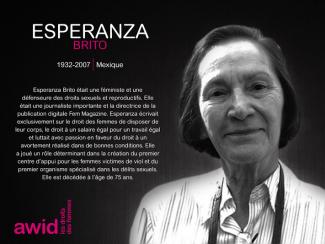
Esperanza Brito
WHRDs are self-identified women and lesbian, bisexual, transgender, queer and intersex (LBTQI) people and others who defend rights and are subject to gender-specific risks and threats due to their human rights work and/or as a direct consequence of their gender identity or sexual orientation.
WHRDs are subject to systematic violence and discrimination due to their identities and unyielding struggles for rights, equality and justice.
The WHRD Program collaborates with international and regional partners as well as the AWID membership to raise awareness about these risks and threats, advocate for feminist and holistic measures of protection and safety, and actively promote a culture of self-care and collective well being in our movements.
WHRDs are exposed to the same types of risks that all other defenders who defend human rights, communities, and the environment face. However, they are also exposed to gender-based violence and gender-specific risks because they challenge existing gender norms within their communities and societies.
We work collaboratively with international and regional networks and our membership
We aim to contribute to a safer world for WHRDs, their families and communities. We believe that action for rights and justice should not put WHRDs at risk; it should be appreciated and celebrated.
Promoting collaboration and coordination among human rights and women’s rights organizations at the international level to strengthen responses concerning safety and wellbeing of WHRDs.
Supporting regional networks of WHRDs and their organizations, such as the Mesoamerican Initiative for WHRDs and the WHRD Middle East and North Africa Coalition, in promoting and strengthening collective action for protection - emphasizing the establishment of solidarity and protection networks, the promotion of self-care, and advocacy and mobilization for the safety of WHRDs;
Increasing the visibility and recognition of WHRDs and their struggles, as well as the risks that they encounter by documenting the attacks that they face, and researching, producing, and disseminating information on their struggles, strategies, and challenges:
Mobilizing urgent responses of international solidarity for WHRDs at risk through our international and regional networks, and our active membership.
La recherche de moyens alternatifs de production alimentaire fondés sur la durabilité environnementale gagne du terrain dans toutes les régions du monde. Cette quête mondiale présente une caractéristique centrale : la nécessité de mobiliser les populations rurales, en particulier les femmes, tenant compte de leurs priorités et de leurs connaissances locales par le truchement de l’agroécologie.
L’agroécologie est une façon de pratiquer l'agriculture ou de faire appel aux technologies qui ne nuit pas à l'environnement. Cette approche propose de rompre avec le modèle de développement rural hégémonique reposant sur les grandes exploitations et la monoculture qui profitent essentiellement aux entreprises agricoles et renforcent l'exclusion sociale.
Dans le contexte de l'agriculture familiale, l'agroécologie représente une forme de résistance au modèle de développement actuel et aux problèmes sociaux, culturels, environnementaux et économiques que ce modèle implique. L’agroécologie se pose en alternative face au manque d'autonomie financière des agriculteur-trice-s et symbolise une résistance face au modèle d'agroentreprises actuel.
Il se pourrait que les efforts uniquement axés sur l'agroécologie ne suffisent pas à résoudre tous les problèmes de la marginalisation et de l'invisibilité des femmes. Il est alors crucial d’adopter une perspective féministe afin d'analyser les normes associées à la notion de famille telle qu'actuellement constituée en tant qu'institution parfaite, ainsi que les normes relatives à la condition de subordination des femmes.
Plus simplement, il importe d'inclure une réflexion sur les rôles de genre socialement construits pour faire avancer le potentiel émancipateur de l'agroécologie dans ce débat.

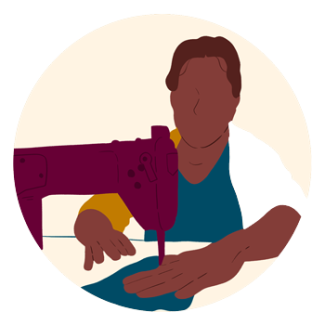
THE TRANS EMPLOYMENT QUOTA
sanctioned by law is not being respected by companies and employers
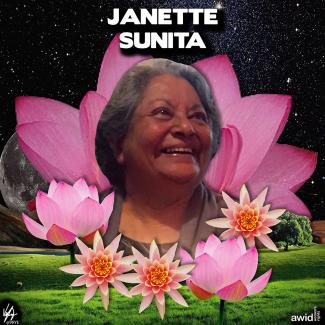
De la India, Janette era enérgica, extraordinaria, compasiva y amorosa.
Su intolerancia de la injusticia y su firme compromiso de defender los derechos de todas las personas la llevaron a trabajar en TARSHI (una ONG que trabaja en temas de la sexualidad y la salud y derechos sexuales y reproductivos) durante más de 15 años. Janette dirigió con destreza las finanzas, los recursos humanos y los aspectos operativos del trabajo de TARSHI, atravesando hábilmente la laberíntica burocracia a la que están sometidas las ONG indias.
Lxs integrantes de su equipo recuerdan que «Ella se quedaba vigilando, de manera que pudiéramos seguir el rumbo en aguas abiertas. Mujer de muchos talentos, Janette no sólo nos ayudó a conseguir nuestra propia oficina sino que también la diseñó para una utilización óptima». Amaba viajar y a los animales, y estaba interesada en la terapia asistida por animales.

(Disponível em inglês)
“Mis sueños y objetivos siempre han sido los mismos que los de Lohana Berkins: que la cooperativa siga de pie y no cierre. Seguir dándole este lugar a nuestras compañeras travesti, darles trabajo y un lugar de apoyo”
Brisa Escobar,
presidenta de la Cooperativa
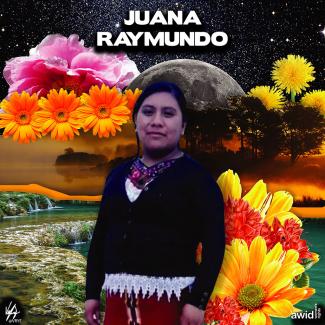
Membre de la communauté autochtone maya ixil, Juana était infirmière professionnelle et coordinatrice du Comité de développement des agriculteurs (CODECA)
CODECA est une organisation de défense des droits humains composée d'agriculteurs autochtones et vouée à la promotion des droits à la terre et du développement rural pour les familles autochtones dans la microrégion de Nebaj Quiché. Elle a d'abord rejoint le CODECA en tant que membre de la Juventud de CODECA (branche de la jeunesse).
Au moment de son décès, elle venait d’être élue membre du Comité exécutif du Mouvement de libération des peuples (MLP).
Le corps de Juana a été retrouvé par des voisins au bord d’une petite rivière sur la route située près de Nebaj et du village d’Acambalam, au Guatemala. Selon le CODECA, son corps portait des traces de torture.
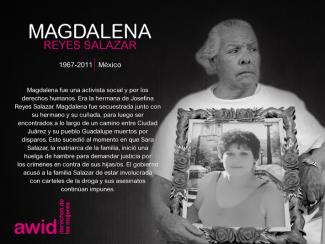
We can have an intro here
And maybe a little bit more text here
Безусловно, мы хотим услышать ваше мнение и о вашем опыте привлечения ресурсов.
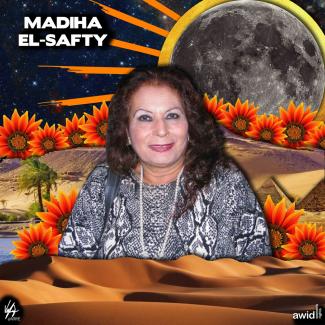
Madiha was a prominent Professor of Sociology who actively engaged with civil society as an advocate for women’s rights in the Arab region.
She chaired the Alliance for Arab Women and was a member of the Committee on Civil Society and the Committee on the Development of Minia Governorate with the National Council for Women. She produced numerous papers that shed light on, and analyzed, gender inequalities and discrimination against women.
She is remembered fondly by colleagues, students and friends.

In a global picture of rising religious fundamentalisms, this ebook details the grave human rights violations, and violations of women’s rights in particular, caused by state-sponsored fundamentalism, as well as by fundamentalist non-state actors such as militias, religious community organizations, and individuals.
It is vital to promote intersectional feminist understandings of power and privilege, and to apply these to questions of religion and culture.
