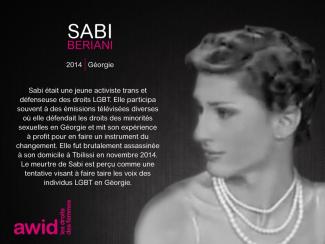
Sabi Beriani
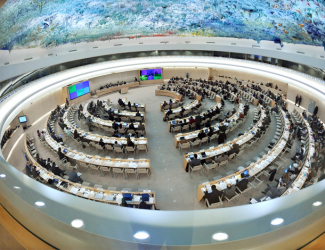
The Human Rights Council (HRC) is the key intergovernmental body within the United Nations system responsible for the promotion and protection of all human rights around the globe. It holds three regular sessions a year: in March, June and September. The Office of the UN High Commissioner for Human Rights (OHCHR) is the secretariat for the HRC.
Debating and passing resolutions on global human rights issues and human rights situations in particular countries
Examining complaints from victims of human rights violations or activist organizations on behalf of victims of human rights violations
Appointing independent experts (known as “Special Procedures”) to review human rights violations in specific countries and examine and further global human rights issues
Engaging in discussions with experts and governments on human rights issues
Assessing the human rights records of all UN Member States every four and a half years through the Universal Periodic Review
AWID works with feminist, progressive and human rights partners to share key knowledge, convene civil society dialogues and events, and influence negotiations and outcomes of the session.
por Marta Plaza Fernández
Tejer redes en las que nos sostenemos unas a otras: esa potencia es la realidad feminista que quiero compartirles. (...)
arte: «Healing Together» [Sanar juntxs], Upasana Agarwal >
Marianne Mesfin Asfaw est une féministe panafricaine qui se consacre à la justice sociale et à la construction communautaire. Elle est titulaire d'une licence en études de genre et en relations internationales de l'Université de la Colombie-Britannique (UBC) et d'un master en études de genre et de droit de l'Université SOAS de Londres. Auparavant, elle travaillait dans l'administration universitaire et le soutien aux étudiant·e·s internationaux·ales, de même qu’à titre de chercheuse et d’animatrice dans des espaces féministes à but non lucratif. Elle a également travaillé et été bénévole auprès d'organisations non gouvernementales, notamment Plan International, dans des rôles administratifs. Avant d'occuper son poste actuel, elle a travaillé dans le soutien logistique et administratif à l'AWID. Elle est originaire d'Éthiopie, a grandi au Rwanda et est actuellement basée à Tkaronto/Toronto, au Canada. Elle aime lire, voyager et passer du temps avec sa famille et ses ami·e·s. Pendant les mois les plus chauds, on peut la trouver en train de se promener dans des quartiers familiers à la recherche de cafés et de librairies obscurs dans lesquels flâner.
Cette communauté est un endroit de connexions, où l’on comprend nos combats individuels comme faisant partie de luttes mondiales, et où l’on peut même parfois danser ! Il n’existe aucun endroit de la sorte en ligne, où être en contact avec des activistes de terrain, qui viennent du monde entier, et forger de la solidarité et de la sororité..- Paz Romero, Argentina
What does an AWID Forum mean to those who have been there? What is this magic that happens when feminists from around the world gather to celebrate, strategize, learn and share joy?
AWID spoke to over forty Forum participants to hear their stories of the transformations that happened to them as activists, to their organizations and to the movements they are part of. We also learned about what we should keep and build on that makes an AWID Forum different and how we can improve.
This report holds lessons and advice invaluable to anyone planning in-person regional and thematic convenings and for us as we plan for the 15th AWID International Forum.
Doris Valenzuela Angulo était une activiste sociale, leader et défenseure des droits humains afrodescendante de Buenaventura, en Colombie. Elle faisait partie du réseau national Comunidades Construyendo Paz en Colombia (CONPAZ, Communautés construisant la paix en Colombie) composé d’organisations présentes dans les communautés affectées par le conflit armé œuvrant en faveur de la non-violence et la justice socio-environnementale.
Doris s’opposait à la violence paramilitaire continue, aux pressions incessantes des mégaprojets cherchant à déplacer sa communauté, et à la complicité de l’État. Confrontée à l’un des contextes les plus difficiles de son pays, elle joua un rôle de premier plan dans l’initiative de résistance non-violente sans précédent Espacio Humanitario Puente Nayero, un lieu urbain conçu pour assurer la cohésion communautaire, la sécurité, la créativité et l’action collective.
Ce combat non-violent unique en son genre des familles de l’Espacio Humanitario Puente Nayero attira l’attention et le soutien des agences tant locales qu’internationales. En septembre 2014, la Commission interaméricaine des droits de l’Homme accorda des mesures de protection préventives à la communauté, ordonnant au gouvernement colombien d’adopter des mesures nécessaires en vue de protéger la vie et l’intégrité physique des habitant·e·s. Les menaces et la violence des paramilitaires se poursuivirent néanmoins. Malgré l’assassinat de son fils Cristian Dainer Aragón Valenzuela en juillet 2015,Doris continua à mettre toute son énergie à éviter le recrutement forcé des enfants et des jeunes par les néo-militaires. Elle devint alors également une cible, recevant constamment des menaces pour son activisme et le travail qu’elle accomplissait.
Les incessantes agressions et menaces de mort dont elle était l’objet forcèrent Doris à quitter la Colombie. Elle vécut en Espagne de février 2017 à février 2018, dans le cadre du programme de protection temporaire d’Amnesty International pour les défenseur·e·s des droits humains en danger.
Doris a été assassinée en avril 2018 à Murcie, en Espagne, par son ex-compagnon. Elle n’avait que 39 ans.
« Doris, cette année passée avec toi nous a montré combien une personne peut avoir la capacité de transformer et créer de l’espoir en dépit des événements profondément négatifs et dévastateurs qui jalonnent sa vie... Nous poursuivons notre engagement à défendre tous les droits humains. Ton courage et ta lumière nous guideront toujours. » - Montserrat Román, Amnesty International, Groupe de La Palma, Espagne
« ... Tu le savais. Tu l’as toujours su. Et malgré tout cela, tu as résisté sans faillir à tant d’injustice, de misère, de persécution. Tu t’es élevée, fière et acharnée, contre ceux qui continuaient à vouloir que tu abandonnes tout espoir, que tu t’abaisses, que tu te rendes. Debout, tu as réclamé haut et fort ta liberté et la nôtre, qui était la tienne. Rien ni personne n’est parvenu à paralyser tes efforts pour changer le monde et le rendre plus généreux et plus vivable. Tu vis parmi nous, aujourd’hui plus vivante que jamais malgré la mort. Tu vis encore par tes actes, par ton courage, par ta grandeur lorsque tu pleurais pour cette terre promise que tu invoquais à chacun de tes cris, pour tous ces déserts que tu as habités. Toi. Toujours en vie. Doris Valenzuela Angulo.
Ce ne sont que des mots. Je sais. Je le sais, moi aussi. Mais les mots nous unissent, nous protègent, nous donnent la force et le soutien nécessaires pour continuer à aller vers la lumière que tu défendais tant... »
par Judyannet Muchiri
Je suis partie pour le Kenya en octobre de l'année dernière, pour entamer ce que j'en suis venue à considérer comme mon travail le plus important à ce jour. (...)
illustration : « Guérir ensemble », par Upasana Agarwal >
Claudia is a feminist psychologist with a Masters degree in Development Equality and Equity. She has been a human rights activist for 30 years, and a women’s rights activist for the last 24.
Claudia works in El Salvador as the co-founder and Executive Director of Asociación Mujeres Transformando. For the past 16 years she has defended labour rights of women working within the textile and garment maquila sector. This includes collaborations to draft legislative bills, public policy proposals and research that aim to improve labour conditions for women workers in this sector. She has worked tirelessly to support organizational strengthening and empowerment of women workers in the textile maquilas and those doing embroidery piece-work from home.
She is an active participant in advocacy efforts at the national, regional and international levels to defend and claim labour rights for the working class in the global South from a feminist, anti-capitalist and anti-patriarchy perspective and class and gender awareness raising. She is a board member with the Spotlight Initiative and its national reference group. She is also part of UN Women’s Civic Society Advisory Group.
#FreezeFascisms
A 30 años de la adopción de la Declaración y Plataforma de Acción de Beijing, existe una ola creciente de fascismos que ejercen gran poder e influencia en los espacios multilaterales, todo un retroceso para las conquistas de igualdad de género y la protección de los derechos humanos en el mundo entero.
En torno a la CSW69, estamos organizando, en conjunto y de forma horizontal, una serie de valientes espacios sobre el terreno y en línea a fin de compartir estrategias y forjar un poder feminista más allá de Beijing +30. Nuestra presencia colectiva trastorna las prácticas institucionales de exclusión en dichos espacios y, a la vez, apoya los procesos de organización de los movimientos en torno a las alternativas feministas a los sistemas de opresión.
Súmate a las conversaciones desde el 10 al 21 de marzo de 2025, mientras transformamos de forma colectiva la CSW69 en espacios para y sobre la resistencia y la solidaridad.
Diana Isabel Hernández Juárez was a Guatemalan teacher, human rights defender and environmental and community activist. She was the coordinator of the environmental program at Our Lady of Guadalupe Parish on the South coast of the country.
Diana dedicated her life to co-creating environmental awareness, working especially closely with local communities to address environmental issues and protect natural resources. She initiated projects such as forest nurseries, municipal farms, family gardens and clean-up campaigns. She was active in reforestation programmes, trying to recover native species and address water shortages, in more than 32 rural communities.
On 7 September 2019, Diana was shot and killed by two unknown gunmen while she was participating in a procession in her hometown. Diana was only 35 years old at the time of her death.

 |
Jurema Araújo est une enseignante-poète originaire de Rio de Janeiro. Elle a contribué au magazine Urbana, édité par les poètes Brasil Barreto et Samaral (paix à son âme) et au livre Amor e outras revoluções (L’amour et autres révolutions) avec plusieurs autres écrivain·e·s. En collaboration avec Angélica Ferrarez et Fabiana Pereira, elle a coédité O livro negro dos sentidos (Le livre noir des sens), une anthologie créative sur la sexualité des femmes noires au Brésil. Jurema a 54 ans ; elle a une fille, trois chiens, un chat et beaucoup d’ami·e·s. |

Tu la suces avec moi?La mangue est mon fruit préféré. |
Je vais être honnête : lorsque Angélica et Fabi m’ont proposé de créer une collection de textes érotiques écrits par des femmes noires, j’ignorais ce que c’était que de produire un recueil. Je maîtrisais le thème de l’érotisme, mais créer un recueil… J’ai souri, timide et flattée. Je crois que je les ai remerciées – du moins je l’espère! – et je me suis dit : mais qu’est-ce que c’est que ce truc, putain?! C’est quoi ce mot pompeux que je vais devoir intégrer tout en le mettant en pratique?
Aujourd’hui, je sais ce que c’est que de créer un recueil : c’est faire l’amour avec les écrits de quelqu’un d’autre, avec l’art de quelqu’un d’autre dans le but d’en faire un livre. Et c’est exactement ce que j’ai fait. J’ai dévêtu le texte de chaque autrice avec une lascivité littéraire. J’ai eu un rapport avec les mots et les sens d’autres personnes. J’ai été pénétrée par des poèmes que je n’avais pas écrits; des contes que je n’aurais jamais osé imaginer m’ont retournée, ont chamboulé mes sentiments, ma libido. Et c’était un orgasme inhabituel et merveilleux : éthéré, corporel, sublime, à la fois intellectuel et sensitif.
Ces textes pulsaient comme un clito durci par le désir, trempé, dégoulinant de joie à chaque lecture. Des mots dont la grivoiserie m’aspirait, me faisant plonger plus profondément dans cet univers humide.
Ces femmes noires sont allées au fond de leur excitation et ont transformé leurs fantasmes érotiques les plus profonds en art. Ces œuvres sont imprégnées de la manière dont chaque autrice vit la sexualité : libre, noire, individuelle, la sienne, son pouvoir retrouvé.
J’ai choisi de classer les textes en différentes parties dans le livre, chacune étant organisée en fonction du contenu le plus délicat, explosif, évident ou implicite qu’elle renfermait.
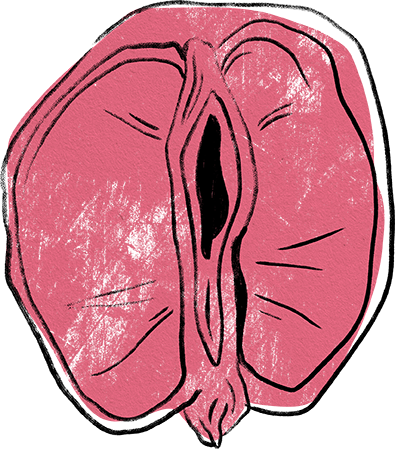
Pour ouvrir la porte à cette « envulvée noiressence », nous proposons la section Préliminaires, avec des textes qui introduisent le lecteur dans ce monde de délices. Il s’agit d’une caresse plus générale et délicate afin d’accueillir les sujets que les textes aborderont dans le reste du livre.
Puis vient la chaleur du Toucher, qui évoque les ressentis de la peau. Cette énergie qui brûle ou transite nos corps, fait bouillir nos hormones et éveille à leur tour nos autres sens. Et même si nous sommes nombreux·ses à être voyeurs·euses, le contact de la peau sur une bouche humide et chaude est excitant, comme si vous naviguiez dans la douceur de la personne qui se trouve avec vous. On est séduit par le contact ferme ou doux qui nous fait frissonner et ce picotement délicieux qui nous traverse du cou au bas du dos et qui ne disparaît que le lendemain. Et la chaleur des lèvres, la bouche, la langue humide sur la peau – ah! la langue dans l’oreille, mmmm – ou peau contre peau, les vêtements glissant sur les corps, comme s’ils se voulaient une extension de la main de l’autre. S’il n’y a pas d’urgence, l’excitation absolument sauvage d’une étreinte ferme, un peu de douleur – ou pourquoi pas, beaucoup?
La section Son – ou mélodie? – nous montre que l’attirance pour une personne passe également par l’ouïe : c’est la voix, les chuchotements, cette musique qui permet la connexion des corps et peut constituer la trame même du désir. Pour certain·e·s d’entre nous, la seule voix d’une personne ayant un joli timbre, qu’il soit rauque, traînant ou mélodieux, suffirait à nous donner un orgasme auditif. Elle n’aurait qu’à jurer grossièrement ou nous murmurer des mots doux à l’oreille pour nous faire frissonner du cou au coccyx.
Dans Saveur, nous confirmons que la langue est imbattable lorsqu’il s’agit d’aller goûter les endroits les plus enfouis et parcourir les corps pour se faire plaisir. Parfois, on l’utilise audacieusement pour goûter le nectar de l’autre. L’idée d’offrir sa fraise ou sa mangue délicieuse et juteuse à des morsures ou des coups de langue – ou des coups de langue et des morsures – nous désarme. Mais rien n’est plus délicieux que de goûter aux grottes et collines de la personne avec laquelle on est. Enfoncez votre langue bien profond pour goûter à ce bout de fruit… ou passez des heures à goûter le gland d’une queue dans votre bouche, passez votre langue sur des seins gourmands pour en goûter leurs tétons. Il s’agit de se souvenir d’une personne par la Saveur qu’elle nous a laissée.
Il y a aussi les textes où c’est le nez qui déclenche le désir. L’Odeur, mes chers·ères lecteurs·trices, est capable de nous éveiller aux délices du désir. Parfois, nous rencontrons des gens qui sentent si bon que nous voudrions les aspirer par le nez. Lorsque vous sillonnez le corps de l’autre avec le nez en commençant par le cou, sentez ce frisson délicieusement inconfortable qui parcourt votre colonne vertébrale et déshabille votre âme! Ce nez impudent se déplace ensuite vers la nuque où il capture le parfum de l’autre de telle sorte qu’en l’absence de cette personne, ce même parfum évoque, voire se répand en nous dans des souvenirs olfactifs qui ressuscitent l’odeur affolante de cette dernière.
Nous en venons au Regard – le plus traître des sens selon moi – où nous percevons le désir à partir d’un point de « vue ». Les textes présentent le désir et l’excitation par le biais de la vue, qui à son tour provoque les autres sens. Il suffit parfois d’un sourire pour nous rendre dingues. L’échange de regards? Celui qui dit : « J’ai envie de toi, là, maintenant ». Ce regard possédé qui s’éteint quand vous avez fini de baiser, ou pas. Celui-là est très particulier; il attire à lui l’autre qui ne pourra en détourner ses yeux très longtemps. Ou les regards du coin de l’œil – quand on détourne le regard au moment où l’autre va tourner la tête, comme un jeu du chat et de la souris? Pris·e·s en flagrant délit, il ne nous reste plus qu’à lui décocher un large sourire.
Pour finir, l’explosion. En se promenant à travers Tous les sens, les textes mêlent des sentiments qui prennent des allures d’alarme et nous entraînent vers le plaisir suprême : l’orgasme.
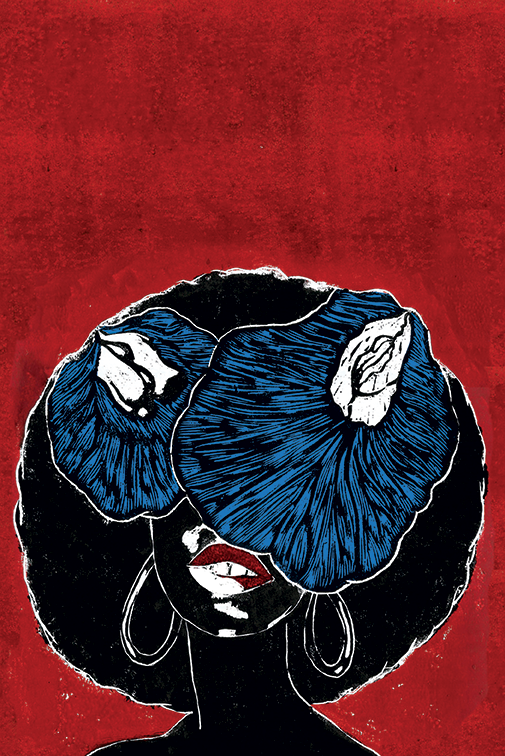
Bien sûr, ces différents contes et poèmes ne diffèrent d’aucune façon explicite. Certains sont subtils. L’excitation fait appel à tous nos sens et, plus fondamentalement, à notre tête. C’est là que ça se passe, c’est là que se fait la connexion à tout notre corps. J’ai organisé les poèmes selon la façon dont je les sentais à chaque lecture. Libre à vous de ne pas être d’accord! Mais pour moi, il existe un sens particulier par lequel le désir passe et puis explose. Et il y a quelque chose de délicieux à découvrir duquel il s’agit.
Pour pouvoir transformer l’excitation en art, nous devons nous libérer de tous nos préjugés, de nos prisons et des stigmates dans lesquels cette société centrée sur les Blancs nous a enfermé·e·s.
Chaque fois qu’une autrice noire transforme l’érotique en art, elle brise ces chaînes racistes et néfastes qui paralysent son corps, répriment sa sexualité et nous transforment en objet de convoitise d’un autre. Écrire de la poésie érotique, c’est reprendre le pouvoir sur son propre corps et parcourir sans crainte les délices du désir pour soi-même, pour les autres, pour la vie.
L’érotisme littéraire reflète ce que nous sommes lorsque nous en faisons de l’art. Nous montrons ici le meilleur de nous-mêmes, nos visions de l’amour trempées de plaisir, assaisonnées d’érogénéité, répandues dans nos corps et traduites par notre conscience artistique. Nous sommes multiples et nous partageons cette multiplicité de sensations dans des mots dégoulinants d’excitation. Oui, même nos mots dégoulinent de notre désir sexuel, mouillant nos vers, transformant nos pulsions sexuelles en paragraphes. Pour nous, jouir est révolutionnaire.
Nous devons noircir nos esprits, nos corps et notre sexualité, renouer avec notre plaisir et nous réapproprier nos orgasmes. Ce n’est qu’alors que nous serons libres. Tout ce processus est une révolution et il se fait dans la douleur. Mais il y a du bonheur à se découvrir très différent·e·s de ce que l’on attendait de nous.
Je sens que je suis à vous, je suis à nous. Goûtez, prenez plaisir, régalez-vous de ces mots merveilleux avec nous.
Ce texte est une adaptation des introductions de “O Livro Negro Dos Sentidos” [Le livre noir des sens], un recueil érotique de poèmes composés par 23 autrices noires.

Cette édition du journal, en partenariat avec Kohl : a Journal for Body and Gender Research (Kohl : une revue pour la recherche sur le corps et le genre) explorera les solutions, propositions et réalités féministes afin de transformer notre monde actuel, nos corps et nos sexualités.
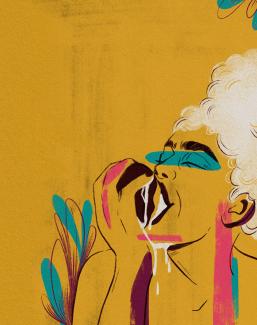
نصدر النسخة هذه من المجلة بالشراكة مع «كحل: مجلة لأبحاث الجسد والجندر»، وسنستكشف عبرها الحلول والاقتراحات وأنواع الواقع النسوية لتغيير عالمنا الحالي وكذلك أجسادنا وجنسانياتنا.
Our first Feminist Film Club program is now available to view: “Tenderness is the Sharpest Resistance” is a film series on Asian/Pacific Feminist Realities curated by Jess X Snow
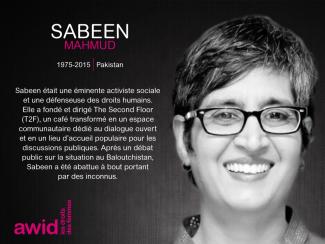
Sanyu es una feminista que reside en Nairobi (Kenia). Ha dedicado los últimos 10 años a apoyar a los movimientos obreros, feministas y por los derechos humanos, promoviendo la rendición de cuentas empresarial, la justicia económica y la justicia de género. Ha trabajado con el Centro de Información sobre Empresas y Derechos Humanos, en International Women’s Rights Action Watch Asia y el Pacífico (IWRAW, Observatorio Internacional de los Derechos de las Mujeres) y la Iniciativa de Derechos Humanos de la Commonwealth. Posee una maestría en Leyes y Derechos Humanos y una licenciatura en Derecho de la Universidad de Nottingham. Sus escritos se han publicado en el Business and Human Rights Journal, Human Rights Law Review, y plataformas como Open Global Rights, Democracia Abierta, entre otras. En sus ratos libres, le gusta caminar por el bosque y perseguir mariposas.
✉️ Sur inscription pour les grands groupes. Espace ouvert pour les petits groupes. Inscrivez-vous ici
📅 Mardi 11 mars 2025
🕒12.00h-14.00h et 16.00h-18.00h EST
🏢 Chef's Kitchen Loft with Terrace, 216 East 45th St 13th Floor New York
Organisé par : AWID

Feminist movements have changed and adapted tremendously since we last convened in this way - so to remember why AWID Forums matter, we asked activists from around the world to reflect on and share their stories, impressions and memories. This is what we learned.
Jaitun, comúnmente conocida como «Amma», estaba comprometida con garantizar los derechos reproductivos de las mujeres y niñas de India. Se dedicó, particularmente, a abogar por quienes viven en la pobreza y son más marginadas, incluidas las mujeres y niñas dalit y musulmanas.
Jaitun fue la fuerza vital detrás del caso Jaitun versus Janpura Maternity Home & Ors. Su perseverancia por la justicia llevó a que la Corte Suprema de Delhi emitiera una sentencia innovadora, que obligó al gobierno indio a hacerse responsable del incumplimiento de cierto número de obligaciones legalmente vinculantes, tales como la atención a la salud reproductiva y el derecho a la alimentación.
A su hija Fatema, quien vivía por debajo de la línea de pobreza, se le negaron los servicios reproductivos, y tuvo que dar a luz en público, bajo un árbol. En ese momento, tanto Jaitun como Fatema estaban en situación de calle, ya que su casa había sido demolida por el gobierno como parte del programa de reurbanización y gentrificación de Nueva Delhi.
«Desde entonces, esta sentencia ha sido utilizada por innumerables abogadxs y activistas de todo el mundo, incluyendo al ex-Relator Especial de la ONU sobre el derecho a la salud, no solamente como fuente de inspiración, sino como una sólida plataforma para promover la justicia.» - Jameen Kaur
Jaitun ha sido una inspiración para que muchas otras mujeres que viven en la pobreza reclamen sus derechos. Falleció en 2017.
«Con la muerte de Jaitun, hemos perdido una incomparable guerrera de la justicia, pero su espíritu de desafío pervive.» -Jameen Kaur
«En mis dieciocho años como defensora de los derechos humanos, nunca he encontrado una mujer que me inspirara ni que conmoviera mi espíritu de la forma en que lo hacía Amma. Su sonora valentía, su inimitable humor (solíamos compararla con la actriz de Bollywood, Hema Melini) cuando se sentía molesta porque habíamos pasado tanto tiempo lejos de ella... con un brillo en los ojos, decía “Ustedes se han olvidado de Amma, Amma ahora no les habla”, y luego con gran dramatismo se ponía de espaldas para darse vuelta enseguida riendo y estirando los brazos para un abrazo. Su bondad y, en definitiva, su amor y su alegría por el amor y el derecho de todxs nosotrxs a vivir con dignidad. La extraño terriblemente.» - Jameen Kaur