Confronting Extractivism & Corporate Power

Women human rights defenders (WHRDs) worldwide defend their lands, livelihoods and communities from extractive industries and corporate power. They stand against powerful economic and political interests driving land theft, displacement of communities, loss of livelihoods, and environmental degradation.


Why resist extractive industries?

Extractivism is an economic and political model of development that commodifies nature and prioritizes profit over human rights and the environment. Rooted in colonial history, it reinforces social and economic inequalities locally and globally. Often, Black, rural and Indigenous women are the most affected by extractivism, and are largely excluded from decision-making. Defying these patriarchal and neo-colonial forces, women rise in defense of rights, lands, people and nature.

Critical risks and gender-specific violence

WHRDs confronting extractive industries experience a range of risks, threats and violations, including criminalization, stigmatization, violence and intimidation.  Their stories reveal a strong aspect of gendered and sexualized violence. Perpetrators include state and local authorities, corporations, police, military, paramilitary and private security forces, and at times their own communities.

Acting together

AWID and the Women Human Rights Defenders International Coalition (WHRD-IC) are pleased to announce “Women Human Rights Defenders Confronting Extractivism and Corporate Power”; a cross-regional research project documenting the lived experiences of WHRDs from Asia, Africa and Latin America.

We encourage activists, members of social movements, organized civil society, donors and policy makers to read and use these products for advocacy, education and inspiration.

Share your experience and questions!

Tell us how you are using the resources on WHRDs Confronting extractivism and corporate power.

◾️ How can these resources support your activism and advocacy?

◾️ What additional information or knowledge do you need to make the best use of these resources?

Share your feedback


Thank you!

AWID acknowledges with gratitude the invaluable input of every Woman Human Rights Defender who participated in this project. This project was made possible thanks to your willingness to generously and openly share your experiences and learnings. Your courage, creativity and resilience is an inspiration for us all. Thank you!
Related Content

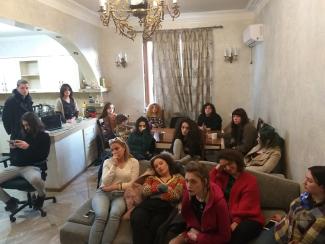
Snippet FEA collaborator and allies Photo 5 (FR)

La photo représente un groupe de quinze travailleur.euse.s assis.e.s ensemble dans un salon aux murs blancs. Certain.e.s dorment, d'autres sont debout, discutent entre elleux ou regardent leur téléphone.

Por que devo considerar responder ao inquérito?

Existem várias razões pelas quais a sua resposta ao inquérito WITM é importante. Por exemplo, tem a oportunidade de partilhar a sua experiência vivida com a mobilização de financiamento para apoiar a sua organização; de reivindicar o seu poder como especialista sobre como o dinheiro circula e os bolsos em que entra; e de contribuir para a defesa coletiva e consistente junto de financiadores para mover mais recursos de maior qualidade. Ao longo das últimas duas décadas, o inquérito WITM da AWID tem-se revelado um recurso fundamental para ativistas e financiadores. Convidamo-lo a juntar-se a nós na sua terceira edição para destacar o estado efetivo do financiamento, desafiar soluções falsas e apontar a forma como o financiamento precisa de mudar para que os movimentos prosperem e enfrentem os desafios complexos do nosso tempo.

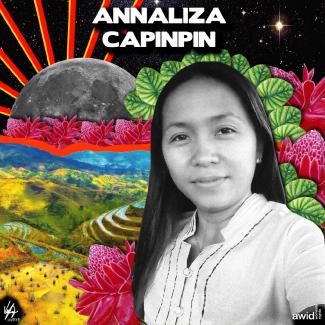
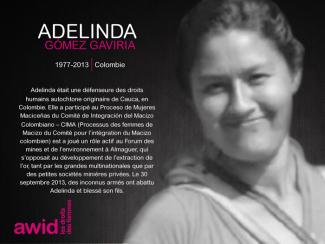
Annaliza Dinopol Gallardo Capinpin

Conocida como «Ate Liza», Annaliza era la presidenta del Consejo de la Reforma Agraria para lxs Pionerxs de Mindanao, un grupo coodinador general en Tacurong City, Filipinas.

Querida madre de cuatro hijxs, maestra y líder comunitaria, Annaliza es recordada por su comunidad como «la que lidera cuando nadie quiere liderar, la que habla cuando nadie quiere hablar, la que se puso de pie con coraje para ayudar a lxs beneficiarxs de la reforma agraria a ser dueñxs de sus tierras».

Atacantes desconocidos la ultimaron a balazos en frente de la Universidad Estatal Sultán Kudarat (SKSU), mientras se dirigía a la Escuela Secundaria Nacional Salabaca, en Esperanza.

Su familia ha dicho: «Naghihintay pa rin kami ng hustisya para sa kanya» (todavía estamos esperando justicia para ella).


Je suis une défenseuse des droits humains et je me sens en danger. À qui puis-je m’adresser pour obtenir du soutien ?

Snippet FEA Workers Persecution S4 (EN)

A law enforcement agent in pink riot gear holding a stick

WORKERS PERSECUTION

نحن نعيد إعطاء المال لشركائنا/شريكاتنا ونعرّف عن أنفسنا كنسويات و\ أو صندوق نسائي. هل علينا تعبئة الاستطلاع؟

كلا. نقدّر عملكم/ن لكننا لا نطلب في هذه المرحلة من الصناديق النسوية والنسائية تعبئة الاستطلاع. نشجعكم/ن على مشاركة الاستطلاع مع شركائكم/ن و شبكاتكم/ن النسوية.

The Feminist Realities Magazine

The Feminist Realities Magazine

We bring you an inspiring curated collection of powerful stories and images of transformation and resistance created by feminist activists, writers and artists from all over the world.

Explore the magazine


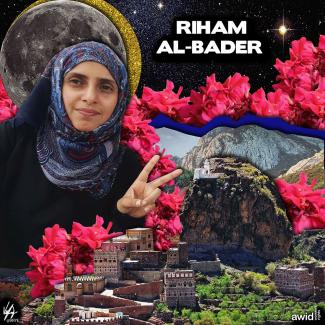
Riham Al-Bader

Riham était avocate et activiste engagée à suivre de près la question des violations des droits au Yémen.

Elle a travaillé avec d'autres activistes pour fournir de la nourriture et de l'eau aux civils piégés par les milices houthies dans la banlieue de la ville de Taiz.

Riham a été tuée en février 2018. La cause de son décès, soit par la main d’un tireur d'élite ou par un tir de mortier, n’a pas été confirmée. Personne n'a été tenu responsable de son meurtre.


Riham Al Bader, Yemen

2009: The UN holds Conference on the impact of the economic crisis

2009 UN Conference on the World Financial and Economic Crisis and its Impacts on Development

  • The 2009 conference was an outcome of the 2008 Doha conference. The Doha Declaration had mandated that the United Nations hold a conference, to be organized by the President of the General Assembly, on the world financial and economic crisis and its impact on development.
  • During the conference women’s groups, through the WWG, highlighted the impact of the global financial crisis on vulnerable groups. In their statement to the members, the WWG proposed necessary actions to be taken by member states to redress the effects of the crisis to women. They stated that other social groups affected by the crisis are key to a response that is harmonized with international standards and commitments to gender equality, women’s rights and human rights and empowerment. 

Snippet FEA HEALTH CONDITIONS (ES)

Ilustración de una persona de piel blanca con uniforme amarillo de enfermera con estetoscopio en la mano,

BUENAS CONDICIONES DE SALUD

На каких языках проводится опрос?

На данный момент опрос в KOBO доступен на арабском, английском, французском, португальском, русском и испанском языках. В начале опроса у вас будет возможность выбрать нужный вам язык.

Reason to join 3

Comparte tus historias y conoce las de otrxs. Al conectar nuestras experiencias, relatos y propuestas ayudamos a crear en conjunto y amplificar las Realidades Feministas.

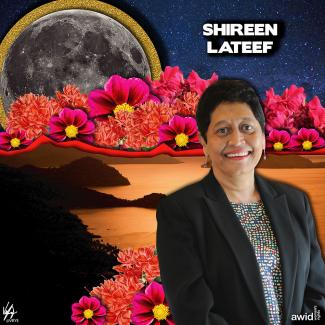
Shireen Lateef

Shireen was an inspiration to many feminists in Fiji and a powerful ally to the women’s movement. She advocated tirelessly for gender equality locally and regionally.

She began her career as a junior gender specialist at the Asian Development Bank and brought about drastic changes to the institution’s gender policies.

Her research, “Rule by the Danda: Domestic violence amongst Indo Fijians” was one of the earliest pieces of research on domestic violence, marriage and women in Fiji. This seminal work has been a catalyst for feminist work in this area.

Shireen’s legacy lives on as many remember her influence, commitment and support to the women’s movement in Fiji and the Pacific.


Shireen Lateef, Fiji

Enero 2015: 1a sesión para redactar el documento final de la 3a Conferencia sobre FpD

Primera sesión para redactar el Documento Final de la tercera Conferencia Internacional sobre la Financiación para el Desarrollo

  • En enero de 2015, en la sede de la ONU en Nueva York comenzó una serie de sesiones para redactar el Documento Final.
  • Antes de la primera sesión, los facilitadores del proceso preparatorio de la Conferencia de Adís Abeba presentaron los “Elementos” para el llamado “Borrador Cero” del documento, que constituyeron la base para las negociaciones entre gobiernos en torno al Documento Final.
  • En esas sesiones, las organizaciones por los derechos de las mujeres subrayaron la necesidad de que, en los procesos post-2015, la FpD y los medios para su implementación se traten por separado, ya que la FpD brinda a los Estados una oportunidad única de ocuparse de las causas estructurales de la desigualdad.

Snippet FEA WE ARE LEGAL AND ALWAYS WERE (FR)

Espagne

Syndicat OTRAS


NOUS SOMMES LÉGAL·ES

ET L’AVONS TOUJOURS ÉTÉ

Devo fazer alguma preparação para responder ao inquérito?

Tendo em conta que o inquérito WITM foca-se nas realidades do financiamento de organizações feministas, a maioria das perguntas aborda o tópico do financiamento do seu grupo entre 2021-2023. Será preciso ter essas informações facilmente acessíveis para preencher o inquérito (por exemplo, os seus orçamentos anuais e as principais fontes de financiamento).

Values - intersectionality

Intersectionnalité

nous estimons que pour être transformateurs et forts, les mouvements féministes doivent continuer à travailler au-delà de leurs similitudes et de leurs différences. Nous devons également interroger le pouvoir et les privilèges, tant au sein qu'à l'extérieur de nos mouvements.