Women human rights defenders (WHRDs) worldwide defend their lands, livelihoods and communities from extractive industries and corporate power. They stand against powerful economic and political interests driving land theft, displacement of communities, loss of livelihoods, and environmental degradation.
Why resist extractive industries?
Extractivism is an economic and political model of development that commodifies nature and prioritizes profit over human rights and the environment. Rooted in colonial history, it reinforces social and economic inequalities locally and globally. Often, Black, rural and Indigenous women are the most affected by extractivism, and are largely excluded from decision-making. Defying these patriarchal and neo-colonial forces, women rise in defense of rights, lands, people and nature.
Critical risks and gender-specific violence
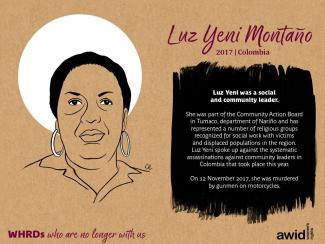
WHRDs confronting extractive industries experience a range of risks, threats and violations, including criminalization, stigmatization, violence and intimidation. Their stories reveal a strong aspect of gendered and sexualized violence. Perpetrators include state and local authorities, corporations, police, military, paramilitary and private security forces, and at times their own communities.
Acting together
AWID and the Women Human Rights Defenders International Coalition (WHRD-IC) are pleased to announce “Women Human Rights Defenders Confronting Extractivism and Corporate Power”; a cross-regional research project documenting the lived experiences of WHRDs from Asia, Africa and Latin America.
We encourage activists, members of social movements, organized civil society, donors and policy makers to read and use these products for advocacy, education and inspiration.
AWID acknowledges with gratitude the invaluable input of every Woman Human Rights Defender who participated in this project. This project was made possible thanks to your willingness to generously and openly share your experiences and learnings. Your courage, creativity and resilience is an inspiration for us all. Thank you!
The key objective of the WITM survey is to shine light on the financial status of diverse feminist, women’s rights, gender justice, LBTQI+ and allied movements globally. Based on this, we hope to further strengthen the case for moving more and better money, as well as shift power, to feminist movements.
Defensoras mexicanas
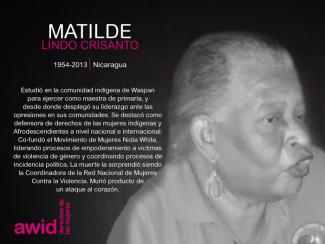
La información compilada para nuestro Tributo indica queMéxico es un país particularmente peligroso para las defensoras. De las 12 defensoras de derechos humanos mexicanas que conmemoramos en el Tributo de este año, 11 fueron asesinadas. Eran periodistas, activistas por los derechos de las mujeres, activistas de los derechos trans* y sociales. Únete a nosotras para recordar y honrar a estas defensoras de derechos humanos, su trabajo y su legado, compartiendo los memes aquí incluidos con tus colegas, amistades y redes; y tuiteando las etiquetas #WHRDTribute y #16Días.
Por favor, haz click en cada imagen de abajo para ver una versión más grande y para descargar como un archivo.
Nous vivons dans un monde où la destruction de la Nature alimente notre économie mondiale actuelle.
Même en période de crise climatique, les gouvernements continuent d'encourager les industries agricoles à grande échelle à se développer. Ces activités empoisonnent la terre, menacent la biodiversité et détruisent la production alimentaire et les moyens de subsistance locaux. Pendant ce temps, alors que les femmes produisent la majorité de la nourriture dans le monde, elles ne possèdent presque aucune terre.
Et si nous percevions la terre et la Nature non pas comme une propriété privée à exploiter, mais comme une totalité avec laquelle vivre, apprendre et coexister harmonieusement ? Et si nous réparions nos relations avec la terre et adoptions des alternatives plus durables qui nourrissent à la fois la planète et ses communautés?
Nous Sommes la Solution (NSS) est l'un des nombreux mouvements dirigés par des femmes qui s'efforcent d'atteindre cet objectif.
Voici leur histoire.
¿Podría haber varias respuestas a la encuesta ¿Dónde está el dinero? en nombre de una agrupación en particular?
No. Solicitamos una sola respuesta a la encuesta por agrupación.
Les défenseuses de l’Afrique subsaharienne
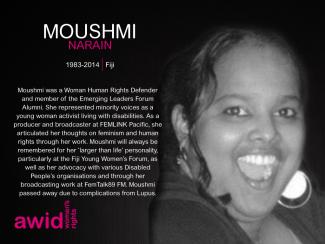
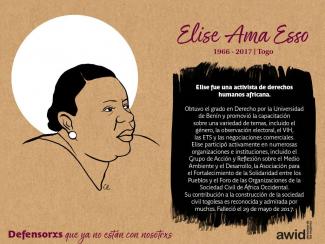
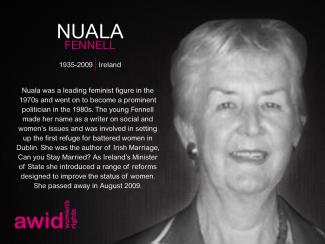
Cette année, dans le cadre de notre hommage en ligne aux défenseuses des droits humains qui ne sont plus parmi nous, nous célébrons la mémoire de quatre femmes originaires d’Afrique subsaharienne. Trois d’entre elles ont été assassinées en raison de leur travail et/ou à cause de leur identité de genre ou de leur orientation sexuelle. Leur mort souligne la violence à laquelle les personnes LGBT* sont confronté-e-s dans cette région et dans le monde entier. Nous vous invitons à vous joindre à nous pour commémorer la vie de ces femmes, leur activisme et l’héritage qu’elles nous ont laissé. Faites circuler ces mèmes après de vos collègues et amis ainsi que dans vos réseaux et twittez en utilisant les hashtags #WHRDTribute et #16Jours.
S'il vous plaît cliquez sur chaque image ci-dessous pour voir une version plus grande et pour télécharger comme un fichier
AGROÉCOLOGIE ET SOUVERAINETÉ ALIMENTAIRE EN TANT QUE RÉSISTANCE
Aujourd'hui, la production alimentaire industrielle à grande échelle utilise des plantations à culture unique, des organismes génétiquement modifiés et d'autres pesticides qui détruisent la terre et les connaissances des communautés locales.
Le rôle des femmes, des communautés indigènes et rurales et des personnes racialisées des pays du Sud Global est essentiel dans la préservation des systèmes alimentaires.
Les agroécologistes féministes s'efforcent aussi de démanteler les rôles de genre oppressifs et les systèmes patriarcaux intégrés à la production alimentaire. Comme le montrent les héroïnes de Nous Sommes la Solution, elles génèrent une agroécologie libératrice en renforçant la résilience des communautés, en autonomisant les femmes paysannes et agricultrices tout en en préservant les traditions locales, les territoires et les connaissances des communautés productrices de nourriture.
Est-il possible de répondre en dehors de la plateforme KOBO et de vous transmettre mes réponses par courriel?
Sauf si vous avez des problèmes d’accessibilité et/ou que vous répondez aux questions de l’enquête dans une autre langue, nous vous encourageons fortement à utiliser KOBO pour une collecte et une analyse standardisées des données WITM.
Por qué y cómo renovar tu membresía a AWID
Conoce a otras/os afiliadas/os
Nuestras/os afiliadas/os tanto individuales como institucionales provienen de todas las regiones del mundo y de 163 países; las/os más recientes se nos han unido desde Zimbabue, Turquía y los Estados Unidos. ¡Todas/os nuestras/os afiliadas/os aportan una rica y diversa gama de perspectivas, experiencias, conocimiento, energía e inspiración!
¿Sabías que cada semana publicamos perfiles de afiliadas/os?
Uno de los beneficios de ser afiliada/o de AWID es que tu historia sea destacada en nuestro boletín informativo, el cual llega a 35,000 suscriptoras/es, y a través de nuestros canales en las redes sociales que tienen más de 60,000 seguidores.
Publicaciones recientes:
Conoce a Angila Ashitua, una joven afiliada a AWID que vive en el condado de Vihiga, Kenia Occidental.
Aprendiendo más acerca del trabajo que hace AWID y de temas relativos a los derechos de las mujeres y la justicia social por medio de nuestras publicaciones y recursos, incluyendo el último video "Cambiando sistemas, cambiando vidas". [disponible solo en inglés]
Participando en nuestras sesiones de aprendizaje electrónico. ¡Mira lo más destacado de nuestro seminario en línea sobre justicia fiscal! [disponible solo en inglés]
¡Y mucho más!
Puedes renovar tu membresía por uno, dos o tres años; también ofrecemos membresías individuales e institucionales gratis a quienes tengan bajos ingresos o presupuestos.
Si tienes alguna dificultad y necesitas apoyo con el proceso de inscripción, por favor no dudes en comunicarte conmigo a través de membership@awid.org
Testemonios de nuestras/os afiliadas/os
"AWID nos ha resultado una red muy interesante y estamos participando en muchas de sus plataformas". - Engabu Za Tooro (afiliada/o institucional AWID)
"Espero una colaboración fructífera con el equipo. Me siento excelente. Gracias por aceptarme como afiliada". - R. Chakraborty (afiliada individual AWID)
"Muchas gracias, AWID, pues el trabajo que hacen es formidable. Aprecio realmente sus esfuerzos". - E. Khan (afiliada individual AWID)