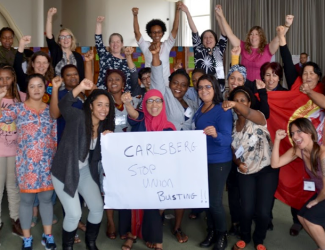
Women human rights defenders (WHRDs) worldwide defend their lands, livelihoods and communities from extractive industries and corporate power. They stand against powerful economic and political interests driving land theft, displacement of communities, loss of livelihoods, and environmental degradation.
Why resist extractive industries?
Extractivism is an economic and political model of development that commodifies nature and prioritizes profit over human rights and the environment. Rooted in colonial history, it reinforces social and economic inequalities locally and globally. Often, Black, rural and Indigenous women are the most affected by extractivism, and are largely excluded from decision-making. Defying these patriarchal and neo-colonial forces, women rise in defense of rights, lands, people and nature.
Critical risks and gender-specific violence
WHRDs confronting extractive industries experience a range of risks, threats and violations, including criminalization, stigmatization, violence and intimidation. Their stories reveal a strong aspect of gendered and sexualized violence. Perpetrators include state and local authorities, corporations, police, military, paramilitary and private security forces, and at times their own communities.
Acting together
AWID and the Women Human Rights Defenders International Coalition (WHRD-IC) are pleased to announce “Women Human Rights Defenders Confronting Extractivism and Corporate Power”; a cross-regional research project documenting the lived experiences of WHRDs from Asia, Africa and Latin America.
We encourage activists, members of social movements, organized civil society, donors and policy makers to read and use these products for advocacy, education and inspiration.
AWID acknowledges with gratitude the invaluable input of every Woman Human Rights Defender who participated in this project. This project was made possible thanks to your willingness to generously and openly share your experiences and learnings. Your courage, creativity and resilience is an inspiration for us all. Thank you!
Related Content
Snippet FEA NSS Quote (EN)
“It’s the indigenous knowledge and the practices that have always supported food sovereignty and this knowhow is in the hands of the women … Ecofeminism for me is the respect for all that we have around us.”
Our individual and institutional members come from ALL regions of the world and 163 countries. Our latest members join us from France, South Sudan, the United Kingdom, and Lebanon. All of our members bring with them a rich and diverse array of perspectives, experiences, knowledge, energy and inspiration!
Did you know about our weekly member profiles?
One of the benefits of being an AWID member, is having your story featured on awid.org, in our newsletters which go out to 35,000 subscribers, and via our social media channels which have over 60,000 followers.
If you have any difficulties and require support with the sign-up process, please do not hesitate to contact us at membership@awid.org
What Our Members Say
"We have found AWID to be a very exciting network and we are involved in many of its platforms." - Engabu Za Tooro (AWID institutional member)
"I am looking forward to a fruitful engagement with the team. Feeling great. Thanks for accepting me as a member." - R. Chakraborty (AWID individual member)
"Thank you so much AWID, your work is tremendous. I really appreciated your efforts." - E. Khan (AWID individual member)
Puis-je vous contacter si j’ai des questions ou des inquiétudes?
Si vous avez des questions ou des inquiétudes, merci de nous contacter par le biais de ce formulaire, en indiquant « Enquête WITM » dans l’objet de votre message. Vous pouvez également nous écrire à witm@awid.org.
Patience est une professionnelle internationale des ressources humaines avec plus d'une décennie d'expérience dans la gestion des ressources humaines (RH) dans le secteur non lucratif. Elle a travaillé auparavant chez Mercy Corps en tant que responsable générale des ressources humaines pour l'Afrique. Elle y a appuyé le cycle de vie complet des employé·e·s expatrié·e·s dans la région de l'Afrique de l'Est et de l'Afrique australe et fourni des conseils techniques RH aux responsables des ressources humaines dans les bureaux nationaux de la région africaine. Avant de rejoindre l'équipe internationale des ressources humaines, elle agissait en tant que point focal national ressources humaines et protection, et faisait partie de l'équipe de direction qui traitait de toutes les questions de ressources humaines et de protection. Avant de rejoindre Mercy Corps, elle dirigeait le département des ressources humaines et des opérations de l'organisation de développement des Pays-Bas SNV et était membre de l'équipe de direction nationale. Elle possède également une expérience de consultance en ressources humaines qu'elle a acquise alors qu'elle étudiait encore pour sa licence spécialisée en gestion des ressources humaines. Elle est passionnée de RH, aime travailler avec les gens et considère le bien-être et la protection dans ses valeurs fondamentales et son travail professionnel. Amatrice de sport, Patience peut également être aperçue sur un terrain de basket, un court de tennis ou encore un terrain de football.
Position
Coordonnatrice des Ressources Humaines
Add to stories
Off
Snippet FEA This is the story of the Nadia Echazú (ES)
Un lugar de trabajo no tiene que operar sobre la base de la competencia y las ganancias. No tiene que explotar a la gente en beneficio de unx dueñx o pequeña élite.
Las comunidades vulnerabilizadas al margen de las economías formales han ido construyendo modelos cooperativos alternativos basados en la autonomía, la cooperación, la corresponsabilidad, la autogestión y la solidaridad.
Las cooperativas y lugares de trabajo autogestionados por lxs trabajadorxs siempre han ofrecido formas alternativas de generar oportunidades de empleo, ingresos, seguridad social y ahorros y, al mismo tiempo, distribuir los ingresos de formas más comunitarias, sostenibles y seguras.
Pero es más que una oportunidad de empleo: es hacer realidad los sueños y construir economías feministas basadas en la solidaridad y el cuidado mutuo. Es crear un mundo donde nuestras vidas, nuestro trabajo y nuestras comunidades importen.
Esta es la historia de la Cooperativa Textil Nadia Echazú, la primera cooperativa creada y dirigida por y para personas travesti y trans en Argentina.
7. Sintetiza los resultados de la investigación
Ahora que has analizado toda la información que recogiste — de la encuesta, las entrevistas, la investigación secundaria y otras fuentes que hayas utilizado — ya puedes generar el producto final.
En esta sección:
El producto final
1. Escribe con claridad
2. Consigue que tenga un aspecto atractivo
El producto final será un documento que resume, analiza y critica la información que obtuviste. Será lo que compartas con la audiencia cuando les presentes tu investigación y se la expliques.
En AWID por lo general elaboramos un informe escrito exhaustivo en el que analizamos cada conjunto de información y sintetizamos todos los resultados que encontramos, para luego generar productos más breves como infografías o resúmenes (que explicaremos en la sección siguiente, «Finalización y formato»).
1. Escribe con claridad
Organiza la información según cómo te gustaría contar la historia. Puedes respetar el orden de la encuesta. O reagrupar algunas preguntas para que la conclusión surja de manera fluida y siga una progresión lógica.
Adapta el lenguaje al público. Utiliza un lenguaje universal y evita las jergas o los términos demasiado técnicos.
La importancia de la edición
El trabajo de edición implica corregir el texto, garantizar que la redacción sea concisa, revisar que los datos proporcionados sean exactos, señalar las inconsistencias que se deben resolver, acomodar el texto para que fluya y posiblemente también sugerir títulos.
Lo ideal es que la persona que haga este trabajo entienda y conozca tu labor en cuanto a WITM pero que no haya participado directamente de la investigación, así puede aportar una perspectiva nueva.
2. Consigue que el producto tenga un aspecto atractivo
Utiliza la información recogida para generar gráficos y tablas. Estas herramientas visuales constituyen una forma atractiva de subrayar los principales resultados de la investigación y validar los análisis.
Busca imágenes relevantes que puedan ilustrar el informe.
Destaca las principales cifras y/o los testimonios de impacto.
Recuerda: Cuanto más accesible sea el producto, más personas querrán leerlo (y compartirlo).
Cuando llegues a este momento, ya habrás compilado toda la información, la habrás analizado y convertido en un producto final, que probablemente sea un informe extenso.
1. Pule los resultados
Antes de encarar los pasos siguientes deberías compartir el producto final con organizaciones, activistas y donantes que puedan comentarlo (lxs «consultorxs»).
Este es un momento excelente para pedirles que revisen lo siguiente:
¿Hay algo fundamental que esté ausente delanálisis del panorama actual del financiamiento y sus tendencias?
¿Hay algo fundamental que esté ausente de las conclusiones?
¿Hay alguna inexactitud en la información que necesite ser corregida?
¿Tienen alguna sugerencia general sobre cómo fortalecer el informe para que cumpla con las metas que habías mencionado en el marco de la investigación?
Una vez que hayas incorporado todos los comentarios de las personas a las que consultaste, asegúrate de que la persona a cargo de la edición vuelva a revisar el informe.
Con esto ya tendrás la versión final y completa del informe. Si quieres publicarlo en otros idiomas, ahora es el momento de enviarlo a traducir.
2. Facilita los comentarios
Es probable que las personas a las que consultes estén ocupadas con su trabajo habitual. Asegúrate de darles un plazo razonable para que te hagan llegar sus comentarios.
Pídeles comentarios breves y específicos, para que les resulte fácil responder. Si quieres, puedes simplemente copiar y pegar los puntos que mencionamos en la sección anterior.
Si vas a publicar el informe en varios idiomas, asegúrate de contar con personas que también puedan revisar las versiones finales traducidas de el/los producto/s.
Las personas que revisen el informe (lxs «consultorxs») te estarán haciendo un aporte significativo. Considera la posibilidad de otorgarles alguna forma de reconocimiento.
• 1 persona (o más) de investigación
• 1 Editor (editor web o si crea un producto en línea)
• Traductores (si ofrece encuesta en varios idiomas)
Recursos necesarios
• Lista de organizaciones de asesores, activistas y financiadores.
• Documento de Síntesis (sección de "marco de su investigación")
• Los resultados de su(s) encuesta(s)
• Preguntas de la entrevista
• Resultados de las entrevistas
• Los datos de la investigación secundaria
• Todos otros datos utilizados en el informe
Ȃurea Mouzinho is a feminist economic justice organizer from Luanda, Angola, with a 10-year career in research, grant-making, advocacy, and movement-building for women's rights and economic justice across Africa and the global south. Currently the Program Manager for Africa at Thousand Currents, she also serves on the Feminist Africa Editorial Board and is a member of Ondjango Feminista, a feminist collective she co-founded in 2016. A new mom to a Gemini boy, Ȃurea enjoys slow days with her young family and taking long strolls by the beach.
1 personne trans et travesti sur 3 en Argentine vit dans un ménage à faible revenu.
Les 5 principales menaces qui pèsent sur nous
Dans le contexte actuel, nous avons cerné cinq grandes menaces à la lutte pour des économies justes d’un point de vue féministe :
1. La financiarisation de l'économie mondiale
« La financiarisation fait référence à l'importance croissante des marchés financiers, des intérêts financiers, des institutions financières et des élites de la finance dans le fonctionnement de l'économie et de ses institutions de gouvernance, sur la scène nationale et internationale. » Gerald Epstein
Epstein Gerald A. 2006 ; Financialization and the World Economy, Editions Edward Elgar, en anglais seulement.
Les institutions financières exercent une forte influence sur la gouvernance économique et l’orientation des politiques de développement. La domination croissante du secteur des entreprises et des institutions financières internationales, dans le cadre de la définition des politiques publiques locales et mondiales, a abouti à la prise en otage de l'État dans l'intérêt du capital. Le système financier actuel, en ce compris les politiques controversées de crédit et d’endettement, font partie intégrante de l'expansion et de la reproduction des processus d'accumulation du capital.
Cela soulève des questions importantes sur la façon de réglementer et de repenser le système financier mondial, non seulement pour éviter les conséquences désastreuses des crises de la dette, mais également pour permettre des moyens de subsistance durables et la réalisation des droits économiques et sociaux sans périodes de recul.
Au cours des 20 dernières années, les cadres des accords commerciaux (bilatéraux ou multilatéraux) ont été élargis, démontrant un intérêt accru pour les droits de propriété intellectuelle (DPI) à octroyer aux sociétés.
Les droits de propriété intellectuelle ont clairement bénéficié aux sociétés multinationales, causant d'énormes répercussions sur la capacité des nations et des peuples les plus pauvres à réaliser les droits humains, notamment :
le droit à l'alimentation
le droit de préserver
le droit d'utiliser et de vendre des semences
le droit d'accès aux médicaments essentiels
En outre, la libéralisation de l'importation des produits agricoles a entraîné un afflux de produits bon marché et compromis l’emploi des agriculteur-trice-s indépendants dans les pays pauvres, ainsi que la sécurité alimentaire. Les dispositions de protection de l'investissement inscrites aux accords commerciaux limitent la marge de manœuvre des gouvernements nationaux leur permettant de créer et de faire respecter des règlements sur des questions aussi cruciales que la protection de l'environnement, le droit du travail et la durée des droits d'auteur.
En exposant les pièges de ces accords, les mouvements féministes ont été et sont toujours à la fine pointe de la résistance.
3. Les écosystèmes et la biodiversité menacés à une échelle sans précédent
La marchandisation des ressources de la Terre, la dégradation environnementale et le changement climatique qui résultent de décennies d'industrialisation agressive, du pillage et de l'extraction liée aux ressources de la planète, ont endommagé la biodiversité et la résilience écologique. Ces dommages menacent maintenant l'existence de la société humaine elle-même.
La communauté internationale n'a pas réussi à modifier les modes de production et de consommation qui sont à la racine du problème. Au lieu de cela, les gouvernements, avec le soutien de grandes entreprises intéressées au profit, penchent en faveur d’une «économie verte». Cette approche favorise les « technologies économes en énergie » (y compris l'énergie nucléaire, les biocarburants, les organismes génétiquement modifiés et la géo-ingénierie) et les systèmes d’échanges de droits d’émission de carbone comme solutions miracles.
4. La marchandisation des terres et l’accélération du phénomène mondial de l’accaparement des terres et des ressources
Les phénomènes d’accaparement des terres et de l'appropriation des ressources ne sont pas nouveaux et les résistances étaient déjà au cœur de l’histoire coloniale. Ce qui est nouveau, c’est la rapidité et la manière dont les terres et les ressources naturelles sont devenues des marchandises pour de nouveaux marchés.
Les institutions financières internationales jouent un rôle central dans la promotion des marchés fonciers dans les pays en développement. Ces institutions financent des réformes agraires qui permettent à de puissants acteurs financiers de faire main-basse sur des terres à des fins spéculatives en échange de maigres promesses d'emplois et de croissance. L'accaparement des terres a de profondes répercussions négatives sur l'accès des populations locales aux biens et services essentiels, sans compter les déplacements forcés et la dégradation de l'environnement qui y sont associés.
Les personnes qui résistent à l'accaparement des terres, parmi lesquelles des femmes défenseuses des droits humains, sont confrontées quotidiennement à diverses formes de violence, y compris les agressions physiques et les abus sexuels.
5. Des fondements patriarcaux profondément ancrés qui soutiennent le système capitaliste
Ces fondements patriarcaux sont particulièrement hégémoniques dans les modèles néolibéraux actuels.
Les nombreuses manières dont l'économie politique et le développement sont liés à la sexualité ou au genre sont évidentes : pensez à la manière dont le capitalisme détermine ce qui est qualifié de travail et comment la ‘valeur humaine’ est fondée sur la productivité du travail salarié.
En règle générale, la position des femmes dans l'économie mondiale continue de reposer sur l’exploitation de leur travail fondée sur le genre : ce travail est sous-évalué et on retrouve essentiellement les femmes dans les emplois précaires, la sphère de la subsistance domestique et de la production non rémunérée et dans la sphère ‘reproductive’. Puisque le travail de reproduction est systématiquement associé au travail non rémunéré des femmes, il a fourni un immense soutien au capitalisme, en même temps qu’il est la source d'oppressions fondées sur le genre et l'assujettissement.
Cette situation est aggravée par le fait que dès lors où les mécanismes de protection sociale commencent à diminuer, le fardeau du travail des femmes augmente proportionnellement.
En outre, le phénomène de la migration mondiale, stimulé par des milliers de réfugiés économiques qui fuient la pauvreté endémique à travers le monde, n’est pas étranger au type de relations de pouvoir entre hommes et femmes du système capitaliste. Les fonds envoyés dans le pays d’origine deviennent une source importante de financement et de développement pour les familles et les communautés restées au pays. Ce phénomène a un coût important pour les femmes migrantes qui luttent pour gagner un salaire décent dans leur pays d’accueil.
Dans la même veine, nous avons vu comment les systèmes capitalistes patriarcaux font usage de la violence et de l'oppression pour maintenir le statu quo. La hausse des dépenses militaires mondiales et l’escalade de la violence perpétrée à la fois par des acteurs étatiques et non étatiques, sont des stratégies adoptées pour contrôler la dissidence, le corps et la voix des femmes et régler les différends économiques, politiques et sociaux.
Partout dans le monde, la violence, l'incarcération et la discrimination ciblent de manière disproportionnée :
les femmes et les communautés de couleur
les peuples autochtones
les personnes handicapées
les travailleur-euse-s du sexe
les populations démunies
les personnes LGBT*QI
Pour contester la violence structurelle et ses liens avec un système mondial capitaliste, nous devons procéder à une analyse intersectionnelle qui tienne compte du genre, de la race/de l'origine ethnique, de l'âge, des compétences, de la nationalité, de l'orientation sexuelle et de l'identité de genre des personnes, entre autres statuts.
La crise profonde du système actuel de gouvernance mondiale est également évidente lorsqu’on examine les maigres accords intergouvernementaux conclus et la façon dont ils manquent souvent de mécanismes de responsabilisation les plus fondamentaux. Le système multilatéral qui a servi la gouvernance mondiale par le passé ne parvient plus à répondre aux multiples crises actuelles. Ce même système continue d'être profondément antidémocratique, marqués par l’augmentation de la présence et de la puissance des sociétés qui occupent désormais les espaces précédemment réservés aux États.
Repenser, Renouveler et Réactiver
Ces menaces nous forcent, nous les féministes, à repenser nos perspectives et nos stratégies, à renouveler et à réactiver notre engagement pour la construction d’un mouvement en faveur d’une économie juste, en partenariat avec d'autres mouvements.
Ces menaces nous incitent à envisager, d’une perspective féministe, de vastes programmes de transformation socioéconomique qui tiennent compte des réalités de la majorité des personnes démunies. Le temps est venu d’opérer les changements nécessaires pour mettre en place une économie juste et pour relever les défis systémiques persistants.
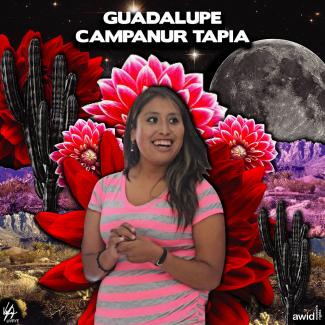
Guadalupe was an environmental activist involved in the fight against crime in Cherán, Mexico.
Guadalupe helped to overthrow the local government in April 2011 and participated in local security patrols including those in municipal forests. She was among the Indigenous leaders of Cherán, who called on people to defend their forests against illegal and merciless logging. Her work for seniors, children, and workers made her an icon in her community.
She was killed in Chilchota, Mexico about 30 kilometers north of her hometown of Cherá.
تتواجد الحركات النسوية، حركات حقوق النساء، حركات العدالة الجندرية، حركات مجتمع الميم - عين وحلفاءها/ يفاتها في مفترق شديد الأهمية وتواجه هجمات عصيبة على حقوق وحريات حصلت عليها. فتصاعد الاستبداد في الأعوام الأخيرة، وكذلك القمع العنيف للمجتمع المدني وتجريم النساء والأشخاص المتنوعين/ات جندرياً المدافعين عن حقوق الإنسان، تصاعد الحروب والأزمات في الكثير من أنحاء العالم، استمرار الظلم الاقتصادي والتقاطع بين الصحة، البيئة والأزمة المناخية.
Simone a 20 ans d’expérience dans le soutien à la gestion et l’administration dans des organisations à but non lucratif, en particulier dans l’enseignement médical post universitaire et la formation aux Technologies de l'Information et de la Communication. Elle possède des qualifications en soutien à la gestion et en études parajuridiques. Elle est basée en Afrique du Sud, aime voyager et agit en tant que généalogiste amatrice.
Position
Assistante Exécutive
Add to stories
Off
Snippet FEA Financial Precarities (EN)
FINANCIAL PRECARITIES
is constant
Challenging the economic growth model
Context
Contesting the premise that a country’s economy must always ‘grow or die’, de-growth propositions come to debunk the centrality of growth measured by increase in Gross domestic product (GDP).
Definition
A de-growth model proposes a shift towards a lower and sustainable level of production and consumption. In essence, shrinking the economic system to leave more space for human cooperation and ecosystems.
The proposal includes
Downsizing resource-, energy- and emission-intensive superfluous production, particularly in the North (e.g. the automotive and military industries)
Directing investments instead into the care sector, social infrastructure and environmental restoration
Feminist perspective
Feminist perspectives within de-growth theory and practice argue that it also needs to redefine and revalidate unpaid and paid, care and market labour to overcome traditional gender stereotypes as well as the prevailing wage gaps and income inequalities that devalue care work.
Learn more about this proposition
In “The Future WE Want: Occupy development” Christa Wichterich argues that in order to break up the hegemonic logic of unfettered growth and quick returns on investment, three cornerstones of another development paradigm must combine: care, commons and sufficiency in production and consumption.
Equitable, Ecological Degrowth: Feminist Contributions by Patricia Perkins suggests developing effective alternative indicators of well-being, including social and economic equity and work-time data, to demonstrate the importance of unpaid work and services for the economy and provide a mechanism for giving credit to those responsible.