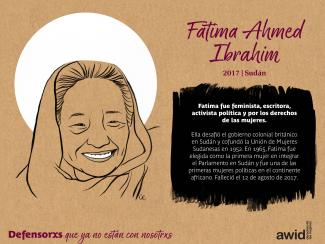
Fatima Ahmed Ibrahim
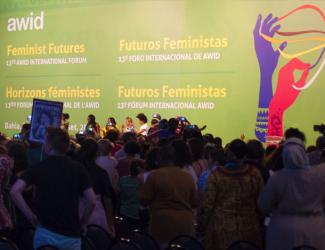
In September 2016, the 13th AWID international Forum brought together in Brazil over 1800 feminists and women’s rights advocates in a spirit of resistance and resilience.
This section highlights the gains, learnings and resources that came out of our rich conversations. We invite you to explore, share and comment!
One of the key takeaways from the 2016 Forum was the need to broaden and deepen our cross-movement work to address rising fascisms, fundamentalisms, corporate greed and climate change.
With this in mind, we have been working with multiple allies to grow these seeds of resistance:
And through our next strategic plan and Forum process, we are committed to keep developing ideas and deepen the learnings ignited at the 2016 Forum.
AWID Forums started in 1983, in Washington DC. Since then, the event has grown to become many things to many peoples: an iterative process of sharpening our analyses, vision and actions; a watershed moment that reinvigorates participants’ feminisms and energizes their organizing; and a political home for women human rights defenders to find sanctuary and solidarity.
Pour toute question sur le Forum, merci de nous contacter via notre formulaire de contact en choisissant « 14e Forum de l'AWID » comme sujet de votre message.
Para fortalecer nuestra voz y poder colectivos para obtener más y mejor financiamiento para las organizaciones feministas, por los derechos de las mujeres y de las personas LBTQI+ y demás organizaciones aliadas de todo el mundo.
El Foro Internacional de AWID es un evento de la comunidad global y, al mismo tiempo, un espacio para una transformación personal radical. Es un encuentro único: el Foro reúne a los movimientos feministas, por los derechos de las mujeres, por la justicia de género, LBTQI+ y aliados, en toda nuestra diversidad y humanidad, para conectarnos, sanar y florecer.
El tema del Foro –Rebelándonos Juntes– es una invitación a vincularnos con todo nuestro ser, a conectarnos entre nosotrxs de forma focalizada, afectuosa y valiente, para que podamos sentir el latido de los movimientos globales y rebelarnos juntxs para enfrentar los desafíos de esta época.
Por primera vez, el Foro de AWID ofrece tres modos de participación:
 |
 |
 |
|
Presencial En el Queen Sirikit National Convention Centre en Bangkok, Tailandia |
En línea a través del espacio virtual (capacidad: 3000 participantes) |
Nodos conectades en el espacio a través de las fronteras |
Con más de 4.000 participantes, el 15º Foro Internacional de AWID en 2024 fue una fuerza colectiva arrolladora de resistencia frente a la opresión, apostando a la sanación y la liberación compartida. Mantente atente a este espacio para más historias del foro y futuras actualizaciones.
El Consejo Directivo de AWID tomó la difícil decisión de cancelar el 14° Foro Internacional que estaba programado para realizarse del 20 al 23 de septiembre de 2021 en la ciudad de Taipei.
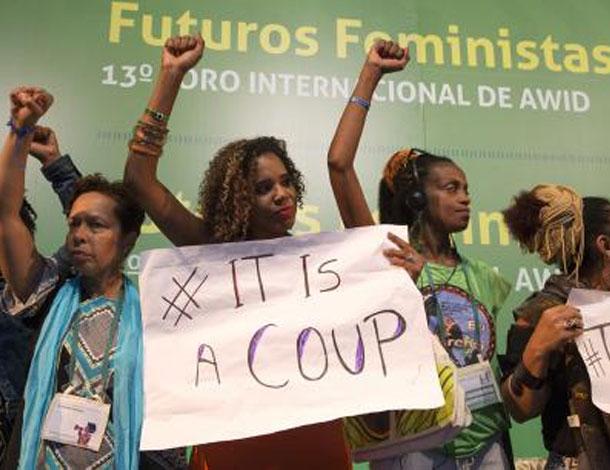
Dado el complejo mundo que enfrentamos hoy, el Foro de AWID 2016 no se centró en un ‘tema’ en particular, sino en la creación de formas más efectivas de trabajar juntxs.
Pese a las dificultades del contexto en el que se celebró este Foro (la epidemia del virus del Zika, una huelga de lxs trabajadorxs del servicio exterior brasileño, el juicio político a la presidenta Dilma Rousseff y la crisis que le siguió), se logró congregar a más de 1800 participantes de 120 países y territorios de todas las regiones del mundo.
Para el 96% de lxs participantes que respondieron a la encuesta de evaluación posterior al Foro, el evento fue una importante fuente de inspiración y energía.
El 98% de lxs participantes lo consideraron un importante espacio de convocatoria para los movimientos feministas, y manifestaron su esperanza de que AWID continúe organizado estos foros.
El 59% de quienes respondieron a la encuesta de evaluación del Foro declaró estar muy satisfechx con el Foro y el 34% algo satisfechx.
Se realizaron más de 150 sesiones en distintos formatos sobre diversos temas, desde la integridad y la libertad corporal, pasando por la violencia de género en el ámbito laboral, hasta estrategias de construcción de poder colectivo.
El primer Foro de Feminismos Negros, se celebró justo antes del Foro de AWID, y reunió a 250 feministas negrxs de todo el mundo, para crear colectivamente un espacio de poder desde donde construir y fortalecer las conexiones intergeneracionales y transnacionales.
Descargar el informe de evaluación del foro
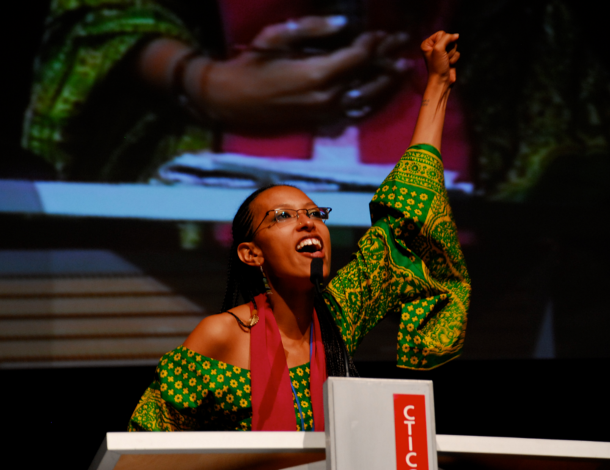
El 12° Foro de AWID se llevó a cabo en el año 2012 en Estambul, Turquía, bajo el título “Transformando el Poder Económico para Avanzar los Derechos de las Mujeres y la Justicia”. El Foro 2012 fue el más grande y diverso que hemos organizado hasta la fecha, con la participación de 2239 activistas por los derechos de las mujeres, de 141 países. El 65% provenía del sur global y casi el 15% eran mujeres jóvenes menores de 30 años, mientras que el 75% de las personas asistían a un Foro de AWID por primera vez.
El programa del Foro se enfocó en la transformación del poder económico para promover los derechos de las mujeres y la justicia. Se ofrecieron más de 170 sesiones de lo más diversas, incluyendo las sesiones de la caja de herramientas económicas feministas para forjar habilidades, sesiones interactivas que representaron los 10 temas del Foro, discusiones en profundidad y las mesas redondas de solidaridad.
Aprovechando el impulso del Foro, hemos transformado la página web en un centro de recursos y aprendizaje que se basa en el contenido generado por las participantes mediante recursos multimedia sobre todos los componentes del Foro.
Visita el archivo web del Foro 2012
Metzineres
Taipei nous semble être l’emplacement de la région Asie-Pacifique qui nous permet au mieux de bâtir un espace sécurisé et désobéissant pour notre communauté féministe mondiale.
Taipei offre un certain niveau de stabilité et de sécurité aux divers·es participant·e·s du Forum que nous voulons rassembler. La ville dispose aussi de capacités logistiques importantes, en plus d’être accessible pour beaucoup de voyageurs·ses (avec une facilitation de procédure de visa électronique pour les conférences internationales).
Le mouvement féministe sur place est accueillant vis-à-vis du Forum et désire s’engager avec des féministes du monde entier.
Le 11 juillet 2024, nous avons eu une conversation étonnante avec de grandes féministes sur l'état de l'écosystème du financement et le pouvoir du recherche « Où est l'argent ? ».
Un merci spécial à Cindy Clark (Thousand Currents), Sachini Perera (RESURJ), Vanessa Thomas (Black Feminist Fund), Lisa Mossberg (SIDA) et Althea Anderson (Fondation Hewlett).
N'oubliez pas que l'enquête restera ouverte jusqu'au 31 août 2024 !
Care as the foundation of economies
The COVID-19 pandemic put the global crisis of care into sharp focus and demonstrated the failures of the dominant economic model that is decimating essential public services, social infrastructures and systems of care around the world.
Cozinha Ocupação 9 Julho, the Association of Afro-Descendant Women of the Northern Cauca (ASOM) and Metzineres are only some examples of caring economies that center the needs of marginalized people and nature, as well as the reproductive, invisibilized, and unpaid care work required to ensure the sustainability of our lives, societies and eco-systems.
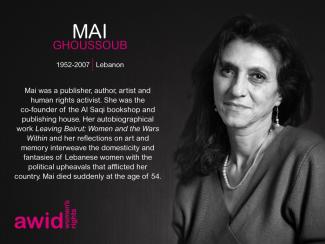
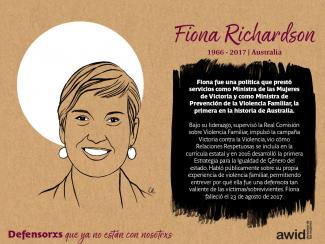
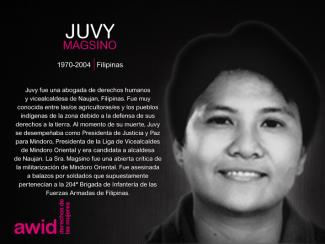
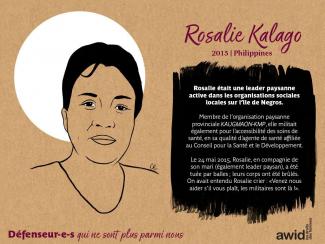
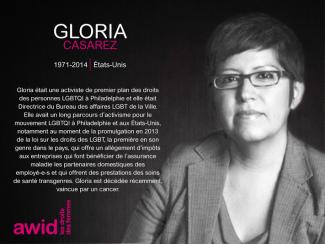
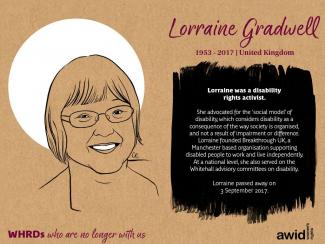
Estudiantes, escritoras, lideresas, activistas. Cada una de las cuatro mujeres que honramos a continuación encaró el activismo a su manera. Sin embargo, todas tuvieron en común la promoción y defensa de los derechos de lesbianas, gays, personas bisexuales, trans*, queer e intersex. Únete a nosotras para recordar y honrar a estas defensoras de derechos humanos, su trabajo y su legado, compartiendo los memes aquí incluidos con tus colegas, amistades y redes; y tuiteando las etiquetas #WHRDTribute y #16Días.
Por favor, haz click en cada imagen de abajo para ver una versión más grande y para descargar como un archivo.