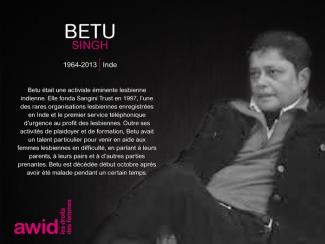
Betu Singh
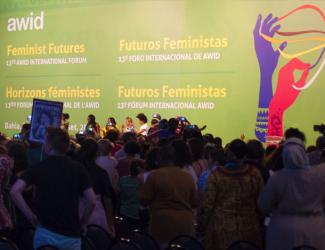
In September 2016, the 13th AWID international Forum brought together in Brazil over 1800 feminists and women’s rights advocates in a spirit of resistance and resilience.
This section highlights the gains, learnings and resources that came out of our rich conversations. We invite you to explore, share and comment!
One of the key takeaways from the 2016 Forum was the need to broaden and deepen our cross-movement work to address rising fascisms, fundamentalisms, corporate greed and climate change.
With this in mind, we have been working with multiple allies to grow these seeds of resistance:
And through our next strategic plan and Forum process, we are committed to keep developing ideas and deepen the learnings ignited at the 2016 Forum.
AWID Forums started in 1983, in Washington DC. Since then, the event has grown to become many things to many peoples: an iterative process of sharpening our analyses, vision and actions; a watershed moment that reinvigorates participants’ feminisms and energizes their organizing; and a political home for women human rights defenders to find sanctuary and solidarity.
Se quiser guardar as suas respostas e voltar ao inquérito mais tarde, pode fazê-lo sempre que precisar.
En China, el movimiento #MeToo [«Yo También»] se encendió en enero de 2018, empujado por el ímpetu del movimiento #MeToo de todo el planeta. Fue una respuesta a los problemas culturales y sistémicos relacionados con el género y el poder dentro de China. Las bases del movimiento habían sido establecidas durante décadas, y los muchos años de debate y promoción de la igualdad de género, finalmente, hicieron erupción con tremenda fuerza en toda la sociedad. El movimiento #MeToo fue impulsado fundamentalmente por jóvenes, que incluyen a innumerables mujeres anónimas y sus aliadxs, en busca de oportunidades para hacer realidad el principal «sueño chino»: transformar a China en un país con igualdad de género.
En China, el contexto para el movimiento #MeToo es extremadamente adverso: el Estado de derecho, la justicia y la transparencia de las acciones gubernamentales y la libertad de expresión no pueden darse por descontados, pero estos son precisamente los objetivos por los cuales lucha el movimiento. Ha sido, desde el principio, una lucha intensa, y cada víctima o activista que se visibiliza corre enormes riesgos: desde ser silenciadx o humilladx o de sufrir represalias hasta poner en peligro su seguridad. Todos los éxitos del movimiento #MeToo han sido logrados por quienes son lo suficientemente valientes como para asumir los costos de manifestarse y desafiar la censura.
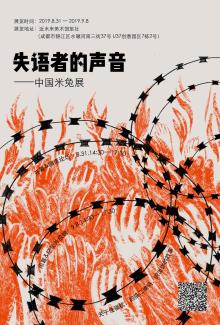
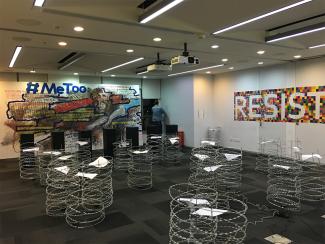
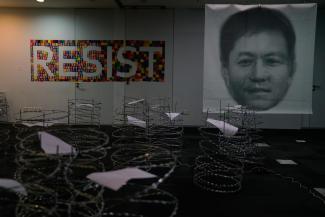
La exhibición «#MeToo in China» fue inaugurada en 2019 y recorrió cinco ciudades. Su objetivo es dar mayor prominencia a las experiencias personales de lxs víctimas y lxs activistas, para inspirar al público a unirse a la lucha a través del contacto con estas historias. La exposición misma se ha convertido en parte de la lucha #MeToo: ha debido enfrentar desafíos en su itinerario por toda China y, en más de una ocasión, fue amenazada con la clausura.
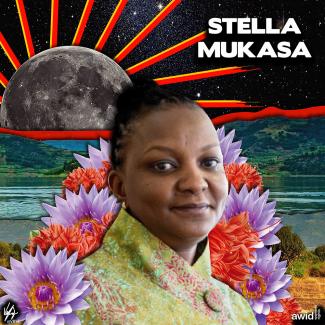
Stella a commencé sa carrière au ministère du Genre et du Développement communautaire en Ouganda. Elle œuvrait auprès des décideurs-euses politiques, pour encourager des réformes législatives, dont celle de la Constitution ougandaise en 1995 qui a entériné certaines des réformes les plus progressives pour les femmes dans la région.
Elle était adorée dans la région tout entière pour ses incessants efforts pour la création et l’application de lois et politiques sensibles au genre. Elle a joué un rôle clé dans l’ébauche de la loi sur les violences domestiques en Ouganda. Elle a aussi contribué à une mobilisation importante en faveur de Constitutions sensibles au genre à la fois en Ouganda et au Rwanda.
Par son travail au Centre international de recherches sur les femmes (International Center for Research on Women, ICRW), elle a abordé les thématiques de la violence à l’égard des enfants. Stella s’est attachée à renforcer les organisations locales qui luttent contre les violences basées sur le genre. Conférencière en Droits genrés et loi à l’université Makerere, elle a également siégé aux conseils d’administration d’Akina Mama wa Afrika, ActionAid International Uganda et l’Open Society Initiative for Eastern Africa.
En rejoignant l’AWID, j’espère pouvoir contribuer à la mobilisation du mouvement féministe. Pas seulement pour les femmes privilégiées, mais pour TOUTES les femmes et activistes féministes..- Angelina Mootoo, féministe intersectionnelle et caribéenne, Guyane/USA
إن رغبتم/ن في سحب استطلاعكم/ن ومحيه لأي سبب كان، لديكم/ن الحق الكامل بالقيام بذلك. الرجاء التواصل معنا عن طريق هذا النموذج وكتابة "استطلاع المال" في عنوان رسالتكم/ن وسنقوم بسحب ومحي أجوبتكم/ن.
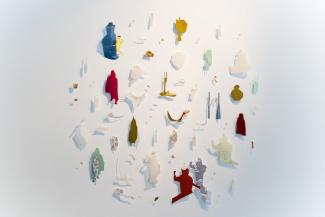
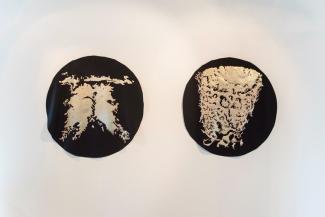
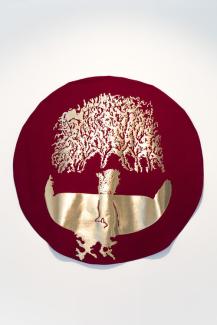
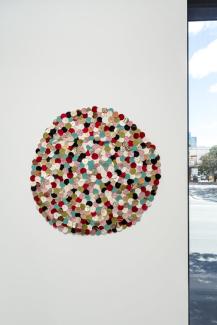
Une exposition de Nicole Barakat qui incarne sa reconnexion avec la diaspora d'objets provenant de ses terres ancestrales dans l'Asie du Sud-Ouest et l'Afrique du Nord.
Barakat présente une collection d'œuvres textiles en tant que manifestations de sa démarche consistant à travailler avec des objets déplacés, souvent volés, détenus dans les collections de musées occidentaux, notamment le Louvre, le British Museum et le Nicholson Museum.
Pour contourner les gardiens et pénétrer dans les vitrines contenant ces objets ancestraux, Barakat récupère des formes de connaissances précoloniales, non linéaires et réceptives qui sont souvent dévaluées et rejetées par les institutions coloniales et patriarcales. Elle utilise ainsi la cafédomancie, le travail du rêve, l'écoute intuitive et les conversations avec les objets eux-mêmes (source).
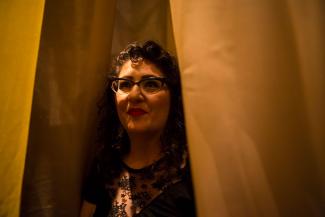
Ses œuvres comprennent des dessins en tissu et en papier cousus et découpés à la main, des formes sculpturales réalisées avec ses propres cheveux, du tissu et des matériaux végétaux, ainsi que des œuvres en direct où elle utilise sa voix comme matériau.
La pratique créative de Nicole s'enracine dans la re-mémoration et le re-couvrement de son savoir ancestral, y compris la cafédomancie et, plus récemment, le travail avec des plantes et des essences de fleurs pour le soin et la guérison de la communauté.
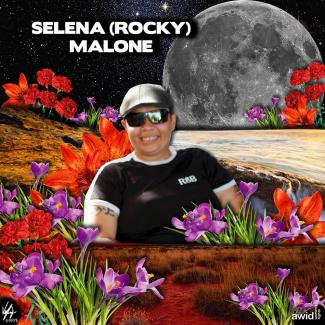
Rocky showed inspirational leadership and direction in working with Lesbian, Gay, Bisexual, Transgender, Intersex, Queer, Brotherboy and Sistergirl (LGBTIQBBSG) youth at risk.
Rocky started her career with the Queensland Police Service as a Police Liaison Officer. Making a difference was important to her. She led an impressive career working with young LGBTIQBBSG people as the Manager of Open Doors Youth Service.
Rocky worked through complex situations with clients relating specifically to gender and sexual identity. She was a natural in this line of work - a strong community leader, a quiet achiever, a loyal friend, a compassionate nurturer, and a change maker. Rocky was a founding member of IndigiLez Leadership and Support Group.
In 2016 at the Supreme Court in Brisbane, Former High Court Justice Michael Kirby mentioned Rocky by name when praising the work of the LGBTI Legal Service over the years. Rocky fought extremely hard for the human rights of the LGBTIQBBSG community, pushed boundaries and created change in a respectful, loving way.
AWID offers the WITM Toolkit to support individuals and organizations who want to conduct their own research on funding trends for a particular region, issue or population by adapting AWID’s research methodology.
AWID’s WITM Toolkit builds on 10 years research experience. AWID’s WITM research and WITM Toolkit is a political and practical demonstration of the resources and steps it takes to conduct solid action-research.
Learn more about the context around the WITM research methodology
The Resourcing Feminist Movements team also offers technical and political support before and during the research process. Review the toolkit and contact us at fundher@awid.org if you need more information.
Если у вас есть какие-либо вопросы или сомнения, пожалуйста, свяжитесь с нами через форму здесь, указав «Опрос «Где деньги?» (WITM Survey) в качестве заголовка вашего сообщения. или напишите нам по адресу witm@awid.org
A complex and evolving network of anti-rights actors is exerting increasing influence in international spaces as well as domestic politics. Often backed by obscure funding, these actors build tactic alliances across issues, regions, and faiths to increase their impact.
We are witnessing fascist and fundamentalist actors that, while nationalist in their discourse, are completely transnational in their ideological underpinnings, political alliances, and networks of financing. In some cases these groups are backed by obscure funding flows, linked with big business, or far-right political parties. However, they also create strategic alliances, including, in some cases, with segments of the feminist and women’s rights movements, and distance themselves from more outwardly extreme elements to appear more legitimate. Anti-rights actors are also spreading and replicating their brand of anti-rights organizing - be that campaigning and lobbying or strategic litigation - across the globe.
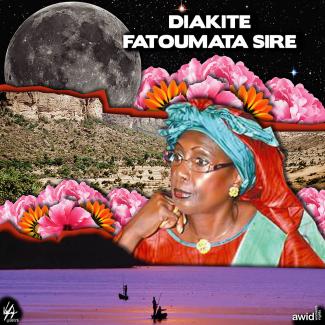
Diakite estuvo activamente comprometida con la defensa de las mujeres en la vida política y pública de Mali.
Trabajó para apoyar la capacitación de candidatas electorales y habló en contra de la práctica de la mutilación genital femenina (MGF). Fue una firme defensora de la salud y los derechos reproductivos.
A través de la organización laboral y sindical, Sopo, Sabrina y Linda no solo luchan por los derechos de lxs mujeres, lxs trabajadorxs esenciales, lxs trabajadorxs migrantes y lxs trabajadores sexuales, sino por los derechos de todxs lxs trabajadorxs.
La lucha para acabar con la explotación de lxs trabajadores es una lucha feminista, y nos muestra que no hay economías feministas sin sindicatos feministas.
por Nandini Tanya Lallmon
Olajumoke «Jay» Abdullahi y Kym Oliver son feministas revolucionarias en más de un sentido. (...)
arte: «Bloomed» [En flor], de Titash Sen >
The AWID Community is an online social networking platform specifically for AWID. It is a feminist space for connection, resistance and celebration. A space for critical feminist conversations, collective power and solidarity. It is also a space for post-event dialogues, navigating difficult political learnings and community care.
Join AWID membership to be part of the AWID Community today.