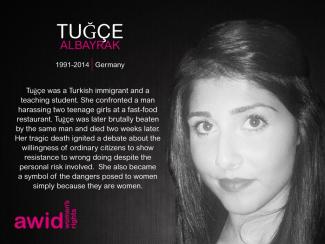
Tuğçe Albayrak
Over the past few years, a troubling new trend at the international human rights level is being observed, where discourses on ‘protecting the family’ are being employed to defend violations committed against family members, to bolster and justify impunity, and to restrict equal rights within and to family life.
The campaign to "Protect the Family" is driven by ultra-conservative efforts to impose "traditional" and patriarchal interpretations of the family, and to move rights out of the hands of family members and into the institution of ‘the family’.
Since 2014, a group of states have been operating as a bloc in human rights spaces under the name “Group of Friends of the Family”, and resolutions on “Protection of the Family” have been successfully passed every year since 2014.
This agenda has spread beyond the Human Rights Council. We have seen regressive language on “the family” being introduced at the Commission on the Status of Women, and attempts made to introduce it in negotiations on the Sustainable Development Goals.
AWID works with partners and allies to jointly resist “Protection of the Family” and other regressive agendas, and to uphold the universality of human rights.
In response to the increased influence of regressive actors in human rights spaces, AWID joined allies to form the Observatory on the Universality of Rights (OURs). OURs is a collaborative project that monitors, analyzes, and shares information on anti-rights initiatives like “Protection of the Family”.
Rights at Risk, the first OURs report, charts a map of the actors making up the global anti-rights lobby, identifies their key discourses and strategies, and the effect they are having on our human rights.
The report outlines “Protection of the Family” as an agenda that has fostered collaboration across a broad range of regressive actors at the UN. It describes it as: “a strategic framework that houses “multiple patriarchal and anti-rights positions, where the framework, in turn, aims to justify and institutionalize these positions.”
Al unirme a AWID, espero poder ayudar a la movilización del movimiento feminista. No solo para las mujeres privilegiadas, sino para TODAS las mujeres y activistas feministas.- Angelina Mootoo, feminista interseccional y caribeña, Guyana/EEUU
Forum des femmes sur le financement de l’égalité des genres
La troisième Conférence internationale des Nations Unies sur le financement du développement
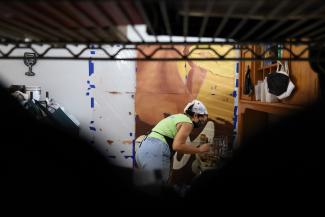
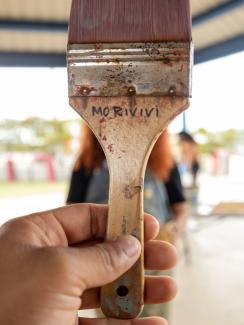
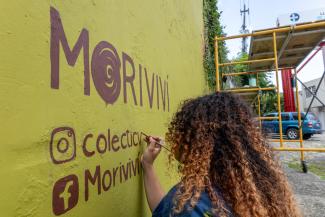
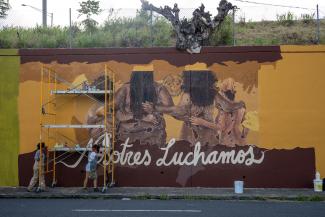
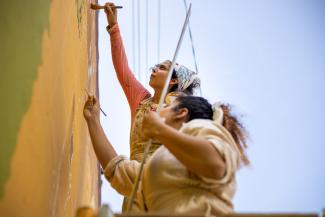
Colectivo Moriviví is an all women artistic collective. Our artistic production consists of muralism, community-led muralism, and protest performance/actions. Our work is about democratizing art and bringing the narratives of Puerto Rican communities to the public sphere to create spaces in which they are validated. We believe that through artivism we can promote consciousness on social issues and strengthen our collective memory.
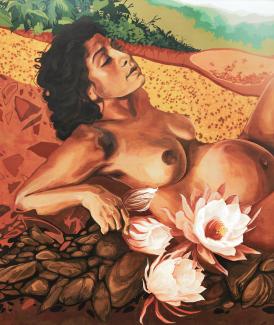
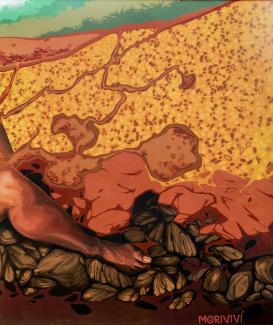
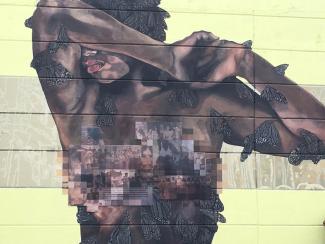
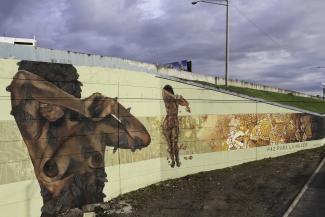
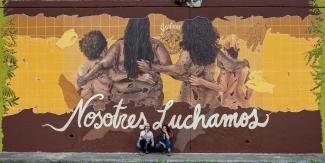
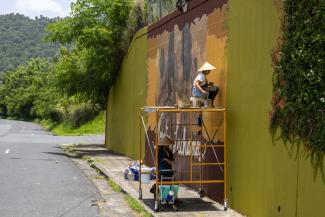
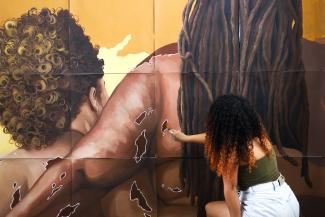
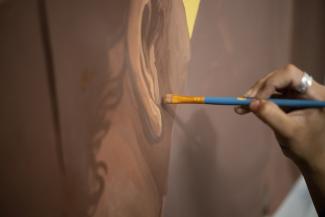
As part of their participation in AWID’s Artist Working Group, Colectivo Morivivi gathered a diverse group of members, partners and staff to facilitate a collaborative process of dreaming into, informing, and deciding on the content for a community mural through a multi-stage co-creation process. The project began with a remote conceptualization with feminists from different parts of the planet brought together by AWID, and then it evolved to its re-contextualization and realization in Puerto Rico. We were honored to have the input of local artists Las Nietas de Nonó(@lasnietasdenono), the participation of local women in the Community Painting Session, the logistics support from the Municipality of Caguas, and FRIDA Young Feminist Fund’s additional support to the collective.
The mural explores the transcendence of borders by presenting bodies like a map, in an embrace that highlights the intersection of the different feminist manifestations, practices and realities.
We also thank Kelvin Rodríguez, who documented and captured the different stages of this project in Puerto Rico:

Membre de mouvements démocratiques, pacifistes et LGBT, Yelena était une féroce opposante au président Vladimir Poutine et son administration. Elle a notamment exprimé son opposition à l’annexion de la péninsule ukrainienne de la Crimée par la Russie ainsi que critiqué les mauvais traitements infligés aux détenu·e·s.
Yelena a fait part de sa bisexualité en 2019.
« Sa déclaration m’a surprise et je ne l’approuvais pas. Je lui ai dit : « Écoute, Lena, tu portes déjà une cible sur la poitrine du fait de ton activisme politique. Tu viens de t’en peindre une autre dans le dos », Olga Smirnova, compagne de lutte politique et amie.
Yelena a effectivement reçu plusieurs menaces de mort, et des proches ont déclaré que son nom figurait sur un site Web homophobe qui incitait ses visiteur·euse·s à tuer les personnes LGBT. Elle a fait part de ces menaces à la police, mais l’État russe ne l’a pas protégée.
Mais même dans une société où l’opposition politique, les activistes et les membres de la communauté LGBT, qui se battent pour leurs droits, font face à une violence croissante, Yelena continuait à défendre la justice sociale et l’égalité.
« Elle ne manquait pas une seule action militante. Et ils l’ont arrêtée plus de fois que je n’ai pu en compter », Olga Smirnova.
Yelena a été assassinée le 21 juillet 2019, à proximité de chez elle. Un suspect a été arrêté, mais certaines sources et plusieurs de ses ami·e·s et compagnes et compagnons de lutte pensent que ce suspect sert de bouc émissaire, et qu’en fait, il s’agit d’un assassinat politique ciblé.
Pour la famille et les ami·e·s de Yelena, son assassinat demeure irrésolu, bien que le suspect ait avoué.
En 2013, la Russie a passé une loi interdisant la propagation de ce qu’elle a appelé la « propagande gay ». En 2014, Human Rights Watch a publié un rapport à ce propos (en anglais et en russe).
J’ai l’intime conviction que des femmes puissantes peuvent donner à d’autres femmes la possibilité d’être puissantes, c’est pourquoi je suis ravie d’être membre de l’AWID. La visibilité que j’ai reçue en faisant partie de la Street Team de la communauté AWID a élargi mes connaissances et ma façon d’envisager le Féminisme et l’intersectionnalité. J’espère que davantage de femmes se joindront à nous et porteront des thématiques et des idées qui aideront d’autres femmes..- Loyiso Lindani, Afrique du Sud.
Vous avez des questions concernant le Forum de l’AWID ou les activités connexes ? Nous avons des réponses !
第十四屆論壇的主題是“女權主義現實實踐:我們的行動力量”。
我們將女權主義現實實踐理解為不同方式和形式的存在,向我們展示了儘管有主導的權力系統但仍舊存在各種可能性去反抗和抵抗它們。我們將這些女權主義現實實踐理解為希望和力量的開墾與體現,並且是多維的、動態的和植根於特定背景和歷史時刻的。
Los actores anti-derechos adoptan una estrategia doble. Además de atacar abiertamente al sistema multilateral, los actores anti-derechos también socavan los derechos humanos desde adentro. Se involucran con el fin de cooptar procesos, consolidar normativas regresivas, y erosionar responsabilidades.
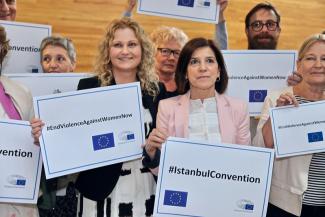
El involucramiento de los actores anti-derechos en espacios internacionales de derechos humanos tiene un objetivo principal: socavar el sistema y su capacidad de respetar, proteger y satisfacer los derechos humanos para todas las personas, y de exigir rendición de cuentas a los Estados miembro por su violación. Algunas tácticas anti-derechos operan por fuera de la ONU, e incluyen la deslegitimación y la presión política para desfinanciar a la ONU, o para que ciertos Estados miembro se retiren de acuerdos internacionales sobre derechos humanos. En los últimos años, algunos actores antiderechos han logrado una creciente influencia dentro de la ONU. Sus tácticas internas incluyen la capacitación de representantes, la distorsión de los marcos de derechos humanos, el debilitamiento de acuerdos sobre derechos humanos, la infiltración en comités de organizaciones no gubernamentales, las solicitudes de ingreso al Consejo Económico y Social bajo nombres neutrales, la infiltración en los espacios de la juventud, y las presiones para ubicar a actores antiderechos en posiciones clave.
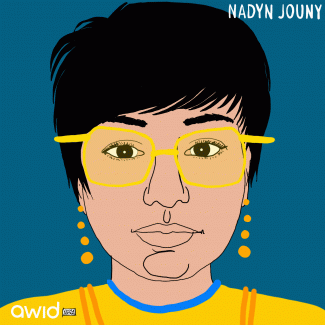
The personal is political - and fiery and courageous Nadyn Jouny personified this feminist mantra. Nadyn experienced firsthand the pain of structural violence in legal systems that strip women of their rights.
When she decided to file for divorce, the religious Shitte courts under the Lebanese Personal Status laws, denied her custody of her young son Karam. Nadyn, like so many other women across Lebanon and other countries, was caught in the impossible pain of leaving an unwanted and abusive relationship and also losing the rights to her child. But Nadyn fought back, as she would until her last day.
She used her media savvy to become an outspoken voice to women fighting discriminatory family laws in Lebanon and internationally. Nadyn co-founded the self-funded group, “Protecting Lebanese Women” (PLW) and banded with many other Lebanese mothers facing similar custody issues. Together, they advocated to raise awareness of the injustices they were facing, protesting in front of the religious courts for their rights and bringing international media attention to extreme injustices they were facing.
Nadyn also worked with ABAAD - Resource Center for Gender Equality, another women’s rights organization in Lebanon, to campaign for women’s rights, equality in family law and custody and against forced and early marriages.
For many of her colleagues, she came to “symbolize a Lebanese mother’s fight against suppression and misogyny of all sorts," using “her personal experiences and her individual journey of empowerment to give hope to others that they can be a catalyst for positive change.”- ABAAD - Resource Centre for Gender Equality, Lebanon
On October 6, 2019 Nadyn was tragically killed in a car accident on her way to protest unfair tax increases in a country already facing spiralling financial crisis. Nadyn Jouny was only 29 years old at the time of her death.
Through labor and union organizing, Sopo, Sabrina and Linda are not only fighting for the rights of essential workers, women workers, migrant workers and sex workers, but the rights of all workers.
The fight to end workers’ exploitation is a feminist struggle, and shows us that there are no feminist economies without feminist unions.
"Creemos que este es el momento para continuar organizándonos desde la solidaridad, la esperanza y la imaginación radical."
- Beijing+30 & CSW: La construcción de significados feministas en tiempos de policrisis
Olajumoke ‘Jay’ Abdullahi and Kym Oliver are revolutionary feminists in more ways than one. (...)
artwork: “Bloomed” by Titash Sen >
我們一直努力確保論壇是由合作夥伴、運動和我們的優先群體共同來開發。
對於即將舉行的論壇,我們旨在加深和增強共同創造與合作的精神和實踐。我們還認識到有必要在多樣的聲音和體驗之間取得平衡,讓參與者和工作人員有調整呼吸、休息和享受一些空閒時間的空間。
該論壇將在以下方面有所不同:
Une expérience magique de narration féministe animée par la féministe panafricaine Coumba Touré, dans la tradition séculaire des griots d’Afrique de l’Ouest
Et nous nous réunissons à nouveau
Nous avons rassemblé nos histoires, notre force
nos chansons
nos larmes
notre rage
nos rêves
nos succès
nos échecs
nous les avons rassemblés dans un grand bol pour le partage
pendant une lune de pensées
Aussi, nous restons en contact
Nous nous secouons l'esprit
nous nous caressons l'âme
Alors que nos mains sont toujours liées
Et que nos baisers et nos câlins sont interdits
Pourtant, nous nous renforcons d’heure en heure
Tissant ensemble nos voix
Franchissant les barrières sonores
comme nous parlons en langues
Nous sommes de plus en plus fortes
Nous connaissons ce qui nous différencie des autres
et les différences entre nous,
alors nous cousons nos beautés en patchwork de pensées
De nos apprentissages les plus profonds
de nos pouvoirs
Parfois, nous sommes entourées de terreur,
Par la confusion, la malhonnêteté
Mais nous nous purifions dans l'océan de l'amour
Nous sommes des tisserands de rêves
Pour vêtir un nouveau monde
Fil après fil
Aussi petites que nous soyons,
comme de petites fourmis construisant nos mouvements
comme de petites gouttes construisant nos rivières
Nous faisons des pas en avant et des pas en arrière
dansons notre chemin de retour à un mental sain
Nous soutenons le rythme de nos coeurs
Continuez à battre,
s'il vous plaît, ne vous arrêtez pas
ainsi nous sommes les transmetteurs d'une générosité oubliée
Goutte après gouttes, grandissant comme l'océan
grandissant comme la rivière qui coule de nos âmes
montrant notre force pour être l'eau qui lavera ce monde
et nous nous rassemblons à nouveau,
peux-tu nous sentir ?
Je mentirais si je disais que ça va
Que cela ne me dérange pas de ne pas vous voir.
Vos voix non filtrées et non enregistrées me manquent
Nos murmures et nos cris me manquent.
Nos cris de la révolution avortée
Nous voulonsêseulement donner naissance à de nouveaux mondes
Alors luttons pour effacer les frontières entre nous
Sil vous plait n’arrêtez pas
Doris Valenzuela Angulo fue una activista social afrodescendiente, líder y defensora de los derechos humanos, de Buenaventura, Colombia. Fue parte de Comunidades Construyendo Paz en los Territorios (CONPAZ), una red nacional de organizaciones de comunidades afectadas por el conflicto armado que propugnan la no violencia y la justicia socioambiental.
Doris desafiaba la constante violencia paramilitar y las presiones de los megaproyectos para desplazar a su comunidad, así como la complicidad del Estado. Enfrentando uno de los contextos más difíciles de su país, tuvo un rol de liderazgo en una iniciativa de resistencia no violenta sin precedentes llamado «Espacio Humanitario Puente Nayero», una zona urbana para la cohesión comunitaria, la seguridad, la creatividad y la acción colectiva.
Esta singular lucha no violenta de las familias que pertenecían al «Espacio Humanitario Puente Nayero» atrajo la atención y el apoyo de organismos locales e internacionales. Hacia septiembre de 2014, la Comisión Interamericana de Derechos Humanos había establecido medidas cautelares de protección para la comunidad, y había ordenado al Estado colombiano hacer lo necesario para preservar sus vidas y su integridad personal. Sin embargo, las amenazas y la violencia de los paramilitares continuaron. Doris centró sus energías en evitar el reclutamiento forzoso de niñxs y jóvenes por parte de los neo-paramilitares, y siguió haciéndolo a pesar del asesinato de su hijo Cristian Dainer Aragón Valenzuela en julio de 2015. Doris también se convirtió en blanco de ataques, y recibía amenazas por su activismo y el trabajo que realizaba continuamente.
Las persistentes agresiones y amenazas contra su vida forzaron a Doris a abandonar Colombia. Residió en España desde febrero de 2017 hasta febrero de 2018, e integró el Programa de Protección Temporal de Defensores y Defensoras de los Derechos Humanos de Amnistía Internacional para activistas cuyas vidas están en riesgo.
En abril de 2018, Doris fue asesinada por su ex-marido en Murcia, España. Tenía solamente 39 años.
«Doris, pasar un año entero contigo nos ha enseñado cómo una persona puede tener la capacidad de transformar y generar esperanza ante hechos profundamente negativos y devastadores sucedidos durante tu vida...Seguimos con nuestro compromiso en la defensa de todos los derechos humanos. Siempre nos guiará tu valentía y tu luz.» Montserrat Román, Amnistía Internacional Grupo La Palma
«Tú lo sabías. Siempre lo supiste. Y a pesar de todo te levantaste firme contra tantas injusticias, tantas miserias, tanta persecución.Te alzaste, altiva y feroz, contra aquellos que querían hacerte de nuevo abandonar tus esperanzas, humillarte y rendirte. Puesta en pie clamaste por tu libertad y la nuestra que era la tuya. Nada ni nadie paralizó tus esfuerzos por cambiar el mundo y hacerlo más generoso y habitable. Tú, viva entre nosotras, más viva hoy que nunca entre nosotras a pesar de la muerte. Viva siempre por tus gestos, tu valor, tu grandeza al clamar por una tierra prometida que llegaste a invocar con cada uno de tus gritos por todos los desiertos que habitaste. Tú. Siempre viva. Doris Valenzuela Angulo.
Son sólo palabras. Lo sé. Yo también lo sé. Pero las palabras nos unen, nos protegen, nos dan fuerza y aliento para seguir caminando hacia la luz que tanto defendías.»