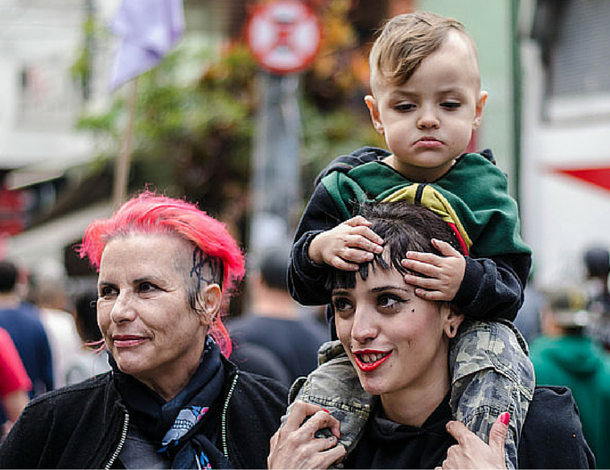
Flickr/Leonardo Veras (CC BY 2.0)

Protection of the Family

The Issue

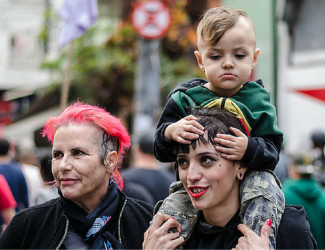
Over the past few years, a troubling new trend at the international human rights level is being observed, where discourses on ‘protecting the family’ are being employed to defend violations committed against family members, to bolster and justify impunity, and to restrict equal rights within and to family life.

The campaign to "Protect the Family" is driven by ultra-conservative efforts to impose "traditional" and patriarchal interpretations of the family, and to move rights out of the hands of family members and into the institution of ‘the family’.

“Protection of the Family” efforts stem from:

  • rising traditionalism,
  • rising cultural, social and religious conservatism and
  • sentiment hostile to women’s human rights, sexual rights, child rights and the rights of persons with non-normative gender identities and sexual orientations.

Since 2014, a group of states have been operating as a bloc in human rights spaces under the name “Group of Friends of the Family”, and resolutions on “Protection of the Family” have been successfully passed every year since 2014.

This agenda has spread beyond the Human Rights Council. We have seen regressive language on “the family” being introduced at the Commission on the Status of Women, and attempts made to introduce it in negotiations on the Sustainable Development Goals.


Our Approach

AWID works with partners and allies to jointly resist “Protection of the Family” and other regressive agendas, and to uphold the universality of human rights.

In response to the increased influence of regressive actors in human rights spaces, AWID joined allies to form the Observatory on the Universality of Rights (OURs).  OURs is a collaborative project that monitors, analyzes, and shares information on anti-rights initiatives like  “Protection of the Family”.

Rights at Risk, the first OURs report, charts a map of the actors making up the global anti-rights lobby, identifies their key discourses and strategies, and the effect they are having on our human rights.   

The report outlines “Protection of the Family” as an agenda that has fostered collaboration across a broad range of regressive actors at the UN.  It describes it as: “a strategic framework that houses “multiple patriarchal and anti-rights positions, where the framework, in turn, aims to justify and institutionalize these positions.”
 

Related Content

Creación conjunta de realidades feministas

Mientras soñamos con un mundo feminista, hay quienes ya lo están construyendo y viviendo. ¡Esas son nuestras realidades feministas!

¿Qué son las realidades feministas?

Las realidades feministas son ejemplos palpables de los mundos justos que estamos creando conjuntamente. Existen ahora, en las múltiples formas en que vivimos, luchamos y construimos nuestras vidas.

Estas realidades feministas van más allá de la resistencia contra los sistemas de opresión, y nos muestran cómo sería un mundo sin dominación, ni explotación ni supremacía. 

Estas son las historias que queremos descubrir, compartir y ampliar a lo largo de este viaje por las realidades feministas.

Transformar las visiones en experiencias vividas

Mediante esta iniciativa, nosotrxs:

  • Creamos y difundimos alternativas: Creamos juntxs arte y expresiones creativas se centran en celebrar la esperanza, el optimismo, la sanación y la imaginación radical que inspiran las realidades feministas.

  • Construimos conocimiento: Documentamos, demostramos y difundimos metodologías que ayudarán a identificar las realidades feministas en nuestras diferentes comunidades.

  • Promovemos agendas feministas: Expandimos y profundizamos nuestro pensamiento colectivo y nuestra organización para promover soluciones y sistemas justos que encarnen valores y visiones feministas.

  • Movilizamos acciones solidarias: Involucramos a movimientos feministas, de derechos de las mujeres, de justicia de género y aliados para que compartan, intercambien y creen juntos  realidades, narrativas y propuestas feministas en el 14º Foro Internacional de AWID.


El Foro Internacional de AWID

Aunque ponemos énfasis en el proceso que lleva al Foro y en lo que ocurre después, el evento de cuatro días es un espacio importante en el que ocurre la magia que queremos crear, gracias a la energía única que despierta y a las oportunidades que se abren cuando nos reunimos.

Esperamos que el próximo Foro:

  • Les dé fuerza a las Realidades Feministas al nombrarlas, celebrarlas y generar entusiasmo por las experiencias y propuestas que nos muestran de qué somos capaces, alimentando así nuestra imaginación colectiva.

  • Nos llene de esperanza y de energía que son combustibles tan necesarios para la resiliencia y el activismo por los derechos y la justicia

  • Fortalezca las conexiones, la reciprocidad y la solidaridad entre los diversos movimientos feministas, y entre ellos y otros movimientos por los derechos y la justicia

Aquí podrás leer más acerca del proceso del Foro

El próximo Foro de AWID tendrá lugar del 20 al 23 de septiembre de 2021 en Taipéi, Taiwán.

Descubre más

Related Content

Snippet FEA Mariama Sonko (EN)

This is Mariama Sonko, an inspiring small-scale rural farmer, eco-feminist and a woman human rights defender.

She lives in Niaguiss, a town in the southwest of Senegal. Growing up in a family and community of rural farmers, she witnessed the essential role of women in food production and seed preservation from a very early age, while also being immersed in the rhythms and working of the land. Mariama has been defending local agricultural knowledge and peasant practices since the 1990s. As a mother of five children, the food she grows herself is the main source of sustenance for her family.

She is currently the president of “Nous Sommes la Solution'' and is involved in promoting agroecological practices and family farming, encouraging food sovereignty, biodiversity and farmer seed preservation, and demanding equitable access to resources and land for women across West Africa.

Source: AWID’s Feminist Realities Festival Crear | Résister | Transform - Day 2/ 2ème jour/ 2º día

Puis-je accéder à l’enquête et répondre aux questions depuis mon téléphone?

Oui, l’enquête est accessible depuis les téléphones intelligents.

Snippet FEA Objectives NSS Advocacy (EN)

INCIDENCIA POLITICA

Yellow circle with illustration of a brown woman with a white t-shirt holding a blue loudspeaker.
Influir en tomas de decisiones políticas y promover un acceso más equitativo a la tierra para las mujeres que trabajan en la agricultura

Should I do any preparation to respond to the survey?

As the WITM survey is focused on resourcing realities for feminist organizations, most questions ask about your group’s funding between 2021–2023. You will need to have this information with you to fill out the survey (e.g., your annual budgets and key sources of funding).

Body

¿Cómo presentarán y procesarán los datos que se recopilen en la encuesta?

Los datos se procesarán para fines estadísticos y así arrojar luz sobre el estado de la dotación de recursos para los movimientos feministas de todo el mundo, y solo se exhibirán de forma desglosada. AWID no divulgará información acerca de ninguna organización en particular ni publicará información que permita identificar a una organización por su ubicación o características sin el consentimiento acreditado de dicha organización.

Snippet FEA Travesti (EN)

TRAVESTI

A latin-american gender identity

The term travesti is often mistakenly translated as "transvestite" in English. However, it is a Latin American gender identity with no equivalent in other languages, and exclusively female. It is a person designated male at birth who identifies as female. They may or may not undergo bodily changes, and should always be addressed with she/her pronouns.

Travesti is not only a gender identity located outside of gender binarism, it is also a cultural identity rooted in Latin American movements. The term was initially pejorative, but it was later re-appropriated as a symbol of resistance and dignity.

Every travesti is trans because she does not identify with the gender designated at birth, however not every travesti considers themselves as a trans woman, since travesti is already a gender identity on its own.

Source: Berkins, Lohana. (2006). Travestis: una Identidad Política [Travestis: a Political Identity]. Trabajo presentado en el Panel Sexualidades contemporáneas en las VIII Jornadas Nacionales de Historia de las Mujeres/ III Congreso Iberoamericano de Estudios de Género Diferencia Desigualdad. Construirnos en la diversidad, Villa Giardino, Córdoba, 25 al 28 de octubre de 2006.

Mona Chemali Khalaf

Mona était économiste et consultante indépendante sur les questions de genre et de développement.

Elle a été professeure d'économie et directrice de l'Institut d'études féminines du monde arabe à l'Université libanaise américaine. Elle est décédée subitement le 6 janvier 2018.

Des amis et d'anciens collègues disent de Mona: « Pour lui rendre hommage, la meilleure chose à faire est de continuer à faire ce qu'elle a commencé: l'égalité de genre, à tout prix. 


Mona Chemali Khalaf, Lebanon

Les réalités du financement et l’état du financement des mouvements féministes changent rapidement. Cette enquête a-t-elle une seule édition?

Non. L’enquête s’appuie sur les 20 années de mobilisation de l’AWID dans l’objectif d’obtenir davantage de financement de meilleure qualité pour des changements sociaux menés par des féministes. Cette enquête est la troisième édition de la recherche Où est l’argent pour l’organisation des mouvements féministes? Notre objectif est de mener une enquête WITM tous les 3 ans.

Snippet FEA Lohana Berkins (ES)

Una de las líderes fundadoras de la cooperativa fue Lohana Berkins, activista, defensora y promotora de la identidad trans. Lohana jugó un papel crucial en la lucha por los derechos de las personas trans y travesti.

A través de su lucha se consiguió, entre muchas otras cosas, la aprobación de la Ley de Identidad de Género. Es una de las legislaciones más progresistas del mundo, garantizando derechos fundamentales a las personas trans y travestis. Ahora, las personas pueden cambiar sus nombres y géneros solo con una declaración jurada, y tener acceso a atención médica integral sin intervención/aprobación judicial o médica (Outright International, 2012).