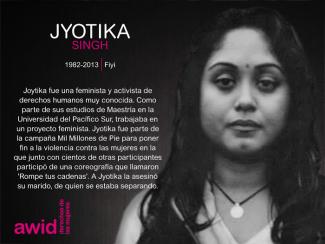
Jyotika Singh
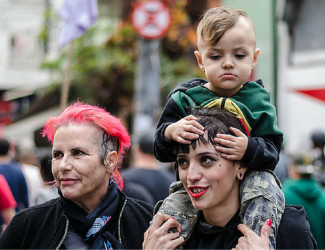
Over the past few years, a troubling new trend at the international human rights level is being observed, where discourses on ‘protecting the family’ are being employed to defend violations committed against family members, to bolster and justify impunity, and to restrict equal rights within and to family life.
The campaign to "Protect the Family" is driven by ultra-conservative efforts to impose "traditional" and patriarchal interpretations of the family, and to move rights out of the hands of family members and into the institution of ‘the family’.
Since 2014, a group of states have been operating as a bloc in human rights spaces under the name “Group of Friends of the Family”, and resolutions on “Protection of the Family” have been successfully passed every year since 2014.
This agenda has spread beyond the Human Rights Council. We have seen regressive language on “the family” being introduced at the Commission on the Status of Women, and attempts made to introduce it in negotiations on the Sustainable Development Goals.
AWID works with partners and allies to jointly resist “Protection of the Family” and other regressive agendas, and to uphold the universality of human rights.
In response to the increased influence of regressive actors in human rights spaces, AWID joined allies to form the Observatory on the Universality of Rights (OURs). OURs is a collaborative project that monitors, analyzes, and shares information on anti-rights initiatives like “Protection of the Family”.
Rights at Risk, the first OURs report, charts a map of the actors making up the global anti-rights lobby, identifies their key discourses and strategies, and the effect they are having on our human rights.
The report outlines “Protection of the Family” as an agenda that has fostered collaboration across a broad range of regressive actors at the UN. It describes it as: “a strategic framework that houses “multiple patriarchal and anti-rights positions, where the framework, in turn, aims to justify and institutionalize these positions.”
1 |
Brindar a lxs afiliadxs de AWID, sus aliados y donantes un análisis actualizado, potente, basado en evidencias y orientado a la acción acerca de las realidades de la dotación de recursos para los movimientos feministas y el estado actual del ecosistema de financiamiento feminista. |
2 |
Determinar y demostrar las oportunidades para cambiar hacia un mayor y mejor financiamiento para las organizaciones feministas, impugnar las falsas soluciones y desmantelar aquellas tendencias por las que el financiamiento omite u opera en contra de la justicia de género y las agendas interseccionales feministas. |
3 |
Expresar las perspectivas, propuestas y agendas feministas para dotar de recursos a la justicia. |


In 2002 AWID celebrated its 20th anniversary. Given the challenging political, economic and funding environment in which women's organizations must survive, a milestone such as this is worthy of recognition.
In the past two decades the geo-political landscape has been transformed and development theories have come and gone, but approaches to ensure women benefit from development processes have endured.
In its twenty-year history, AWID grew from a volunteer organization for U.S. "Women in Development" (WID) specialists to an international network striving to support proactive and strategic gender equality research, activism and policy dialogue.
On the occasion of its 20th anniversary, this paper charts not only the changes in AWID's organizational structure and goals but also the shifts in policy approaches to gender equality in a changing global environment, through the lens of a membership organization committed to improving the lives of women and girls everywhere.
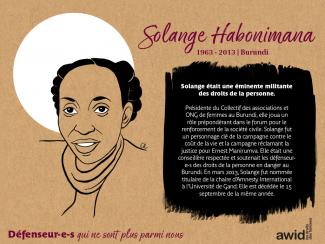
Les soins comme fondations des économies
La pandémie du COVID-19 a mis en évidence la crise mondiale des soins et démontré les échecs du modèle économique dominant qui continue de détruire les services publics essentiels, les infrastructures sociales et les systèmes de soins dans le monde entier.
Cozinha Ocupaçao 9 Julho, de l’Association des Femmes Afro-Descendantes du Cauca du Nord (ASOM) et Metzineres ne sont que quelques exemples d'économies des soins qui se concentrent sur les besoins des personnes marginalisées et de la Nature, ainsi que sur le travail de soins, le travail reproductif, invisible et non rémunéré nécessaire pour assurer la pérennité de nos vies, de nos sociétés et de nos écosystèmes.
Existen numerosas razones acerca de por qué tu respuesta a la encuesta ¿Dónde está el dinero? es importante. Entre otras cosas, tienes la oportunidad de compartir tu experiencia con la movilización de financiamiento para apoyar a tu organización, afirmar tu poder como especialista en cómo se mueve el dinero y a quién le llega, y contribuir a la promoción colectiva y continua ante los donantes para movilizar más y mejor financiamiento. Durante los últimos dos decenios, la investigación de AWID ¿Dónde está el dinero? ha demostrado ser un recurso clave para activistas y donantes. Con muchísimo entusiasmo, te invitamos a sumarte a AWID en su tercera edición para poner de relieve el estado real de la dotación de recursos, impugnar las falsas soluciones y señalar cómo el financiamiento necesita cambiar para que los movimientos prosperen y hagan frente a los complejos desafíos de nuestro tiempo.
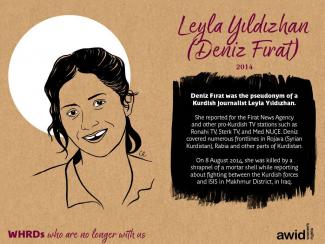
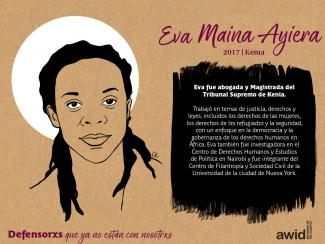
Estas defensoras lucharon por los derechos sobre la tierra, de las mujeres y de los pueblos indígenas; haciendo frente a las industrias extractivas, escribiendo poesía y promoviendo el amor. Una de ellas desapareció hace ya 19 años. Únete a nosotras para recordar y honrar a estas defensoras de derechos humanos, su trabajo y su legado, compartiendo los memes aquí incluidos; y tuiteando las etiquetas #WHRDTribute y #16Días.
Por favor, haz click en cada imagen de abajo para ver una versión más grande y para descargar como un archivo.




Non, nous reconnaissons l’importance cruciale de votre travail, mais nous ne collectons pas les participations de fonds féministes et de femmes à l’heure actuelle. Nous vous encourageons néanmoins à transmettre cette enquête à vos partenaires bénéficiaires et vos réseaux féministes.
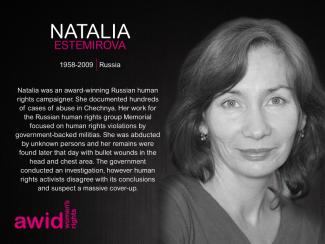
7 Women Human Rights Defenders from across the South and Southeast Asian region are honored in this year’s Online Tribute. These defenders have made key contributions to advancing human and women’s rights, indigenous people’s rights, and the right to education. These WHRDs were lawyers, women’s rights activists, scholars, and politicians. Please join AWID in commemorating t their work and legacy by sharing the memes below with your colleagues, networks and friends and by using the hashtags #WHRDTribute and #16Days.
Please click on each image below to see a larger version and download as a file


.

Yes, the survey can be accessed using a smartphone.