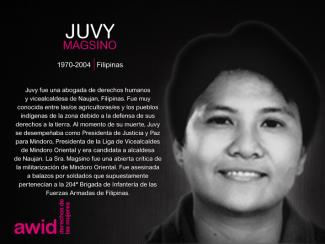
Juvy Magsino
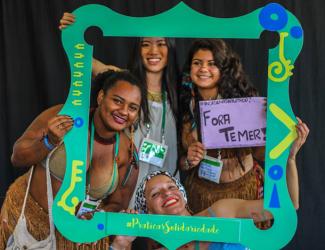
Young feminist activists play a critical role in women’s rights organizations and movements worldwide by bringing up new issues that feminists face today. Their strength, creativity and adaptability are vital to the sustainability of feminist organizing.
At the same time, they face specific impediments to their activism such as limited access to funding and support, lack of capacity-building opportunities, and a significant increase of attacks on young women human rights defenders. This creates a lack of visibility that makes more difficult their inclusion and effective participation within women’s rights movements.
AWID’s young feminist activism program was created to make sure the voices of young women are heard and reflected in feminist discourse. We want to ensure that young feminists have better access to funding, capacity-building opportunities and international processes. In addition to supporting young feminists directly, we are also working with women’s rights activists of all ages on practical models and strategies for effective multigenerational organizing.
We want young feminist activists to play a role in decision-making affecting their rights by:
Fostering community and sharing information through the Young Feminist Wire. Recognizing the importance of online media for the work of young feminists, our team launched the Young Feminist Wire in May 2010 to share information, build capacity through online webinars and e-discussions, and encourage community building.
Researching and building knowledge on young feminist activism, to increase the visibility and impact of young feminist activism within and across women’s rights movements and other key actors such as donors.
Promoting more effective multigenerational organizing, exploring better ways to work together.
Supporting young feminists to engage in global development processes such as those within the United Nations
Collaboration across all of AWID’s priority areas, including the Forum, to ensure young feminists’ key contributions, perspectives, needs and activism are reflected in debates, policies and programs affecting them.
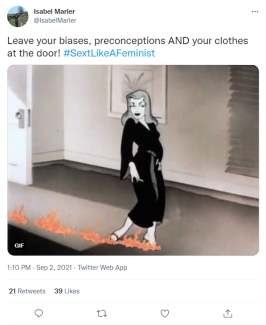
ممنوع الدخول قبل التخلّص من أي شكل من أشكال التحيّز و/أو الأحكام المُسبقة و/أو الاحتشام!
To strengthen our collective voice and power for more and better funding for feminist, women's rights, LBTQI+ and allied organizing globally
As part of our commitment to engage more deeply with artists and the practice of co-creating Feminist Realities, AWID collaborated with an Artist Working Group to advance and strengthen feminist agendas and realities in their communities and movements through their creative expression. Our intention here is to bring feminist creatives together in a powerful and brave space where they grow and live freely, and where they shatter toxic narratives to replace them with transformative alternatives.
This exhibition gathers the work of artists and collectives from across the globe, those who are actively creating the difference that we want to see in the world. These feminist creatives include Upasana Agarwal, Nicole Barakat, Siphumeze Khundayi, Katia Herrera, Ali Chavez Leeds, Colectivo Morivivi, Ika Vantiani, and the curators behind the #MeToo in China exhibition. Their voices stand strong in their refusal to accept the limitations imposed by patriarchy, and amplify their commitments to the communities they are working in and with. In their own way, each artwork represents daily acts of resistance, untold stories and identities, connections to land and ancestry, and most importantly, the solidarity that exists within and amongst feminist movements and struggles. These artists are both inspired by and inspire creative strategies of feminist resistance and initiatives that show us how we can all live in a more just world - a world that centers care and healing.
Nous comptons actuellement parmi nos membres plusieurs centaines d’organisations parmi les plus connues et novatrices. Les critères d’adhésion sont les mêmes que pour les personnes, mais les cotisations diffèrent et les services proposés tentent de répondre à leurs besoins particuliers.
El 11 de julio de 2024, tuvimos una conversación increíble con grandes feministas sobre el estado del ecosistema de financiación y el poder de la investigación "¿Dónde está el dinero?".
Le agradecemos de manera especial a Cindy Clark (Thousand Currents), Sachini Perera (RESURJ), Vanessa Thomas (Black Feminist Fund), Lisa Mossberg (SIDA) y Althea Anderson (Hewlett Foundation).
Recuerda: ¡la encuesta permanecerá abierta hasta el 31 de agosto de 2024!
Esta edición en alianza con Kohl: una publicación para Body and Gender Research analizará soluciones, propuestas y realidades feministas para transformar nuestro mundo actual, nuestros cuerpos y nuestras sexualidades.
The AWID international Forum is a gathering of 2,000 women’s rights leaders and activists from around the world. The AWID Forum is the largest recurring event of its kind, and every Forum takes place in a different country in the global South.
The AWID International Forum is both a global community event and a space of radical personal transformation. A one-of-a-kind convening, the Forum brings together feminist, women’s rights, gender justice, LBTQI+ and allied movements, in all our diversity and humanity, to connect, heal and thrive.
When people come together on a global scale, as individuals and movements, we generate a sweeping force.
Join us in Bangkok, Thailand and online in December 2024.
Merci de bien vouloir parcourir les propositions existantes avant de soumettre vos idées. Quelqu'un pourrait déjà avoir pensé à une proposition similaire! Envoyez votre proposition à contribute@awid.org.
Nous examinerons et inclurons les nouvelles propositions qui nous parviendront au fur et à mesure sur cette page Web.
La Conferencia de Monterrey sobre la Financiación para el Desarrollo marcó el comienzo de las conversaciones acerca de una agenda de Financiación para el Desarrollo.
Para saber más sobre los seis temas centrales de Monterrey los mecanismos de seguimiento a esta conferencia, consulta Género y financiación para el desarrollo, de Maria Floro, Nilufer Çagatay, John Willoughby y Korkut Ertürk (INSTRAW, 2004).
No. Valoramos tu trabajo, pero no estamos buscando respuestas de personas a título individual por el momento.
La Conférence des Nations Unies de 2009 sur la crise financière et économique mondiale et son incidence sur le développement
L’enquête est disponible sur KOBO, une plateforme en source libre de collecte, gestion et visualisation de données. Pour y participer, il vous suffit de cliquer ici sur le lien de l’enquête et de suivre les indications pour répondre aux questions.