Eden Marcellana
WHRDs are self-identified women and lesbian, bisexual, transgender, queer and intersex (LBTQI) people and others who defend rights and are subject to gender-specific risks and threats due to their human rights work and/or as a direct consequence of their gender identity or sexual orientation.
WHRDs are subject to systematic violence and discrimination due to their identities and unyielding struggles for rights, equality and justice.
The WHRD Program collaborates with international and regional partners as well as the AWID membership to raise awareness about these risks and threats, advocate for feminist and holistic measures of protection and safety, and actively promote a culture of self-care and collective well being in our movements.
WHRDs are exposed to the same types of risks that all other defenders who defend human rights, communities, and the environment face. However, they are also exposed to gender-based violence and gender-specific risks because they challenge existing gender norms within their communities and societies.
We work collaboratively with international and regional networks and our membership
We aim to contribute to a safer world for WHRDs, their families and communities. We believe that action for rights and justice should not put WHRDs at risk; it should be appreciated and celebrated.
Promoting collaboration and coordination among human rights and women’s rights organizations at the international level to strengthen responses concerning safety and wellbeing of WHRDs.
Supporting regional networks of WHRDs and their organizations, such as the Mesoamerican Initiative for WHRDs and the WHRD Middle East and North Africa Coalition, in promoting and strengthening collective action for protection - emphasizing the establishment of solidarity and protection networks, the promotion of self-care, and advocacy and mobilization for the safety of WHRDs;
Increasing the visibility and recognition of WHRDs and their struggles, as well as the risks that they encounter by documenting the attacks that they face, and researching, producing, and disseminating information on their struggles, strategies, and challenges:
Mobilizing urgent responses of international solidarity for WHRDs at risk through our international and regional networks, and our active membership.
When you come to the center of São Paulo, you will see the building of the Ocupação 9 de Julho - a landmark in the struggle for social housing and an important cultural site. This is the work of The Homeless Workers Movement (Movimento dos Sem-Teto do Centro, MSTC) a movement of over 2000 people that operates in the city center and converts abandoned spaces into housing for low-income workers, children, women, adults, the elderly, migrants and refugees. In this particular building, they provide food and shelter to 122 families.
Jour 1
Alejandra se passionne pour les droits des femmes et la justice de genre. Elle rêve de créer un monde qui place le soin en son cœur, celui des personnes comme celui de la nature. Experte féministe en droits humains, elle a travaillé dans des domaines en lien avec le genre, le climat, la justice sociale et économique au sein de diverses organisations internationales. Ses domaines d’expertise comprennent le développement des connaissances et la co-création, la recherche, la facilitation et le plaidoyer. Elle est titulaire d’un master en droits humains de l’université d’Essex et a rédigé et co-élaboré de nombreuses publications, dont l’article «Enragée: Femmes et Nature». La campagne Activisme Féministe Sans Peur s’appuie sur des entretiens et des recherches menés par Alejandra.
Originaire d’Argentine, elle a vécu et travaillé dans plusieurs pays d’Europe et d’Amérique latine au cours des vingt dernières années. Alejandra aime la photographie, la mer, préparer des gâteaux avec sa fille et déguster des plats du monde entier. En tant que mère, elle met un point d’honneur à briser le cycle des schémas répétitifs transgénérationnels. Alejandra puise son énergie et son inspiration auprès des femmes extraordinaires qui font partie de sa vie, et qui vivent aux quatre coins du monde.
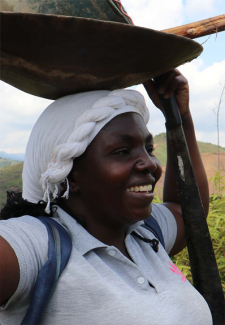
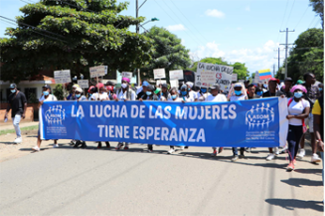
Asociación de Mujeres Afrodescendientes del Norte del Cauca (ASOM)
(avec des invités spéciaux!)
📅Mardi 12 mars
🕒18 h - 21 h 30 HNE
🏢 Blue Gallery, 222 E 46th St, New York
Entrée par RSVP uniquement
 |
 |
 |
 |
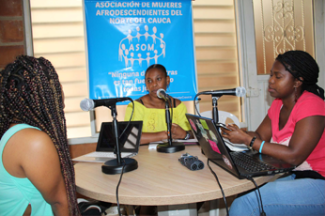 |
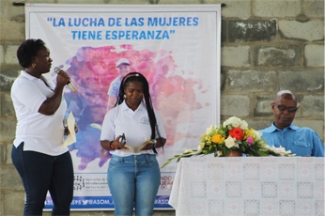
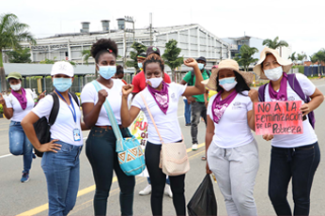
Les militants de l'ASOM dans les rencontres, les défilés et les événements
The WITM survey is focused on the feminist resourcing realities of the last 3 years (2021 to 2023), and has five key sections:
It consists of mandatory* and optional questions, most of which are multiple-choice. You will have a chance to share more on issues that are important to you by responding to the open question(s) at the end of the survey.

To respond to the questions quickly and easily, we advise that you have your key financial information at hand (e.g., your annual budgets from 2021 to 2023). However, if you wish to save your responses and come back to the survey later, you are able to do this whenever needed.
Actualmente contamos en nuestra membresía con cientos de organizaciones destacadas e innovadoras que trabajan en temas relacionados con los derechos de las mujeres y el desarrollo. Los criterios de afiliación son los mismos que para las personas a título individual, aunque las cuotas y los beneficios son diferentes, con el fin de atender a las necesidades de las instituciones afiliadas.

To make the complexity of resourcing diverse forms of feminist organizing visible
Contenu lié
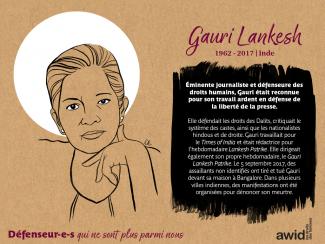
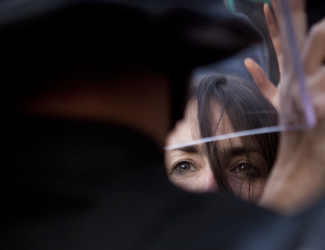
Reporters sans frontières: Inde : La journaliste Gauri Lankesh sauvagement assassinée à son domicile