WHRDs are self-identified women and lesbian, bisexual, transgender, queer and intersex (LBTQI) people and others who defend rights and are subject to gender-specific risks and threats due to their human rights work and/or as a direct consequence of their gender identity or sexual orientation.
WHRDs are subject to systematic violence and discrimination due to their identities and unyielding struggles for rights, equality and justice.
The WHRD Program collaborates with international and regional partners as well as the AWID membership to raise awareness about these risks and threats, advocate for feminist and holistic measures of protection and safety, and actively promote a culture of self-care and collective well being in our movements.
Risks and threats targeting WHRDs
WHRDs are exposed to the same types of risks that all other defenders who defend human rights, communities, and the environment face. However, they are also exposed to gender-based violence and gender-specific risks because they challenge existing gender norms within their communities and societies.
By defending rights, WHRDs are at risk of:
Physical assault and death
Intimidation and harassment, including in online spaces
Judicial harassment and criminalization
Burnout
A collaborative, holistic approach to safety
We work collaboratively with international and regional networks and our membership
to raise awareness about human rights abuses and violations against WHRDs and the systemic violence and discrimination they experience
to strengthen protection mechanisms and ensure more effective and timely responses to WHRDs at risk
We work to promote a holistic approach to protection which includes:
emphasizing the importance of self-care and collective well being, and recognizing that what care and wellbeing mean may differ across cultures
documenting the violations targeting WHRDs using a feminist intersectional perspective;
promoting the social recognition and celebration of the work and resilience of WHRDs ; and
building civic spaces that are conducive to dismantling structural inequalities without restrictions or obstacles
Our Actions
We aim to contribute to a safer world for WHRDs, their families and communities. We believe that action for rights and justice should not put WHRDs at risk; it should be appreciated and celebrated.
Promoting collaboration and coordination among human rights and women’s rights organizations at the international level to strengthen responses concerning safety and wellbeing of WHRDs.
Supporting regional networks of WHRDs and their organizations, such as the Mesoamerican Initiative for WHRDs and the WHRD Middle East and North Africa Coalition, in promoting and strengthening collective action for protection - emphasizing the establishment of solidarity and protection networks, the promotion of self-care, and advocacy and mobilization for the safety of WHRDs;
Increasing the visibility and recognition of WHRDs and their struggles, as well as the risks that they encounter by documenting the attacks that they face, and researching, producing, and disseminating information on their struggles, strategies, and challenges:
Mobilizing urgent responses of international solidarity for WHRDs at risk through our international and regional networks, and our active membership.
Related Content
Snippet FEA FEMINIST COOPERATIVISM (EN)
FEMINIST
COOPERATIVISM
When work and
solidarity go together
Est-il possible de répondre en dehors de la plateforme KOBO et de vous transmettre mes réponses par courriel?
Sauf si vous avez des problèmes d’accessibilité et/ou que vous répondez aux questions de l’enquête dans une autre langue, nous vous encourageons fortement à utiliser KOBO pour une collecte et une analyse standardisées des données WITM.
Cette année, dans le cadre de notre hommage en ligne aux défenseuses des droits humains qui ne sont plus parmi nous, nous célébrons la mémoire de quatre femmes originaires d’Afrique subsaharienne. Trois d’entre elles ont été assassinées en raison de leur travail et/ou à cause de leur identité de genre ou de leur orientation sexuelle. Leur mort souligne la violence à laquelle les personnes LGBT* sont confronté-e-s dans cette région et dans le monde entier. Nous vous invitons à vous joindre à nous pour commémorer la vie de ces femmes, leur activisme et l’héritage qu’elles nous ont laissé. Faites circuler ces mèmes après de vos collègues et amis ainsi que dans vos réseaux et twittez en utilisant les hashtags #WHRDTribute et #16Jours.
S'il vous plaît cliquez sur chaque image ci-dessous pour voir une version plus grande et pour télécharger comme un fichier
Antes de retirarse, ocupó muchas posiciones de alto perfil, como por ejemplo miembrx de la Corte de Apelaciones de Uganda y Presidenta Adjunta de la Corte Suprema de Uganda. Fue la primera mujer ugandesa en ocupar el cargo de Primera Magistrada entre 1973 y 1986, y la primera mujer en ser nombrada jueza de la Corte Suprema en 1986.
Fue una de las primeras mujeres investidas como “Caballero Papal” de la historia de la Iglesia Católica en África. Murió de un paro cardíaco.
Por qué y cómo renovar tu membresía a AWID
Conoce a otras/os afiliadas/os
Nuestras/os afiliadas/os tanto individuales como institucionales provienen de todas las regiones del mundo y de 163 países; las/os más recientes se nos han unido desde Zimbabue, Turquía y los Estados Unidos. ¡Todas/os nuestras/os afiliadas/os aportan una rica y diversa gama de perspectivas, experiencias, conocimiento, energía e inspiración!
¿Sabías que cada semana publicamos perfiles de afiliadas/os?
Uno de los beneficios de ser afiliada/o de AWID es que tu historia sea destacada en nuestro boletín informativo, el cual llega a 35,000 suscriptoras/es, y a través de nuestros canales en las redes sociales que tienen más de 60,000 seguidores.
Publicaciones recientes:
Conoce a Angila Ashitua, una joven afiliada a AWID que vive en el condado de Vihiga, Kenia Occidental.
Aprendiendo más acerca del trabajo que hace AWID y de temas relativos a los derechos de las mujeres y la justicia social por medio de nuestras publicaciones y recursos, incluyendo el último video "Cambiando sistemas, cambiando vidas". [disponible solo en inglés]
Participando en nuestras sesiones de aprendizaje electrónico. ¡Mira lo más destacado de nuestro seminario en línea sobre justicia fiscal! [disponible solo en inglés]
¡Y mucho más!
Puedes renovar tu membresía por uno, dos o tres años; también ofrecemos membresías individuales e institucionales gratis a quienes tengan bajos ingresos o presupuestos.
Si tienes alguna dificultad y necesitas apoyo con el proceso de inscripción, por favor no dudes en comunicarte conmigo a través de membership@awid.org
Testemonios de nuestras/os afiliadas/os
"AWID nos ha resultado una red muy interesante y estamos participando en muchas de sus plataformas". - Engabu Za Tooro (afiliada/o institucional AWID)
"Espero una colaboración fructífera con el equipo. Me siento excelente. Gracias por aceptarme como afiliada". - R. Chakraborty (afiliada individual AWID)
"Muchas gracias, AWID, pues el trabajo que hacen es formidable. Aprecio realmente sus esfuerzos". - E. Khan (afiliada individual AWID)
Snippet Intro The Feminist Realities Magazine (FR)
Magazine des Réalités Féministes
À l’AWID, nous concevons ces réalités féministes comme les exemples vivants des mondes que nous savons possibles. Nous concevons ces diverses réalités féministes comme des revendications et des incarnations d’espoir et de pouvoir. Elles sont ancrées dans les multiples manières de vivre, de penser et de faire autrement, que ce soit au niveau des expressions quotidiennes de nos modes de vie ou nos manières d'être en relations les un.e.s avec les autres ou au niveau de systèmes alternatifs de gouvernance et de justice.
Les Réalités féministes combattent les systèmes de pouvoir dominants tels que le patriarcat, le capitalisme et la suprématie blanche.
¿Cómo presentarán y procesarán los datos que se recopilen en la encuesta?
Los datos se procesarán para fines estadísticos y así arrojar luz sobre el estado de la dotación de recursos para los movimientos feministas de todo el mundo, y solo se exhibirán de forma desglosada. AWID no divulgará información acerca de ninguna organización en particular ni publicará información que permita identificar a una organización por su ubicación o características sin el consentimiento acreditado de dicha organización.
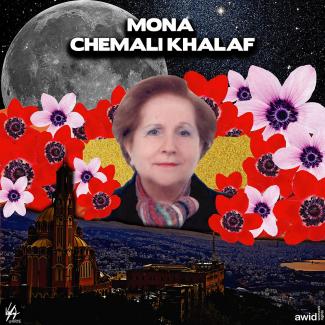
Mona était économiste et consultante indépendante sur les questions de genre et de développement.
Elle a été professeure d'économie et directrice de l'Institut d'études féminines du monde arabe à l'Université libanaise américaine. Elle est décédée subitement le 6 janvier 2018.
Des amis et d'anciens collègues disent de Mona: « Pour lui rendre hommage, la meilleure chose à faire est de continuer à faire ce qu'elle a commencé: l'égalité de genre, à tout prix.
7. Synthétisez les résultats de votre recherche
Une fois que vous aurez analysé l’ensemble des données issues du sondage, des interviews, de la recherche documentaire et possiblement d’autres sources, vous pourrez créer votre produit final.
Votre produit final sera le document qui synthétisera, analysera et posera un regard critique sur vos données. Ce sera la composante que vous partagerez avec votre communauté afin de présenter et d’expliquer votre recherche à votre auditoire.
À l’AWID, nous rédigeons fréquemment un rapport complet qui analyse chaque ensemble de données et qui synthétise tous nos résultats pour ensuite créer des produits plus concis comme des infographies et des sommaires (expliqué plus loin dans la section « Finalisez et mettez en forme »).
1. Écrivez clairement
Organisez vos données comme si vous vouliez raconter une histoire. Vous pouvez suivre l’ordre de votre sondage. Vous pouvez également regrouper certaines questions qui mènent à votre conclusion de façon cohérente et progressive.
Adaptez votre langage à votre public. Employez un langage universel et évitez le jargon ou les termes trop techniques.
L’importance de la révision
La personne chargée de la révision relira votre document, s’assurera qu’il est rédigé de manière concise, procédera à la vérification des faits, soulèvera les incohérences qui doivent être résolues, assurera la fluidité du texte et suggérera éventuellement des titres.
Il est préférable que cette personne connaisse et comprenne votre travail WITM, sans être engagée dans la recherche. Ainsi, elle apportera au document une nouvelle perspective.
2. Rendez-le attrayant
Créez des tableaux et des graphiques à l’aide des données recueillies. Ce type de documents visuels est très utile pour faire ressortir les principaux résultats de votre recherche et pour valider votre analyse.
Utilisez des images pertinentes qui illustrent vos propos.
Mettez en évidence les principaux chiffres et/ou les témoignages percutants.
Rappel : Plus votre produit est accessible, plus les gens auront envie de le lire…et de le partager!
À cette étape, vous avez recueilli toutes vos données, vous les avez analysées et vous avez transformé ces renseignements en produit final, probablement en un long rapport.
1. Peaufinez vos résultats
Avant de passer à la prochaine étape, vous devriez partager votre produit final avec les organisations, les activistes et les donateurs qui vous conseillent.
C’est le moment idéal pour vérifier les aspects suivants :
Est-ce qu’il manque des points clés à votre analyse des tendances et du panorama actuels du financement ?
Est-ce qu’il manque des points clés à vos conclusions ?
Y a-t-il des données inexactes qui doivent être corrigées ?
Y a-t-il des suggestions de nature générale sur la manière de renforcer le rapport afin d’atteindre les objectifs fixés dans le cadre de référence de la recherche.
Lorsque vous aurez intégré toutes les réactions de vos conseillers et conseillères, assurez-vous de présenter le document à la personne chargée des révisions.
Vous aurez ainsi en main la version finale et complète de votre rapport. Si vous prévoyez de publier votre rapport final en d’autres langues, il est temps de le faire traduire.
2. Encouragez les réactions
Les personnes qui vous conseillent seront probablement très occupées. Assurez-vous de leur accorder un délai raisonnable lorsque vous leur demandez de commenter le texte.
Soyez brefs et spécifiques lorsque vous sollicitez des commentaires, de sorte qu’il leur soit facile d’y répondre. Si vous le souhaitez, vous pouvez simplement copier et coller la liste des points que nous vous avons fournie.
Si vous publiez en plusieurs langues, assurez-vous que vos conseillers et conseillères vérifient la ou les versions finales traduites de vos produits.
Il s’agit d’une contribution considérable de la part de vos conseillers et conseillères. Pensez à leur offrir une forme de reconnaissance.
• 1 personne (ou plus) chargée de la recherche
• 1 éditeur-trice (spécialisé-e web si vous créez des prduits en ligne)
• Traducteur(s)-trice(s), si vous réalisez votre recherche en différentes langues
Ressources requises :
• Liste d’organisations, de donateurs et d’activistes agissant à titre consultatif
• Note conceptuelle (définie par votre cadre de référence)
• Résultats préliminaires de votre sondage
• Questions d'interview
• Résultats de vos interview
• Données de votre recherche documentaire
• Toutes les données utilsées dans le rapport
The Nadia Echazú Textile Cooperative carries the name of a pioneer in the struggle for trans rights in Argentina. In many ways, the work of the cooperative celebrates her life and legacy.
Nadia Echazú had a remarkable activist trajectory: she was one of the co-founders of "El Teje", the first trans newspaper in Latin America, alongside Lohana Berkins, Diana Sacayán and Marlene Wayar. Nadia was part of the Argentinian Association of Travestis, Transexual and Transgender people (Asociación de Travestis y Transexuales de Argentina, ATTA) and founded The Organization of Travestis and Transgender People of Argentina (Organización de Travestis y Transexuales de Argentina, OTTRA).
Shortly after her death, her fellow activists founded the cooperative in her name, to honor the deep mark she left on trans and travesti activism in Argentina.
Les réalités du financement et l’état du financement des mouvements féministes changent rapidement. Cette enquête a-t-elle une seule édition?
Non. L’enquête s’appuie sur les 20 années de mobilisation de l’AWID dans l’objectif d’obtenir davantage de financement de meilleure qualité pour des changements sociaux menés par des féministes. Cette enquête est la troisième édition de la recherche Où est l’argent pour l’organisation des mouvements féministes? Notre objectif est de mener une enquête WITM tous les 3 ans.