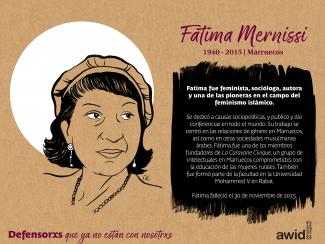
Women Human Rights Defenders
WHRDs are self-identified women and lesbian, bisexual, transgender, queer and intersex (LBTQI) people and others who defend rights and are subject to gender-specific risks and threats due to their human rights work and/or as a direct consequence of their gender identity or sexual orientation.
WHRDs are subject to systematic violence and discrimination due to their identities and unyielding struggles for rights, equality and justice.
The WHRD Program collaborates with international and regional partners as well as the AWID membership to raise awareness about these risks and threats, advocate for feminist and holistic measures of protection and safety, and actively promote a culture of self-care and collective well being in our movements.
Risks and threats targeting WHRDs
WHRDs are exposed to the same types of risks that all other defenders who defend human rights, communities, and the environment face. However, they are also exposed to gender-based violence and gender-specific risks because they challenge existing gender norms within their communities and societies.
By defending rights, WHRDs are at risk of:
- Physical assault and death
- Intimidation and harassment, including in online spaces
- Judicial harassment and criminalization
- Burnout
A collaborative, holistic approach to safety
We work collaboratively with international and regional networks and our membership
- to raise awareness about human rights abuses and violations against WHRDs and the systemic violence and discrimination they experience
- to strengthen protection mechanisms and ensure more effective and timely responses to WHRDs at risk
We work to promote a holistic approach to protection which includes:
- emphasizing the importance of self-care and collective well being, and recognizing that what care and wellbeing mean may differ across cultures
- documenting the violations targeting WHRDs using a feminist intersectional perspective;
- promoting the social recognition and celebration of the work and resilience of WHRDs ; and
- building civic spaces that are conducive to dismantling structural inequalities without restrictions or obstacles
Our Actions
We aim to contribute to a safer world for WHRDs, their families and communities. We believe that action for rights and justice should not put WHRDs at risk; it should be appreciated and celebrated.
-
Promoting collaboration and coordination among human rights and women’s rights organizations at the international level to strengthen responses concerning safety and wellbeing of WHRDs.
-
Supporting regional networks of WHRDs and their organizations, such as the Mesoamerican Initiative for WHRDs and the WHRD Middle East and North Africa Coalition, in promoting and strengthening collective action for protection - emphasizing the establishment of solidarity and protection networks, the promotion of self-care, and advocacy and mobilization for the safety of WHRDs;
-
Increasing the visibility and recognition of WHRDs and their struggles, as well as the risks that they encounter by documenting the attacks that they face, and researching, producing, and disseminating information on their struggles, strategies, and challenges:
-
Mobilizing urgent responses of international solidarity for WHRDs at risk through our international and regional networks, and our active membership.
Related Content
January 2015: 1st drafting session on the outcome document for the 3rd FfD Conference
The 1st drafting session on the outcome document for the 3rd Financing for Development Conference
- In January 2015 a series of drafting sessions towards the final outcome document started at UN headquarters in New York.
- Prior to the first drafting session the co-facilitators of the Addis conference preparatory process presented an elements paper for the so-called “zero-draft” outcome document, as the basis for the intergovernmental negotiations of the outcome document.
- During the sessions, women’s rights organisations emphasised the need to treat the FfD and means of implementations (MOI) under the post 2015 processes separately, because FfD provides a unique opportunity for states to address the structural causes of inequality.
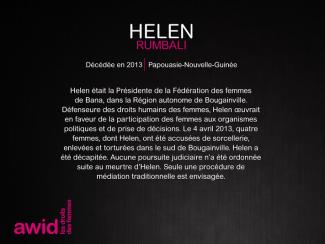
Helen Rumbali
As realidades de financiamento para movimentos feministas mudam rapidamente. Este questionário é um ocorrência única?
Não. Tem por base a história de 20 anos da AWID de mobilizar mais financiamento de maior qualidade para mudanças sociais lideradas por feministas e é a terceira edição do nosso inquérito “Onde está o dinheiro para organização feminista?”. O nosso objetivo é repetir o inquérito WITM a cada 3 anos.
Snippet FEA Union Otras Photo 5 (ES)

14th AWID international Forum is cancelled (forum page)
El 14°Foro Internacional de AWID ha sido cancelado
Dada la situación global, nuestra Junta Directiva tomó la difícil decisión de cancelar el Foro que estaba programado en 2021, enTaipei.
Julio 2015
Foro de Mujeres sobre Financiación para la Igualdad de Género
- Este Foro se realizó el 10 de julio de 2015 en Adís Abeba y reunió a feministas, mujeres de las bases, activistas de género, académicas/os y representantes de organizaciones/redes por los derechos de las mujeres, además de recibir aportes específicos de representantes de la ONU y otras/os hacedoras/es de políticas públicas.
- Los objetivos del Foro de Mujeres son: compartir información actualizada sobre el estado de las más recientes negociaciones en torno a la FpD; analizar colectivamente el panorama de la FpD y su seguimiento; acordar una postura en común sobre los derechos de las mujeres; y formular estrategias para participar de manera significativa y sustantiva con una perspectiva feminista en la Conferencia sobre la FpD en Adís Abeba.
- El WWG organizó el Foro de Mujeres en colaboración con FEMNET, el African Women’s Development Fund [Fondo para el Desarrollo de las Mujeres Africanas, AWDF en inglés] y la Post-2015 Women’s Coalition [Coalición de Mujeres por el Post-2015] con el apoyo de ONU Mujeres.
Foro de las OSC en la Conferencia Internacional sobre la FpD
- El Foro de las OSC en la Conferencia sobre la FpD tuvo lugar en Adís Abeba el 11 y 12 de julio de 2015 con los siguientes objetivos: informar a las OSC participantes sobre el estado del proceso oficial y coordinar la participación de la sociedad civil en la tercera Conferencia sobre la FpD; redactar colectivamente una Declaración del Foro de OSC, así como los mensajes de las OSC para las Mesas Redondas de la Conferencia sobre la FpD, los eventos paralelos organizados por el Grupo de las OSC y cualquier otra oportunidad que pueda surgir; planificar y organizar las futuras áreas de participación de las OSC en el proceso de Financiación para el Desarrollo más allá de la tercera Conferencia sobre la FpD.
- Para más información, por favor visita el sitio del Grupo de OSC en la Conferencia Internacional sobre la FpD (en inglés) o contacta al Grupo Coordinador de las OSC en Adís Abeba (addiscoordinatinggroup@gmail.com).
Tercera Conferencia Internacional de la ONU sobre la Financiación para el Desarrollo
- La tercera Conferencia Internacional de la ONU sobre la Financiación para el Desarrollo se realizó en Adís Abeba, Etiopía, del 13 al 16 de julio de 2015 y estuvo centrada en: evaluar los progresos realizados en cuanto a la aplicación del Consenso de Monterrey (2002) y la Declaración de Doha (2008); abordar temas nuevos y emergentes, incluso en el contexto de los recientes esfuerzos multilaterales por promover la cooperación internacional para el desarrollo, teniendo en cuenta el panorama actual y en permanente evolución de la cooperación para el desarrollo, la interrelación entre todas las fuentes de financiación para el desarrollo, las sinergias entre objetivos de la financiación en las tres dimensiones del desarrollo sostenible (económica, social y ambiental) y la necesidad de apoyar el desarrollo de la agenda de Naciones Unidas más allá de 2015; así como revitalizar y fortalecer el proceso de seguimiento a la financiación para el desarrollo.
- La Agenda de Acción de Addis Ababa fue adoptada el 15 de julio de 2015 por jefes de estado, de gobierno y altos representantes ante las Naciones Unidas.
- Sin embargo, los países en desarrollo, las organizaciones de la sociedad civil y, más específicamente, las organizaciones de mujeres consideran que la Agenda de Acción de Addis Ababa no logró cumplir su cometido. El Grupo de Trabajo de Mujeres expresó su fuerte decepción y demandó cambios estructurales en la gobernanza económica mundial y la arquitectura para el desarrollo. Puedes leer aquí la reacción al documento final. Cientos de organizaciones y redes de la sociedad civil de todo el mundo también expresaron sus profundas preocupaciones y reservas. Puedes leer aquí la respuesta al documento final.
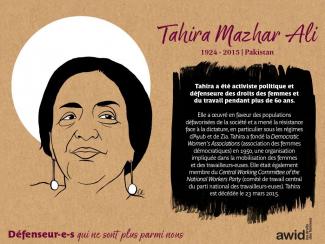
Tahira Mazhar Ali
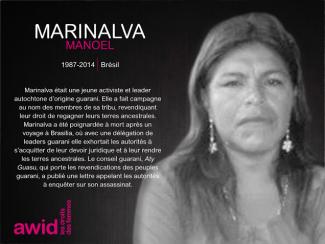
Marinalva Manoel
هل يمكنني التواصل مع أي أحد إن كانت لدي أسئلة أو أمور تثير قلقي؟
إن كانت لديكم/ن أسئلة أو أمور تثير قلقكم/ن، الرجاء التوجه الينا عن طريق هذا النموذج وكتابة "استطلاع أين المال" في العنوان أو راسلنا على witm@awid.org
Snippet FEA Principles of Work S4 (FR)

HORIZONTALITÉ
“Where is the Money for Women’s Rights?" AWID’s WITM Toolkit (landing page intro) FR
Une nouvelle édition de la recherche Où est l'argent ? est en cours.
En savoir plusUne méthodologie de recherche autogérée

L’AWID propose la Boîte à outils « Où est l’argent pour les droits des femmes? » (« Where Is The Money for Women's Rights? », WITM) pour soutenir les individus et les organisations qui souhaitent mener leur propre recherche sur les tendances de financement en adaptant la méthodologie de recherche de l’AWID à une région, une question ou une population spécifique.
La Boîte à outils WITM de l’AWID est le produit de dix ans de recherches. La rméthologie WITM de l’AWID proposent une démonstration politique et pratique des ressources et des étapes qu’exige une solide recherche-action.
L’équipe 'Ressources des mouvements féministes' offre également un soutien technique et politique, avant et pendant le processus de recherche. Parcourez la boîte à outils et contactez fundher@awid.org si vous souhaitez plus de renseignements.
Quel est le thème du 14e Forum de l’AWID ?
Le 14e Forum a pour thème « Réalités féministes: notre pouvoir en action ».
Nous concevons les Réalités féministes comme différentes façons d’exister et d’être qui nous révèlent ce qui est possible, au mépris et malgré les systèmes de pouvoir dominants, et en résistance à ces derniers. Nous concevons ces réalités féministes comme des revendications et des incarnations d’espoir et de pouvoir, et comme des réalités multidimensionnelles, dynamiques et ancrées dans des contextes et des moments historiques spécifiques.
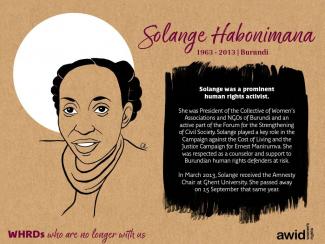
Solange Habonimana
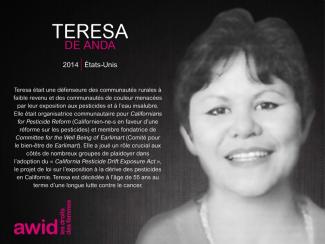
Teresa De Anda
Snippet FEA No feminist economies without feminist unions (EN)
No feminist economies without feminist unions!
Through labor and union organizing, Sopo, Sabrina and Linda are not only fighting for the rights of essential workers, women workers, migrant workers and sex workers, but the rights of all workers.
The fight to end workers’ exploitation is a feminist struggle, and shows us that there are no feminist economies without feminist unions.
FRMag - The Triple
The Triple Cripples: Let’s talk about sex, baby!
by Nandini Tanya LallmonOlajumoke ‘Jay’ Abdullahi and Kym Oliver are revolutionary feminists in more ways than one. (...)
artwork: “Bloomed” by Titash Sen >
我無法提交書面提案,是否接受其他格式呢?
作為對AWID論壇各方面可訪問性承諾的一部分,我們接受那些無法提交書面申請的個人/組織/團體提交自己的音頻或視頻等。
如果您選擇以音頻/視頻格式提交提案,請按照相同的順序回答活動申請表格中詳細的問題。
若您要提交音頻/視頻文件,請與我們聯繫,選擇“論壇活動徵集”作為電子郵件的主題。