WHRDs are self-identified women and lesbian, bisexual, transgender, queer and intersex (LBTQI) people and others who defend rights and are subject to gender-specific risks and threats due to their human rights work and/or as a direct consequence of their gender identity or sexual orientation.
WHRDs are subject to systematic violence and discrimination due to their identities and unyielding struggles for rights, equality and justice.
The WHRD Program collaborates with international and regional partners as well as the AWID membership to raise awareness about these risks and threats, advocate for feminist and holistic measures of protection and safety, and actively promote a culture of self-care and collective well being in our movements.
Risks and threats targeting WHRDs
WHRDs are exposed to the same types of risks that all other defenders who defend human rights, communities, and the environment face. However, they are also exposed to gender-based violence and gender-specific risks because they challenge existing gender norms within their communities and societies.
By defending rights, WHRDs are at risk of:
Physical assault and death
Intimidation and harassment, including in online spaces
Judicial harassment and criminalization
Burnout
A collaborative, holistic approach to safety
We work collaboratively with international and regional networks and our membership
to raise awareness about human rights abuses and violations against WHRDs and the systemic violence and discrimination they experience
to strengthen protection mechanisms and ensure more effective and timely responses to WHRDs at risk
We work to promote a holistic approach to protection which includes:
emphasizing the importance of self-care and collective well being, and recognizing that what care and wellbeing mean may differ across cultures
documenting the violations targeting WHRDs using a feminist intersectional perspective;
promoting the social recognition and celebration of the work and resilience of WHRDs ; and
building civic spaces that are conducive to dismantling structural inequalities without restrictions or obstacles
Our Actions
We aim to contribute to a safer world for WHRDs, their families and communities. We believe that action for rights and justice should not put WHRDs at risk; it should be appreciated and celebrated.
Promoting collaboration and coordination among human rights and women’s rights organizations at the international level to strengthen responses concerning safety and wellbeing of WHRDs.
Supporting regional networks of WHRDs and their organizations, such as the Mesoamerican Initiative for WHRDs and the WHRD Middle East and North Africa Coalition, in promoting and strengthening collective action for protection - emphasizing the establishment of solidarity and protection networks, the promotion of self-care, and advocacy and mobilization for the safety of WHRDs;
Increasing the visibility and recognition of WHRDs and their struggles, as well as the risks that they encounter by documenting the attacks that they face, and researching, producing, and disseminating information on their struggles, strategies, and challenges:
Mobilizing urgent responses of international solidarity for WHRDs at risk through our international and regional networks, and our active membership.
Related Content
Nuestra agrupación no ha recibido financiamiento externo entre 2021 y 2023, ¿a pesar de ello, deberíamos responder la encuesta?
Sí, aún así deseamos saber de ustedes aunque no hayan recibido financiamiento en los tres, dos o cualquiera de los años comprendidos entre 2021 y 2023.
"[Ella] era una persona que se caracterizaba por su arduo trabajo a favor de la defensa de los derechos humanos y la construcción de la paz en Nariño, especialmente en el municipio de Samaniego-Nariño". - Jorge Luis Congacha Yunda para Página10.
Paula Andrea Rosero Ordóñez fue abogada de primera instancia en la oficina del Ministerio Público en Samaniego, Nariño, la principal agencia de defensa de los derechos de la ciudadanía en Colombia.
Paula se especializó en los derechos civiles y políticos, las problemáticas de la impunidad y la justicia, y contribuyó a descubrir abusos de poder, incluida la corrupción. Paula participó también en proyectos para la consolidación de la paz en su ciudad natal, Samaniego, a través del Consejo Municipal de Paz y la Junta Municipal de Mujeres.
Paula recibió amenazas de muerte tras exponer el manejo irregular de los recursos y de denunciar actos de corrupción en el Hospital Lorencita Villegas del municipio nariñense. Fue asesinada el 20 de mayo de 2019, cuando dos hombres se acercaron y le dispararon a corta distancia.
Snippet FEA Nous Sommes la Solution (ES)
Nous Sommes la Solution es un movimiento de mujeres rurales por la soberanía alimentaria en África Occidental. Originalmente fundada como una campaña contra la agricultura hiper-industrializada, Nous Sommes la Solution se ha convertido en un movimiento de más de 500 asociaciones de mujeres rurales de Burkina Faso, Senegal, Ghana, Gambia, Guinea Bissau, Malí y Guinea.
Este movimiento liderado por mujeres está construyendo y fortaleciendo la soberanía alimentaria y de semillas en África Occidental. Alimentan a las comunidades, fortalecen las economías locales, amplían el conocimiento de las mujeres agricultoras y mitigan los efectos devastadores de la crisis climática a través de las prácticas agroecológicas. También organizan talleres, foros y transmisiones de radio comunitarias para compartir sus mensajes, conocimientos tradicionales y prácticas agroecológicas en las comunidades rurales.
En colaboración con universidades y centros públicos de investigación, Nous Sommes la Solution trabaja para restaurar las variedades indígenas de arroz (un alimento esencial de África Occidental) y promover economías alimentarias locales basadas en principios agroecológicos para influir en la formulación de políticas nacionales, mientras apoya a las mujeres en la creación de asociaciones agrícolas y su acceso a la propiedad y gestión colectiva de las tierras agrícolas.
Nominate bold feminists to join AWID's Board of Directors
Every year, AWID seeks to renew and enrich the perspectives and experience reflected in our Board of Directors by bringing in new members.
Currently, we are looking for individuals to serve 3-year terms on AWID’s Board, starting in early 2023. This is an opportunity to contribute to our organisation’s governance and to be part of an amazing group of feminists from around the world.
Please help us to identify thoughtful and bold feminists to nominate for election by July 29, 2022.
Please also share this invitation to nominate with your networks!
Who are we looking for?
First and foremost, we are looking for candidates who are committed to AWID’s mission, who can make connections between local and global struggles, and who can help us to be thoughtful about how to best leverage AWID's positioning and strengths in a constantly evolving context. Candidates must be willing to uphold the legal duties and responsibilities of the AWID Board in the best interests of the organization.
This is a voluntary role that requires commitment and engagement throughout the year. Board members are expected to commit a minimum of 10-15 days per year to attend in-person and virtual meetings, and contribute to other communications.
We aspire for our Board to reflect diversity in all its forms, particularly in terms of gender identity, sexual orientation, age, geography and background. Additionally, we seek Board members with experience relevant to AWID’s priority areas of work.
While we will consider all candidates, in light of the current composition of the board, priority consideration will be given to:
Candidates with experience working at the intersections of women’s rights/gender justice and :
Finance
Climate justice
Disability justice, and/or
Technology
Candidates from the following regions:
Africa
South America
What Board members bring to AWID
The Board of Directors is key to inform AWID’s strategic direction and support our organisation to fulfill its mission in coherence with the world we live in and the needs of our movements.
Board members contribute to the organization in many ways: bringing governance experience from other spaces, perspectives from diverse sectors of feminist movements, and substantive expertise in areas relevant to AWID’s strategy.
The candidates who are ultimately elected will be joining the AWID Board in 2023, accompanying us for the launch of our new strategic plan led by AWID’s new Co-Executive Directors, and the planning of our next international Forum.
Vous demandez le nom du groupe, de l’organisation et/ou du mouvement qui répond aux questions de l’enquête, et ses coordonnées – pour quelle raison?
Nous demandons ces données pour faciliter l’examen des réponses, éviter les doublons et pouvoir vous contacter si votre groupe n’a pas pu terminer le questionnaire et/ou vous répondre si vous avez des doutes ou des questions. Des informations sur la manière dont nous utilisons les informations personnelles collectées lors de notre travail sont disponibles ici.
Carol Thomas était une pionnière de la défense des droits sexuels et reproductifs des femmes en Afrique du Sud. Gynécologue aguerrie et fondatrice du WomenSpace, elle pratiquait et promouvait des modes de prestation de soins aux femmes non traditionnels, en proposant des soins à la fois de haute qualité, empathiques et accessibles.
« Elle inscrivait cela non seulement dans la joie de la grossesse et des nouveaux bébés, mais également dans les angoisses de la stérilité, des accouchements prématurés et des cancers féminins et dans le déchirement des fausses couches et des mortinaissances. » -Helen Moffett
Carol fonctionnait selon de nouveaux paradigmes, mettant au centre de sa pratique les besoins des femmes ayant le moins d’accès aux services et aux droits dans la société :
« L’environnement socioéconomique dans lequel nous nous trouvons majoritairement implique que les femmes supportent un fardeau disproportionné de maladies et du chômage... En tant que femme noire précédemment désavantagée, je comprends très bien ce qui se passe dans nos communautés. » - Carol Thomas
Son entreprise sociale innovante «iMobiMaMa», s’étant mérité de nombreux prix, prend appui sur les kiosques de téléphonie mobile et la technologie interactive pour connecter directement les femmes avec les services, l’information et le soutien en soins prénataux et de santé sexuelle dans les communautés de toute l’Afrique du Sud.
Carol soutenait les femmes à la fois lors des grossesses désirées et non désirées, et a encadré de nombreux·ses infirmier·ère·s et médecins au cours de sa vie.
On la décrivait également comme la gynécologue chez qui se rendre « pour les trans qui souhaitaient des soins trans affirmatifs. Elle savait y faire lorsque tant d’autres butaient sur les pronoms ou les mots à employer. Ses couvertures chaudes, son écoute attentive et ses mots qui tombaient toujours justes étaient vraiment réconfortants. » - Marion Lynn Stevens
On disait de Carol Thomas qu’elle était au point culminant de sa carrière lorsqu’elle est décédée, le 12 avril 2019, des complications d’une double transplantation pulmonaire.
Les très nombreux hommages qui lui ont été rendus suite à son décès inattendu faisaient mention qu’elle était, entre autres :
« un modèle à suivre, une guerrière, une innovatrice, une leader dynamique, une rebelle, une boule d’énergie, une brillante scientifique, une doctoresse bienveillante ».
Nul doute que Carol Thomas restera dans nos mémoires et que nous lui rendrons hommage pour avoir été tout cela, et bien plus.
Snippet FEA What are the objectives (FR)
Quels sont les Objectifs de Nous Sommes la Solution?
Las Triple Cripples: ¡hablemos de sexo, nena!
por Nandini Tanya Lallmon, República de Mauricio (@nandini_tanya)
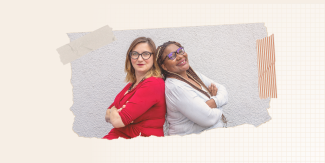
Olajumoke «Jay» Abdullahi y Kym Oliver son feministas revolucionarias en más de un sentido.
Las dos amigas se llaman a sí mismas las «Triple Cripples» [«Triples Inválidas»] porque, como mujeres discapacitadas negras, se ven sometidas a tres niveles de discriminación. Jay, actualmente de 31 años, contrajo polio cuando era bebé y utiliza una férula y unas muletas como sostén, mientras que Kym, de 25 años, tiene esclerosis múltiple y se moviliza en silla de ruedas. El nombre del dúo surge de un esfuerzo por redefinir la palabra «inválida» que, según ellas, «ha sido un término habitualmente usado contra las personas discapacitadas como injuria, como una forma infalible de recordarnos que estábamos “falladas” y que siempre íbamos a ser “menos que”.»
Como mujeres negras, Kym y Jay han sido víctimas del estereotipo racial globalizado que hipersexualiza la piel oscura. En su libro Heart of the Race: Black Women’s Lives in Britain [Corazón de la raza: las vidas de las mujeres negras en Gran Bretaña], Beverley Bryan, Stella Dadzie y Suzanne Scafe describen cómo las mujeres negras han sido históricamente definidas como un «riesgo de alta promiscuidad» por los doctores, debido a su libido y su fertilidad. Jay explica que «la gente piensa que estoy siempre dispuesta a hacer de todo y cualquier cosa todo el tiempo porque soy una mujer negra». Aunque ambas mujeres han sido sometidas a una intensa fetichización debido a su color de piel, sus discapacidades han confundido a muchas personas. Kym describe así su experiencia como mujer con curvas: «Tengo el tipo de cuerpo que la gente quiere manosear, y les parece que yo debería poder aceptarlo, pero, al mismo tiempo, existe esta idea de que yo no debería tener pretensiones, por mi discapacidad.»
En las plataformas de citas en línea, a Jay le han preguntado si puede realizar ciertas posiciones sexuales, dado que ciertas potenciales parejas «han decidido que quieren estar contigo de este modo y quieren saber si tu corporalidad puede facilitarlo.» Durante una consulta de control, Kym hizo disculparse a unx profesional médicx que, mientras completaba un formulario de admisión, le preguntó cuántas parejas sexuales ha tenido con un tono que implicaba «yo sé que estas preguntas no son aplicables en tu caso, pero tenemos que seguir el proceso estándar del cuestionario.»
El error de pensar que la falta de autonomía física equivale a una falta de deseo sexual es generalizado.
En la escuela, Jay era excluida de las clases de educación sexual, porque se presuponía que estaba incapacitada para tener sexo. Ella explica que incluso las organizaciones bien intencionadas que promueven el acceso a los servicios de salud sexual y reproductiva a menudo no tienen en cuenta las necesidades específicas de las mujeres discapacitadas. Por ejemplo, las píldoras son consideradas con frecuencia un método anticonceptivo efectivo, sin ninguna mención de que pueden agravar los riesgos de coágulos de las mujeres que usan sillas de ruedas.
Con sede en Londres, las Triple Cripples esperaban ansiosamente participar, junto con el equipo Decolonising Contraception [descolonizar la contracepción], en el SexFest2020, un festival de un día organizado para personas de color y dedicado a la salud y el bienestar sexuales. Desafortunadamente, el evento fue cancelado debido a la pandemia del COVID-19. A pesar de ello, sin desanimarse, Jay y Kim se volcaron a sus plataformas de activismo en línea, para oponerse a la forma en que la sexualidad es vista desde una perspectiva estrictamente heteronormativa y para desafiar la idea de que la femineidad está definida por la capacidad de procrear. El dúo inauguró un canal de YouTube y un podcast (también llamado «The Triple Cripples») para promover la representación de las personas discriminadas de múltiples formas como seres humanos holísticos. Sus planes a futuro incluyen un documental creativo y una muestra fotográfica dedicada a luchar contra la discriminación y a difundir las voces de personas de color discapacitadas.
La experiencia de discriminación basada en la raza, el género y la discapacidad es más que acumulativa.
Si bien las mujeres discapacitadas de color comparten experiencias de discriminación por motivos de discapacidad con otras personas discapacitadas, experiencias de sexismo con otras mujeres, y experiencias de racismo con otras personas de color, estas experiencias interactúan y no pueden ser separadas: las mujeres discapacitadas de color experimentan una discriminación singular como mujeres discapacitadas de color.
Si bien las Triple Cripples reconocen que las ideas anticuadas y superficiales sobre la diversidad no se transformarán, como por arte de magia, en espacios inclusivos de un día para otro, siguen confiando en que sus pequeños hachazos finalmente lograrán derribar los grandes robles que las prácticas discriminatorias representan para ellas.
La alegría de aceptarse y crecer al calor de esa luz.
Titash Sen (@unzeroed)
“Asignado Nderentendei Al Nacer”
de Bastión Moral, Asunción, Paraguay (@basti0nmoral)
La mujeridad obligatoria es un dispositivo colonial heterocispatriarcal de violencia hacia cuerpos asignados femeninos al nacer. Los cuerpos trans seguimos resistiendo a pesar de la invisibilización y apagamiento histórico. No soy mujer, me asignaron un género a partir de mis genitales.
We will analyze the survey responses, derive insights and trends, and present the results during the 15th AWID International Forum in Bangkok, and online, in December 2024. Register to attend the Forum here!
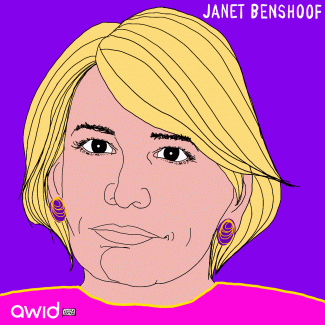
Janet Benshoof was a human rights lawyer from the United States and an advocate for women’s equality, sexual and reproductive rights.
She campaigned to broaden access to contraceptives and abortions across the world, and battled anti-abortion rulings and in the American territory of Guam. She was arrested in 1990 for opposing her country’s most restrictive abortion law, but won an injunction at the local court in Guam that blocked the law and eventually won at the Ninth Circuit Court of Appeals, striking down the law for good.
“The women in Guam are in a very tragic situation. I never intend to be quiet about that.” - Janet Benshoof for People Magazine
Janet established landmark legal precedents including the US Food and Drug Administrations’ approval of emergency contraception, as well as the application of international law to ensure the rights of rape victims in the Iraqi High Tribunal’s prosecution of Saddam-era war crimes.
Janet was President and founder of the Global Justice Center, as well as founder of the Center for Reproductive Rights, the world’s first international human rights organization focused on reproductive choice and equality. She served 15 years as Director of the American Civil Liberties Union’s Reproductive Rights Project, where she spearheaded litigation shaping US constitutional law on gender equality, free speech, and reproductive rights.
“Janet was known for her brilliant legal mind, her sharp sense of humor, and for her courage in the face of injustice.” - Anthony D. Romero
Named one of the “100 Most Influential Lawyers in America” by the National Law Journal, Janet was the recipient of numerous awards and honors.
She was born in May 1947 and passed away in December 2017.
Snippet FEA NSS Quote (EN)
“It’s the indigenous knowledge and the practices that have always supported food sovereignty and this knowhow is in the hands of the women … Ecofeminism for me is the respect for all that we have around us.”
Love letter to feminist movements: A Letter from Inna and Faye
Dear feminist movements,
Love is what keeps our feminist fire burning. Along with care for our communities, anger and rage in the face of injustice, and the courage to take action.
In September 2022, we stepped with great excitement into our leadership roles at AWID, as Co-Executive Directors. We felt the warmth and embrace of the feminist sisterhood as you welcomed us.
Reflecting on our most precious memories as feminists, we recall powerful moments of togetherness at street protests, sharp analysis, and brave voices shaking the status quo at gatherings. We held those intimate conversations into the night, laughed for hours, and danced at parties together.
Feminist fires need to be fed, especially in difficult times when there is no lack of external challenges, from the climate crisis and the rise of right-wing forces to exploitative economies and persisting patterns of oppression within our own social movements. It's these fires, burning ablaze everywhere, that light our ways and keep us warm, but we can’t disregard the exhausting effects of political violence and repression directed against many of our struggles, movements, and communities.
We understand the desire to change the world as an essential ingredient of feminist organizing. We can never forget that we are the ones we have been waiting for, in building alternatives and shaping our future. Yet, vibrant feminist energy cannot be taken for granted and must be safeguarded in many ways. In this, we will continue to be vigilant. Greater and equal access to care and wellbeing, to healing and pleasure, are not only instruments to prevent burnout and sustain our movements, though that is an important function; first and foremost, they are the way in which we hope to live our lives.
We are thrilled to roll up our sleeves and work with you. AWID’s new strategic plan “Fierce Feminisms: Together We Rise” reflects our conviction that now is the time for us to be fierce and unapologetic in our agendas while making an effort to connect across movements and truly get to know each other’s realities, so that we may rise together - because, for us, this is the only way.
Our plans include the long-awaited AWID Forum! We look forward to meeting you all in person and online in 2024. We are hearing from you the need to connect and recharge, to rest and heal, to be challenged and inspired, to share good food, and to laugh and dance together. Few things in this world are as powerful and transformative, as feminists from all parts of the world coming together, and we truly hold our breath for this moment, because we know the magic that we can create together.
Our membership engagement has taken on a life of its own through the AWID Community (our online platform for members), and our focus on building connection and solidarity resonates with many of you. Please join and connect with us and others in feminist movements around the world. We know the importance of connection in a time and space where the rules are not made for us, and we hold close our community, where each of us matters.
Together with our fantastic AWID colleagues, we promise to do our best to support feminist movements, as is the mission and purpose of AWID. Please hold us to account.
For the past 40 years, you - feminist movements - have shaped AWID’s history, and pushed us to be braver, creative, and radical. 40 is a fabulous age, and we look forward to another 40 years with you all. We are looking forward to the partnerships, calls to justice, collaboration, policy influencing, and badass feminist power that you all bring in navigating the ever-increasing backlash on gender, racial and environmental justice. We have so much to learn from you and from each other, as we collectively build the worlds we believe in.
Cindy Clark and Hakima Abbas, thank you for paving the way for us and preparing us to fill your enormous shoes. We always appreciate all those on whose shoulders we stood and continue to stand. We understand ourselves to be part of a broader movement landscape, feminist histories, presents, and daring futures.
AWID’s Board of Directors, we are grateful to you for the support and feminist love you show us, and for your commitment to Global South leadership and the co-leadership model. We send our love and respect to each and every AWID colleague, we feel honoured to be working with such an exceptional feminist team of dedicated professionals.
This is our first time writing a love letter together, how could we conclude it without expressing love, care, and respect for each other? It’s a pretty intense relationship we’ve stepped into! We both bring our different and diverse perspectives and skills to our work, and as individuals, we also bring our lived experiences and authentic selves.
Together with you all, we are a story in the making, a part of a beautiful woven - and often beautifully challenging - tapestry that continues into the future. We had fun starting this journey together with each other and with you, and we very much hope to keep the romance alive.
In solidarity, with love and care
Inna and Faye
Save the date!
21 February 2023, Member Mixer 5 on Feminist Politics with Faye and Inna.
الاستطلاع هذا مخصّص للمجموعات، المنظمات والحركات التي تعمل بالأساس أو فقط على حقوق النساء، أفراد مجتمع الميم - عين، والحقوق الجندرية، في جميع السياقات، على جميع المستويات، وفي جميع المناطق. إن كان واحد من هذه المبادئ اساسًا لمجموعتكم/ن، تنظيمكم/ن أو شبكتكم/ن، أو أي نوع تنظيم آخر، إن كان مسجلاً أم لا، جديداً أو طويل العمر، ندعوكم/ن للإجابة على الاستطلاع.
*في الوقت الحالي، لا نطلب من الأفراد أو الصناديق النسوية أو النسائية تعبئة الاستطلاع.
تعرف على المزيد حول الاستطلاع: راجع/ي الأسئلة الشائعة
Juli Dugdale fue una feminista australiana que practicaba un liderazgo intergeneracional arraigado en los principios del feminismo, la inclusión y la igualdad. Fue líder, colega y mentora para muchas mujeres, especialmente, para las mujeres jóvenes de todo el mundo.
Juli fue una integrante comprometida del equipo del movimiento Young Women's Christian Association [Asociación Cristiana de Mujeres Jóvenes] (YWCA, por su siglas en inglés), una voluntaria y una ferviente defensora del liderazgo de las mujeres jóvenes por más de 30 años.
Se convirtió en un vínculo fuerte entre el movimiento australiano y la Oficina de la YWCA Mundial. Su confianza en la capacidad de liderazgo de las mujeres jóvenes llevó a establecer una asociación de varios años con el Departamento de Asuntos Exteriores y Comercio de Australia y a la creación del manual Rise Up (Rebélate), una guía global para el liderazgo transformador de las mujeres jóvenes, lanzada en 2018.
Juli falleció en Ginebra el 12 de agosto de 2019.
Tributos:
"Para quienes llegaron a trabajar con Juli, fue un privilegio. Quienes no lo hicieron, pueden tener la certeza de que su legado continúa en el trabajo que hacemos cada día y en la misión del movimiento de la YWCA". - YWCA Australia
"Juli Dugdale siempre ocupará un lugar profundo en el corazón de muchas personas en el movimiento de la YWCA, especialmente aquí, en Aotearoa, y a través del Pacífico. Juli tenía una relación especial con el Pacífico y fue un apoyo increíble para las mujeres jóvenes de allí. Ella era humilde, amable, cariñosa, dedicada, apasionada y tenía un corazón generoso. Ella encarnó la visión de la YWCA de "liderazgo transformador" con una extraordinaria visión y previsión de futuro, y ayudó a empoderar a generaciones de mujeres jóvenes líderes de todo el mundo". - YWCA Nueva Zelanda
Snippet FEA This is the story of the Nadia Echazú (ES)
Un lugar de trabajo no tiene que operar sobre la base de la competencia y las ganancias. No tiene que explotar a la gente en beneficio de unx dueñx o pequeña élite.
Las comunidades vulnerabilizadas al margen de las economías formales han ido construyendo modelos cooperativos alternativos basados en la autonomía, la cooperación, la corresponsabilidad, la autogestión y la solidaridad.
Las cooperativas y lugares de trabajo autogestionados por lxs trabajadorxs siempre han ofrecido formas alternativas de generar oportunidades de empleo, ingresos, seguridad social y ahorros y, al mismo tiempo, distribuir los ingresos de formas más comunitarias, sostenibles y seguras.
Pero es más que una oportunidad de empleo: es hacer realidad los sueños y construir economías feministas basadas en la solidaridad y el cuidado mutuo. Es crear un mundo donde nuestras vidas, nuestro trabajo y nuestras comunidades importen.
Esta es la historia de la Cooperativa Textil Nadia Echazú, la primera cooperativa creada y dirigida por y para personas travesti y trans en Argentina.
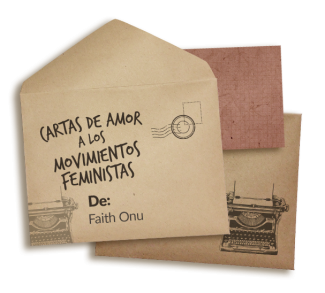
Carta de amor a los movimientos feministas #10
Nunca supe que tenía una familia cercana que me ama y que quiere que crezca. Mi mamá siempre ha estado presente para mí, pero nunca imaginé que tendría miles de familias por otros sitios, con las que no estoy relacionada por lazos de sangre.
Descubrí que la familia no son solo las personas relacionadas por lazos sanguíneos, sino la gente que te ama de forma incondicional, a quienes no les importa tu orientación sexual, ni tu estado de salud, ni tu estatus social, ni tu raza.
Al pensar en los momentos invaluables en que escuché a mis hermanas de todo el mundo que son firmes feministas –gente a quien no he conocido físicamente, pero quienes me apoyan, me enseñan, luchan por mí– me faltan las palabras: las palabras no pueden expresar cuánto las amo a ustedes, mis mentoras, y a las demás feministas. Ustedes son una madre, una hermana, una amiga para millones de chicas jóvenes.
Ustedes son maravillosas, ustedes luchan por personas a quienes no conocen –y eso es lo que las hace tan especiales–.
Mi corazón se alegra de expresar esto por escrito.
Las amo a todas y seguiré amándolas. Nunca he visto a ninguna de ustedes en forma física, pero parece que nos conociéramos desde hace décadas.
Somos feministas y estamos orgullosas de ser mujeres.
Vamos a seguir diciéndole al mundo que nuestra valentía es nuestra corona.
Una carta de amor de FAITH ONUH, una joven feminista de Nigeria

![“Asignado Nderentendei Al Nacer” [Assigned Nderentendei at Birth] by Bastión Moral](https://web.archive.org/web/20210928161447/https://www.awid.org/sites/default/files/thumbnails/image/web_bastion-nderentendei.png "“Asignado Nderentendei Al Nacer” [Assigned Nderentendei at Birth] by Bastión Moral")