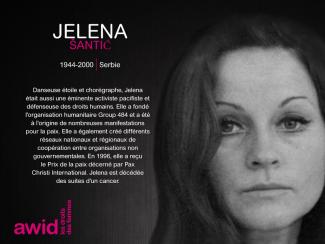
Jelena Santic
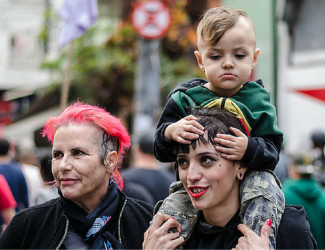
Over the past few years, a troubling new trend at the international human rights level is being observed, where discourses on ‘protecting the family’ are being employed to defend violations committed against family members, to bolster and justify impunity, and to restrict equal rights within and to family life.
The campaign to "Protect the Family" is driven by ultra-conservative efforts to impose "traditional" and patriarchal interpretations of the family, and to move rights out of the hands of family members and into the institution of ‘the family’.
Since 2014, a group of states have been operating as a bloc in human rights spaces under the name “Group of Friends of the Family”, and resolutions on “Protection of the Family” have been successfully passed every year since 2014.
This agenda has spread beyond the Human Rights Council. We have seen regressive language on “the family” being introduced at the Commission on the Status of Women, and attempts made to introduce it in negotiations on the Sustainable Development Goals.
AWID works with partners and allies to jointly resist “Protection of the Family” and other regressive agendas, and to uphold the universality of human rights.
In response to the increased influence of regressive actors in human rights spaces, AWID joined allies to form the Observatory on the Universality of Rights (OURs). OURs is a collaborative project that monitors, analyzes, and shares information on anti-rights initiatives like “Protection of the Family”.
Rights at Risk, the first OURs report, charts a map of the actors making up the global anti-rights lobby, identifies their key discourses and strategies, and the effect they are having on our human rights.
The report outlines “Protection of the Family” as an agenda that has fostered collaboration across a broad range of regressive actors at the UN. It describes it as: “a strategic framework that houses “multiple patriarchal and anti-rights positions, where the framework, in turn, aims to justify and institutionalize these positions.”
"Life is...about living in joy - waking up with purpose, feeling our creative energy, answering your calling." - Sylvia Robinson
This hub and performance space combine education, civic engagement, arts, social and spiritual services, and sustainable environmental practices. Sylvia envisioned it as a home where “there was a balance and synergy with the activities that people needed in order to sustain life.”
She was also one of the founding members of the Georgia Avenue Community Development Taskforce, a neighborhood group that works on social justice and organizing in Northwest DC to make sure the community has a voice in redevelopment and gentrification in the area.
“We're asking for affordable housing. We're asking that the small businesses that have been here for a long time don't get wiped out by new retail. We're asking for green space and space for people to get together to socialize. We're asking for streetscape improvements—better roads and lighting in the corridor.” - Sylvia Robinson about the Taskforce
Prior to becoming an organizer and after receiving a degree in computer science, Sylvia worked in air traffic control systems for over a decade. She then moved into drug and alcohol counselling, becoming increasingly engaged in community work.
“It was my call to be involved in community.” - Sylvia Robinson
Born in Washington D.C. on 14 August 1961, Sylvia passed away on 18 September 2017 after a battle with cancer.
“Sylvia's spirit and legacy will continue to inspire this community for many years to come.” - ECAC


Boil them down to communications language preferences
Nous œuvrons en faveur d’un monde fondé sur la justice sociale, environnementale et économique, ainsi que sur l'interdépendance, la solidarité et le respect. Nous travaillons au démantèlement des systèmes de pouvoir oppressif et contre toutes ses manifestations, y compris tout forme de patriarcat, de fondamentalisme, de militarisme et de fascisme, et le pouvoir des entreprises qui menacent nos vies et notre monde. Nous voulons un monde juste où le partage des ressources et celui du pouvoir permettront à chacun·e de s'épanouir.
Ultra conservative actors have developed a number of discourses at the international human rights level that call on arguments manipulating religion, culture, tradition, and national sovereignty in order to undermine rights related to gender and sexuality.
Anti-rights actors have increasingly moved away from explicitly religious language. Increasingly, we see regressive actors - who may previously have derided human rights concepts - instead manipulating and co-opting these very concepts to further their objectives.
This emerging and successful discourse appears innocuous, but it functions as a useful umbrella theme to house multiple patriarchal and anti-rights positions. The ‘protection of the family’ theme is thus a key example of regressive actors’ move towards holistic and integrated advocacy.
The language of ‘protection of the family’ works to shift the subject of human rights from the individual and onto already powerful institutions.
It also affirms a unitary, hierarchical, and patriarchal conception of the family that discriminates against family forms outside of these rigid boundaries. It also attempts to change the focus from recognition and protection of the rights of vulnerable family members to non-discrimination, autonomy, and freedom from violence in the context of family relations.
The Holy See and a number of Christian Right groups seek to appropriate the right to life in service of an anti-abortion mission. Infusing human rights language with conservative religious doctrine, they argue that the right to life, as set out in the Universal Declaration of Human Rights and the International Covenant on Civil and Political Rights, applies at the moment of conception.
The discourse has no support in any universal human rights instrument. Yet this is an appealing tactic for anti-rights actors, because the right to life cannot be violated under any circumstances and is a binding legal standard.
Anti-rights actors use a number of rhetorical devices in their campaign to undermine sexual rights: they argue that sexual rights do not exist or are ‘new rights,’ that they cause harm to children and society, and/or that these rights stand in opposition to culture, tradition or national laws.
Conservative actors engaged in advocacy at the UN attack the right to comprehensive sexuality education from several directions. They claim that CSE violates ‘parental rights’, harms children, and that it is not education but ideological indoctrination. They also claim that comprehensive sexuality education is pushed on children, parents, and the United Nations by powerful lobbyists seeking to profit from services they provide to children and youth.
Attempts to invalidate rights related to sexual orientation and gender identity have proliferated. Ultra conservative actors argue that application of long-standing human rights principles and law on this issue constitutes the creation of ‘new rights’; and that the meaning of rights should vary radically because they should be interpreted through the lens of ‘culture’ or ‘national particularities.’
Christian Right organizations have been mobilizing against reproductive rights alongside the Holy See and other anti-rights allies for several years. They often argue that reproductive rights are at heart a form of Western-imposed population control over countries in the global South. Ironically, this claim often originates from U.S. and Western Europe-affiliated actors, many of whom actively work to export their fundamentalist discourses and policies.
Regressive actors also cite to ‘scientific’ arguments from ultra-conservative think tanks, and from sources that rely on unsound research methodologies, to suggest that abortion causes an array of psychological, sexual, physical, and relational side effects.
Just as anti-rights actors aim to construct a new category of ‘protection of the family,’ they are attempting to construct a new category of ‘parental rights,’ which has no support in existing human rights standards.
This discourse paradoxically endeavours to use the rights protections with which children are endowed, as articulated in the Convention on the Rights of the Child, to support the rights of parents to control their children and limit their rights.
Increasingly, anti-rights actors are attempting to infiltrate and subvert standards and discourses developed by women human rights defenders, such as violence against women (VAW).
At the Commission on the Status of Women and other spaces, one rhetorical move is to treat VAW as a concept in which to embed anti-reproductive rights and patriarchal arguments. Ultra conservative actors, for example, have argued that non-heteronormative or traditional intimate partner relationships are a risk factor for violence, and emphasize that fathers are necessary to protect families from violence.
The Holy See has set off a sustained critique of gender, ‘gender ideology’, ‘gender radicals,’ and gender theory, and anti-rights actors often read the term as code for LGBTQ rights. Gender is used by the religious right as a cross-cutting concept that links together many of their discourses. Increasingly, the hysteria on this subject fixates on gender identity and trans rights.
Complementarity of the sexes is a discourse employed by a number of ultra-conservative actors today. Its rhetoric is structured around an assumption of difference: men and women are meant to have differing but complementary roles in marriage and family life, and with respect to their engagement in the community and political and economic life.
Reference to ‘natural’ roles is meant to fundamentally reject universal human rights to equality and non-discrimination.
It is also used to justify State and non-State violations of these rights, and non-compliance with respect to State obligations to eliminate prejudices and practices based on stereotyped roles for men or women.
This discourse suggests that national governments are being unjustly targeted by UN bodies, or by other States acting through the UN. This is an attempt to shift the subject of human rights from the individual or marginalized community suffering a rights violation to a powerful and/or regressive institution - i.e. the state, in order to justify national exceptions from universal rights or to support state impunity.
Anti-rights actors have taken up the discourse of freedom of religion in order to justify violations of human rights. Yet, ultra-conservative actors refer to religious freedom in a way that directly contradicts the purpose of this human right and fundamentally conflicts with the principle of the universality of rights. The inference is that religious liberty is threatened and undermined by the protection of human rights, particularly those related to gender and sexuality.
The central move is to suggest that the right to freedom of religion is intended to protect a religion rather than those who are free to hold or not hold different religious beliefs.
Yet under international human rights law, the right protects believers rather than beliefs, and the right to freedom of religion, thought and conscience includes the right not to profess any religion or belief or to change one’s religion or belief.
The deployment of references to culture and tradition to undermine human rights, including the right to equality, is a common tactic amongst anti-rights actors. Culture is presented as monolithic, static, and immutable, and it is is often presented in opposition to ‘Western norms.’
Allusions to culture by anti-rights actors in international policy debates aim to undermine the universality of rights, arguing for cultural relativism that trumps or limits rights claims. Regressive actors’ use of cultural rights is founded on a purposeful misrepresentation of the human right. States must ensure that traditional or cultural attitudes are not used to justify violations of equality, and human rights law calls for equal access, participation and contribution in all aspects of cultural life for all, including women, religious, and racial minorities, and those with non-conforming genders and sexualities.
Anti-rights actors in international policy spaces increasingly manipulate references to universal or fundamental human rights to reverse the meaning of the universality of rights.
Rather than using the term universal to describe the full set of indivisible and interrelated human rights, ultra conservative actors employ this term to instead delineate and describe a subset of human rights as ‘truly fundamental.’ Other rights would thus be subject to State discretion, ‘new’ rights or optional. This discourse is especially powerful as their category of the truly universal remains unarticulated and hence open to shifting interpretation.
Maritza Quiroz Leiva fue una activista social afrocolombiana, líder comunitaria y defensora de los derechos humanos de las mujeres. Como una de las 7,7 millones de colombianxs desplazadxs internamente por 50 años de conflicto armado, Maritza dedicó su trabajo de incidencia a apoyar los derechos de otras personas, en particular dentro de la comunidad afrocolombiana, que sufrían similares desplazamientos y violaciones de derechos.
Maritza era líder adjunta del Comité de Víctimas de Santa Marta, y una voz importante para quienes buscaban justicia en su comunidad, exigiendo reparaciones por las torturas, los secuestros, los desplazamientos y la violencia sexual que experimentaban las víctimas durante el conflicto armado. También trabajó activamente en el movimiento nacional por la redistribución de la tierra y la justicia agraria.
El 5 de enero de 2019 Maritza fue asesinada por dos individuos armados que irrumpieron en su casa. Tenía 60 años.
Maritza se sumó así a lxs otrxs cinco activistas y líderes sociales colombianxs que fueron asesinadxs durante la primera semana de 2019. En Colombia, ese año fueron asesinadxs un total de 107 defensorxs de derechos humanos.
Meet Sabrina Sanchez, remarkable trans migrant woman, sex worker, organizer, transfeminist and one of the founders of the union OTRAS.
Originally from Mexico City, she migrated to Spain 17 years ago after getting a degree in communications and started working as a sex worker.
It didn’t take long before she became involved with trans activism and sex worker activism in Barcelona. After joining the collective Asociación de Profesionales del Sexo (Association of Sex Workers, Aprosex), she started working in its secretariat and founded the Spanish sex workers union OTRAS.
She currently lives in Amsterdam where she works as the coordinator of the European Sex Workers’ Alliance.
Fun fact: she’s also a car mechanic and serious runner!
The theme of the 14th AWID International Forum is: “Feminist Realities: our power in action”.
In this Forum, we will celebrate and amplify powerful propositions that are around us, in all stages of development.
Nuestro nuevo documento de investigación El diablo se esconde en los detalles aborda la falta de conocimientos sobre los fundamentalismos religiosos en el sector del desarrollo, y se propone comprender mejor de qué manera estos fundamentalismos inhiben el desarrollo y, en particular, los derechos de las mujeres. Propone recomendaciones para que quienes trabajan en temas de desarrollo desafíen la labor de los fundamentalismos y eviten fortalecerlos inadvertidamente. [CTA download link: Leer el documento completo]
| Graphic1 | 1. Control of women’s bodies, sexuality, and choice are “warning signs” of rising fundamentalisms. |
| 2. Neoliberal economic policies have a particularly negative impact on women, and fuel the growth of religious fundamentalisms. | Graphic2 |
| Graphic3 | 3. Choosing religious organizations as default for partnerships builds their legitimacy and access to resources, and supports their ideology, including gender ideology. |
| 4.Everyone has multiple identities and should be defined by more than just their religion. Foregrounding religious identities tends to reinforce the power of religious fundamentalists. | Graphic4 |
| Graphic5 | 5. Religion, culture, and tradition are constantly changing, being reinterpreted and challenged. What is dominant is always a question of power. |
| 6. Racism, exclusion, and marginalization all add to the appeal of fundamentalists’ offer of a sense of belonging and a “cause”. | Graphic6 |
| Graphic7 | 7. There is strong evidence that the single most important factor in promoting women’s rights and gender equality is an autonomous women’s movement. |
El Diablo se esconde en los detalles proporciona detalles de las graves violaciones a los derechos humanos y, en particular, de las violaciones a los derechos de las mujeres, causados por los fundamentalismos auspiciados por los Estados, así como por actores fundamentalistas no estatales como milicias, organizaciones comunitarias confesionales e individuos. La profundización fundamentalista de normas sociales atávicas y patriarcales está provocando el aumento de la violencia contra las mujeres, las niñas y las defensoras de derechos humanos (WHRDs). El informe propuesta estas ideas clave para abordar el problema:
Quienes trabajan en el desarrollo están de capacidad de asumir una posición más firme. Su capacidad colectiva para reconocer y enfrentar conjuntamente a los fundamentalismos religiosos resulta crucial para promover la justicia social, económica y de género y los derechos humanos de todas las personas en el marco del desarrollo sostenible. Resulta fundamental promover que el poder y los privilegios se entiendan desde la óptica del feminismo interseccional y aplicar esta comprensión a los interrogantes sobre religión y cultura. Las organizaciones de mujeres ya poseen conocimientos y estrategias para oponerse a los fundamentalismos. Quienes trabajan en el desarrollo deberían apoyarse en estos e invertir en coaliciones enfocadas en múltiples temáticas. Lo anterior, les ayudará a alcanzar nuevos horizontes.
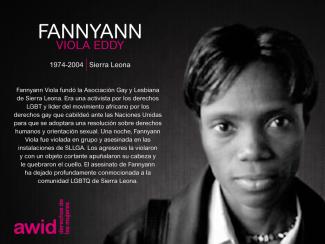
Roxana Reyes Rivas, était une philosophe, féministe, lesbienne, poétesse, politicienne et activiste pour les droits des personnes LGBT et des femmes du Costa Rica. Auteure à la plume acérée et à l’humour incisif, elle était irrésistiblement drôle. Née en 1960 et élevée à San Ramón dans la province d’Alajuela, qui était encore une localité rurale à l’époque, elle a toute sa vie refusé d’adhérer aux attentes envers « les femmes ».
Avec le groupe de lesbiennes costariciennes El Reguero, Roxana a organisé pendant plus de dix ans des festivals lesbiens, de joyeux espaces de formation où se rassembler à une époque où le gouvernement du Costa Rica et la société persécutaient et pénalisaient l’existence des lesbiennes. Ces festivals lesbiens étaient, pour des centaines de femmes, le seul endroit où elles pouvaient être elles-mêmes et se regrouper avec leurs semblables.
Roxana aimait répéter que la formation de partis politiques comptait parmi ses passe-temps. « Il est important que les gens comprennent qu’il y a d’autres manières de faire de la politique, et que de nombreuses questions doivent être résolues collectivement. » Elle fut également l’une des fondatrices des partis Nueva Liga Feminista et VAMOS, centrés sur les droits humains.
« La philosophie est faite pour bousculer, pour aider les gens à se poser des questions. Une philosophe qui n’irrite personne ne fait pas son travail. » Pendant 30 ans, Roxana a enseigné la philosophie dans plusieurs universités publiques du Costa Rica. Des générations d’étudiant·e·ss ont suivi ses directives et réfléchi aux dilemmes éthiques que posent la science et les technologies.
L’outil de prédilection de Roxana était l’humour. Elle a créé le prix de l’ignorance La Citrouille étincelante, qu’elle décernait à des personnalités publiques sur ses réseaux sociaux, tournant en dérision leurs expressions et déclarations anti-droits.
Roxana a été emportée par un cancer agressif fin 2019, avant qu’elle ne puisse publier son recueil de poèmes, qu’elle aurait voulu être le cadeau de départ de l’esprit créatif d’une féministe qui a toujours élevé sa voix contre l’injustice.

In 2023, feminist and women's rights organizations had a median annual budget of USD 22,000. Behind that median lies disparity and inequality: while a few groups access large-scale resources, the vast majority survive on shoestring budgets.
A closer look at actual budgets reveals major income diversity and inequality.
Enciende tu fuego feminista leyendo nuestras investigaciones y publicaciones varias sobre financiamiento, defensoras de derechos humanos, construcción de movimientos, fundamentalismos, justicia económica, seguimiento y evaluación feminista y más
Learn more about Feminist Realities
Any questions? Please do not hesitate to contact us
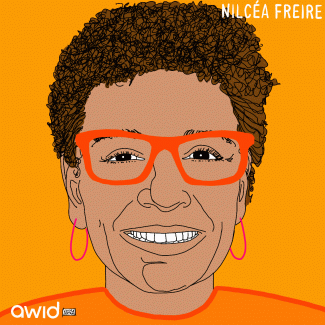
Nilcéa Freire was a Brazilian feminist activist, politician and academic. A persevering advocate for women’s rights and those of underrepresented minorities in the country, her life and work carried a long history of struggles and victories.
"While resisting we have to keep pushing for progress, and what we can achieve at this time, in my view, will be through the stupendous organization of young white women, and especially black women, in all of the state capitals and large cities of Brazil." - Nilcéa Freire
In 1999 she became the first woman to occupy the position of Dean at the State University of Rio de Janeiro. Here, she spearheaded the implementation of the first affirmative action policy for students graduating from public schools, requiring reserved places specifically for low-income black students in a public university. This system was adopted in dozens of other public universities.
Some years later, Nilcéa headed the Special Secretariat of Policies for Women in the government of former president Luiz Inácio Lula da Silva. In this capacity, she led the first National Women’s Conference. Over 12,000 women from across the country participated and the result of this collective work was embodied in the National Plan for Policies for Women.
Her commitment to women, Afro-Brazilians and indigenous peoples was also strongly reflected in her work to promote their rights through initiatives of the Brazil Ford Foundation office where she was a regional director.
The feminist activist Manoela Miklos recounted Nilcéa to be "a woman without equal".
At the age of 66, Nilcéa passed away in Rio de Janeiro on 29 December 2019 of cancer.
"Without words for the news of the death of dear Nilcea Freire. It is too sad to know that she left so early. She was always part of the ranks of those who do not settle for the injustices of the world. She was the Minister of Women, an activist, always active in the feminist cause. Much missed!” - Jandira Feghali, Federal Deputy
Watch Brazilian feminist Nilcea Freire on why we need to show solidarity with Brazil