
Anabel Flores Salazar
Over the past few years, a troubling new trend at the international human rights level is being observed, where discourses on ‘protecting the family’ are being employed to defend violations committed against family members, to bolster and justify impunity, and to restrict equal rights within and to family life.
The campaign to "Protect the Family" is driven by ultra-conservative efforts to impose "traditional" and patriarchal interpretations of the family, and to move rights out of the hands of family members and into the institution of ‘the family’.
Since 2014, a group of states have been operating as a bloc in human rights spaces under the name “Group of Friends of the Family”, and resolutions on “Protection of the Family” have been successfully passed every year since 2014.
This agenda has spread beyond the Human Rights Council. We have seen regressive language on “the family” being introduced at the Commission on the Status of Women, and attempts made to introduce it in negotiations on the Sustainable Development Goals.
AWID works with partners and allies to jointly resist “Protection of the Family” and other regressive agendas, and to uphold the universality of human rights.
In response to the increased influence of regressive actors in human rights spaces, AWID joined allies to form the Observatory on the Universality of Rights (OURs). OURs is a collaborative project that monitors, analyzes, and shares information on anti-rights initiatives like “Protection of the Family”.
Rights at Risk, the first OURs report, charts a map of the actors making up the global anti-rights lobby, identifies their key discourses and strategies, and the effect they are having on our human rights.
The report outlines “Protection of the Family” as an agenda that has fostered collaboration across a broad range of regressive actors at the UN. It describes it as: “a strategic framework that houses “multiple patriarchal and anti-rights positions, where the framework, in turn, aims to justify and institutionalize these positions.”
¿Quieres inspirarte con las estrategias de resistencia creativas de feministas de todo el mundo? ¿Quieres descubrir iniciativas feministas que nos muestran las maneras en que todxs podemos vivir en un mundo más justo? ¿Quieres aprender sobre modelos de cuidado y sanación feministas para aplicarlos en tu propia comunidad?¿Eso que escuchamos es un estruendoso sí? ¡SÍ!
Entonces explora Crear | Résister | Transform: un festival de movimientos feministas. Este festival se llevó a cabo en línea durante todo el mes de septiembre de 2021 en todas las plataformas de AWID, y ahora puedes experimentarlo en tu propio tiempo.
Las sesiones a continuación son para ti y todas lxs increíbles activistas feministas y por la justicia social que conoces. Unámonos para compartir nuestras estrategias de resistencia, co-crear magia feminista y transformar este mundo juntxs.
Lxs expositorxs participaron en su idioma de preferencia y en AWID incluimos subtítulos en los videos para tu accesibilidad.
Second High-level Dialogue on Financing for Development
เราตระหนักดีถึงอุปสรรคในทางปฏิบัติและความทุกข์ทางอารมณ์ในการเดินทางระหว่างประเทศ โดยเฉพาะอย่างยิ่งจากซีกโลกใต้ โดย AWID กำลังทำงานร่วมกับ TCEB (สำนักงานส่งเสริมการจัดประชุมและนิทรรศการของประเทศไทย) เพื่อสนับสนุนผู้เข้าร่วมฟอรัมในการขอวีซ่า ข้อมูลอื่นๆเกี่ยวกับการขอวีซ่าจะถูกนำเสนอในช่วงที่เปิดให้ลงทะเบียน รวมถึงสถานที่และวิธีการขอวีซ่า

El Quinto Diálogo de Alto Nivel sobre la Financiación para el Desarrollo, realizado el 7 y 8 de diciembre de 2011, marcó el comienzo de las conversaciones en torno a la Agenda de Desarrollo Post-2015 y sus relaciones con la financiación para el desarrollo. Esta conferencia puso especial énfasis en incrementar la ayuda para financiar los ODM. En sus observaciones finales, el Presidente en Funciones de la Asamblea General pidió a los Estados Miembros que comenzaran a pensar en el marco para el desarrollo post-2015.
.
📅Lunes 11 de marzo
🕒4:30 p. m. - 6:00 p. m. EST
Organizan:AWID, IJSC y NAWI
🏢 Church Center de las Naciones Unidas, 777 United Nations Plaza, piso 11, Nueva York.
(Interpretación disponible en francés y español)
Source: Centro de população de rua da cidade de São Paulo
 |
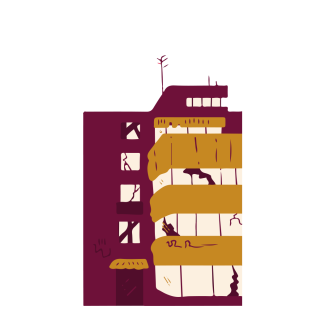
Abandoned / Unoccupied Buildings |
 |
||
Population living in the streets |
||||
|
31,000 |
40.000 |
.
Other useful links to stay informed:
Día 3