Flickr/Leonardo Veras (CC BY 2.0)

Special Focus

AWID is an international, feminist, membership organisation committed to achieving gender equality, sustainable development and women’s human rights

Protection of the Family

The Issue

Over the past few years, a troubling new trend at the international human rights level is being observed, where discourses on ‘protecting the family’ are being employed to defend violations committed against family members, to bolster and justify impunity, and to restrict equal rights within and to family life.

The campaign to "Protect the Family" is driven by ultra-conservative efforts to impose "traditional" and patriarchal interpretations of the family, and to move rights out of the hands of family members and into the institution of ‘the family’.

“Protection of the Family” efforts stem from:

  • rising traditionalism,
  • rising cultural, social and religious conservatism and
  • sentiment hostile to women’s human rights, sexual rights, child rights and the rights of persons with non-normative gender identities and sexual orientations.

Since 2014, a group of states have been operating as a bloc in human rights spaces under the name “Group of Friends of the Family”, and resolutions on “Protection of the Family” have been successfully passed every year since 2014.

This agenda has spread beyond the Human Rights Council. We have seen regressive language on “the family” being introduced at the Commission on the Status of Women, and attempts made to introduce it in negotiations on the Sustainable Development Goals.


Our Approach

AWID works with partners and allies to jointly resist “Protection of the Family” and other regressive agendas, and to uphold the universality of human rights.

In response to the increased influence of regressive actors in human rights spaces, AWID joined allies to form the Observatory on the Universality of Rights (OURs).  OURs is a collaborative project that monitors, analyzes, and shares information on anti-rights initiatives like  “Protection of the Family”.

Rights at Risk, the first OURs report, charts a map of the actors making up the global anti-rights lobby, identifies their key discourses and strategies, and the effect they are having on our human rights.   

The report outlines “Protection of the Family” as an agenda that has fostered collaboration across a broad range of regressive actors at the UN.  It describes it as: “a strategic framework that houses “multiple patriarchal and anti-rights positions, where the framework, in turn, aims to justify and institutionalize these positions.”


Related Content

Snippet - Join CSW69 Conversations Intro_EN

Join us through the #FreezeFascisms conversations!

As we navigate the global polycrisis, movements are tirelessly building power beyond traditional power structures. The wave of US presidential executive orders is intended to scare us, but no amount of fascist ideology can erase our existence and resistance.

We invite you to be a part of the solidarity-building campaign to expose and resist fascist forces undermining feminist and gender justice movements in your contexts!

  • Spark conversations in a brave space: Share stories of struggles and resistance to fascisms in your contexts on the AWID Community Platform. Not a member yet? Join here
  • Support movements that have been impacted: Amplify fundraisers, resourcing opportunities, mutual aid efforts using the #FreezeFascisms (we’re still on X, Instagram, LinkedIN, and we’re also on Bluesky)
  • Organize around alternatives: We’ve been building our community of practice on feminist economic alternatives & autonomous resourcing. Sign up to be part of it here.

Soy una joven feminista, ¿hay lugar para mí en AWID?

Las activistas feministas jóvenes son la parte medular del trabajo de AWID

De hecho, el 38% de nuestra membresía tienene menos de 30 años de edad.

Creemos que lxs activistas jóvenes son el presente y el futuro de la lucha por los derechos de las mujeres. Mediante nuestro programa «Activismo Joven Feminista» que atraviesa todos los aspectos de nuestro trabajo, promovemos a líderes jóvenes en el movimiento mundial por los derechos de las mujeres. A la vez, al definir a este programa como una de nuestras Áreas Prioritarias, contribuimos con nuevos análisis a los debates actuales para asegurarnos que las jóvenes activistas feministas sean capaces de articular sus prioridades y darle voz a los temas que les preocupan.

Conoce más sobre el Programa de Activismo Joven Feminista

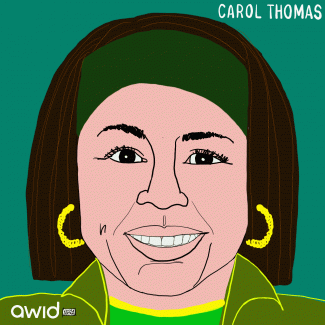
Carol Thomas

Carol Thomas was a trailblazer for women’s sexual and reproductive rights in South Africa. A gifted gynecologist and founder of the WomenSpace, she practiced and advocated for non-traditional ways of delivering healthcare to women, offering services that were high quality, empathetic and accessible.

“She entered into not only the joy of pregnancies and new babies, but the anxieties of infertility and premature deliveries and female cancers, the heartbreak of miscarriages and stillbirths.” Helen Moffett

Carol thought in new paradigms that centered the needs of women with the least access to services and rights in society:

“The prevailing socio-economic environment that we find ourselves in means that women bear a disproportionate burden of disease and unemployment…As a black, previously disadvantaged woman I have a good sense of what is happening in our communities.” - Carol Thomas

Carol’s innovative and multi-award-winning social venture “iMobiMaMa” used mobile kiosks and interactive technology to connect women directly with antenatal and reproductive health services, information and support in communities all over South Africa.

Carol supported women both in wanted and unwanted pregnancies, mentoring many nurses and doctors during her lifetime.

She was also described as the go-to gynecologist “for trans folks who could have affirming care. She got it right when so many did not have the language or pronouns. Her warm blankets, listening and saying just what you needed to hear was so comforting.” -Marion Lynn Stevens

Carol Thomas was described as being at the height of her professional career when she died on 12 April 2019 of complications following a double lung transplant.

The tributes that poured in following her unexpected death referred to her as many things:

“a role model, warrior woman, innovator, dynamic leader, mould-breaker, dynamo, brilliant scientist, compassionate doctor.”

Undoubtedly, Carol Thomas will be remembered and honored for being all of this and much more.
Snippet Love Letters from our Co-EDs and the Board (ES)

Cartas de amor de nuestra Junta Directiva y nuestras Co-Directoras Ejecutivas

Snippet - Feminist Mixer - EN

Feminist Mixer: Speed Dating for Feminists!

✉️ By registration only. Register here

📅 Tuesday, March 11, 2025
🕒 6.00-8.00pm EST

🏢 Chef's Kitchen Loft with Terrace, 216 East 45th St 13th Floor New York

Organizer: AWID

Je suis en train de rédiger un rapport de recherche. L’AWID peut-elle m’aider ?

L’AWID fournit une profusion de ressources pour vous aider dans votre recherche.

Nous vous invitons à explorer nos sections Domaines prioritaires et Informez-vous ou utlisez l'outil de recherche pour trouver des informations sur un suject spécifique.

Nous recommendons particulièrement la consultation de notre boîte à outils « Où est l’argent pour les droits des femmes ? » (« Where Is The Money for Women's Rights? », WITM). Cette boîte à outils est une méthodologie de recherche autogérée  pour soutenir les individus et les organisations qui souhaitent mener leur propre recherche sur les tendances de financement en adaptant la méthodologie de recherche de l’AWID à une région, une question ou une population spécifique.

Explorez la boîte à outils WITM

Mereani Naisua Senibici

Mereani Naisua Senibici, también llamada "Sua", fue, durante mucho tiempo,  integrante del movimiento de la Asociación Cristiana de Mujeres Jóvenes de Fiji (YWCA, por sus siglas en inglés).

Trabajó con diversos grupos de mujeres en entornos multirraciales, rurales y urbanos y se comprometió a apoyar y promover los derechos de las mujeres y las jóvenes.

En el YWCA de Lautoka, Sua trabajó con mujeres de ascendencia india, y se convirtió en  una figura destacada en el desarrollo del deporte y de la participación de atletas mujeres y personas trans en Lautoka.

"Sua es muy querida por lxs integrantes del YWCA de Fiji, a causa de su dedicación y apoyo persistente a todo lo que la organización se ha esforzado por hacer". - Tupou Vere

Mereani formaba parte de House of Sarah [La Casa de Sarah] (HoS, por sus siglas en inglés ), una iniciativa de la Asociación de Mujeres Anglicanas (AAW), lanzada en 2009, que tenía por objetivos tanto sensibilizar sobre los problemas relacionados con la violencia de género, como brindar apoyo a las mujeres que sufren violencia. Mereani empezó como una voluntaria comprometida y ofreció apoyo a las mujeres de todo el Pacífico.

Mereani falleció en 2019.

"Una persona  con don de gente y  una trabajadora todoterreno en el empoderamiento de las mujeres y construcción de movimientos a nivel comunitario. Descansa en paz, Sua". - Tupou Vere

Snippet FEA Tanta Gente sem casa (FR)

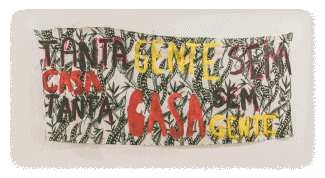
A graphic with green feather patterns on a beige background, text on it in Portuguese says “Tanta Gente sem casa. tanta casa sem gente” which means "So many people without a home,  so many homes without people"

« Tant de gens sans maison, tant de maisons sans personne. »

Snippet - CSW69 On feminist resourcing today - ES

Sobre la dotación de recursos feministas de hoy

2007: CSO engagement rises with the creation of the WWG on FfD

The Women’s Working Group on Financing for Development (WWG on FfD), an alliance of women’s rights organizations and networks, was launched in October 2007 to advocate for the advancement of gender equality, women’s empowerment and human rights in the FfD related UN processes.  

  • The Third High-level Dialogue on Financing for Development, 23-25 October 2007 saw an upsurge in civil society participation. Aside from the six round table sessions, there were hearings for civil society and the business sector.
  • AWID delivered a statement at the plenary on behalf of Civil Society calling for governments to give greater attention to the importance of women’s rights organizations as agents of development, and the need to promote new mechanisms for financing for women in developing and least developed countries. The statement urged governments to give greater support to gender architecture in the United Nations so that the system as a whole could make progress in terms of its commitment to gender equality, women’s empowerment and human rights, including the economic, social, cultural and environmental rights of all persons. 

Sylvia Robinson

« La vie... c’est vivre dans la joie, se lever avec un but, sentir son énergie créative, répondre à son appel. » – Sylvia Robinson

Sylvia Robinson, infatigable leader et organisatrice communautaire, fut la fondatrice et directrice générale de l’Emergence Community Arts Collective (ECAC) à Washington, D.C.

Cet espace de performances créatrices foisonnantes rassemblait des initiatives d’éducation, d’engagement citoyen, d’arts, de services sociaux et spirituels et de pratiques de développement durable. Sylvia considérait cet endroit comme une maison où « il existe un équilibre et une synergie avec les activités dont les gens ont besoin pour entretenir la vie ».

Elle comptait également parmi les membres fondateur·trice·s du Georgia Avenue Community Development Taskforce, dans le nord-ouest de la capitale, un groupe de quartier actif dans le domaine de la justice sociale et de l’organisation qui veillait à ce que la communauté ait son mot à dire dans le redéveloppement et l’embourgeoisement du secteur.

« Nous demandons des logements abordables. Nous demandons que les petits commerces qui sont ici depuis longtemps ne soient pas balayés par de nouvelles enseignes. Nous demandons des espaces verts et des lieux où les gens peuvent se rencontrer. Nous demandons à ce que le paysage urbain soit amélioré, avec des rues en meilleur état et des éclairages publics. » – Sylvia Robinson, à propos du travail de la Taskforce

Avant de devenir organisatrice, et après avoir obtenu son diplôme en informatique, Sylvia avait travaillé dans le domaine des systèmes de contrôle du trafic aérien pendant plus d’une décennie. Elle s’est ensuite orientée vers le conseil relatif à la consommation d’alcool et de drogue, s’impliquant davantage dans le travail communautaire.

« Cette implication dans la communauté, c’était ma vocation. » – Sylvia Robinson

Née à Washington D.C. le 14 août 1961, Sylvia est décédée le 18 septembre 2017 après avoir lutté contre le cancer.

« L’esprit et l’héritage de Sylvia continueront d’inspirer cette communauté pour de nombreuses années. » – ECAC

Snippet FEA Occupation’s kitchen Instagram (EN)

Occupation’s kitchen campaign:

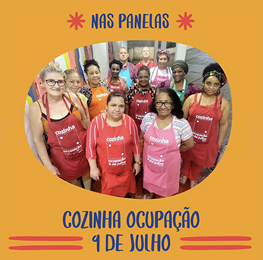
Photo of Cozinha Ocupação 9 de Julho team in aprons
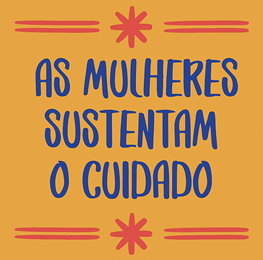
Yellow square that says "As mulheres sustentam o cuidado" or Women sustain care in Portuguese.
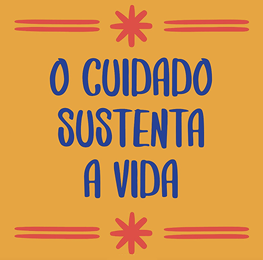
Yellow square that says "O cuidado sustenta a vida" or "Care sustains life" in Portuguese.
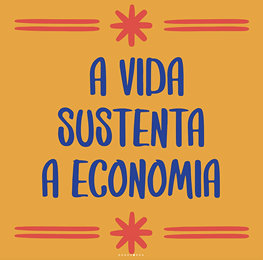
Yellow square that says "A vida sustenta a economia" or "Life sustains the economy" in Portuguese.
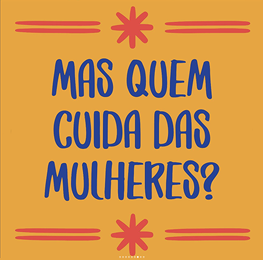
Yellow square that says: "Mas quen cuida das mulheres?" or "But who is taking care of women?" in Portuguese.
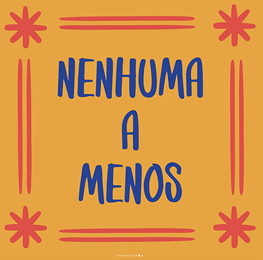
A yellow square that says "Nenhuma a menos" which translates to "Not another woman less"
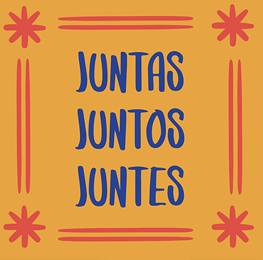
Yellow square that says "Juntas, Juntos, Juntes" which translates to "Together, together, together"
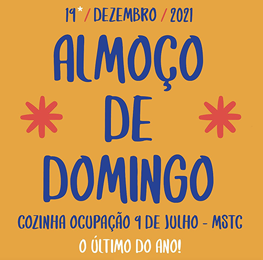
Yellow square announcing Sunday Lunch at the Occupation's Kitchen

Women sustain Care | Care Sustains Life | Life Sustains Economy | Who takes care of women?  | Not one less1 | Together | Sunday lunch

1Nenhuna a menos literally translates as “not one woman less” or “ni una menos” in Spanish - a famous feminist slogan in Latin America that emerged in Argentina as a response to increasing gender-based violence.

Snippet - CSW69 - What Can Feminist Movements Learn - EN

What Can Feminist Movements Today Learn from Beijing 1995?

✉️ By registration only. Register here 

📅 Wednesday, March 12, 2025
🕒 6.30–8:00pm EST

🏢 Church Center of the United Nations, 777 United Nations Plaza, New York, NY 10017

🎙️Co-facilitated by: Inna Michaeli, Co-Executive Director

Organizer: Jass, Gender at Work, and Count Me In! Consortium

2013: el sexto Diálogo de Alto Nivel revisa el progreso de los ODM

  • El Sexto Diálogo de Alto Nivel sobre la Financiación para el Desarrollo, que tuvo lugar el 7 y 8 de octubre de 2013, se centró en analizar los progresos hacia los ODM e identificar las brechas a ser abordadas en las conversaciones acerca del nuevo marco para el desarrollo.
  • Durante la sesión, el Grupo de Trabajo sobre el desfase en el logro de los ODM presentó un informe en el que hizo referencia al fracaso en alcanzar el ODM 8 (Alianza mundial para el desarrollo) como un factor decisivo que explicaba los obstáculos para el logro de los demás ODM. Ese informe demostró que en el nuevo marco para el desarrollo post-2015 se debía prestar más atención a crear alianzas globales fuertes que garantizaran compromisos vinculantes.

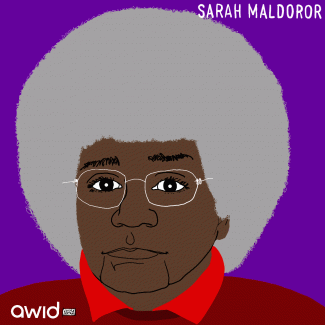
Sarah Maldoror

“I’m no adherent to the concept of the ‘Third World’. I make films so that people - no matter what race or color they are - can understand them. For me there are only exploiters and the exploited, that’s all. To make a film means to take a position.” - Sarah Maldoror 

Sarah Maldoror, a French filmmaker of West Indies descent, was a pioneer of Pan-African cinema. At the core of her work, she placed political concerns along with her longstanding involvement in decolonization movements.

Her groundbreaking film and “revolutionary picture” Sambizanga (1972) follows Angolan militants’ anti-colonial liberation struggle, as well as captures a woman’s perspective in a historical moment she finds herself in. 

“For many African filmmakers, cinema is a revolutionary tool, a political education to raise consciousness. It is inscribed in the evolution of a Third Cinema striving to decolonize thought and advocate radical changes in society.” - Sarah Maldoror

Throughout her career, Sarah - together with a number of African and Caribbean artists - co-founded (1956) the first Black theatre troupe in France. She made around 40 films, comprising important documentaries that amplify the lives and work of black artists, including her friend and poet Aimé Césaire who wrote to her: 

“To Sarah Maldo
who, a camera in hand,
fights oppression, alienation
and flies in the face
of human bullshit.”

Sarah was also committed to giving African women more ownership of the filmmaking process. In an interview, she pointed out: 

"African women must be everywhere. They must be in the images, behind the camera, in the editing room and involved in every stage of the making of a film. They must be the ones to talk about their problems." 

Sarah left an incredibly powerful legacy to be carried forward. 

Born 19 July 1929, Sarah passed away on 13 April 2020 from complications of the coronavirus.


Watch Sambizanga and read a film review in a 1973 New York Times article
 

Snippet FEA LINES OF ACTION (ES)

¿Cuál es su línea de trabajo?
Illustration of a hand with a pencil writing on white paper

Derechos humanos y etnico-territoriales

Asegurar la defensa de los derechos humanos y los derechos de la Naturaleza a través de la construcción de alianzas con actores y organizaciones locales, nacionales, regionales y globales.

A person holding a plant in a pink pot in their hands

Desarrollo Sostenible

Garantizar que todas las actividades económicas, culturales y ambientales contribuyan al desarrollo sostenible, la seguridad alimentaria y la generación de ingresos, respetando la libre determinación y el autogobierno de las comunidades afrodescendientes.

Three women sitting next to each other

Educación y formación

Capacitar y empoderar mujeres para que defiendan sus derechos en diferentes espacios políticos, sociales y económicos.

¡Para obtener más información, puedes ver más aquí!