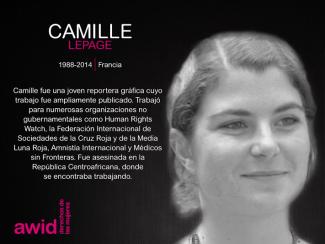
Camille Lepage
Over the past few years, a troubling new trend at the international human rights level is being observed, where discourses on ‘protecting the family’ are being employed to defend violations committed against family members, to bolster and justify impunity, and to restrict equal rights within and to family life.
The campaign to "Protect the Family" is driven by ultra-conservative efforts to impose "traditional" and patriarchal interpretations of the family, and to move rights out of the hands of family members and into the institution of ‘the family’.
Since 2014, a group of states have been operating as a bloc in human rights spaces under the name “Group of Friends of the Family”, and resolutions on “Protection of the Family” have been successfully passed every year since 2014.
This agenda has spread beyond the Human Rights Council. We have seen regressive language on “the family” being introduced at the Commission on the Status of Women, and attempts made to introduce it in negotiations on the Sustainable Development Goals.
AWID works with partners and allies to jointly resist “Protection of the Family” and other regressive agendas, and to uphold the universality of human rights.
In response to the increased influence of regressive actors in human rights spaces, AWID joined allies to form the Observatory on the Universality of Rights (OURs). OURs is a collaborative project that monitors, analyzes, and shares information on anti-rights initiatives like “Protection of the Family”.
Rights at Risk, the first OURs report, charts a map of the actors making up the global anti-rights lobby, identifies their key discourses and strategies, and the effect they are having on our human rights.
The report outlines “Protection of the Family” as an agenda that has fostered collaboration across a broad range of regressive actors at the UN. It describes it as: “a strategic framework that houses “multiple patriarchal and anti-rights positions, where the framework, in turn, aims to justify and institutionalize these positions.”
Etendez vos frontières. Les membres de l'AWID représentent de plus en plus une section transversale dynamique et variée de féministes travaillant, entre autres, sur les questions foncières, les droits des travailleures, les droits sexuels et l'autonomie corporelle. En devenant membre, vous pouvez relier vos luttes entre mouvements.
So'oalo était une fervente défenseure des droits humains, notamment en ce qui concerne les droits de la communauté LGBTQI dans le Pacifique.
Elle était membre de la Samoa Fa’afafine Association (SFA) et militait avec passion pour la reconnaissance d’un troisième genre dans le pays insulaire. Sous sa direction, la SFA a fait pression pour la reconnaissance du bien-fondé des droits de la communauté des fa’afafine et leur respect.
Elle a également été une pionnière dans l’articulation des liens entre les droits humains, l’exploitation des fa’afafines à Samoa et dans le Pacifique et la santé, le bien-être et la sécurité de la communauté LGBTQI.
Inspirante et visionnaire, on se souviendra de son dévouement admirable au service des droits de sa communauté.

Мы проанализируем ответы, чтобы получить представление о тенденциях, и представим результаты на 15-м Международном форуме AWID в Бангкоке, а также в режиме онлайн, в декабре 2024 года. Зарегистрируйтесь для участия в Форуме здесь!
¡Bienvenidxs a Crear | Résister | Transform: un festival para movimientos feministas!
AWID está comprometida con la creación de un espacio virtual que nos invite y desafíe a todxs a funcionar desde un lugar de valentía, curiosidad, generosidad y responsabilidad compartida.
Te invitamos a crear conjuntamente con nosotrxs espacios libres de acoso y violencia, donde todas las personas sean respetadas en su identidad y expresión de género, raza, capacidad, clase, religión, idioma, etnia, edad, ocupación, tipo de educación, sexualidad, tamaño corporal y apariencia física. Espacios donde reconozcamos las desigualdades que prevalecen en nuestro mundo, y nos esforcemos por transformarlas.
Esto significa escucharnos, comprendernos y vincularnos. Sentirnos cerca, a pesar de la virtualidad. Para eso, contaremos con interpretación y abriremos canales (como el chat y otras herramientas) para reaccionar y compartir. Para lograr escucharnos mejor, les invitamos a utilizar audífonos o auriculares durante la sesión. Si puedes hacerlo, te sugerimos cerrar tus correos electrónicos y cualquier otra posible distracción mientras estás en la conversación.
Celebremos los distintos saberes y las múltiples formas en que estos se expresan. Nos acercamos al espacio con curiosidad y apertura para aprender de otrxs y permitiéndonos desaprender y reaprender a partir del intercambio, sentando las posibilidades para la construcción colectiva de conocimiento.
Estamos comprometidxs con un enfoque holístico de la accesibilidad, conscientes de las diferentes necesidades físicas, mentales, de idioma y de seguridad. Queremos un espacio que acoja a gente de contextos, creencias, capacidades y experiencias diversas. Seremos proactivxs, pero también te pedimos que nos comuniques tus necesidades, para que, dentro de nuestras posibilidades, nos ocupemos de satisfacerlas.
Asumimos compromisos individuales y colectivos de respetar la privacidad y contar con el consentimiento de otrxs para difundir imágenes o contenido generado durante la conversación.
Crear un ambiente más seguro, respetuoso y disfrutable para las conversaciones es responsabilidad de todxs.
Si notas que alguien se está comportando de forma discriminatoria u ofensiva, por favor, contacta a la persona de referencia que se indicará al comienzo de la sesión.
Cualquier participante que se exprese con lenguaje opresivo o imágenes ofensivas será eliminadx de la videoconferencia y no será admitidx nuevamente. No interactuaremos con esa persona de ninguna manera.
We strive for transparency, responsible use of our resources, fairness in our collaborations and accountability and integrity with our members, partners, funders and the movements with(in) which we work. We are committed to reflecting on our experiences, sharing our learnings openly, and striving to change our practices accordingly.
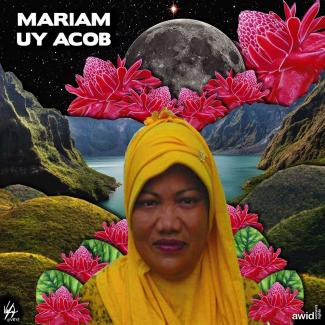
Mariam was a paralegal at the Kawagib Moro Human Rights Alliance.
Mariam was a staunch critic of militarization in Moro communities, and consistently denounced aerial bombardment and encampment. She had to seek sanctuary after exposing and calling out the injustices committed against Muslim communities in the Philippines.
She is believed to have been killed by suspected military agents because of her work as a WHRD. The assailants who killed Mariam waited for her, caught up with the vehicle she was using and shot her seven times.
"This community is a place for connections, to understand our individual fights as part of global struggles, and sometimes even dance! There aren’t places like this online where you can meet real grassroots activists from all over the world and build solidarity and sisterhood."
- Paz Romero, Argentina
Dada la situación global, nuestra Junta Directiva tomó la difícil decisión de cancelar el Foro que estaba programado en 2021, enTaipei.
Florence fue una activista por los derechos de las personas con discapacidad que trabajó con varias organizaciones de mujeres con discapacidad en Uganda.
También ocupó la Dirección del Distrito de Lira de la Asociación de Mujeres con Discapacidad, así como del foro de Consejeras Mujeres del Distrito de Lira. Formada como consejera para personas con discapacidad y para madres y padres de niñxs con discapacidad, apoyó muchos proyectos que reclamaban mayor representación de las personas con discapacidad.
Murió en un accidente de motocicleta.

Se rassembler à l’échelle mondiale, en tant qu’individus et mouvements, nous permet de générer une force considérable. Rejoignez-nous à Bangkok, en Thaïlande et en ligne en décembre 2024.
Anti-rights actors adopt a double strategy. As well as launching outright attacks on the multilateral system, anti-rights actors also undermine human rights from within. Anti-rights actors engage with the aim of co-opting processes, entrenching regressive norms, and undermining accountability.
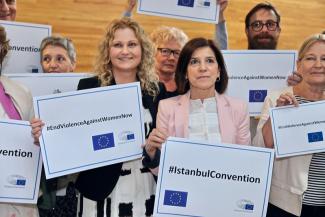
Anti-rights actors’ engagement in international human rights spaces has a principal purpose: to undermine the system and its ability to respect, protect and fulfill human rights for all people, and to hold member states accountable for violations. Some anti-rights tactics operate from outside the UN and include delegitimization and political pressure to defund the UN, or to withdraw from international human rights agreements. In recent years, anti-rights actors have also gained increasing influence inside the UN. Their inside tactics include training of delegates, distortion of human rights frameworks, watering down human rights agreements, infiltrating NGO committees, applying for ECOSOC status under neutral names, infiltrating youth spaces, and lobbying to place anti-rights actors in key positions.
L’AWID propose la Boîte à outils « Où est l’argent pour les droits des femmes? » (« Where Is The Money for Women's Rights? », WITM) pour soutenir les individus et les organisations qui souhaitent mener leur propre recherche sur les tendances de financement en adaptant la méthodologie de recherche de l’AWID à une région, une question ou une population spécifique.
La Boîte à outils WITM de l’AWID est le produit de dix ans de recherches. La rméthologie WITM de l’AWID proposent une démonstration politique et pratique des ressources et des étapes qu’exige une solide recherche-action.
L’équipe 'Ressources des mouvements féministes' offre également un soutien technique et politique, avant et pendant le processus de recherche. Parcourez la boîte à outils et contactez fundher@awid.org si vous souhaitez plus de renseignements.