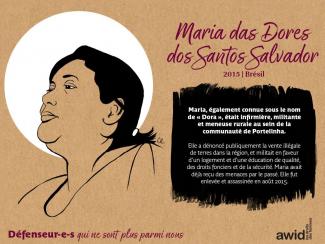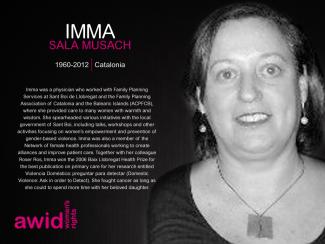
Imma Sala
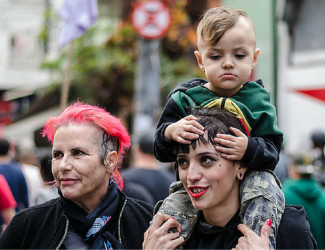
Over the past few years, a troubling new trend at the international human rights level is being observed, where discourses on ‘protecting the family’ are being employed to defend violations committed against family members, to bolster and justify impunity, and to restrict equal rights within and to family life.
The campaign to "Protect the Family" is driven by ultra-conservative efforts to impose "traditional" and patriarchal interpretations of the family, and to move rights out of the hands of family members and into the institution of ‘the family’.
Since 2014, a group of states have been operating as a bloc in human rights spaces under the name “Group of Friends of the Family”, and resolutions on “Protection of the Family” have been successfully passed every year since 2014.
This agenda has spread beyond the Human Rights Council. We have seen regressive language on “the family” being introduced at the Commission on the Status of Women, and attempts made to introduce it in negotiations on the Sustainable Development Goals.
AWID works with partners and allies to jointly resist “Protection of the Family” and other regressive agendas, and to uphold the universality of human rights.
In response to the increased influence of regressive actors in human rights spaces, AWID joined allies to form the Observatory on the Universality of Rights (OURs). OURs is a collaborative project that monitors, analyzes, and shares information on anti-rights initiatives like “Protection of the Family”.
Rights at Risk, the first OURs report, charts a map of the actors making up the global anti-rights lobby, identifies their key discourses and strategies, and the effect they are having on our human rights.
The report outlines “Protection of the Family” as an agenda that has fostered collaboration across a broad range of regressive actors at the UN. It describes it as: “a strategic framework that houses “multiple patriarchal and anti-rights positions, where the framework, in turn, aims to justify and institutionalize these positions.”
เราขอเชิญชวนให้คุณติดต่อเราเพื่อสามารถสร้างการมีส่วนร่วมอย่างมีความหมายต่อฟอรัม
¿Quieres inspirarte con las estrategias de resistencia creativas de feministas de todo el mundo? ¿Quieres descubrir iniciativas feministas que nos muestran las maneras en que todxs podemos vivir en un mundo más justo? ¿Quieres aprender sobre modelos de cuidado y sanación feministas para aplicarlos en tu propia comunidad?¿Eso que escuchamos es un estruendoso sí? ¡SÍ!
Entonces explora Crear | Résister | Transform: un festival de movimientos feministas. Este festival se llevó a cabo en línea durante todo el mes de septiembre de 2021 en todas las plataformas de AWID, y ahora puedes experimentarlo en tu propio tiempo.
Las sesiones a continuación son para ti y todas lxs increíbles activistas feministas y por la justicia social que conoces. Unámonos para compartir nuestras estrategias de resistencia, co-crear magia feminista y transformar este mundo juntxs.
Lxs expositorxs participaron en su idioma de preferencia y en AWID incluimos subtítulos en los videos para tu accesibilidad.
La Conférence de Monterrey sur le financement du développement a marqué le début des discussions sur les questions relatives au financement du développement.
Pour en savoir plus sur les six axes de Monterrey et sur les mécanismes de suivi de la conférence : Gender Issues and Concerns in Financing for Development (en anglais), par Maria Floro, Nilufer Çagatay, John Willoughby et Korkut Ertürk (INSTRAW, 2004).
จากงบประมาณในส่วนของการสร้างการเข้าถึงของเราจะสามารถมีทุนจำกัดจำนวนสำหรับสนับสนุนการเข้าร่วมของนักกิจกรรมที่ไม่สามารถหาทางอื่นๆได้และอีกทั้งยังไม่มีความสัมพัยธ์กับแหล่งทุนที่สามารถสนับสนุนการเข้าร่วมของพวกเขา โดยหากคุณมีหนทางเป็นไปได้อื่นๆกรุณาลองติดต่อประสานงานดูก่อน ส่วนพวกเราจะพยายามอย่างสุดความสามารถที่จะจัดให้มีทุนสนับสนุนให้มากที่สุดเท่าที่จะมากได้ และเราจะแจ้งรายละเอียดของกระบวนการสมัครเพื่อรับทุนนี้ในช่วงต้นปี 2567
Related Content
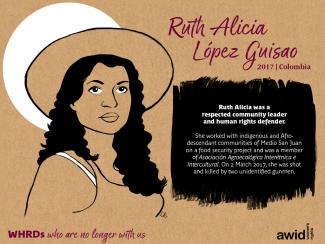
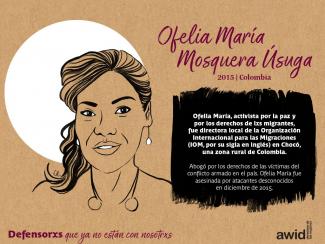
Front Line Defenders: Ruth Alicia López Guisao killed
HRD Memorial: Ruth Alicia Lopez Guisao
The theme of the Fourth High-level Dialogue on Financing for Development, 23-24 March 2010: The Monterrey Consensus and Doha Declaration on Financing for Development: status of implementation and tasks ahead. It had four round tables on: the reform of the international monetary and financial systems; impact of the financial crisis on foreign direct investments; international trade and private flows; and the role of financial and technical development cooperation, including innovative sources of development finance, in leveraging the mobilization of domestic and international financial resources for development.
There was also the informal interactive dialogue involving various stakeholders that focused on the link between financing for development and achieving the Millennium Development Goals.
กรุณาสมัครใหม่อีกครั้ง โลกได้เปลี่ยนไปจากปี 2564 และเราขอเชิญชวนให้คุณเสนอกิจกรรมที่ถ่ายทอดความจริงและสิ่งที่คุณให้ความสำคัญในปัจจุบัน
Difusión del Borrador Cero del Documento Final
Source: Centro de população de rua da cidade de São Paulo
 |
Abandoned / Unoccupied Buildings |
 |
||
Population living in the streets |
||||
|
31,000 |
40.000 |