Related content
The Guardian: Kate Millett Obituary
New York Times: Kate Millett, Ground-Breaking Feminist Writer, Is Dead at 82
The New Yorker: A Last Interview with Kate Millett
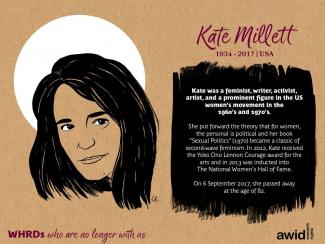
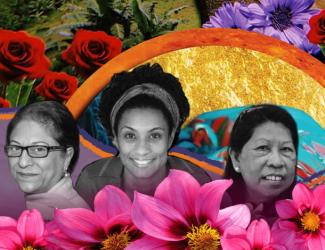
AWID’s Tribute is an art exhibition honouring feminists, women’s rights and social justice activists from around the world who are no longer with us.
This year’s tribute tells stories and shares narratives about those who co-created feminist realities, have offered visions of alternatives to systems and actors that oppress us, and have proposed new ways of organising, mobilising, fighting, working, living, and learning.
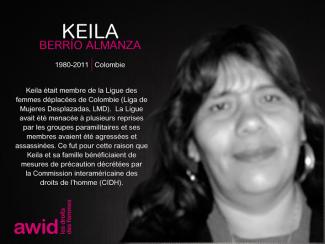
49 new portraits of feminists and Women Human Rights Defenders (WHRDs) are added to the gallery. While many of those we honour have passed away due to old age or illness, too many have been killed as a result of their work and who they are.
This increasing violence (by states, corporations, organized crime, unknown gunmen...) is not only aimed at individual activists but at our joint work and feminist realities.
The portraits of the 2020 edition are designed by award winning illustrator and animator, Louisa Bertman.
AWID would like to thank the families and organizations who shared their personal stories and contributed to this memorial. We join them in continuing the remarkable work of these activists and WHRDs and forging efforts to ensure justice is achieved in cases that remain in impunity.
“They tried to bury us. They didn’t know we were seeds.” - Mexican Proverb
It took shape with a physical exhibit of portraits and biographies of feminists and activists who passed away at AWID’s 12th International Forum, in Turkey. It now lives as an online gallery, updated every year.
To date, 467 feminists and WHRDs are featured.
Vous pouvez suivre le travail de ces collectifs sur les réseaux sociaux et sites internet suivant:
Related content
The Guardian: Kate Millett Obituary
New York Times: Kate Millett, Ground-Breaking Feminist Writer, Is Dead at 82
The New Yorker: A Last Interview with Kate Millett

Чтобы поделиться опытом финансирования в вашей организации

As feminist and labour movements, together in solidarity, we articulate the following points as a collective vision for care economies with domestic workers rights at the centre. We call on feminist and social movements to join the call to rethink the economy with care at its centre recognising the rights, agency and leadership of domestic worker movements.
Domestic and care work is in the limelight after the COVID-19 global pandemic as it provided the means to carry the world through multiple intersecting crises at the global scale. The World Bank, the International Monetary Fund, and other multilateral institutions also acknowledge the importance of care and domestic work in sustaining the world’s economy. However, it is our analysis that this recognition most often takes an instrumentalist approach (i.e. care work sustains the ‘productive’ economy) focused on profiteering from care work without recognizing care as a human right and public good, or providing recognition and rights to the workers undertaking the bulk of this labour.

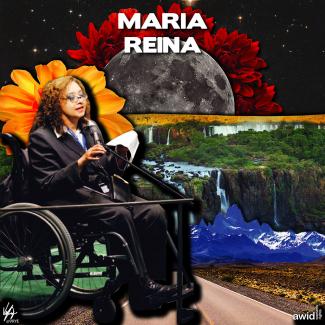
Representó al Consorcio Internacional sobre Discapacidad y Desarrollo (IDDC por su sigla en inglés) durante la negociación de la Convención sobre los Derechos de las Personas con Discapacidad (2001-2006). Su trabajo estaba dedicado a la implementación del objetivo de la Convención: el goce pleno de los derechos humanos universales por, para y con las personas con discapacidades, en pos de un mundo inclusivo, accesible y sostenible.
En sus propias palabras, su liderazgo consistía en «servir a la comunidad de personas con discapacidad, comenzando por aquellas pequeñas tareas que otrxs pueden no querer realizar».
Falleció el 27 de octubre de 2017 en su ciudad natal de Rosario, Argentina.
En esta nota puede leerse más sobre María Verónica Reina, en sus propias palabras.


O inquérito está disponível em árabe, inglês, francês, português, russo e espanhol!

Notre rapport annuel 2012 fournit les points saillants de notre travail durant l'année pour contribuer de manière hardie, créative et efficace à la promotion des droits des femmes et l'égalité de genre dans le monde entier.
Amusez-vous en regardant des vidéos, des photos et des histoires sur nos contributions !
L'enquête "Où est l'argent?" #WITM est maintenant en ligne ! Plongez dans l'enquête et partagez votre expérience du financement de votre organisation avec des féministes du monde entier.
En savoir plus et participer à l’enquête!
Les mouvements féministes, en faveur des droits des femmes et leurs allié-e-s du monde entier s’opposent au pouvoir et imaginent de nouvelles politiques de libération. Des ressources économiques et politiques aux actes quotidiens de résistance et de survie, les contributions qui viennent nourrir ce travail revêtent de nombreuses formes.
L’initiative de l’AWID, Ressources des mouvements féministes (Resourcing Feminist Movements, RFM), met en lumière l’écosystème de financement actuel, qui va des modèles d’attribution des ressources auto-générée aux voies de financement officielles.
A travers nos recherches et analyses, nous examinons de quelles façons les pratiques de financement pourraient mieux servir nos mouvements. Nous faisons une étude critique des contradictions propres au “financement” de la transformation sociale, compte tenu notamment de la répression politique croissante, des programmes anti-droits et du pouvoir grandissant des entreprises. Mais surtout, nous élaborons des stratégies collectives en appui à des mouvements fleurissants, solides et résilients.
Créer et élargir les alternatives : Nous développons les pratiques de financement qui accordent une place prépondérante aux priorités des activistes et impliquons un large éventail de donateurs et d’activistes dans la création de nouveaux modèles dynamiques d’attribution de ressources en faveur des mouvements féministes, en particulier dans un contexte qui voit l’espace de participation de la société civile diminuer considérablement.
Enrichir nos connaissances : Nous explorons, échangeons et consolidons nos connaissances sur la façon dont les mouvements attirent, organisent et utilisent les ressources qui leur sont nécessaires pour entreprendre des changements significatifs.
Plaider : Nous travaillons en partenariat, comme avec le Count Me In! Consortium, afin d’influencer les programmes de financement et permettre aux mouvements féministes d’être en dialogue direct pour déplacer le pouvoir et l’argent.
NOUS SOMMES LA SOLUTION
We are the Solution
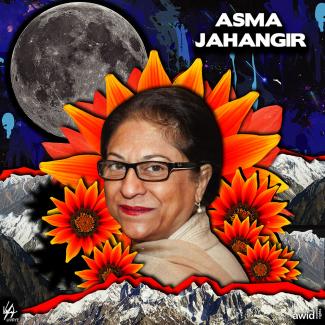
Asma était une militante pakistanaise des droits humains, une critique courageuse de l'ingérence de l'armée dans la politique et une défenseure acharnée de la primauté du droit.
Elle a été la présidente fondatrice de la Commission des droits de l'homme du Pakistan, un groupe indépendant ainsi qu’administratrice de l'International Crisis Group. Elle a remporté des prix internationaux et a été rapporteuse des Nations Unies sur les droits de l'homme et les exécutions extrajudiciaires.
Ses collègues et ami-e-s de l’AWID se souviennent d'elle avec affection
« Grâce à sa vie, Asma a réécrit l'histoire que beaucoup d'entre nous ont racontée en tant que femmes. Asma a changé le monde. Elle l'a changé au Pakistan et elle l'a changé dans notre imaginaire. »
استطلاع "اين المال" (أين التمويل للتنظيمات النسوية) هو ركيزة أساسية للنسخة الثالثة لأبحاثنا الموجهة نحو العمل. سيتم بحث وتوسيع نتائج الاستطلاع من خلال المحادثات العميقة مع النشطاء/ الناشطات والممولين/ات وسيتم مقارنة النتائج مع تحليلات وبحوث أخرى عن وضع التمويل للحركات النسوية وحركات العدالة الجندرية.
سيتم نشر تقرير أين المال للتنظيمات النسوية في العام  2026.
2026.
لمعرفة المزيد عن كيف تسلّط جمعية حقوق المرأة في التنمية الضوء على على تمويل التنظيمات النسوية أو ضدها، انظروا إلى قصة "أين المال" وتقارير سابقة هنا
We have contributed to some major victories, like expanding the women’s rights funding landscape with ground-breaking, far-reaching research and advocacy. At the same time, we have experienced some devastating setbacks, including the assassination of Women Human Rights Defenders (WHRDs) like Berta Cacares of Honduras, Gauri Lankesh of India and Marielle Franco of Brazil, as well as the rise of anti-rights mobilizing in human rights spaces.
Five years ago, we committed to our movement-building role by producing knowledge on anti-rights movement trends, as well as on issues that feminists often engage with less, like illicit financial flows. We advocated side by side with our movement partners, strengthening young feminist and inter-generational activism, and expanding the holistic protection of WHRDs. As we close out the strategic plan, we are proud of our accomplishments and our growth as an organization. We end 2017 with renewed commitment, insights and learning for the continued struggle ahead!
This is Mariama Sonko, an inspiring small-scale rural farmer, eco-feminist and a woman human rights defender.
She lives in Niaguiss, a town in the southwest of Senegal. Growing up in a family and community of rural farmers, she witnessed the essential role of women in food production and seed preservation from a very early age, while also being immersed in the rhythms and working of the land. Mariama has been defending local agricultural knowledge and peasant practices since the 1990s. As a mother of five children, the food she grows herself is the main source of sustenance for her family.
She is currently the president of “Nous Sommes la Solution'' and is involved in promoting agroecological practices and family farming, encouraging food sovereignty, biodiversity and farmer seed preservation, and demanding equitable access to resources and land for women across West Africa.
Source: AWID’s Feminist Realities Festival Crear | Résister | Transform - Day 2/ 2ème jour/ 2º día
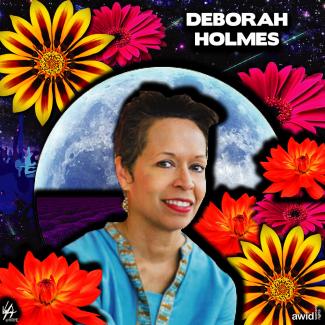
At the time of her death, following a short but aggressive battle with cancer, Deborah was the Chief Communication and Engagement Officer at the Women’s Funding Network (WFN).
Deborah also worked for the Global Fund for Women from 2008 to 2017. Deborah was extremely loved and respected by board, staff, and partners of Global Fund for Women.
Kavita Ramdas, former CEO of the Global Fund for Women aptly noted that Deborah was “a small package exploding with warmth, generosity, intelligence, style, and a passionate commitment to fusing beauty with justice. She understood the power of story. The power of women’s voice. The power of lived experience. The power of rising from the ashes and telling others it was possible. And, still we rise.”
Musimbi Kanyoro, the present CEO of the Global Fund for Women, added, “We have lost a sister and her life illuminates values that unite and inspire us all. As we all come together to mourn Deborah’s passing, let us remember and celebrate her remarkable, bold, and passionate life.”
Existem várias razões pelas quais a sua resposta ao inquérito WITM é importante. Por exemplo, tem a oportunidade de partilhar a sua experiência vivida com a mobilização de financiamento para apoiar a sua organização; de reivindicar o seu poder como especialista sobre como o dinheiro circula e os bolsos em que entra; e de contribuir para a defesa coletiva e consistente junto de financiadores para mover mais recursos de maior qualidade. Ao longo das últimas duas décadas, o inquérito WITM da AWID tem-se revelado um recurso fundamental para ativistas e financiadores. Convidamo-lo a juntar-se a nós na sua terceira edição para destacar o estado efetivo do financiamento, desafiar soluções falsas e apontar a forma como o financiamento precisa de mudar para que os movimentos prosperem e enfrentem os desafios complexos do nosso tempo.