Left
Half
Left

Special Focus

AWID is an international, feminist, membership organisation committed to achieving gender equality, sustainable development and women’s human rights

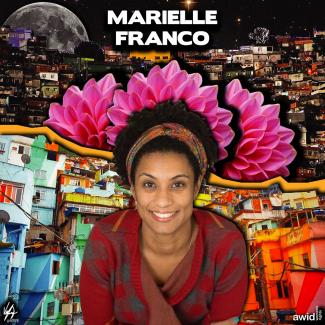
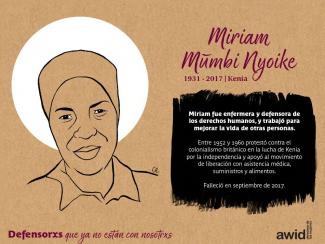
Memory as Resistance: A Tribute to WHRDs no longer with us

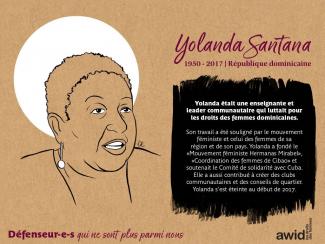
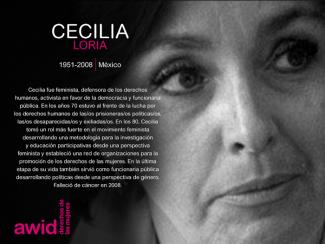
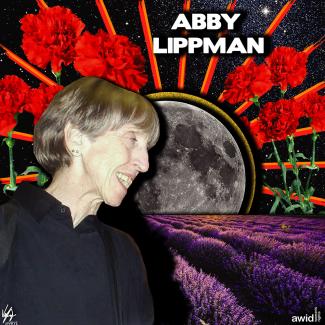
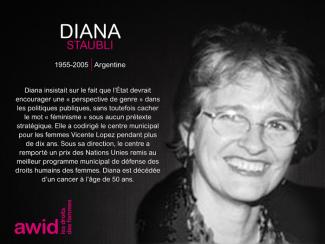
AWID’s Tribute is an art exhibition honouring feminists, women’s rights and social justice activists from around the world who are no longer with us. 


In 2020, we are taking a turn

This year’s tribute tells stories and shares narratives about those who co-created feminist realities, have offered visions of alternatives to systems and actors that oppress us, and have proposed new ways of organising, mobilising, fighting, working, living, and learning.

49 new portraits of feminists and Women Human Rights Defenders (WHRDs) are added to the gallery. While many of those we honour have passed away due to old age or illness, too many have been killed as a result of their work and who they are.

This increasing violence (by states, corporations, organized crime, unknown gunmen...) is not only aimed at individual activists but at our joint work and feminist realities.

The stories of activists we honour keep their legacy alive and carry their inspiration forward into our movements’ future work.

Visit the online exhibit

The portraits of the 2020 edition are designed by award winning illustrator and animator, Louisa Bertman

AWID would like to thank the families and organizations who shared their personal stories and contributed to this memorial. We join them in continuing the remarkable work of these activists and WHRDs and forging efforts to ensure justice is achieved in cases that remain in impunity.

“They tried to bury us. They didn’t know we were seeds.” - Mexican Proverb 


The Tribute was first launched in 2012

It took shape with a physical exhibit of portraits and biographies of feminists and activists who passed away at AWID’s 12th International Forum, in Turkey. It now lives as an online gallery, updated every year.

To date, 467 feminists and WHRDs are featured.

Visit the online exhibit

Related Content

Snippet - if the positions have closed

If the positions advertised have closed, or just don’t match your area of interest and expertise, we suggest the following resources for your job search.

Sarah Maldoror

“I’m no adherent to the concept of the ‘Third World’. I make films so that people - no matter what race or color they are - can understand them. For me there are only exploiters and the exploited, that’s all. To make a film means to take a position.” - Sarah Maldoror 

Sarah Maldoror, a French filmmaker of West Indies descent, was a pioneer of Pan-African cinema. At the core of her work, she placed political concerns along with her longstanding involvement in decolonization movements.

Her groundbreaking film and “revolutionary picture” Sambizanga (1972) follows Angolan militants’ anti-colonial liberation struggle, as well as captures a woman’s perspective in a historical moment she finds herself in. 

“For many African filmmakers, cinema is a revolutionary tool, a political education to raise consciousness. It is inscribed in the evolution of a Third Cinema striving to decolonize thought and advocate radical changes in society.” - Sarah Maldoror

Throughout her career, Sarah - together with a number of African and Caribbean artists - co-founded (1956) the first Black theatre troupe in France. She made around 40 films, comprising important documentaries that amplify the lives and work of black artists, including her friend and poet Aimé Césaire who wrote to her: 

“To Sarah Maldo
who, a camera in hand,
fights oppression, alienation
and flies in the face
of human bullshit.”

Sarah was also committed to giving African women more ownership of the filmmaking process. In an interview, she pointed out: 

"African women must be everywhere. They must be in the images, behind the camera, in the editing room and involved in every stage of the making of a film. They must be the ones to talk about their problems." 

Sarah left an incredibly powerful legacy to be carried forward. 

Born 19 July 1929, Sarah passed away on 13 April 2020 from complications of the coronavirus.


Watch Sambizanga and read a film review in a 1973 New York Times article
 

What will be different about this Forum?

We have always worked towards ensuring that our Forums are co-developed with partners, movements and our priority constituencies.

For our upcoming Forum, we aim to deepen and strengthen that spirit and practice of co-creation and collaboration. We also recognize the need to improve the balance between the inclusion of many voices and experiences with room for participants and staff to breathe, take pause and enjoy some downtime.

This Forum will be different in the following ways: 

  • We will have far less organized Forum activities because we want people to have time to engage, experience, process, talk to each other, etc.  This is key to communicate: you can come to the Forum, be very engaged and active and not facilitate any organized activity (or “session”).
  • We will have Open Spaces - at least one whole afternoon without any organized activities - but also physical spaces available throughout the Forum for people to self-organize meetings, etc.
  • We have a Content and Methodology Committee made up of feminists from different regions with expertise on participatory methodologies to support us and all those leading activities at the Forum to use creative and engaging  formats for the Forum activities. 


CFA 2023 - Themes - thai

ธีมหัวข้อของกิจกรรม 

เรายินดีรับข้อเสนอกิจกรรมจากหลากหลายสาขาที่เชื่อมโยงกับแนวคิดสตรีนิยมและความยุติธรรมทางเพศ ในแบบฟอร์มใบสมัครนั้น ท่านจะสามารถทำเครื่องหมายเลือกประเด็นหลักที่เหมาะกับกิจกรรมของท่านได้ มากกว่าหนึ่งหัวข้อ

  • Free Bodies, Free Spirits: ปลดปล่อยร่างกายและจิตวิญญาณให้เป็นอิสระ: เป็นอิสระทาง ร่างกาย เพศวิถีและเพศสภาพ สิทธิและอนามัยการเจริญพันธุ์ การเป็นอิสระจากความรุนแรง ที่มาจากอคติทางเพศวิถี เสรีภาพที่จะใช้ชีวิตอย่างปลอดภัย ความพึงพอใจและ ความสุขในร่างกาย อัตลักษณ์ และชุมชนที่หลากหลายของเรา และอื่นๆ อีกมากมาย
  • Resisting Anti-Right: การต่อต้านการละเมิดสิทธิ: นักสตรีนิยมเป็นผู้นำในการต่อต้าน การกดขี่ทุกรูปแบบทั้งในระดับท้องถิ่นและระดับโลก รวมถึงลัทธิฟาสซิสต์ ลัทธิรากฐานนิยม การยึดถือหลักความเชื่อถือเดิมอย่างเคร่งครัด และระบอบอำนาจนิยม เรามีอะไรมากมายที่จะ แลกเปลี่ยน แบ่งปันและวางแผนยุทธศาสตร์ร่วมกัน
  • Movements and Organizing: การเคลื่อนไหวและการจัดตั้ง: มาทำความรู้จัก งานเคลื่อนไหว ของกันและกัน จากการค้นหาเส้นทางของอำนาจ (ภายในและภายนอก) ไปจนถึงยุทธศาสตร์ ในการปกป้อง คุ้มครองเมื่อสตรีและนักปกป้องสิทธิมนุษยชนที่มีความหลากหลายทางเพศ เผชิญกับ การกดขี่ การสร้างพันธมิตรไปจนถึงรูปแบบการรวมตัวที่สร้างสรรค์และประสบความสำเร็จ มาเรียนรู้และสร้างแรงบันดาลใจซึ่งกันและกัน
  • Economic Justice and Feminist Economies: ความยุติธรรมทาง เศรษฐกิจ และ เศรษฐกิจสตรีนิยม: หัวข้อนี้ครอบคลุมความพยายามของนักสตรีนิยมทั้งหมด ในการเปลี่ยนแปลง เศรษฐกิจของพวกเรา โดยเริ่มจากการท้าทายรูปแบบที่ครอบงำ การปกป้องสิทธิ แรงงาน ไปจนถึงดำเนินชีวิตตามแนวปฏิบัติทางเศรษฐกิจของสตรีนิยม และทางเลือกในชีวิต ประจำวัน
  • Funding/Resourcing Activitism: การจัดสรรเงินทุน/การจัดหาทรัพยากร: การจัดหาเงินทุน ที่ยั่งยืนถือเป็นความท้าทายร่วมกันสำหรับขบวนการเคลื่อนไหวทั่วโลก มาร่วมแสวงหาแหล่งทุน สำหรับนักสตรีนิยมตั้งแต่การวิเคราะห์เชิงวิพากษ์ ไปจนถึงประสบการณ์ตรง และแนวทางปฏิบัติ ใน การหาทุนให้กับการทำงานของนักสตรีนิยม
  • Climate, Environment Justice, Land and Water: สภาพภูมิอากาศ ความยุติธรรม ด้านสิ่งแวดล้อมที่ดินและน้ำ: ความยุติธรรมทางนิเวศวิทยาและสภาพภูมิอากาศนั้นมีรากฐาน ที่หยั่งรากลึกในขบวนการเคลื่อนไหวและชุมชนต่างๆของเรา จากประเพณีโบราณไปจนถึงวิสัยทัศน์ แห่งอนาคต จากหมู่บ้านนิเวศวิทยาไปจนถึงการรณรงค์ยุติการขูดรีดทรัพยากรธรรมชาติและ ความยุติธรรมด้านสุขภาพ ขอเชิญท่านมาร่วมออกแบบกิจกรรมเต็มรูปแบบที่เกี่ยวข้องกับสภาพ ภูมิอากาศ และความยุติธรรมด้านสิ่งแวดล้อม
  • Militarization, War and Conflict: การทหาร สงคราม และความขัดแย้ง: เรามุ่งเน้นย้ำไปที่ การแสดงถึงบทบาทเด่นของนักสิทธิสตรีในการจัดการ การวิเคราะห์ และประสบการณ์ในการรับมือ กับวิกฤต การดำรงรักษาชีวิต ชุมชน และความยุติธรรมในช่วงเวลาที่เลวร้ายที่สุดของสงคราม และ ความขัดแย้งที่ยืดเยื้อ Decolonization: การให้เอกราชและปลดปล่อยอาณานิคม: การให้เอกราชและปลดปล่อย อาณานิคมเป็นศูนย์กลางของแต่ละประเด็นหลักของเรา แต่ก็เป็นประเด็นเดี่ยวด้วยเพราะเป็นวาระ สำคัญของสตรีนิยมในการต่อต้านและการสร้างโลกในสภาวะอาณานิคมและหลังอาณานิคม
  • Digital Realities and Feminist Tech: สภาวะจริงของโลกดิจิทัลและเทคโนโลยีสตรีนิยม: เรายินดีที่จะเปิดรับโอกาสในการเฉลิมฉลอง ความคิดริเริ่มของสตรีนิยมอันน่าทึ่ง ซึ่งเปลี่ยนแปลง โลกดิจิทัล การท้าทายโครงสร้างอำนาจทางเทคโนโลยีขนาดใหญ่ และทำให้เทคโนโลยีเป็นประชา- ธิปไตยอย่างแท้จริง โดยประชาชนและเพื่อประชาชน
  • Healing Justice: การเยียวยาความยุติธรรม: มีแนวทางที่หลากหลายอย่างไม่น่าเชื่อ ในการดูแล ร่วมกันและรักษาความยุติธรรมทั่วโลก ผู้เยียวยาและขบวนการเคลื่อนไหวกำลังเรียกร้องความ ยุติธรรม ในฐานะหลักการทางการเมือง ชุดแนวทางปฏิบัติ หนทางแห่งการเรียนรู้ วิถีชีวิต และอื่นๆ อีกมากมาย
  • และท่านสามารถเพิ่มประเด็นของท่านได้ที่นี่

Louise Malherbe | Title Snippet ES

Sobre lxs autorxs

Portrait of Louise Malherbe

Louise Malherbe es una comisaria y programadora cinematográfica y crítica de cine radicada en Berlín. Trabajó como programadora de cine para Metropolis Cinema Association de Beirut, y actualmente coordina el proyecto Reel Streams, el cual se orienta a apoyar la difusión del cine independiente en la región árabe. Es jefa de programación del Festival de Cine de Soura, un festival de cine queer enfocado en la región de Asia sudoccidental y Norte de África, escribe crítica de cine para Manifesto XXI y, recientemente, comenzó a desempeñarse como comisaria de cine y festivales para Cinema Akil.

Snippet - WCFM Registration status - EN

icon-registration status

Registration status:

Search for funders based on their requirements for groups to be registered.

María Digna Montero

María Digna Montero fue una garífuna (afrodescendiente e indígena) defensora de la tierra e integrante de la Organización Fraternal Negra Hondureña (OFRANEH), una organización de base que trabaja para proteger a las comunidades garífunas, sus derechos ancestrales, su cultura, sus recursos y su territorio.

María también enseñaba en la escuela local, e integraba el grupo de trabajo de Educación Bilingüe Intercultural de OFRANEH.

El 12 de octubre (Día de la Resistencia Indígena) de 2019, sujetos desconocidos le dispararon a María varias veces en el patio de su casa.

Fue una de las seis defensoras garífunas asesinadas entre septiembre y octubre de 2019 y, según OFRANEH, no hubo ninguna investigación de estos crímenes por parte de las autoridades. En un comunicado oficial, la organización también subrayó la conexión entre la violencia contra líderes garífunas y el incremento de las industrias extractivas que explotan los recursos naturales en sus comunidades, y definieron esta violencia como «parte de una estrategia de intimidación y de expulsión sistemática por parte del Estado de Honduras.»

«El recrudecimiento de la tensión y de los riesgos crecientes para la seguridad y derechos humanos de las lideresas en las comunidades y territorios ancestrales es producto del despojo, desplazamiento y criminalización hacia las comunidades, y de los mega proyectos extractivos que impulsa el Estado junto con las corporaciones nacionales e internacionales.» - Pronunciamiento de OFRANEH, 13 de octubre de 2019

How can I fund my participation in the AWID Forum? Many activists will not be able to afford the cost of the Forum – is AWID doing anything to provide assistance?

Please visit the "Funding ideas" page to get some ideas and inspiration for how you can fund your participation at the next Forum, including the limited support AWID will be able to provide.

Forum 2024 - FAQ - Registration FR

Inscription

Ishtar sur pellicule | Small Snippet FR

Ishtar sur pellicule

À l’âge de six ans, j’appris que mon grand-père avait un cinéma. Ma mère me raconta comment il l’avait ouvert au début des années 1960, quand elle avait également à peu près six ans. Elle se rappelait qu’il avait projeté La Mélodie du bonheur le soir de l’ouverture...

Lire plus

Illustration of film reel

Clone of Snippet - WITM About the survey - ES

Acerca de la encuesta

  • GLOBAL Y DIVERSA: Reflexiona acerca de las realidades de la dotación de recursos entre las organizaciones feministas a escala mundial y desglosada por regiones.
  • CONTEXTUALIZADA: Se centra en las voces, perspectivas y experiencias de los movimientos feministas en toda su riqueza, audacia y diversidad, en sus respectivos contextos.
  • DE CREACIÓN CONJUNTA: Desarrollada y puesta a prueba en consulta estrecha con lxs afiliadxs y movimientos aliados de AWID.
  • COMPLEMENTARIA: Contribuye a la evidencia disponible acerca del estado de la dotación de recursos para las organizaciones feministas, por los derechos de las mujeres y la justicia de género por parte de activistas, donantes feministas y aliadxs, y la difunde.
  • PLURILINGÜE: Disponible en árabe, español, francés, inglés, portugués y ruso.
  • CONFIDENCIAL: Damos prioridad a tu privacidad y anonimato. En ningún caso, AWID divulgará información acerca de una organización en particular ni exhibirá información que permita identificar a una organización por su ubicación o características. Los detalles de nuestra política de privacidad se encuentran disponibles aquí.
  • ACCESIBLE: Es accesible a personas con distinto grado de capacidades auditivas, de movilidad, visuales y cognitivas, y responderla toma aproximadamente 30 minutos.
  • REPLICABLE: Es susceptible de ser replicada por los movimientos en sus respectivos contextos; las herramientas y los conjuntos de datos de la encuesta estarán disponibles al público como forma de apoyar una mayor investigación y la promoción colectiva.

Nilcéa Freire

Nilcéa Freire était une activiste, politicienne et universitaire brésilienne. Ardente défenseuse des droits des femmes et des minorités sous-représentées dans le pays, sa vie et son travail ont été marqués par une longue histoire de luttes et de victoires.

"Nous devons, tout en résistant, continuer à chercher à progresser, et ce que nous pouvons accomplir actuellement, je pense que nous le devons à la fantastique organisation des jeunes femmes blanches, et surtout des femmes noires, dans toutes les capitales d’États et les grandes villes brésiliennes.” - Nilcéa Freire

En 1999, elle est devenue la première femme à occuper le poste de doyenne de l'université d'État de Rio de Janeiro. Elle y a dirigé la mise en œuvre de la première politique d'action positive pour les étudiant·e·s des écoles publiques, demandant au sein d’une école publique que des places soient spécifiquement réservées aux étudiant·e·s noir·e·s à faible revenu. Ce système a été adopté dans des dizaines d'autres universités publiques. 

Quelques années plus tard, Nilcéa dirigea le Secrétariat spécial des politiques pour les femmes sous le gouvernement de l'ancien président Luiz Inácio Lula da Silva. C’est à ce titre qu’elle conduisit la première Conférence nationale des femmes. Plus de 12 000 femmes de tout le pays y participèrent et le résultat de ce travail collectif fut incorporé dans le Plan national des politiques pour les femmes. 

Son engagement envers les femmes, les Afro-Brésilien·ne·s et les populations autochtones se reflète aussi fortement dans son travail de défense de leurs droits, qu’elle a mené dans le cadre des initiatives du bureau de la Fondation Ford du Brésil, dont elle était la directrice régionale. 

L’activiste féministe Manoela Miklos a dit de Nilcéa qu'elle était "une femme sans égal·e".

Nilcéa s’est éteinte à Rio de Janeiro à l'âge de 66 ans, le 29 décembre 2019, des suites d’un cancer.


"Je n’ai pas de mots face à l’annonce de la mort de notre chère Nilcéa Freire. Il m’est trop triste de savoir qu’elle est partie si tôt. Elle s’est toujours rangée du côté de celleux qui ne tolèrent pas les injustices de ce monde. Elle était la ministre des femmes, sans cesse engagée dans la cause féministe. Elle nous manquera beaucoup!” - Jandira Feghali, Federal Deputy

Retrouvez sur YouTube la féministe brésilienne Nilcea Freire et pourquoi il importe de se montrer solidaires avec le Brésil

Will there be pre-Forum convenings this time around?

We have been contacted by global and regional partners about some ideas for pre-Forum convenings and we will share more information about these ideas soon.

If you plan to organize a meeting before the Forum please let us know!

Contact us


Many beautiful things emerged from the 2016 Black Feminisms Forum (BFF) that was organized by an Advisory Group and funded by AWID. Some of the independent organizing that arose from the BFF include Black feminist organizing in Brazil. While we won’t have another BFF this year, we remain committed to sharing some key learnings with anyone interested in continuing work around Black feminist organizing.

Une personne ou une organisation peut-elle proposer plusieurs activités ?

En tant qu’organisatrice, une personne ou organisation peut proposer un maximum de 2 (deux) activités. Cela ne vous empêche pas d’être partenaires dans d’autres activités.

Ester Lopes | Snippet ES

Ester Lopes Portrait

Ester Lopes y escritora, y se dedica a la investigación centrada en el cuerpo, el género, la raza y las relaciones de clase. Es instructora de pilates y profesora de arte. Ester se graduó en Teatro Contemporáneo y Procesos Creativos (en FAINC) y en Danzas y Conciencia Corporal (en USCS). En el campo de la música, su especialización incluye el canto y la percusión populares. Se formó en Novos Brincantes con Flaira Ferro, Mateus Prado y Antonio Meira en el Instituto Brincante en 2015 y 2016.

WITM - Refreshed INFOGRAPHIC 3 EN

How feminists resource themselves

Feminist and women’s rights organizations don’t just rely on institutional funding, we resource ourselves. Our organizing is powered by passion, political commitment, solidarity and collective care.
These resources are self- generated and autonomous, and often invisible in our budgets, but they are the backbone of our organizing.

 Explore the data on autonomous resourcing

Cristina Bautista

“If we stay quiet they kill us and if we talk [they kill us] too. So, let’s talk.” -  Cristina Bautista, 2019

Cristina Bautista was a member of the Nasa Indigenous people’s community whose home is situated in the region of Northern Cauca, Colombia. She was part of their resistance as a leader, land rights defender, social worker, and governor of the Nasa Tacueyó Indigenous reserve. 

A tireless defender of the rights of Nasa people, Cristina spoke strongly and loudly against the violence directed at her community. In a speech before the United Nations, she called for the protection of Indigenous women’s lives and their involvement in different spheres of life. In 2017, Cristina was a UN Human Rights Office Indigenous fellow and she was awarded a grant from the UN Voluntary Fund for Indigenous Peoples in 2019. 

“I would like to bring to light the current situation of the Indigenous people in Colombia, the killing of Indigenous leaders, the repression of social protest. Instead of helping, the peace deal has increased war and the exploitation of sacred territories in Colombia… In the current situation, in almost all Indigenous nations as women we have been working to find a better future for our families. I don’t want more women from the countryside to continue living under these circumstances. We need opportunities for Indigenous women to participate in politics, in the economy, in society and in culture. Today gives me true strength, to see all these women here and that I am not alone.” - Cristina Bautista, 2019

On 29 October 2019, Cristina was murdered along with four unarmed Indigenous guards in an attack which was allegedly carried out by armed members of “Dagoberto Ramos”, a FARC dissident group. 

According to Global Witness, “the murder of community and social leaders has risen dramatically in Colombia in recent years.” 

“The Nasa community has repeatedly raised the alarm with the authorities about threats to their safety. Despite efforts by successive Colombian Governments, indigenous peoples continue to face great risks, especially religious or community leaders like Cristina Bautista.” - UN press briefing, 1 November 2019


Watch a speech by Cristina Bautista in August 2019 in which she denounced previous murders of Indigenous guards (Spanish only)