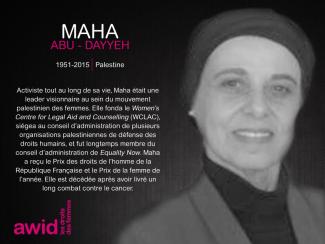
Maha Abu-Dayyeh
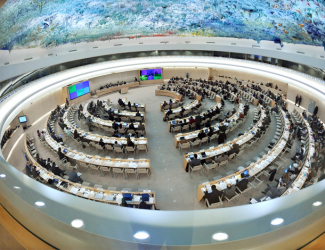
The Human Rights Council (HRC) is the key intergovernmental body within the United Nations system responsible for the promotion and protection of all human rights around the globe. It holds three regular sessions a year: in March, June and September. The Office of the UN High Commissioner for Human Rights (OHCHR) is the secretariat for the HRC.
Debating and passing resolutions on global human rights issues and human rights situations in particular countries
Examining complaints from victims of human rights violations or activist organizations on behalf of victims of human rights violations
Appointing independent experts (known as “Special Procedures”) to review human rights violations in specific countries and examine and further global human rights issues
Engaging in discussions with experts and governments on human rights issues
Assessing the human rights records of all UN Member States every four and a half years through the Universal Periodic Review
AWID works with feminist, progressive and human rights partners to share key knowledge, convene civil society dialogues and events, and influence negotiations and outcomes of the session.
The Sixth High-level Dialogue on Financing for Development, 7-8 October 2013 focused on reviewing the progress of MDG’s, and identifying gaps to be addressed in discussions on the new development framework.
A report by the MDG’s Gap Task Force launched during the session pointed to the failure to meet MDG 8 (Global Partnership for Development) as a major factor in the challenges to meeting the MDGs. The report showed that more focus should be given to developing stronger global partnerships that would ensure binding commitments for the new development framework post 2015.
1 |
Fornecer a membres da AWID, parceires do movimento e financiadores uma análise atualizada, robusta, baseada em fatos e orientada para a ação das realidades do financiamento de movimentos feministas e do estado atual do ecossistema do financiamento feminista. |
2 |
Identificar e demonstrar oportunidades para transferir mais recursos de maior qualidade para a organização feminista, expor soluções falsas e interromper tendências que fazem com que o financiamento não seja bem-sucedido e/ou se mova contra a justiça de género e objetivos feministas interseccionais. |
3 |
Articular visões, propostas e objetivos feministas para a justiça no financiamento. |
par Karina Ocampo
C’est dans un recoin caché du Chiapas, au Mexique, que nous sommes arrivées, femmes et dissidentes sexuelles, pour organiser nos actions. (...)
< illustration : « La muerte sale por el Oriente » [la mort se lève à l’Est], par Sonia Madrigal
The results of your research will also shape your advocacy – for example, your results will have revealed which sectors fund the most and which sectors you feel need donor education.
In this section
- Build your advocacy strategy
- Reach out to your network
- Adapt your strategy to the sector
1. Women’s rights organizations
2. Bilaterals and multilaterals
3. Private foundations
4. Women’s funds
5. Private sector and new donors
In the “Frame your research” section of this toolkit we recommend that you plot out what goals you hope to accomplish with your research. These goals will allow you to build an advocacy strategy once your research is complete.
An advocacy strategy is a plan of distributing your research results in a way that allows you to accomplish your goals, falling under the broader goal of advocating with key sectors to make positive changes for resources for women’s rights organizing.
Using the goals defined in your research framing:
From this list – as exhaustive as possible, chose which ones are the most efficient for achieve your goals. (See below for specific examples of audiences and advocacy methods)
Once you have a strategy, you can start the dissemination.
To disseminate your results, reach out first to the contacts through whom you distributed your survey, as well as to all your survey and interview participants.
Do not forget to state clearly a contact person and ask for a confirmation once they have published it.
On top of making you able to track who disseminated your report, it will help build stronger relationships within your network.
As an example, we present below a list of sectors AWID engages in advocacy.
Your list of advisory organizations and individuals will also be useful here. They can help you disseminate the report in different spaces, as well as introduce you to new organizations or advocacy spaces.
Sample objectives: Update women’s rights organizations on funding trends; brainstorm collaborative efforts for resource mobilization using research findings; influence how they approach resource mobilization
Examples of possible advocacy methods:
Offer seminars, learning cafés or other events throughout your region, in relevant languages, in order to update women’s rights organizations with the findings of your research.
If you can’t physically reach everyone in your region, think about setting-up a webinar and online presentations.
Present your findings at larger convenings, such as the Commission on the Status of Women (CSW).
Beyond your own organizations’ newsletters and website, write articles on different platforms that are frequented by your target audience.
Some examples: World Pulse, OpenDemocracy, feministing.
Sample Objective: Raising awareness about how funding is not meeting established commitments and how this sector needs to improve funding mechanisms to finance women’s rights organizing.
Identify which bilateral & multilaterals have the most influence on funding – this could include local embassies.
Examples of possible advocacy methods:
Sample Objective: Expand the quality and quantity of support for women’s rights organizations.
Examples of possible advocacy methods:
Sample Objective: Encourage them to continue their work at higher scale.
Examples of possible advocacy methods:
Sample Objective: Increase their understanding of the field and encourage coherence between their philanthropic interests and business practice.
Examples of possible advocacy methods:
Make sure to adapt your presentations, propositions and applications to each targeted group.
We strongly recommend referring to our Ready to Go worksheet to assess your own advancement.

• 1-2 years, depending on advocacy goals
• 1 or more communications person(s)
• List of spaces to advertise research
• List of blogs and online magazines where you can publish articles about your research finding
• List of advisors
• Your WITM information products
• Sample of Advocacy Plan
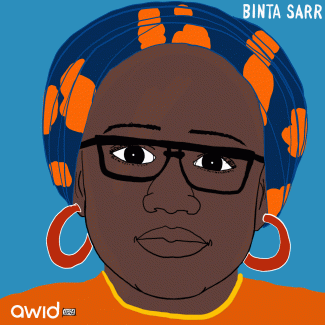
Binta Sarr was an activist for social, economic, cultural and political justice, and a hydraulic engineer in Senegal. After 13 years in civil service, she left this path to work with rural and marginalized women.
Out of this engagement grew the Association for the Advancement of Senegalese Women (APROFES), a grassroots movement and organization Binta founded in 1987. One of her main approaches was leadership training, relating not only to economic activities but also to women's rights and access to positions of decision-making.
“Grassroots populations must organize, mobilize, assume citizen control and demand democratic governance in all sectors of public space. The priority of social movements must go beyond the fight against poverty and must be focused on articulated and coherent development programs in line with human rights principles, while taking into account their needs and concerns both at the national and sub-regional levels and from a perspective of African and global integration.” - Binta Sarr
Rooted in Binta’s conviction that fundamental change in women’s status requires transformation in male attitudes, APROFES took an interdisciplinary approach, using radio, seminars and popular theatre, as well as providing innovative public education and cultural support for awareness-raising actions. Its popular theatre troupe performed original pieces on the caste system in Senegal, alcoholism, and conjugal violence. Binta and her team also looked at the crucial connection between the community and the broader world.
“For APROFES, it is a question of studying and taking into account the interactions between the micro and the macro, the local and the global and also, the different facets of development. From slavery to colonization, neocolonialism and the commodification of human development, most of the resources of Africa and the Third World (oil, gold, minerals and other natural resources) are still under the control of financial cartels and other multinationals that dominate this globalized world.” - Binta Sarr
Binta was one of the founding members of the female section of the Cultural and Sports Association Magg Daan. She received commendations from the Regional Governor and the Minister of Hydrology for her "devotion to rural people."
Born in 1954 in Guiguineo, a small rural town, Binta passed away in September 2019.
“The loss is immeasurable, the pain is heavy and deep but we will resist so as not to mourn Binta; we will not mourn Binta, we will keep the image of her broad smile in all circumstances, to resist and be inspired by her, maintain, consolidate and develop her work…” - Aprofes Facebook page, September 24, 2019
"Farewell Binta! We believe your immense heritage will be preserved." - Elimane FALL, president of ACS Magg-Daan
Sesiones adicionales de consulta sobre el Borrador del Documento Final
We would like to thank the Amar.ela collective of women feminists activists and creatives who made this series possible, and especially Natalia Mallo (the team’s octopus) for her support and accompaniment throughout this journey.
We also extend our deepest gratitude and admiration to all the collectives and people who participated in this project, and we thank them for sharing their time, wisdom, dreams and hopes with us. We thank you for making this world a more just, feminist and sustainable one.
We hope the rest of the world will be as inspired by their stories as we are.
Êtes-vous à la recherche d'un emploi? L'un des avantages de rejoindre la Communauté de l'AWID est d'avoir accès à notre tableau d'offres d'emploi organisé par la communauté. Vous aurez l'occasion d'explorer de nouvelles opportunités et vous aurez également la possibilité de partager des postes vacants et des appels à propositions avec tous les membres.
by Émilie Herbert-Pontonnier
Remember Esmeralda? The exotic "Gypsy" heroine born under the pen of the French literary giant Victor Hugo and popularized by Disney studios with their Hunchback of Notre Dame. (...)
< artwork: “Si las marronas lo permiten” by Nayare Soledad Otorongx Montes Gavilan
La economía solidaria (que incluye la economía cooperativa y la llamada economía del don) es un marco alternativo que adquiere formas diferentes según el contexto y está siempre abierto a los cambios.
Este marco de referencia se asienta sobre los siguientes principios:
En una economía solidaria, quienes producen participan en procesos económicos que guardan íntima relación con sus realidades, con la preservación del medio ambiente y la cooperación mutua.
Según la geógrafa feminista Yvonne Underhill-Sem, la economía del don es un sistema económico en el que los bienes y servicios circulan entre las personas sin que haya acuerdos explícitos acerca de su valor o de una reciprocidad esperada en el futuro.
Lo que hay detrás del otorgamiento de dones es una relación humana, una generación de buena voluntad y el acto de prestar atención a nutrir a toda la sociedad y no solo a lo que concierne a unx mismx y su familia: se trata del colectivo.
En el Pacífico, por ejemplo, esto se manifiesta en la recolección, preparación y procesamiento de recursos terrestres y marinos para tejer alfombras, abanicos, guirnaldas y objetos ceremoniales, así como en la cría de ganado y el almacenamiento de las cosechas estacionales.
Las mujeres tienen diversos incentivos para involucrarse en actividades económicas y que van desde satisfacer sus aspiraciones profesionales y ganar dinero para gozar de una vida confortable en el largo plazo hasta llegar a fin de mes, pagar deudas y huir del desgaste de una vida rutinaria.
Para acomodarse a los diferentes ambientes en los que operan las mujeres, el concepto de economía solidaria está en permanente desarrollo, discusión y debate.
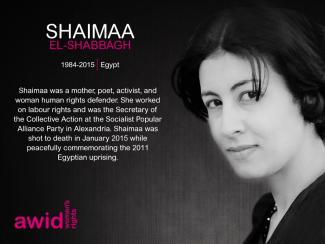
Laurie Carlos fue una actriz, directora, bailarina, dramaturga y poeta estadounidense, una artista y visionaria extraordinaria que tenía un poderoso don para hacer surgir el arte en otras personas.
«Laurie entraba en una habitación (cualquier habitación/todas las habitaciones ) con clarividencia arremolinada, con genio artístico, rigor corporizado, con un realismo feroz— y con la determinación de ser libre... y de liberar a otrxs. Una hacedora de magia. Una vidente. Alguien que cambiaba de formas. Laurie me dijo una vez que entraba en los cuerpos de las personas para descubrir qué necesitaban.» - Sharon Bridgforth
Combinaba estilos de actuación tales como gestos rítmicos y texto. Laurie era mentora de nuevxs actorxs, performers y escritorxs, y ayudaba a difundir su trabajo a través de «Naked Stages», una beca para artistas emergentes. Integraba el Penumbra Theater, con el que colaboraba mediante guiones que produjeran identificaciones, a fin de «traer más voces femeninas al teatro». Laurie integraba también Urban Bush Women, una compañía de danza contemporánea prestigiosa que relata historias sobre mujeres de la diáspora africana.
En 1976, como Lady in Blue, hizo su debut en Broadway, en la producción original galardonada del drama poético de Ntozake Shange For colored girls who have considered suicide / when the rainbow is enuf. La obra de Laurie incluye White Chocolate, The Cooking Show y Organdy Falsetto.
«Cuento las historias en el movimiento (las danzas internas que surgen espontáneamente, como en la vida), la música y el texto. Si escribo una línea, no necesariamente tiene que ser una línea que es hablada; puede ser una línea que es movida. Una línea a partir de la cual se crea música. El gesto se convierte en la oración. Gran parte de quienes somos como mujeres, como personas, tiene que ver con los gestos que hacemos entre nosotrxs todo el tiempo, y en particular, durante momentos emotivos. El gesto se convierte en una oración o una declaración de hechos. Si pongo en un guión “cuatro gestos”, eso no quiere decir que no estoy diciendo nada; significa que lo he abierto para que algo sea dicho físicamente.» - Laurie Carlos
Laurie nació y creció en la ciudad de Nueva York, trabajó y vivió en Twin Cities. Falleció el 29 de diciembre de 2016 a la edad de 67 años, luego de una batalla contra el cáncer de colon.
Tributos:
«Creo que esa era exactamente la intención de Laurie. Salvarnos. De la mediocridad. Del ego. De la pereza. De la producción de arte a medias. De estar paralizadxs por el miedo. Laurie quería ayudarnos a Brillar plenamente. En nuestra producción artística. En nuestras Vidas.» - Sharon Bridgforth para Pillsbury House Theatre
«Nadie que conociera a Laurie dejaría de definirla como una persona original. Era su propia persona. Era su propia persona, su propia artista; ponía en escena el mundo tal como lo conocía, con verdadero estilo y comprensión, y vivía su arte.» - Lou Bellamy, fundador de Penumbra Theater Company, para Star Tribune
Leer un tributo completo de Sharon Bridgforth (solo en ingles)
Rejoignez le Groupe de travail des femmes sur le financement du développement (site en anglais) pour en savoir plus sur leur contribution au processus sur le FdD (ou envoyez un email à l’adresse suivante : wwgonffd@gmail.com) ;
Rejoignez le Groupe des OSC sur le FdD (ou envoyez un email à l’adresse addiscoordinatinggroup@gmail.com pour demander à vous joindre au groupe Google suivant : https://groups.google.com/forum/#!forum/global-social-economy).
D'autres liens importants :
L'investissement à impact de genre est désormais considéré comme une solution contre les inégalités de genre. Et pourtant, comme le montre notre rapport, il fait partie du problème. Les institutions publiques et privées en font la promotion en tant que moyen pour parvenir à l'égalité de genre et pour accroître les ressources des femmes et des filles.
Au contraire, l’investissement à impact de genre constitue plutôt une nouvelle version de vies et de sociétés soumises à une même logique financière, qui continue de façonner les profondes inégalités de notre monde.
Avec ce rapport, l'AWID offre aux lecteurs·rices - féministes, défenseur·euse·s de la justice de genre et autres parties prenantes de l'investissement à impact de genre - une analyse critique et des preuves étayées pour comprendre l’investissement à impact de genre, ses récits et les implications économiques et politiques qu’il a pour les mouvements féministes.
por Siufung Law
«¡97…! 98… ¿dónde está 98? ¡98! ¡Por favor, vuelve a la formación!... ¡99! ¡100!...» La dama detrás del escenario le pedía incesantemente a cada atleta que formara una fila en el espacio húmedo, transpirado y abarrotado detrás de escena. (...)
< arte: «When They See Us» [Cuando nos ven], Lame Dilotsotlhe
La crise économique mondiale actuelle fournit la preuve évidente que les politiques économiques des trois dernières décennies n’ont pas fonctionné.
La dévastation que la crise a opéré sur les ménages les plus vulnérables dans les pays du Nord et du Sud nous rappelle que la formulation de politiques économiques et la réalisation des droits humains (économiques, sociaux, politiques, civils et culturels) ont été trop longtemps séparées l’une de l'autre. La politique économique et les droits humains ne doivent pas être des forces opposées, elles peuvent coexister en symbiose.
Les politiques macroéconomiques influencent le fonctionnement de l'économie dans son ensemble, elles façonnent la disponibilité et la distribution des ressources. Dans ce contexte, les politiques budgétaires et monétaires sont fondamentales.
La politique budgétaire se réfère à la fois aux recettes et aux dépenses publiques, et aux relations entre elles qui sont formulées dans le budget de l’État.
La politique monétaire regroupe les politiques sur les intérêts et les taux de change et la masse monétaire, ainsi que la réglementation du secteur financier.
Les politiques macroéconomiques sont mises en œuvre à l’aide d'instruments tels la fiscalité, les dépenses du gouvernement, et le contrôle entre la masse monétaire et le crédit.
Ces politiques affectent les taux d’intérêt et les taux de change qui ont une influence directe sur, entre autres choses, le niveau de l'emploi, l'accès à un crédit abordable et le marché du logement.
L'application d'un cadre de droits humains aux politiques macroéconomiques permet aux États de mieux se conformer à leur obligation de respecter, de protéger et de réaliser les droits économiques et sociaux. Les droits humains sont inscrits aux conventions internationales selon des normes universelles. Ces normes juridiques sont énoncées dans les traités des Nations Unies tels la Déclaration universelle des droits de l'homme (DUDH), le Pacte international relatif aux droits civils et politiques (PIDCP) et le Pacte international relatif aux droits économiques, sociaux et culturels (PIDESC).
L’Article 1 de la DUDH stipule que « Tous les êtres humains naissent libres et égaux en dignité et en droits ».
Bien que la DUDH ait été rédigée il y a près de six décennies, sa pertinence est toujours de mise. La plupart des principes énoncés répondent aux problèmes auxquels les gens continuent d’être confrontés à l'échelle mondiale. Les questions concernant les châtiments inhumains (art. 5), la discrimination (art. 7), la propriété (art. 17), un salaire égal pour un travail égal (art. 23/2), et l'accès à l'éducation (art. 26/1) sont des questions pertinentes tant pour les pays au Sud et au Nord de l'équateur.
En particulier, les États ont l'obligation, en vertu du droit international, de respecter, de protéger et de réaliser les droits humains, y compris les droits économiques et sociaux des personnes relevant de leur compétence. Cet aspect est particulièrement pertinent aujourd'hui, compte tenu de la crise financière. Aux États-Unis, la réglementation est faussée en faveur de certains intérêts. Dans le contexte du changement social et économique actuel, l'incapacité des gouvernements à étendre leur rôle de surveillance est un échec cuisant face à l’obligation de protéger les droits humains.
Les États devraient respecter les principes clés des droits humains pour réaliser les droits économiques et sociaux. Certains de ces principes ont des implications potentiellement importantes pour la gouvernance des institutions financières et des marchés. Ces possibilités ont été sous explorées jusqu’à présent.
Les droits économiques et sociaux ont un ancrage institutionnel et juridique concret. Les traités internationaux, les déclarations mondiales, les conventions, et, dans un certain nombre de cas, les constitutions nationales ont intégré certains aspects des cadres de droits économiques et sociaux, ce qui a permis l’élaboration d’infrastructures institutionnelles au niveau du droit national et international.
Certaines personnes avancent que l’idée d’une justice mondiale n’est peut-être pas un exercice utile en raison des complexités institutionnelles en jeu. Toutefois, les institutions mondiales ont sans aucun doute des incidences sur la justice sociale, à la fois positives et négatives.
Il est utile de déterminer ce que ces éléments des cadres alternatifs impliquent pour la gouvernance économique, en particulier ceux qui sont soutenus par les institutions existantes. Le cadre des droits économiques et sociaux est un bon exemple concret : ce cadre évolue constamment et les discussions et les délibérations en cours sont nécessaires afin d'aborder les sections sous développées et les lacunes potentielles.

Cette section est fondée sur le blog du CWGL intitulé Applying a Human Rights Framework to Macroeconomic Policies (L'application d'un cadre de droits humains aux politiques macroéconomiques, 2012).