Kalpana Chakma
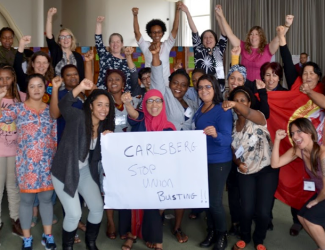
Women human rights defenders (WHRDs) worldwide defend their lands, livelihoods and communities from extractive industries and corporate power. They stand against powerful economic and political interests driving land theft, displacement of communities, loss of livelihoods, and environmental degradation.
Extractivism is an economic and political model of development that commodifies nature and prioritizes profit over human rights and the environment. Rooted in colonial history, it reinforces social and economic inequalities locally and globally. Often, Black, rural and Indigenous women are the most affected by extractivism, and are largely excluded from decision-making. Defying these patriarchal and neo-colonial forces, women rise in defense of rights, lands, people and nature.
WHRDs confronting extractive industries experience a range of risks, threats and violations, including criminalization, stigmatization, violence and intimidation. Their stories reveal a strong aspect of gendered and sexualized violence. Perpetrators include state and local authorities, corporations, police, military, paramilitary and private security forces, and at times their own communities.
AWID and the Women Human Rights Defenders International Coalition (WHRD-IC) are pleased to announce “Women Human Rights Defenders Confronting Extractivism and Corporate Power”; a cross-regional research project documenting the lived experiences of WHRDs from Asia, Africa and Latin America.
"Women Human Rights Defenders confronting extractive industries: an overview of critical risks and Human Rights obligations" is a policy report with a gender perspective. It analyses forms of violations and types of perpetrators, quotes relevant human rights obligations and includes policy recommendations to states, corporations, civil society and donors.
"Weaving resistance through action: Strategies of Women Human Rights Defenders confronting extractive industries" is a practical guide outlining creative and deliberate forms of action, successful tactics and inspiring stories of resistance.
The video “Defending people and planet: Women confronting extractive industries” puts courageous WHRDs from Africa, Asia, and Latin America in the spotlight. They share their struggles for land and life, and speak to the risks and challenges they face in their activism.
Challenging corporate power: Struggles for women’s rights, economic and gender justice is a research paper outlining the impacts of corporate power and offering insights into strategies of resistance.
AWID acknowledges with gratitude the invaluable input of every Woman Human Rights Defender who participated in this project. This project was made possible thanks to your willingness to generously and openly share your experiences and learnings. Your courage, creativity and resilience is an inspiration for us all. Thank you!
 |
Akosua Hanson es una artista activista radicada en Accra (Ghana). Su trabajo abarca la radio, televisión, medios impresos, teatro, cine, muestras de arte del cómic, instalaciones artísticas y la novela gráfica. El activismo de Akosua ha girado en torno al panafricanismo y el feminismo, con interés en la intersección del arte, la cultura pop y el activismo. Posee una maestría en Filosofía y Estudios Africanos con especialización en Género y Pensamiento Filosófico Africano. Akosua Hanson es la creadora de Moongirls, una serie de novelas gráficas que sigue las aventuras de cuatro superheroínas que luchan por un África libre de corrupción, neocolonialismo, fundamentalismos religiosos, cultura de la violación, homofobia y más. Trabaja como conductora radial en Y 107.9 FM en Ghana. |
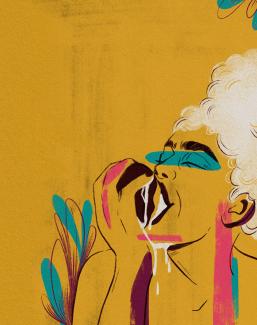
En estas placas, Moongirl Wadjet hace el amor practicando BDSM con un demonio de dos géneros. De las cuatro Moongirls, Wadjet es la sanadora y filósofa, el vehículo del Oráculo. Su propósito es iniciar un proceso científico y espiritual, un experimento que denomina «Luz de plenilunio» y mediante el cual recorre un arco de tiempo vibracional por sus recuerdos, sensaciones, emociones, visiones e imaginación. Es una forma de viajar en el tiempo con vibraciones para descubrir lo que ella denomina «revelaciones-verdades».
En esa experiencia, algunas de las visiones difusas de Wadjet incluyen un apocalipsis inminente derivado de la destrucción ambiental a manos de lxs humanos y al servicio de un capitalismo voraz; un recuerdo de la infancia cuando estuvo hospitalizada luego de recibir un diagnóstico de salud mental, y la visión de una historia del origen de Moongirls en la que la figura bíblica de Noé como una anciana Moongirl negra que advierte sobre los peligros de la contaminación ambiental.
Más que una divertida excentricidad para explorar las sensaciones, el BDSM puede ser una forma de abordar el dolor y el trauma emocionales. Ha sido un medio de sanación sexual para mí, pues me ha permitido una forma radical de liberación. Cuando se inflige dolor físico en el cuerpo, se produce una depuración. Cuando se lo inflige con consentimiento, ese dolor extirpa el padecimiento emocional, casi como si lo «llamara» a retirarse. Los azotes sobre el cuerpo me permiten liberar emociones contenidas: ansiedad, depresión, una sensación de indefensión ante el estrés que me abruma ciertas veces.
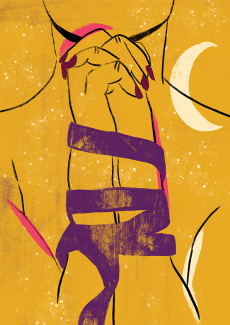
Cuando practican BDSM como un camino de sanación, lxs amantes deben prestar mucha atención y hacerse responsables de su compañerx.. Porque si bien se puede haber consentido al principio, debemos estar atentxs a cualquier cambio que pudiera surgir en el proceso, sobre todo cuando las sensaciones aumentan. Me acerco al BDSM a sabiendas de que, para entregarme al dolor, el amor y la empatía tienen que ser la base del proceso y así puedo crear un espacio para el amor o abrirme a él
Los cuidados posteriores al dolor infligido completan el proceso. Pueden brindarse de forma muy simple como dando caricias, preguntando si tu compañerx necesita beber agua, viendo una película juntxs, compartiendo un abrazo o simplemente un porro. Pueden ser expresados en cualquier idioma amoroso que escojas. Ese espacio de contención, en el que se sabe que se han abierto las heridas, es necesario para completar el proceso de sanación. Debido a lo delicado que es desdibujar la frontera entre dolor y placer, ese espacio te enseña mucho sobre cómo poner en práctica la empatía y sostener verdaderamente a tu compañerx. Por eso para mí, el BDSM es una forma de trabajo de cuidados.
Luego de una experiencia sexual BDSM, me sobrevienen una claridad y una calma que me colocan en un espacio de enorme creatividad y me empoderan espiritualmente. Es casi mágico ver cómo el dolor se transforma en otra cosa en tiempo real. De manera similar, esa experiencia liberadora del BDSM en el plano personal le permite a Wadjet acceder a una suerte de clarividencia, sabiduría y claridad que la ayudan en sus responsabilidades como moongirl que lucha contra el patriarcado africano.
Moongirls nació cuando yo dirigía Drama Queens, una organización de artistas activistas jóvenes radicada en Ghana. Desde nuestros inicios en 2016, hemos empleado distintos medios artísticos como parte de nuestro activismo feminista, panafricanista y ambientalista. Usamos poesía, cuentos, teatro, cine y música para abordar cuestiones como la corrupción, el patriarcado, la degradación del medio ambiente y la homofobia.
Nuestras primeras producciones teatrales, «The Seamstress of St. Francis Street» (La costurera de la calle San Francisco) y «Until Someone Wakes Up» (Hasta que alguien despierte) hablan del problema de la cultura de la violación en nuestras comunidades. Otra obra, «Just Like Us» (Igual que nosotrxs), podría decirse que fue una de las primeras producciones teatrales de Ghana en tratar directamente el arraigadísimo problema de la homofobia en el país. En Queer Universities Ghana, nuestro taller de cine queer para realizadorxs africanxs, se han capacitado cineastas de Ghana, Nigeria, Sudáfrica y Uganda. Cintas que nacieron durante el taller, como «Baby Girl: An Intersex Story» (Una beba: Un relato intersex) de Selassie Djamey, se han proyectado en pantallas de distintos festivales cinematográficos. Por lo tanto, pasar al medio de la novela gráfica fue una evolución natural para nosotrxs
Hace como siete años, había comenzado a escribir una novela que nunca acabé acerca de la vida de cuatro mujeres. En 2018, Open Society Initiative for West Africa (OSIWA) ofreció la oportunidad de un financiamiento que nos permitió producir este proyecto y mi novela inconclusa se convirtió en Moongirls.
Hubo dos temporadas de Moongirls, cada una de seis capítulos. Entre lxs escritorxs y editorxs que participaron en la primera temporada estuvieron Suhaida Dramani, Tsiddi Can-Tamakloe, George Hanson y Wanlov the Kubolor. Yaba Armah, Nadia Ahidjo, y yo escribimos para la segunda temporada. Kissiwa, artista ghanesx, estuvo a cargo de la ilustración y la conceptualización de los personajes, mientras que AnimaxFYB Studio, un estudio de animación, diseño y efectos visuales de primer orden, se encarga de las ilustraciones.
Escribir Moongirls entre 2018 y 2022 ha sido una obra de amor para mí, incluso un trabajo liberador. Aspiro a explorar intensamente formas y estilos: he incursionado en convertir otras formas de composición, como los cuentos y la poesía, al formato de la novela gráfica. Al conjugar ilustración y texto, como hacen las novelas gráficas, Moongirls busca abordar los grandes temas y honrar a lxs activistas de la vida real. La decisión de centrarme en superheroínas queer, lo cual es muy raro de ver en este canon, cobró un significado mucho mayor cuando en 2021 el contexto en Ghana comenzó a tornarse peligroso.
El año pasado hubo un abrupto incremento de la violencia contra la comunidad LGBT+ ghanesa que se originó con el cierre de un centro comunitario LGBT+. A ello le siguieron arrestos y detenciones arbitrarias de personas sospechosas de pertenecer al espectro queer, así como de otras acusadas de propiciar una «agenda LGBT». Como colofón, en el Parlamento ghanés se presentó un proyecto de ley anti-LGBT denominado «Los derechos sexuales humanos apropiados y los valores de la familia ghanesa». Este proyecto probablemente sea el más severo jamás redactado en la región, y sigue a intentos similares en países como Nigeria, Uganda y Kenia.
Recuerdo muy vívidamente la primera vez que leí ese proyecto de ley.
Fue un viernes por la noche, momento que en general me reservo para descansar o ir de fiesta luego de una larga semana de trabajo. Por puro azar, el texto me llegó a través de un grupo de WhatsApp, como una filtración. Mientras lo leía, una profunda sensación de temor y alarma me aguó la noche de descanso del viernes. En el proyecto se proponía castigar todo actoo de incidencia LGBT+ con una sentencia de entre cinco y diez años de prisión, y encarcelar a toda persona que se identificara como LGBT+, salvo que se «retractara» y aceptara someterse a una terapia de conversión. En el borrador del proyecto se penalizaba hasta a las personas asexuales. El proyecto atacaba todas las libertades fundamentales: libertad de pensamiento, de ser, de tener tu propia verdad y elegir tu forma de vida en función de ella. Incluso iba en contra del arte y las redes sociales. De haberse aprobado, Moongirls se hubiera convertido en literatura prohibida. Lo que el proyecto se proponía hacer era tan malicioso y tenía tal alcance que me postró en una depresión al comprobar la intensidad de odio con que había sido redactado.
Al repasar mi línea de tiempo en Twitter aquella noche, vi reflejado el terror que sentía en mi interior. Mi línea de tiempo transmitía en vivo las emociones de las personas que reaccionaban en tiempo real a lo que estaban leyendo, pasando de la incredulidad al terror, seguido por una profunda decepción y tristeza cuando tomamos conciencia de cuán lejos quería llegar con ese proyecto de ley. Algunxs decían en Twitter que estaban dispuestxs a dar vuelta la página y abandonar el país. Luego, al mejor estilo ghanés, la tristeza y el temor se convirtieron en humor. Del humor surgió el ánimo para redoblar la lucha.
Entonces, el trabajo continúa. Creé Moongirls para ofrecer una forma alternativa de educación, para brindar conocimiento allí donde el patriarcado violento lo suprimió, y para crear visibilidad allí donde habían borrado a la comunidad LGBT+. También es importante que la práctica BDSM africana tenga esta plataforma de representación dado que buena parte de lo que se ve del BDSM está encarnado por personas blancas. El placer sexual, a través del BDSM u otras prácticas, así como el amor no heterosexual, trascienden razas y continentes porque el placer sexual y sus experiencias diversas son tan antiguos como el tiempo.

Esta edición en alianza con Kohl: una publicación para Body and Gender Research analizará soluciones, propuestas y realidades feministas para transformar nuestro mundo actual, nuestros cuerpos y nuestras sexualidades.
نصدر النسخة هذه من المجلة بالشراكة مع «كحل: مجلة لأبحاث الجسد والجندر»، وسنستكشف عبرها الحلول والاقتراحات وأنواع الواقع النسوية لتغيير عالمنا الحالي وكذلك أجسادنا وجنسانياتنا.
par Gabriela Estefanía Riera Robles
Juliana. Comme j’aimerais m’appeler Juliana! C’est un prénom plein de pouvoir et de présence, plein de force et de véhémence. (...)
< illustration : «Born Fighters», par Borislava Madeit et Stalker Since
"Pero, ¿ fue el maestro alguna vez
seducido por el poder?
¿Alguna vez se rompió
un sistema con aceptación ?
¿Cuándo el JEFE te entregará el poder con amor?
¿En Jo'Burg, en Cancún o en la ONU? - Molara Ogundipe
A través de los diferentes continentes y países, la profesora Ogundipe enseñó literatura comparada, escritura, género y filología inglesa, y utilizó la literatura como vehículo para la transformación social y el replanteamiento de las relaciones de género.
Molara Ogundipe, como pensadora, escritora, editora, crítica social, poeta y activista feminista, logró combinar el trabajo teórico con la creatividad y la acción práctica. Se la considera una de las principales voces críticas de los feminismos africanos, los estudios de género y la teoría literaria.
Molara acuñó el concepto de "estiwanismo" a partir de las siglas STIWA (Social Transformations in Africa Including Women) [Transformaciones Sociales en África Incluyendo a las Mujeres], con el fin de reconocer la necesidad de “alejar la definición del feminismo y los feminismos en relación con Euro-América u otro lugar, y declamar lealtades o deslealtades". Con su obra fundamental, "Recreándonos Nosotras Mismas", de 1994, Molara Ogundipe (publicada bajo el nombre de Molara Ogundipe-Leslie) dejó tras de sí un inmenso cuerpo de conocimientos que descolonizó el discurso feminista y "re-centró a las mujeres africanas en sus completas y complejas narrativas... guiadas por una exploración de la liberación económica, política y social de las mujeres africanas y la restauración de la agencia femenina en las diferentes culturas de África".
Comentando los retos a los que se enfrentó como joven académica, dijo:
"Cuando empecé a hablar y escribir sobre el feminismo a finales de los años sesenta y en los setenta, se me veía como una chica buena y admirable que se había extraviado, una mujer cuya cabeza se había arruinado con un exceso de aprendizaje".
Molara Ogundipe se destacó por su liderazgo a la hora de combinar el activismo con el mundo académico; en 1977 fue una de las fundadoras de la Asociación de Mujeres en la Investigación y el Desarrollo, AAWORD (por sus siglas en inglés),. En 1982 fundó Mujeres en Nigeria, WIN (por sus siglas en inglés), con el fin de abogar por un acceso pleno a los "derechos económicos, sociales y políticos" para las mujeres nigerianas. Posteriormente, estableció y dirigió la Fundación Internacional para la Educación y el Monitoreo y pasó muchos años en el consejo editorial del periódico The Guardian.
Luego de haber crecido con el pueblo yoruba, sus tradiciones, cultura e idioma, dijo una vez:
"Creo que la celebración de la vida, de las personas que mueren después de una vida llena de logros, es uno de los aspectos más hermosos de la cultura yoruba".
El nombre de alabanza yoruba 'Oiki' de Molara era Ayike. Molara nació el 27 de diciembre de 1940 y falleció el 18 de junio de 2019 a la edad de 78 años, en Ijebu-Igbo, Estado de Ogun, Nigeria.
Feminist and gender justice movements continue to be chronically underfunded in the face of global funding cuts and freezes. Particularly in Global South regions with shrinking civic spaces, resource scarcity has impacted the most vulnerable communities.
In the face of these setbacks, AWID has updated the Who Can Fund Me? Database - an easy-to-use, practical tool for movements looking for funders from philanthropic foundations, multilateral funders to women’s and feminist funds to support vital lifesaving efforts.
Gracias, Ángela y Pilar.

 |
Yannia Sofía Garzón Valencia: Soy Mujernegra y tejedora comunitaria. Vivo en Santander de Quilichao, Cauca, Colombia. Me interesan los procesos creativos que producen organización para sostener la vida colectiva. Me gusta conversar y cocinar, investigar y analizar, sembrar y aprender de plantas, leer y jugar. Actualmente coordino el Observatorio sobre violencia basada en género contra personas Afrodescendientes en Colombia. (@VigiaAfro). |

Como pocas veces ocurre, había una amplia área verde para jugar y nos sentamos en unos banquitos de madera bajo un árbol de sauco. Por fin experimentábamos la sensación de otras formas del amor – estar por el gusto de estar y el placer de escucharnos. Estas conversas para mí hacen parte de las más recientes expresiones de amor que la vida me ha permitido. Formas que no sabía que eran posibles, que se quedan afuera de un taller o de un espacio militante, de un salón de clases o de una oficina de trabajo. Pasamos la tarde entre amigas donde el color de piel de las tres no fuese un tema para hacernos las ciegas y sí una experiencia para intimar sobre los parecidos y diferencias entre nuestras experiencias de infancia y juventud.
Hasta hoy me resultan nutritivas y resignificadoras aquellas charlas que se eximen de alguna tarea pendiente del movimiento negro en Colombia con la cercanía tejida del encuentro, de reconocernos, y en ese reconocernos, de identificar las particularidades que tiene liberarnos. Y de que no hay un solo camino sino muchos caminos de liberación – caminos que habitamos cada vez que dijimos no y nos rebelamos, y que lejos de incomodarnos, nos encontramos en nuestra autenticidad hecha de debilidad y fortaleza, que en lugar de separarnos, nos junta.
Nuestro propósito para hacer esa hermosa tarde fue estar. Ser conscientes de estar entre nosotras. Transitamos para que los recuerdos que quedaran sean aquellos que imaginamos por decididos, sean nuestros y no los que el miedo filtra, acomoda y permite. Recordamos fragmentos exactos de programas; cantamos coros de canciones y a lxs artistas que nos educaron en qué iba eso de amar bien, odiar bien, insultar como la mejor villana, sufrir como la mejor protagonista. Nos contamos travesuras en el colegio, lo que nos quedaba dentro del inconsciente después de la exposición a tantas formas mediáticas de decir lo mismo: durante la época del colegio, desde las maestras y las religiosas, la sobreexposición se nos hace a las mujeres para que nos identifiquemos en la aspiración de cenicienta, la conducción y apropiación para nuestras vidas del drama de la muchacha empobrecida y disminuida que precisa completar el valor de ella misma en el acto redentor de nuestra condición, y del que solo es capaz la mirada de un hombre, que como mínimo ha de ser blanco, merecedor de nuestra entrepierna – su supuesta “máxima aspiración” – y la “perfecta realización de nuestros sueños” la que debe ser nuestra.
Aquella tarde éramos tres, y cada una de nosotras criadas en diferentes lugares del país, pero era fascinante coincidir al repetir de memoria frases y situaciones de canciones y novelas, que a veces – nos dimos cuenta hablando, conociéndonos – mantuvieron algunos códigos, símbolos que se reprodujeron con algunas variaciones en nuestras casas, en nuestras relaciones primeras dentro del barrio y en el colegio. Educadas en y para el “drama” – ¿así se llama al género taquillero? – que llega a ser más drama y mayor merecimiento, el tema de “cómo y en qué situaciones es válido y legítimo sufrir” se transforma también – y esto es importante – en cómo debe ser la actitud, cómo debe verse y cómo debe hacer y ser quien sufre. Por tanto, algunas conseguimos sacarnos de nosotras mismas, y por todo significado de amor “aprendimos” que aquel que nos toca a nosotras, solo lo podíamos aprender adultas, rompiendo las ilusiones, aceptando el pecado natural, el conocimiento de la producción industrial de una virgen maría a la que no queremos parecernos, a la que no nos cabe dentro de lo que entendemos, y los desengaños que esta alineación nos reserva.
Luego de cantar, pasamos por las exploraciones sexuales tempranas. Nunca pensé que la mayoría de personas pasamos por ahí antes de los nueve años, y que aún en la adultez, hoy esas experiencias, esos recuerdos, son carga pesada y que incluso hoy, en miles de lugares, millones de niñas y niños son cercenados en su inocencia por la ausencia de confianza y la ignorancia que les ofrecemos para que reconozcan sus cuerpos. Culpar la curiosidad, valiosa fórmula de control. Retomamos conversas breves que habíamos tenido derivadas de nuestro rehacernos la historia de nuestra vida desde nuestro ser maldecido negro y por nosotras renacido. Recordamos que muchas de nuestras tías y primas fueron saliendo de sus casas, de ombligo, de su arraigo, para buscar un futuro afuera, en otro lugar.
El futuro exige el precio de reacomodar las relaciones que nos han hecho desde la infancia y colocarlas en un cuarto de olvido, fundantes, pero no relevantes para avanzar. Progresar fue para nosotras memorizar qué nos hacemos a nosotras mismas con las oportunidades que encontramos en otro lugar, que el otro lugar y no nosotras es dónde habita la oportunidad, que estamos disponibles, que hay que estar afuera. Sin embargo, para muchas de nuestras tías y primas, a cambio de la oportunidad que pocas veces llegaba de ser matriculadas y mantenidas en el colegio nocturno o un sabático por su trabajo doméstico, lo que sí llegaba con puntualidad de factura de servicio público, era la de convertirse en la primera experiencia sexual de parientes que vivían en ese futuro por el que ellas mismas y otrxs antes de ellas ya habían pagado y cuyo precio habían olvidado. Ese legado no lo seguiremos.
"Aprendió que el cuidado del vientre es un asunto de mantener sus tejidos en calor, de evitar los fríos que entran por la molleja encima de la cabeza, por los pies, por las orejas, para que no doliera especialmente en tiempos en que la luna baja, que para eso hay que cuidar lo que se come y no se come, cómo se viste y cómo se camina, que esto tiene que ver en todo momento con la salud de las niñas."
En Colombia y en América Latina se implementó con mucho éxito un manual de conducta llamado “La Urbanidad de Carreño.” Hasta la década de los 90’s y tanto en colegios públicos como privados fue de obligatoria lectura. Mi mamá que fue recogida por monjas carmelitas, lo conocía de pe a pa: el manual efectivamente condicionaba la mirada sobre los cuerpos. La primera vez que lo leí tuve que parar varias veces para sobarme el estómago que me dolía de tanto reír. Tiene instrucciones tan ridículas como la de ducharse con los ojos cerrados y apagar la luz al momento de ponerse la ropa de dormir. Los capítulos hacían referencia a cómo estar en la casa, en la calle, en una cena, en una comida – en otras palabras, las normas del buen gusto y de la etiqueta. El deber ser de la ciudadanía de bien, la civilidad que permitía distanciarse de los valores de la vida en el campo. El mismo manual indicaba que saludar de grito a alguna persona conocida que se encontrara al otro lado de la calle era indecoroso; la buena educación es cruzar la calle, así como los hombres deben quitarse sus abrigos, para ponerlos en los charcos de agua toda vez que fueran acompañados de mujeres que no debían mojarse el calzado. Pensaba en los saludos de un lado al otro lado del río, y en el calor que hace en los lugares donde hacemos la vida que no nos pide abrigo.
Este señor Carreño se contrasta grandemente con el abuelo de otra mujer mayora oriunda de Turbo. Ella compartió una vez que su abuelo era un sabio, que de él aprendió a partiar, a cuidarse el cuerpo. Aprendió que el cuidado del vientre es un asunto de mantener sus tejidos en calor, de evitar los fríos que entran por la molleja encima de la cabeza, por los pies, por las orejas, para que no doliera especialmente en tiempos en que la luna baja, que para eso hay que cuidar lo que se come y no se come, cómo se viste y cómo se camina, que esto tiene que ver en todo momento con la salud de las niñas. La mayora dice que de su abuelo devoto aprendió que los cólicos se hicieron más comunes cuando las casas dejaron de tener piso de tierra y/o madera. Cuando llegó el concreto y la baldosa, cuando el material de la casa permitió que el frio entrara por los pies, con ellos aumentó la tensión en el tejido de los vientres.
Sorprendidas de nuevo. La distancia entre la consciencia de la vida de Don Carreño y la del sabio abuelo, es la misma distancia entre lo que se dicta para el comportamiento adecuado, y cómo se ven incapacitados el impulso y los sentidos, incluso el sentido común que gusta de la salud. En ese momento podía entender otra de las tantas maneras en cómo el cemento obstruye nuestra forma de respirar de la tierra, y de nosotras como parte de ella. No había dimensionado que hubo, y aún hay, arquitecturas y materiales pensados para el cuido de nuestros cuerpos. En Colombia como en muchos otros países, el material del que está hecha la vivienda hace parte de los indicadores del índice de pobreza multidimensional: la vivienda que está construida en cemento aleja al hogar de ser leído como pobre, y así podríamos seguir rastreando el desaliento con el que el progreso nos arrastra en abandonar la relación de nuestro entorno con nuestro cuerpo. El buen gusto y la civilidad nos encamina hacia afuera: avanzar – mienten – está allá afuera.
Nos molestó un poco caer en cuenta juntas de cómo nuestras mamás o nuestros papás no nos dijeron palabra alguna de la menstruación, salvo cuando la mancha marrón ya había embadurnado los calzones. Ni nos alejaron de la vergüenza que se supone era apenas natural sentir una vez estuviera allí, acompañada de los retortijones en el vientre muchas veces acallados por las labores de faena, que se llaman quistes, miomas, hematomas – asesinaron y olvidaron a nuestras abuelas que habían averiguado y olvidaron los tratamientos para sanarlos. Que su aliento, enfriado cada vez más por ese afuera, heló la familiaridad y en lugar de calentar nuestros vientres, sentenció consejos parecidos más a las advertencias sobre lo único que les importa a los hombres. Generalizando a todos los hombres – legitimando el rol saqueador del pene, y que la única opción para esos cuerpos con pene es tomar aquello que tenemos entre las piernas. La inmutable e instalada naturalización de las múltiples variaciones de esta verdad. Y generalizar para todas las mujeres que debemos preservarlo para uno, el que lo meta primero, el que dé algo a cambio, y que somos mujeres únicamente por eso, por aspirar a/y dejarlo meter. De niña exploré penesitos y clitorisitos, y entre juegos la pregunta al oído que en esas ocasiones hacía cuando era entre mujeres fue: ¿esta vez a quién le toca hacer de hombre y a quién hacer de mujer? Por respuesta: principios de orgasmitos independientemente de con quién. Supongo que ocurre parecido entre los cuerpos de los hombres también.
"Podía entender otra de las tantas maneras en cómo el cemento obstruye nuestra forma de respirar de la tierra, y de nosotras como parte de ella. No había dimensionado que hubo, y aún hay, arquitecturas y materiales pensados para el cuido de nuestros cuerpos."
Experiencias y exploraciones de nuestras tías, primas y conocidas se volcaron hacia el cuerpo y su desnudez como tabú. Evadieron expresarla, enunciarla, hasta el punto de encubrirla, asignando nombres para sus funciones, de excretar, de expulsar, de procrear, y para nosotras de recibir. A propósito, compartí una reflexión que salió de escuchar una mayora en un taller; ella decía que, en el tiempo de vivir con su abuela, la recordaba durmiendo con un ojo abierto y otro cerrado y con una escopeta al lado del colchón. Al menor ruido en la noche, la accionaba sin chistar, situación no poco habitual en algunos territorios del pacífico colombiano donde hay un comportamiento nocivo y normalizado; y es que hombres casados y solteros que sienten gusto por una joven, se le meten en la habitación de noche – “gateada” entendemos, “gateada” decimos. El asunto de hacerle justicia a la joven, era un cálculo de riesgo: si las autoridades de la casa se daban cuenta y había o no abuso, podían herirlo y hasta matarlo.
Una práctica de justicia propia y directa, que tiene consecuencias que hasta hoy no han acabado con el gateo. En ese mismo taller – seguía compartiendo con mis hermanas – otras participantes dijeron que ni ellas ni sus mamás dejaban a sus hijas con sus padres a la hora del baño, a menos que llevaran ropa interior. En esas recordé la voz de mi papá diciéndome cuando yo tenía siete años, su mamá nunca ha dejado que yo la bañe. Les compartí esto y, todo lo contrario, una de ellas nos compartió que en cambio su papá la bañaba desnudita en el patio de su casa de infancia hasta que tuvo siete años, y que luego hasta los nueve lo hacía su hermano mayor. Ella nunca sintió un dejo de mirada extraña por parte de ellos; para ellos, decía, era parte de las tareas del cuidado con la consentida. Recuerda ser vista como lo que era: una niña hija, una niña hermana peleada con el agua.
De nuevo la infancia, ayer y hoy. Nos sorprendió escucharla, me consoló saberlo. Ya había sido diferente en otros lugares y el padre de mi hija hasta casi los dos años la bañó en la tina. Incluso antes de que cumpliera dos años le pegaba un poco en las nalgas hacia arriba, según él, para hacerlas más grandes. Acá se pueden conversar sobre otras dimensiones de cómo hacemos los cuerpos, pero es para otro cuento. Para mí, se trataba de una tarea de cuidado entre tantas del reparto que acordamos antes de que ella naciera. Y la decisión de no ver en cada hombre un violador al acecho, no significa que no lo sean, sino que también pueden dejar de serlo. También hay hombres y cuerpos de hombres que por crianza nunca lo han sido.
También pasa ahora. Le pasó a nuestra amiga y a mi hija. Me quedé pensando: ¿cómo puede ser que algunas mujeres pudieran formar una pareja en la que no les pueden dejar el cuidado de sus hijas? Estoy segura que mi mamá amó a mi papá. Y aunque pocas veces hablamos sobre la mujer que fue antes de ser mi mamá, sé que sus experiencias de abuso no se comparan en brutalidad y permisividad como las de ahora y sin embargo es una decisión – de muchas mujeres en muchos lugares. Lo que me lleva a otras preguntas: ¿Qué tan frecuente, tan reiterados los casos de abuso que en nuestra familia extensa fueron, que las madres prohibieron perceptible o imperceptiblemente a sus parejas bañar a sus hijas?, ¿Tiene que ver con toda esa sobreexposición mediática a la que somos expuestxs casi desde el nacer?, ¿Qué hace posible el desdibujamiento del lazo familiar y lo deja solo en un lazo de satisfacción corporal?, ¿Es la proximidad a los valores de la urbanidad que con tanto celo cuida de las correctas formas de los cuerpos femeninos como objetos de deseo, e impulsa a los cuerpos masculinos a actuar como poseedores y conquistadores, cumpliendo el mandato que debe ser imitado de la representación a la que mediáticamente les exponen para sentirse tranquilos en su identidad?, ¿Es el cemento y otros códigos como el de la urbanidad de Carreño el que lo soporta?, ¿El olvido de las relaciones que establecemos en función de obtener progreso, lo que lo provoca, el insistente hacer para afuera?, ¿Qué pasa con los aprendizajes de nuestra época, de quienes a escondidas o no, tuvimos exploración sexual infantil?, ¿Anulados por la culpa?, ¿Germen de la desconfianza y la vergüenza hacia la desnudez?, ¿Germen de la desconfianza y la vergüenza hacia estar adentro de si mismx? ¿No son estos aprendizajes, posibilidades para confiar en abordar la desnudez de los cuerpos dentro del respeto a sí mismx y otrxs? Estas preguntas nacen porque hay espacios de confianza, donde el miedo a decir cómo se piensa y siente está espantado por el propósito de acompañarnos. Imagino cuantas hay en tantos rincones de este planeta y estoy muy segura que no son preguntas nuevas, que hay mensajes repetidos en ellas y que nos encontramos viviendo sus respuestas.
Esta edición en alianza con Kohl: una publicación para Body and Gender Research analizará soluciones, propuestas y realidades feministas para transformar nuestro mundo actual, nuestros cuerpos y nuestras sexualidades.
نصدر النسخة هذه من المجلة بالشراكة مع «كحل: مجلة لأبحاث الجسد والجندر»، وسنستكشف عبرها الحلول والاقتراحات وأنواع الواقع النسوية لتغيير عالمنا الحالي وكذلك أجسادنا وجنسانياتنا.
You can now watch the AWID Feminist Film Club program “Feminist Embodiments of Hope and Power” - a film series on Feminist Realities from the SWANA region curated by Esra Ozban
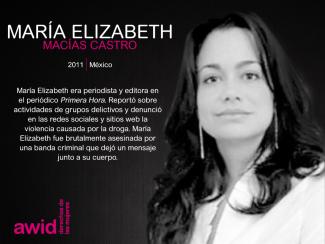
Yamile Guerra était une avocate bien connue, leader communautaire et activiste politique dans la région de Santander en Colombie.
Activement impliquée dans la résolution de litiges entre les communautés locales et les promoteurs immobiliers, elle s’est battue contre l’appropriation des terres illégale. Yamile a occupé plusieurs fonctions politiques, dont celle de secrétaire générale du gouvernement de Santander à Bogota, et s’était également présentée comme candidate à la mairie de Bucaramanga. Au cours des dernières années de sa vie, Yamile s’était de plus en plus impliquée dans les causes environnementales, et particulièrement celle de la défense de la biodiversité des zones humides de Santurbán, une région qui approvisionnait près de deux millions de personnes en eau potable, contre les promoteurs du développement économique.
D’après sa famille et ses ami·e·s, Yamile recevait quotidiennement des menaces de mort et avait demandé la protection des autorités.
« Elle était tout à fait consciente de la question [du litige foncier] et avait à plusieurs reprises mentionné qu’elle se sentait en danger. » - Alixon Navarro Muñoz, journaliste et amie de la famille Guerra
Le 20 juillet 2019, Yamile a été tuée par balles par deux hommes à Floridablanca, Santander. Elle venait de clore une discussion avec eux en lien avec le litige foncier. Un suspect a ensuite été arrêté pour son meurtre, lequel a admis avoir été payé pour organiser son assassinat. Selon des rapports, Yamile est la troisième membre de sa famille a avoir été assassinée, en lien avec des litiges fonciers. Son père, Hernando Guerra, avait lui aussi été assassiné plusieurs années auparavant.
L’assassinat de Yamile s’inscrit dans une vague de violences et de meurtres systématiques de centaines d’activistes sociaux et défenseur·e·s des droits humains en Colombie. L’Institut d’études sur le développement et la paix (INDEPAZ) rapporte qu’au moment du décès de Yamile, plus de 700 leaders communautaires et activistes pour les droits humains ont été tué·e·s depuis la signature en août 2016 d’un traité de paix par la Colombie. La plupart furent assassiné·e·s pour s’être opposé·e·s à des trafics de drogue et des opérations minières; y compris les peuples autochtones, les Afro-Colombiens et les défenseures des droits humains étant les plus exposé·e·s.
Moins d’une semaine après le décès de Yamile, des milliers de Colombien·ne·s ont manifesté dans les petites et grandes villes, brandissant des photos en noir et blanc d’activistes tué·e·s, et sur lesquelles était écrit : « Il ne peut y avoir de paix sans leaders » et « Fini les bains de sang ».
Yamile Guerra n’avait que 42 ans au moment de son assassinat.
From building prospect funders lists with *templates*, to understand how to write a solid grant proposal, with ‘Getting the Money we Need’ Guide really we don't have to figure this out alone anymore
Read and download the guide hereText-only version
Join as an AWID member now and participate in our next member event:
“Forum Dreaming” on June 20th.
Chers mouvements féministes,
Vous nous avez accueillies à bras ouverts lorsqu’il a été annoncé en 2016 au Forum de l’AWID à Bahia que nous serions toutes deux codirectrices exécutives de l’AWID. Nous pensions alors que tout était possible, nous allions construire une oasis féministe qui nourrirait nos combats collectifs à venir. Nous avons quitté Bahia avec un sens aigu de nos nouvelles responsabilités, nous engageant à vous servir de notre mieux et à diriger l’AWID de la manière la plus efficace et la plus soutenante pour vous.
Il est maintenant temps pour nous de laisser la place à un nouveau leadership !
Plus de cinq ans après le début de cette aventure, nous avons décidé de faire coïncider la fin du cycle stratégique actuel de l’AWID avec l’arrêt de notre codirection. Nous pensons que c’est le moment idéal de quitter nos fonctions et de soutenir la relève. Nous pensons en effet que le leadership féministe transformateur est cyclique.
Nous avons pleinement conscience de l’opportunité qui nous a été donnée de jouer un rôle dans les 40 ans d’histoire de l’AWID, de soutenir et mener l’organisation tout au long du difficile contexte de la pandémie mondiale et des nombreuses crises qui se sont succédé.
Mouvements féministes, nous savons que vous ferez partie de notre prochaine aventure, quelle qu’elle soit. Vous nous enseignez sans relâche la force et la résilience. Nous changeons de fonction, mais nous continuerons collectivement à progresser ensemble.
Nous avons des souvenirs très clairs de ceux d’entre vous en Indonésie, en Malaisie, au Népal, en Thaïlande, en Taiwan et ailleurs encore, avec qui nous avons co-créé le Forum de l’AWID, dans la générosité et la spontanéité. Sans aucun doute, notre plus grand regret de ces cinq dernières années est de n’avoir pas pu vous offrir un autre Forum en présentiel.
Dès que la difficile (quoique nécessaire) décision d’annuler le forum de l’AWID a été prise, nous nous sommes centrées sur les questions existentielles avec lesquelles de si nombreuses organisations se débattaient : comment transformer nos manières de travailler pour continuer à être pertinentes, comment prendre en compte la fatigue, la maladie et le deuil qui nous touchent toutes et tous de diverses manières ? Comment construire des relations porteuses de sens, lorsque l’on doit se cantonner aux interactions en ligne ? Il n’y a toujours pas de réponses évidentes à ces questions mais, mouvements féministes, vous avez ouvert la voie.
Nous étions si fières de voir la manière dont les féministes prenaient les rênes d’initiatives visant à atténuer les effets de la COVID-19 sur nos communautés. Les féministes sont les intervenant·es de première ligne dans les crises et nous continuerons à réclamer la reconnaissance et des ressources pour ce travail. Vous avez souvent répondu avec enthousiasme à nos mobilisations, participant de manières toujours plus géniales à notre campagne pour un Sauvetage féministe et ensuite au Festival Crear Résister Transform. Vous vous êtes spontanément jointes à nos actions de plaidoyer, lors d’interventions dans les espaces les droits humains, auprès de responsables des politiques ou de bailleurs de fonds.
Nous voulons témoigner à l’équipe actuelle, et précédente, de l’AWID (tant le personnel que les membres du CA), avec qui nous avons eu l’honneur de travailler au cours de ces années, tout notre amour et notre respect. Nous avons appris de chacun·e d’entre vous et sommes profondément reconnaissantes de toutes vos contributions à l’AWID au fil des ans.
Nous avons été les toutes premières codirectrices exécutives de l’AWID. Nous avons beaucoup appris des multiples traditions activistes et communautaires de leadership collectif et des organisations féministes qui l’avaient fait avant nous. Nous savons que nous n’aurions pas pu faire ce travail sans l’autre. Nous avons pu nous appuyer sur les forces l’une de l’autre et nous nous sommes soutenues mutuellement pour faire le meilleur travail possible.
Nous sommes arrivées à cette fonction ensemble, et repartons ensemble, même si nous décalons nos dates de départ. Nous voulons toutes les deux assurer une transition aussi douce que possible et une arrivée maîtrisée de la nouvelle direction.
Mouvements féministes, vous êtes entre de bonnes mains avec l’équipe de l’AWID. Elle sait ce qu’elle fait. Et nous sommes fières de quitter l’organisation alors qu’elle est si forte et si résiliente. Nous espérons voir bon nombre d’entre vous au Forum de l’AWID en 2024 – vous nous reconnaîtrez facilement, nous serons les deux personnes totalement relax dans l’assemblée !
Nous vous envoyons de l’amour et de la reconnaissance pour tout ce que vous avez fait avec et pour nous. L’impact que vous avez dans nos vies s’étend sur bien plus que les cinq dernières années et continuera, sans aucun doute, bien au-delà.
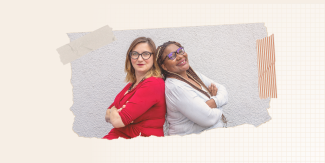
Cindy et Hakima
Como parte del Viaje por las Realidades Feministas de AWID, te invitamos a explorar nuestro nuevo Club de Cine Feminista: una colección de cortometrajes y largometrajes seleccionados por nuestrxs curadorxs y narradorxs feministas de todo el mundo, que incluyen a Jess X. Snow (Asia-Pacífico), Gabrielle Tesfaye (África/Diáspora Africana) y Esra Ozban (Sudoeste Asiático y África del Norte). Alejandra Laprea es la curadora del programa de América Latina y Centroamérica, que inauguraremos en septiembre, durante el evento de AWID Crear, Résister, Transform: un festival para movimientos feministas. Mientras tanto, ¡mantente atentx a los anuncios sobre proyecciones especiales y conversaciones con cineastas!
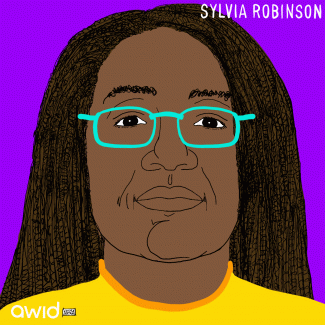
"Life is...about living in joy - waking up with purpose, feeling our creative energy, answering your calling." - Sylvia Robinson
This hub and performance space combine education, civic engagement, arts, social and spiritual services, and sustainable environmental practices. Sylvia envisioned it as a home where “there was a balance and synergy with the activities that people needed in order to sustain life.”
She was also one of the founding members of the Georgia Avenue Community Development Taskforce, a neighborhood group that works on social justice and organizing in Northwest DC to make sure the community has a voice in redevelopment and gentrification in the area.
“We're asking for affordable housing. We're asking that the small businesses that have been here for a long time don't get wiped out by new retail. We're asking for green space and space for people to get together to socialize. We're asking for streetscape improvements—better roads and lighting in the corridor.” - Sylvia Robinson about the Taskforce
Prior to becoming an organizer and after receiving a degree in computer science, Sylvia worked in air traffic control systems for over a decade. She then moved into drug and alcohol counselling, becoming increasingly engaged in community work.
“It was my call to be involved in community.” - Sylvia Robinson
Born in Washington D.C. on 14 August 1961, Sylvia passed away on 18 September 2017 after a battle with cancer.
“Sylvia's spirit and legacy will continue to inspire this community for many years to come.” - ECAC
A closer look at actual budgets reveals major income diversity and inequality.
¡Sí! Por favor lee la Convocatoria de Actividades y presenta tu propuesta aquí. La fecha límite es el 1ero de febrero de 2024.
Every year, AWID seeks to renew and enrich the perspectives and experience reflected in our Board of Directors by bringing in new members.
Currently, we are looking for individuals to serve 3-year terms on AWID’s Board, starting in early 2023. This is an opportunity to contribute to our organisation’s governance and to be part of an amazing group of feminists from around the world.
Please help us to identify thoughtful and bold feminists to nominate for election by July 29, 2022.
Please also share this invitation to nominate with your networks!
First and foremost, we are looking for candidates who are committed to AWID’s mission, who can make connections between local and global struggles, and who can help us to be thoughtful about how to best leverage AWID's positioning and strengths in a constantly evolving context. Candidates must be willing to uphold the legal duties and responsibilities of the AWID Board in the best interests of the organization.
This is a voluntary role that requires commitment and engagement throughout the year. Board members are expected to commit a minimum of 10-15 days per year to attend in-person and virtual meetings, and contribute to other communications.
We aspire for our Board to reflect diversity in all its forms, particularly in terms of gender identity, sexual orientation, age, geography and background. Additionally, we seek Board members with experience relevant to AWID’s priority areas of work.
While we will consider all candidates, in light of the current composition of the board, priority consideration will be given to:
Candidates with experience working at the intersections of women’s rights/gender justice and :
Candidates from the following regions:
The Board of Directors is key to inform AWID’s strategic direction and support our organisation to fulfill its mission in coherence with the world we live in and the needs of our movements.
Board members contribute to the organization in many ways: bringing governance experience from other spaces, perspectives from diverse sectors of feminist movements, and substantive expertise in areas relevant to AWID’s strategy.
The candidates who are ultimately elected will be joining the AWID Board in 2023, accompanying us for the launch of our new strategic plan led by AWID’s new Co-Executive Directors, and the planning of our next international Forum.
(You can nominate yourself or someone you know - with their consent)
Please also share this invitation to nominate with your networks!
Thank you, in advance, for helping us find our next wonderful Board members to support AWID in its journey ahead!