Karen Empeño & Sherlyn Cadapan
Kay Thi Win, Asia Pacific Network of Sex Workers (APNSW)
Thin Pa Pa Htun, Aye Myanmar Association
Xiao Shuang, Northeast Transgender Support Network
Cathy Ketepa, Friends Frangipani Inc. PNG
Rajeshwari Prajapati, Society for Women Awareness Nepal (SWAN)
For decades, feminist scholars and advocates have articulated important concepts related to gender to understand and challenge oppression and discrimination. Those concepts have now become the target of anti-rights actors who claim that oppressive patriarchal gender roles are “common sense”, strategically painting all other ideas, cultural norms, and forms of social life as a dangerous, conspirative ideology.
Read our Brief on “Gender Ideology” Narratives: A Threat To Human Rights
English body
Asociación de Mujeres Afrodescendientes del Norte del Cauca
Before starting the WITM research methodology, it is important you prepare the background and know what to expect.
With AWID’s WITM research methodology, we recommend that you first review the entire toolkit.
While this toolkit is designed to democratize WITM research, there are capacity constraints related to resources and research experience that may affect your organization’s ability use this methodology.
Use the “Ready to Go?” Worksheet to assess your readiness to begin your own WITM research. The more questions you can answer on this worksheet, the more prepared you are to undertake your research.
Before beginning any research, we recommend that you assess your organization’s connections and trust within your community.
In many contexts, organizations may be hesitant to openly share financial data with others for reasons ranging from concerns about how the information will be used, to fear of funding competition and anxiety over increasing government restrictions on civil society organizations.
As you build relationships and conduct soft outreach in the lead-up to launching your research, ensuring that your objectives are clear will be useful in creating trust. Transparency will allow participants to understand why you are collecting the data and how it will benefit the entire community.
We highly recommend that you ensure data is collected confidentially and shared anonymously. By doing so, participants will be more comfortable sharing sensitive information with you.
We also recommend referring to our “Ready to Go?” Worksheet to assess your own progress.

Women sustain Care | Care Sustains Life | Life Sustains Economy | Who takes care of women? | Not one less1 | Together | Sunday lunch
1Nenhuna a menos literally translates as “not one woman less” or “ni una menos” in Spanish - a famous feminist slogan in Latin America that emerged in Argentina as a response to increasing gender-based violence.
The solidarity economy (including cooperative economy and gift economy) is an alternative framework that is allowing for different forms in different contexts, open to continual change.
This framework is grounded in the principles of:
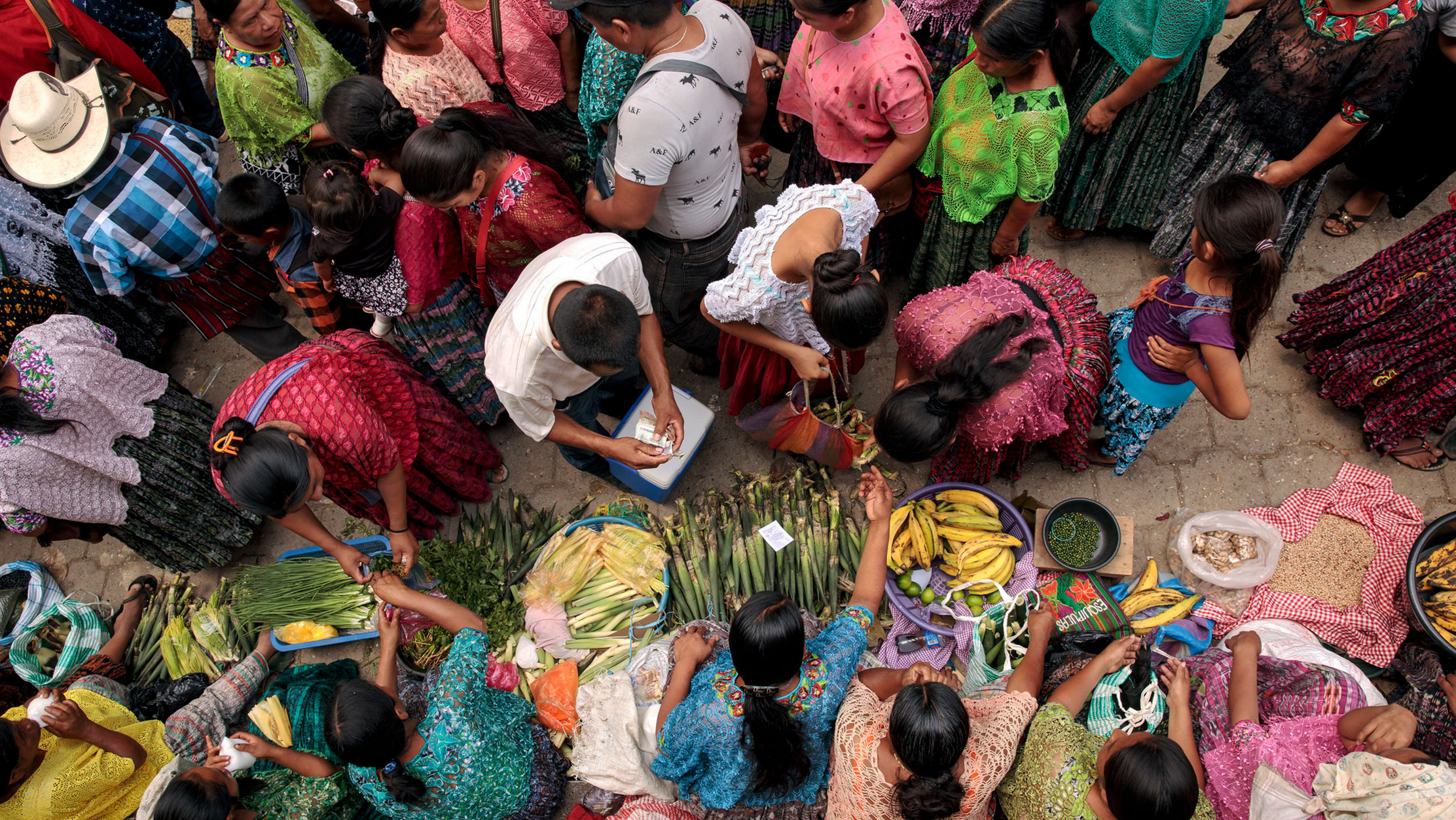
The producers in a solidarity economy develop economic processes that are intimately related to their realities, preservation of the environment and mutual cooperation.
According to feminist geographer Yvonne Underhill-Sem, the gift economy is an economic system in which goods and services flow between people without explicit agreement of their value or future reciprocity.
Behind gifting is human relationship, generation of goodwill, and attention to the nurturance of the whole society and not just one’s immediate self and family, it is about the collective.
For example, in the Pacific region, this includes: collecting, preparing, and weaving terrestrial and marine resources for mats, fans, garlands, and ceremonial items; and raising livestock and storing seasonal harvests.
The incentives for women to be involved in economic activities are diverse, ranging from the fulfillment of career aspirations and making money for a long-term comfortable life to making money to make ends meet, paying off debt, and escaping from the drudgery of routine life.
To accommodate the diverse environments that women operate in, the concept of solidarity economy is in continual development, discussed and debated.