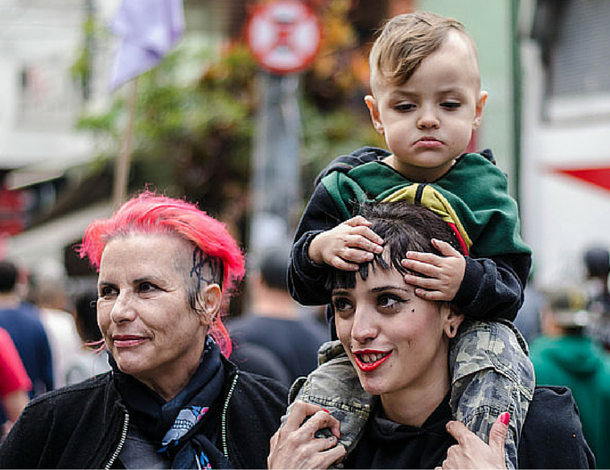
UN Women / Flickr (CC BY-NC-ND 2.0)
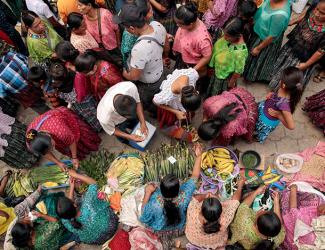
Guatemala - Rural Women Diversify Incomes and Build Resilience
Left
Half
Left

Priority Areas

Supporting feminist, women’s rights and gender justice movements to thrive, to be a driving force in challenging systems of oppression, and to co-create feminist realities.

Building Feminist Economies

Building Feminist Economies is about creating a world with clean air to breath and water to drink, with meaningful labour and care for ourselves and our communities, where we can all enjoy our economic, sexual and political autonomy.


In the world we live in today, the economy continues to rely on women’s unpaid and undervalued care work for the profit of others. The pursuit of “growth” only expands extractivism - a model of development based on massive extraction and exploitation of natural resources that keeps destroying people and planet while concentrating wealth in the hands of global elites. Meanwhile, access to healthcare, education, a decent wage and social security is becoming a privilege to few. This economic model sits upon white supremacy, colonialism and patriarchy.

Adopting solely a “women’s economic empowerment approach” is merely to integrate women deeper into this system. It may be a temporary means of survival. We need to plant the seeds to make another world possible while we tear down the walls of the existing one.


We believe in the ability of feminist movements to work for change with broad alliances across social movements. By amplifying feminist proposals and visions, we aim to build new paradigms of just economies.

Our approach must be interconnected and intersectional, because sexual and bodily autonomy will not be possible until each and every one of us enjoys economic rights and independence. We aim to work with those who resist and counter the global rise of the conservative right and religious fundamentalisms as no just economy is possible until we shake the foundations of the current system.


Our Actions

Our work challenges the system from within and exposes its fundamental injustices:

  • Advance feminist agendas: We counter corporate power and impunity for human rights abuses by working with allies to ensure that we put forward feminist, women’s rights and gender justice perspectives in policy spaces. For example, learn more about our work on the future international legally binding instrument on “transnational corporations and other business enterprises with respect to human rights” at the United Nations Human Rights Council.

  • Mobilize solidarity actions: We work to strengthen the links between feminist and tax justice movements, including reclaiming the public resources lost through illicit financial flows (IFFs) to ensure social and gender justice.

  • Build knowledge: We provide women human rights defenders (WHRDs) with strategic information vital to challenge corporate power and extractivism. We will contribute to build the knowledge about local and global financing and investment mechanisms fuelling extractivism.

  • Create and amplify alternatives: We engage and mobilize our members and movements in visioning feminist economies and sharing feminist knowledges, practices and agendas for economic justice.


“The corporate revolution will collapse if we refuse to buy what they are selling – their ideas, their version of history, their wars, their weapons, their notion of inevitability. Another world is not only possible, she is on her way. On a quiet day, I can hear her breathing”.

Arundhati Roy, War Talk

Related Content

Snippet WITM survey result - EN

DATA SNAPSHOTS

Where is the money for feminist organizing?

1,174 feminist, women's rights & LGBTQI+ organizations 
from 129 countries participated in AWID's 2024 survey.

The data reveals the state of resourcing for feminist movements between 2021-2023, amid current major defunding trends in aid and philanthropy.

Our collective power knows no boundaries, but our bank accounts do.

Contributors of toolkit (WITM landing page)

We would like to thank the contributors and advisors of this toolkit:

  • Angelika Arutyunova
  • Cindy Clark
  • Kamardip Singh
  • Martin Redfern
  • Pei Yao Chen
  • Srilatha Batliwala
  • Veronica Vidal

    Download the Toolkit in PDF

Snippet - COP30 - The People's Summit

The People's Summit

The climate summit by movements, for movements.

📅 November 12 - November 16, 2025
📍 Universidade Federal do Pará, Belém

More info here

FRMag - Let the invisible be visible

Let the invisible be visible: A Genderfluid Bodybuilder’s Manifesto in Hong Kong

by Siufung Law

“97..! 98.. where is 98? 98! Please come back to the lineup!... 99! 100!...” The backstage lady relentlessly asked each athlete to queue up at the humid, sweaty, overcrowded backstage. (...)

Read

< artwork: “When They See Us” by Lame Dilotsotlhe

Snippet - COP30 - Ecozine card - EN

📰 Feminist Transnational Solidarity: an Antidote to Ecocide

This collaborative zine originated from a series of sharing circles that brought together feminists from around the world throughout 2022. The purpose was to exchange ideas and mutually learn how communities are responding to the climate crisis in various local contexts.

Download the Zine

Snippet example from training video

Big banner heading

some text some text some text some text some text some text some text some text some text some text some text some text 

some text some text some text some text some text some text some text some text some text some text some text some text 

Call to action

Snippet 8 - What's happening at HRC61 Intro

Editor's Note | Lost For Words

Editor's Note

Lost For Words

When our embodied labor becomes profit in the hands of the systems we seek to dismantle, it is no wonder that our sexualities and pleasures are once again relegated to the sidelines – especially when they are not profitable enough. In many instances during the production of this issue, we asked ourselves what would happen if we refused to accommodate the essential services of capitalism. 

Read more

Protection of the Family

The Issue

Over the past few years, a troubling new trend at the international human rights level is being observed, where discourses on ‘protecting the family’ are being employed to defend violations committed against family members, to bolster and justify impunity, and to restrict equal rights within and to family life.

The campaign to "Protect the Family" is driven by ultra-conservative efforts to impose "traditional" and patriarchal interpretations of the family, and to move rights out of the hands of family members and into the institution of ‘the family’.

“Protection of the Family” efforts stem from:

  • rising traditionalism,
  • rising cultural, social and religious conservatism and
  • sentiment hostile to women’s human rights, sexual rights, child rights and the rights of persons with non-normative gender identities and sexual orientations.

Since 2014, a group of states have been operating as a bloc in human rights spaces under the name “Group of Friends of the Family”, and resolutions on “Protection of the Family” have been successfully passed every year since 2014.

This agenda has spread beyond the Human Rights Council. We have seen regressive language on “the family” being introduced at the Commission on the Status of Women, and attempts made to introduce it in negotiations on the Sustainable Development Goals.


Our Approach

AWID works with partners and allies to jointly resist “Protection of the Family” and other regressive agendas, and to uphold the universality of human rights.

In response to the increased influence of regressive actors in human rights spaces, AWID joined allies to form the Observatory on the Universality of Rights (OURs).  OURs is a collaborative project that monitors, analyzes, and shares information on anti-rights initiatives like  “Protection of the Family”.

Rights at Risk, the first OURs report, charts a map of the actors making up the global anti-rights lobby, identifies their key discourses and strategies, and the effect they are having on our human rights.   

The report outlines “Protection of the Family” as an agenda that has fostered collaboration across a broad range of regressive actors at the UN.  It describes it as: “a strategic framework that houses “multiple patriarchal and anti-rights positions, where the framework, in turn, aims to justify and institutionalize these positions.”


Related Content

Mobilizing Change

Mobilizing Change

In her own words, Ruth Acheinegeh (AWID member since 2010) is a “young woman in her early thirties, full of energy and cheerfulness in her encounters with those around her and with one leg affected by polio.”

She owns and runs a local market stall in Bamenda, Cameroon which also sells bags and clothing made by a local group of women with disabilities. This is a valuable source of financial support for Ruth, and also enables her to partly support her family.

"What keeps me going is the spirit of moving and creating a new spotlight for many more women with disabilities not only in Cameroon but all over the world, hoping to have an inclusive society for all."

Strengthen leadership skills
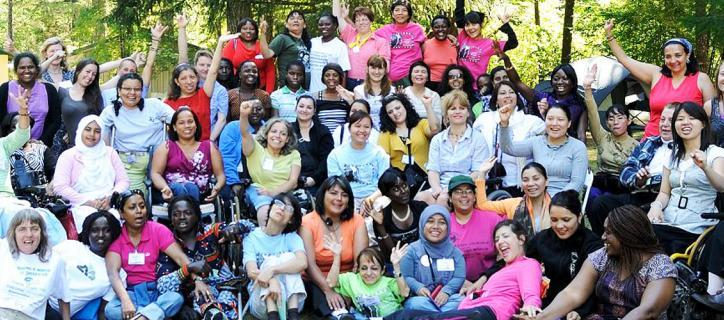
Staff from AWID met Ruth in August 2010 in Eugene, Oregon, United States, at the Mobility International USA’s (MIUSA) Women's Institute on Leadership and Disability (WILD) that brought together numerous women leaders with disabilities from all over the world to “strengthen leadership skills, create new visions and build international networks of support.” After returning to Cameroon, Ruth created the North West Association for Women with Disabilities, the first ever women’s group in Bamenda focusing only on women’s issues. It now counts 40 members and Ruth is passing on the knowledge she gained in Eugene in the areas of economic empowerment, health, and information and technology. 

Ruth is a trail blazer, change-maker, visionary, and a traveler with an incredible sense of humor. In 2012 she participated in the 12th AWID International Forum in Istanbul Turkey which brought together a number of African women with disabilities who subsequently organised their first workshop in Malawi.

Still a big gap
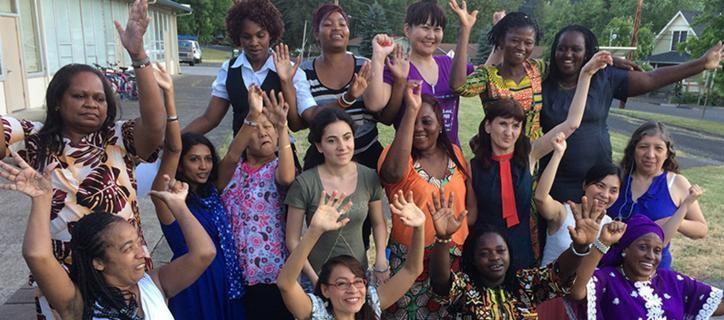
And even though much work has been done and progress achieved, as Ruth points out, there is “still a big gap looking at the low literacy rate among women with disabilities” in the region. So to help advance change, in June 2015 Ruth took part in a highly competitive training-of-trainers program held by MIUSA after which she brought together 20 women with disabilities from 20 different council areas in her region. This was the first of its kind in the country and offered training in human rights, governance and management in that area. In spite of her skills, experience and educational background, including a Bachelor’s degree in Management and Accountancy from the International University Bamenda, Ruth has been unable to find work which she says is, “due to the fact that I have a disability.”

"I think that I am one of those that have the calling of changing the lives of women with disabilities all over the world, not only in my community."

Watch Ruth speak about her WILD 2015 experience

Apart from managing her market stall, Ruth works with local women with disabilities to encourage them to establish economic projects and independence. Through this group she has made connections with international initiatives, global feminist activists and disability researchers which has opened new channels of learning and travel. Despite her own financial challenges and being unable to improve her own life by buying a “much-need wheelchair or new crutches”, Ruth says she “clearly holds her social and economic independence dear”.

As a woman immersed in a range of local, national and international social networks (the latter particularly through her disability work), how Ruth constitutes herself and the strength of her connections constantly shift as she “moves from daughter to sister to income provider.”

Continuing our engagement with Ruth as our member, ally and friend we are extremely excited to meet her again at our upcoming 13th AWID International Forum in Brasil! She is a co-presenter in a session on “Proper” roles and precarious lives: women with disabilities disrupting patriarchy.


Find out more and connect with Ruth


“Loud, Proud and Passionate”

Watch a MIUSA WILD Institute 2010 Video:
 

Source
AWID

Promouvoir la santé pour tous et toutes

Promouvoir la santé pour tous et toutes

Actif dans le secteur sans but lucratif, Isaac Oriafo Ejakhegbe, membre de l'AWID depuis juin 2015, concentre son travail sur l’égalité de genre, le changement climatique, la promotion de la santé et la santé des femmes et des enfants. Il est un jeune leader de l’initiative Women Deliver et travaille actuellement pour le Women’s Health and Action Research Centre (Centre de recherche et d’action pour la santé des femmes), une organisation non gouvernementale établie au Nigeria qui œuvre au service de la santé reproductive des femmes et de leur bien-être social.


Fondateur de l’initiative Youth Spotlight (Coup de projecteur sur la jeunesse), Isaac s’engage également à promouvoir la santé et les droits reproductifs et sexuels des jeunes. En outre, il aborde les enjeux relatifs à l’infection par le VIH.

Isaac a étudié en sciences sociales appliquées en santé à la School of Public Health de l’University of Ghana, où il a obtenu les meilleures notes de sa promotion. Sa thèse portait sur l'égalité de genre, l'autonomisation des femmes et l'usage de la contraception dans la région occidentale du Ghana.

Après avoir obtenu son diplôme, Isaac s’est porté volontaire comme éducateur pour les pairs auprès du Fonds des Nations Unies pour l’enfance (UNICEF), dans le cadre du projet national Reproductive Health HIV and AIDS Prevention and Care (La santé reproductive, la prévention et les soins liés au VIH et au SIDA) dans le Nord du Nigeria. Il est ensuite devenu chargé de programme de l'Initiative for the Rehabilitation and Care for HIV and AIDS (Initiative pour la réadaptation et les soins aux personnes porteuses du VIH et atteintes du SIDA). Il a également participé à plusieurs projets auprès des travailleurs et travailleuses du sexe.

Le renforcement des capacités et du leadership des femmes et des jeunes est un facteur clé pour libérer le potentiel des Objectifs de développement durable (ODD).

Un volet de son travail en promotion de la santé implique une participation communautaire directe. En tant qu’agent de santé communautaire à la Joy Maternity Clinic dans l’État d’Edo au Nigéria, Isaac s’est concentré sur l’offre active d’éducation en matière de santé et de soutien social à l’intention des membres de la communauté. Au même moment, il s’est inscrit à un programme en ligne, obtenant un Clinical Research and Public Health Certificate (Certificat en santé publique et recherche clinique) de la Harvard School of Public Health et un Certificat en  Challenges of Global Poverty (Les défis de la pauvreté mondiale) du Massachusetts Institute of Technology.

Pour atteindre leur objectif, les politiques liées à l’environnement et au climat doivent être holistiques : il faut réduire les émissions de dioxyde de carbone, de méthane et d’autres gaz à effet de serre, tout en promouvant des environnements plus sains, ces deux stratégies favorisant une santé durable pour tous et toutes. 

Isaac aime rédiger des articles et des blogues sur les questions entourant la santé et le changement climatique. À l’approche de la Conférence des Nations Unies sur les changements climatiques COP 21, il a écrit un article (en anglais) pour The Lancet Global Health dans lequel il souligne les incidences d’un environnement malsain sur la santé.


Apprenez à mieux connaître Isaac !

Vous pouvez entrer en contact avec lui en consultant le répertoire en ligne des membres de l’AWID (uniquement accessible aux membres) ou en envoyant un courriel à membership@awid.org. Vous pouvez également suivre ses tweets sur @wisenobleman.

Advocating Health for Everyone

Advocating Health for Everyone

Isaac Oriafo Ejakhegbe works in the non-profit sector, primarily focusing his work on gender equality, climate change, and health promotion, including maternal and child health. He is a Women Deliver Young Leader and is currently working at the Women’s Health and Action Research Centre, a non-governmental organisation in Nigeria that advocates for women’s reproductive health and social well-being. As founder of the Youth Spotlight Initiative, Isaac also engages in specifically promoting sexual and reproductive health and rights of young people, including issues bordering on HIV infection.


Issac studied Applied Health Social Science from the School of Public Health at the University of Ghana, where he was awarded the best graduating student in his set. His thesis focused on gender equality, women’s empowerment, and contraceptive use in the Western Region of Ghana.

After graduating, Isaac volunteered as a United Nations Children's Fund Peer Educator under the National Reproductive Health HIV and AIDS Prevention and Care project in Northern Nigeria and has worked as a program officer at the Initiative for the Rehabilitation and Care for HIV and AIDS. He was involved in several projects pertaining to commercial sex workers.

Strengthening the capacities and leadership of women and youth are key to unlocking the potentials of the Sustainable Development Goals (SDGs).

Part of his work in health promotion included direct community involvement. As a community health officer at the Joy Maternity Clinic based in Edo State, Nigeria Issac actively provided health education and social support to community members. During this time, he enrolled in an online program, earning a Clinical Research and Public Health Certificate from the Harvard School of Public Health and a certificate in “Challenges of Global Poverty” from the Massachusetts Institute of Technology. 

 A successful environment/climate policy must be holistic: cutting carbon dioxide, methane and other greenhouse gases as well as promoting clean surroundings - both working towards sustainable health for everybody.

Isaac enjoys writing articles and blogs on health and climate change issues. Ahead of the recent 2015 United Nations conference on climate change COP 21, he wrote an article for ‘Climate Reports’ focusing on the impacts of unhealthy environment on health. 


En defensa de la salud para todas las personas

En defensa de la salud para todas las personas

Isaac Oriafo Ejakhegbe trabaja en el sector sin fines de lucro y su labor se ha centrado primordialmente en la igualdad de género, el cambio climático y la promoción de la salud, incluyendo la salud materna e infantil. Es Líder Juvenil de Women Deliver [Las mujeres dan a luz/cumplen] y en este momento trabaja en el Women’s Health and Action Research Centre [Centro de Investigación y Acción por la Salud de las Mujeres], organización no gubernamental en Nigeria que defiende la salud reproductiva y el bienestar social de las mujeres. Como fundador de la Youth Spotlight Initiative [Iniciativa Juventud en Primer Plano], Isaac también se dedica específicamente a promover la salud y los derechos sexuales y reproductivos de las personas jóvenes, abordando asimismo aspectos de la infección por VIH.


Isaac completó una Maestría en Ciencias Sociales Aplicadas a la Salud en la Facultad de Salud Pública de la Universidad de Ghana, donde se le reconoció como el mejor alumno de su promoción. Su tesis versó sobre la igualdad de género, el empoderamiento de las mujeres y el uso de anticonceptivos en la región occidental de Ghana.

Tras su graduación, Isaac trabajó como educador de pares voluntario del Fondo de las Naciones Unidas para la Infancia en el marco del Proyecto Nacional de Salud Reproductiva y de Prevención, Tratamiento y Apoyo para el VIH y el SIDA en el norte de Nigeria. También desempeña el rol de Coordinador de Programa de la Iniciativa para Rehabilitación y Tratamiento del VIH y el SIDA, además de haber estado involucrado en diversos proyectos relacionados con trabajadoras/es comerciales del sexo.

Fortalecer las capacidades y el liderazgo de las mujeres y de la juventud es fundamental para que los Objetivos de Desarrollo Sostenible (ODS) puedan realizar todo su potencial.

Su trabajo de promoción de la salud ha incluido participación directa de las comunidades. Como Coordinador de Salud Comunitaria en la Clínica de Maternidad Joy [Alegría], ubicada en el estado de Edo, Nigeria, proporcionó activamente educación para la salud y apoyo social a personas de la comunidad. Mientras realizaba esa tarea, Isaac se inscribió en un programa virtual y obtuvo dos Certificados: uno en Investigación Clínica y Salud Pública de la Facultad de Salud Pública de Harvard y otro en Desafíos de la Pobreza Global, del Instituto de Tecnología de Massachusetts.

Toda política medioambiental/climática exitosa debe ser integral: reducir las emisiones de dióxido de carbono, metano y otros gases de efecto invernadero, promoviendo al mismo tiempo un ambiente limpio pero sin dejar de trabajar por la salud sostenible para todas las personas.

Isaac disfruta escribiendo artículos y blogs sobre temáticas de salud y cambio climático. Poco antes de la Conferencia de las Partes (COP 21) de la Convención Marco de Naciones Unidas sobre el Cambio Climático escribió un artículo para ‘Climate Reporters’ [Reporteras/os del Clima] sobre los efectos que un ambiente nocivo tiene para la salud.


#1 - Sexting like a feminist Tweets Snippet EN

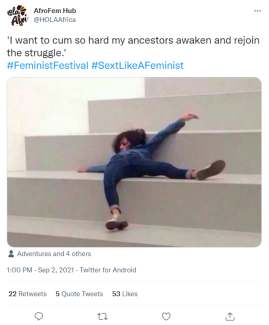
and my number 1... Because you know it’s gotten real when higher powers are invoked.

Image of a tweet with a woman fainted on a set of stairs. Text says: I want to cum so hard my ancestors awaken and rejoin the struggle.

Manal Tamimi | Snippet EN

Portrait Manal Tamimi

Manal Tamimi is a Palestinian activist and human rights defender. She is a mother of four who holds a master’s degree in international humanitarian law. Due to her activism, she was arrested three times and got wounded more than once, including with live explosive bullets which are banned internationally. Her family is also a target: her children have been arrested and wounded with live ammunition more than once. The last incident was an assassination attempt of her son Muhammad who was shot in the chest, near the heart, a few weeks after his liberation from the occupation prisons where he had spent two years. Her philosophy on life: if I have to pay the price for being a Palestinian and not for a crime I have committed, I refuse to die in silence.

Mariam Mekiwi | Snippet EN

Mariam Mekiwi Portrait

Mariam Mekiwi is a filmmaker and photographer from Alexandria and living and working in Berlin.

Hospital | Content Snippet EN

“Now might be a good time to rethink what a revolution can look like. Perhaps it doesn’t look like a march of angry, abled bodies in the streets. Perhaps it looks something more like the world standing still because all the bodies in it are exhausted—because care has to be prioritized before it’s too late.” 
- Johanna Hedva (https://getwellsoon.labr.io/)

Hospitals are institutions, living sites of capitalism, and what gets played out when somebody is supposed to be resting is a microcosm of the larger system itself. 

Institutions are set out to separate us from our care systems – we find ourselves isolated in structures that are rigidly hierarchical, and it often feels as if care is something done to us rather than given/taken as part of a conversation. Institutional care, because of its integration into capitalist demand, is silo-ed: one person is treating your leg and only your leg, another is treating your blood pressure, etc. 

Photographer Mariam Mekiwi had to have surgery last month and documented the process. Her portraits of sanitized environments – neon white lights, rows after rows of repetitive structures – in a washed-out color palette reflect a place that was drained of life and movement. This was one of the ways Mariam kept her own spirit alive. It was a form of protest from within the confines of an institution she had to engage with.

The photos form a portrait of something incredibly vulnerable, because watching someone live through their own body’s breakdown is always a sacred reminder of our own fragility. It is also a reminder of the fragility of these care systems, which can be denied to us for a variety of reasons – from not having money to not being in a body that’s considered valuable enough, one that’s maybe too feminine, too queer or too brown.  

Care experienced as disembodied and solitary, that is subject to revocation at any moment, doesn’t help us thrive. And it is very different from how human beings actually behave when they take care of each other. How different would our world look like if we committed to dismantling the current capitalist structures around our health? What would it look like if we radically reimagined it?

Snippet Kohl - Panel | Liberated Land & Territories | AR

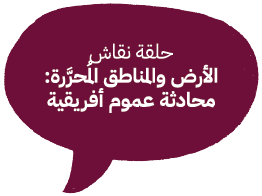
Speech bubble: Panel liberated land and territories

حلقة نقاش | الأرض والمناطق المُحرَّرة: محادثة عموم أفريقية 
مع لوام كيدان ومريامة سونكو ويانيا صوفيا غرسون ڤالنسيا ونوسمة سيزاني

YOUTUBESOUNDCLOUD

#5 - Sexting like a feminist Tweets Snippet AR

تقديم تحليل كفء للأجساد البحثيّة، يستوجب بالضرورة تسخيرًا شاملا لكافّة الأدوات الحميميّة…

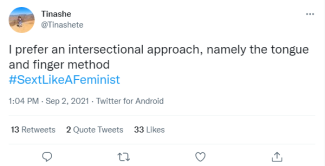
Image of a tweet. Text says: I prefer an intersectional approach, namely the tongue and finger method.

أفضّل المقاربة التقاطعيّة لما تشتمل عليه من مداعبة ممنهجة باللسان والأصابع