Audette Salem

Across the globe, feminist, women’s rights and gender justice defenders are challenging the agendas of fascist and fundamentalist actors. These oppressive forces target women, persons who are non-conforming in their gender identity, expression and/or sexual orientation, and other oppressed communities.
Discriminatory ideologies are undermining and co-opting our human rights systems and standards, with the aim of making rights the preserve of only certain groups. In the face of this, the Advancing Universal Rights and Justice (AURJ) initiative promotes the universality of rights - the foundational principle that human rights belong to everyone, no matter who they are, without exception.
We create space for feminist, women’s rights and gender justice movements and allies to recognize, strategize and take collective action to counter the influence and impact of anti-rights actors. We also seek to advance women’s rights and feminist frameworks, norms and proposals, and to protect and promote the universality of rights.
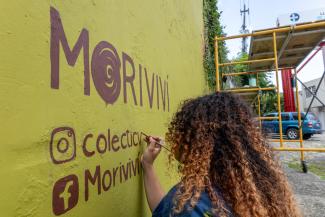
Colectivo Moriviví is an all women artistic collective. Our artistic production consists of muralism, community-led muralism, and protest performance/actions. Our work is about democratizing art and bringing the narratives of Puerto Rican communities to the public sphere to create spaces in which they are validated. We believe that through artivism we can promote consciousness on social issues and strengthen our collective memory.

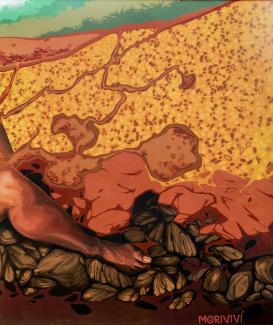
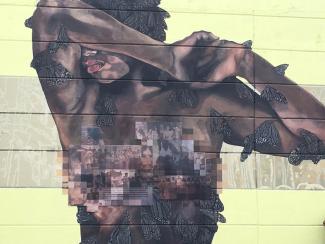
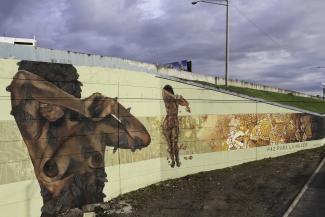

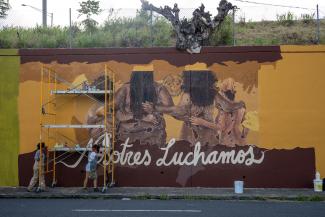
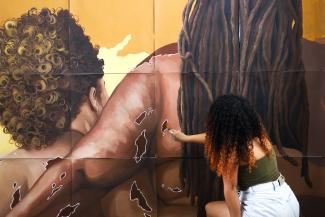
As part of their participation in AWID’s Artist Working Group, Colectivo Morivivi gathered a diverse group of members, partners and staff to facilitate a collaborative process of dreaming into, informing, and deciding on the content for a community mural through a multi-stage co-creation process. The project began with a remote conceptualization with feminists from different parts of the planet brought together by AWID, and then it evolved to its re-contextualization and realization in Puerto Rico. We were honored to have the input of local artists Las Nietas de Nonó(@lasnietasdenono), the participation of local women in the Community Painting Session, the logistics support from the Municipality of Caguas, and FRIDA Young Feminist Fund’s additional support to the collective.
The mural explores the transcendence of borders by presenting bodies like a map, in an embrace that highlights the intersection of the different feminist manifestations, practices and realities.
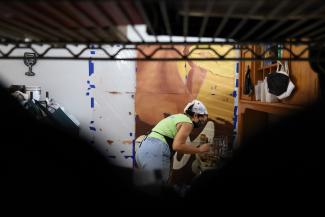
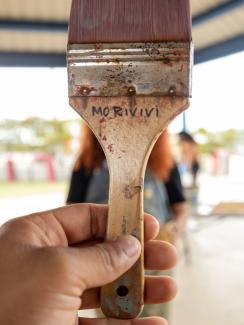
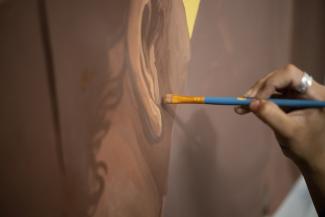
We also thank Kelvin Rodríguez, who documented and captured the different stages of this project in Puerto Rico:




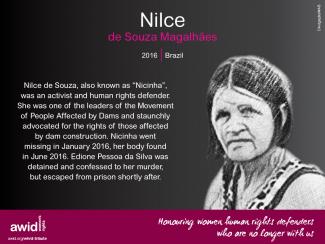
ترجمة مارينا سمير
 |
أكوسوا هانسون، فنانة وناشطة مقيمة في أكرا في غانا. تشمل أعمالها على ميادين الإذاعة والتلفزيون ووسائل الإعلام المطبوعة والمسرح والأفلام ومعارض القصص المصورة والأعمال الفنية ثُلاثية الأبعاد والروايات المصورة. تتمحور نشاطية أكوسوا حول قضايا الوحدة الأفريقية والنسوية، مع اهتمام خاص بتقاطع الفن مع الثقافة الشعبية والنشاطية. حائزة على ماجستير في الفلسفة في الدراسات الأفريقية، مع التركيز على الدراسات الجندرية والفكر الفلسفي الأفريقي. أكوسوا مبتكرة مود جيرلز، وهي سلسلة روايات مصورة، تتابع مغامرات أربعة أبطال خارقين يقاتلون من أجل إفريقيا خالية من الفساد والاستعمار الجديد والأصولية الدينية، وثقافة الاغتصاب ورهاب المثلية الجنسية وغير ذلك. تعمل كمذيعة في Y 107.9 FM، غانا. |
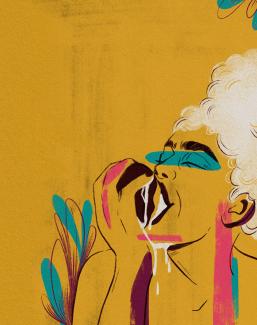
في هذه الرسومات، تنخرط فتاة القمر وادجيت في ممارسة حميمية مع شيطان ثنائي الجندر. من بين فتيات القمر الأربعة، وادجيت هي المُعالِجة والفيلسوفة ووسيطة العرّافة. هي تقوم بذلك من أجل إطلاق عملية علمية وروحية، تُطلِق عليها تسمية «الاستنارة بضوء البدر». خلال هذه العملية، تشكّل تسلسلاً زمنياً حيّاً بين ذكرياتها وحواسها ومشاعرها ورؤاها وخيالاتها. إنّها أحد أشكال السفر عبر الزمن من خلال الذبذبات، من أجل اكتشاف ما تُسميه «تجلّيات الحقيقة». أثناء التجربة، تتضمّن إحدى رؤى وادجيت الضبابية اقتراب نهاية العالم نتيجة تدمير الناس للبيئة في خدمة الرأسمالية الشرهة؛ وذكرى طفولة حول دخول المستشفى بعد التشخيص بمرض نفسي؛ ورؤية لأصل قصّة فتيات القمر يظهر فيها الرمز التوراتي نوح، كفتاة قمر سوداء من عصر قديم تحذّر من أخطار التلوث البيئي.
تمتدّ ممارسات الـ»بي دي إس إم» إلى أبعد من كونها كينك مرح يقود لاستكشافات حسّية، فبإمكانها أن تكون طريقة للتعامل مع الألم العاطفي والصدمات. لقد كانت وسيلةً للتعافي الجنسي بالنسبة لي، بتقديمها نمط للتحرّر الجذري. تطهيرٌ ما، يحدث، عند وقوع ألمٍ مادّي على الجسد. يقع هذا الألم في وجود تراضٍ، فيستخرج ألمًا عاطفيًا، كما لو كان «يستدعيه». نزول السوط على جسدي يسمح لي بتحرير مشاعر مكبوتة: توتّر، اكتئاب، شعوري بغياب دفاعاتي في وجه ضغوطاتٍ تُغرقني أحيانًا. عند الانخراط في الـ»بي دي إس إم» كسبيل للتعافي، على العشّاق أن يتعلّموا كيف يكونون شديدي الوعي ببعضهم البعض، ومسؤولين عن بعضهم البعض. فحتى لو كانت الموافقة قد أُعطيت في البداية، علينا أن نكون منتبهين لأيّ تغيّرات قد تطرأ أثناء الممارسة، خاصةً مع احتدام المشاعر. أتعامل مع الـ»بي دي إس إم» بفهمٍ لأنه ينبغي أن يكون الحبّ والتعاطف أساسًا لعملية الاستسلام للألم، وبذلك أخلق مساحة أو أنفتح للحبّ.
إن الاهتمام برعاية ما بعد وقوع الألم يُعَدّ استكمالًا للعملية. يمكن لذلك أن يحدث بطُرُقٍ بسيطة جدًا مثل الاحتضان، التأكّد ممّا إذا كان الآخر يرغب في شرب الماء، مشاهدة فيلمٍ معًا، مشاركة عناق أو حتى مشاركة سيجارة حشيش. يمكن لهذه الرعاية أن تمتثل لأيّ ما كانت عليه لغة حبّك المُختارة. مع إدراك أنّ جروحًا قد فُتِحَت، تُعَدّ هذه المساحة من الاحتواء ضرورية من أجل استكمال عملية التعافي. إنّه أكبر درسٍ في ممارسة التعاطف وتعلّم كيف تحتوي شريكك/ شريكتك حقًا، نظرًا لحساسية تمييع الحدود الفاصلة بين الألم والمتعة. بهذه الطريقة، يصبح الـ»بي دي إس إم» أحد أشكال أعمال الرعاية بالنسبة لي.
بعد ممارسة جنسية فيها ممارسات «بي دي إس إم»، أشعر بصفاء ذهني وهدوء يَضَعاني في مساحة إبداعية عظيمة ويمكّناني روحيًا. مشاهدة الألم يتحوّل آنيّاً لشيء آخر هي أشبه بتجربة سحرية. وبالمثل، تجربة الـ»بي دي إس إم» المحرِّرة على المستوى الشخصي تسمح لوادجيت بالوصول إلى المعرفة المُسبَقة والحكمة والصفاء الذهني مما يساعدها في واجباتها كفتاة قمر في مواجهة الأبوية الأفريقية.
وُلِدَت «فتيات القمر» أثناء عملي كمديرة لـ»دراما كوينز»، وهي منظمة فنّية شبابية ناشطة في غانا. منذ تأسيسنا في 2016، استخدمنا وسائط فنّية مختلفة كجزءٍ من عملنا الناشطي النسوي والبيئي والعموم- أفريقي. استخدمنا الشِعر والقصص القصيرة والمسرح والأفلام والموسيقى لمناقشة قضايا مثل الفساد والأبوية والتدهور البيئي ورهاب المثلية الجنسية. ناقَشَت أعمالنا المسرحية الافتتاحية مثل «خَيّاطة شارع سان فرانسيس» و»حتى يفيق أحدهم» مشكلة ثقافة الاغتصاب في مجتمعاتنا. كما يُزعم أن «مثلنا تمامًا» كانت من أوائل الانتاجات المسرحية في غانا التي تناقش بشكل مباشر قضية رهاب المثلية الجنسية المتغلغلة في البلد. كما ساهمت «جامعات غانا الكويرية»، وهي ورشة لصناعة الأفلام الكويرية لتدريب صنّاع الأفلام الأفارقة، في تدريب صنّاع أفلام من غانا ونيجيريا وجنوب أفريقيا وأوغاندا. وعُرِضَت الأفلام المصنوعة في الورشة في مهرجانات، مثل فيلم «فتاة رضيعة: قصة شخص بيني الجنس». ولذلك، فإنّ الانتقال إلى وسيط الروايات المصوّرة هو تطوّر طبيعي.
منذ حوالي سبع سنوات، بدأتُ بكتابة رواية لم أكملها أبدًا عن حياة أربع نساء. في عام 2018، فتحت «مبادرة المجتمع المفتوح لغرب إفريقيا» (OSIWA) فرصة مِنحة أطلقت إنتاج المشروع وتحوّلت روايتي غير المكتملة إلى فتيات القمر. هناك جزءان من فتيات القمر، يتكوّن كلّ منهما من ستّة فصول. الكُتّاب والمحرّرون المساهمون في الموسم الأول هم سوهايدا دراماني، وتسيدي كان تاماكلوي، وجورج هانسون، ووانلوف كوبولور. كتّاب الموسم الثاني هم يابا أرما ونادية أهيدجو وأنا. قام الفنان الغاني كيسوا وستوديو «أنيماكس إف واي بي»، وهو ستوديو رسوم متحرّكة وتصميمات وتأثيرات بصرية، بالرسوم التوضيحية للشخصيات وصياغتها مفاهيميًا.
لقد كانت كتابة فتيات القمر، بين 2018 و2022، عملَ حبٍّ بالنسبة لي، بل بالأحرى، عمل من أجل التحرّر. أهدف أن أكون مجدِّدة في الشكل والأسلوب: لقد اهتممت بتحويل أنماطٍ أخرى من الكتابة، مثل القصص القصيرة والشِعر، لتلائم بنية القصص المصوّرة. تستهدف فتيات القمر مناقشة القضايا الكبرى وتكريم النشطاء الموجودين في الحياة الحقيقية، من خلال إدماج الرسومات والنصوص، كما يحدث في القصص المصوّرة عادةً. قراري بمركزة النساء الكوير كبطلات خارقات، وهو أمر نادر الحدوث في هذا النوع من الفن، أصبح له معنى أكبر بكثير عندما بدأ يتطوّر أمر خطير في غانا في عام 2021.
شهد العام الماضي تصاعد في وتيرة العنف ضد مجتمع الميم عين في غانا، والتي بدأت بإغلاق أحد مراكز مجتمع الميم عين. أعقب ذلك اعتقالات تعسفية وسجن أشخاص مشكوك في انتمائهم للطيف الكويري، كذلك أشخاص متّهمين بالدفع بـ»أجندة مثلية». تُوِّج ذلك بتقديم مشروع قانون ضد الميم عين في البرلمان الغاني تحت إسم «حقوق الإنسان الجنسية اللائقة وقِيَم الأسرة الغانية». يُزعم أن هذا المشروع هو أكثر مشاريع القوانين توحشًا ضد الميم عين كان قد صيغ في المنطقة، وقد أتى لاحقًا على محاولات سابقة في بلاد مثل نيجيريا وأوغندا وكينيا.

أتذكّر بمنتهى الوضوح أول مرّة قرأت فيها مسودة مشروع القانون. لقد كانت ليلة جمعة، والتي عادةً ما أستريح أو أحتفل فيها بعد أسبوع عمل طويل. لحسن الحظ، سُرِّبت المسودّة وتمّت مشاركتها معي على مجموعة واتساب. أثناء القراءة، تسلّل إليّ شعور عميق بالخوف والتوجّس مما أفسد ليلة استراحتي.
اقترح المشروع معاقبة أيّة مناصرة للميم عين بالسجن من خمس لعشرة سنوات، وبتغريم وحبس أي شخص يُعرّف نفسه باعتباره مثلي أو مثلية أو عابر أو عابرة جنسيًا أو ينتمي لأية فئات جنسية أو/وجندرية غير نمطية، إلا إذا «تراجع» وقَبِل الخضوع لعلاج تصحيحي. في مسودة مشروع القانون، حتى اللاجنسيين جُرِّموا. انقضّ مشروع القانون على جميع الحرّيات الأساسية: حرّية الفكر وحرّية الوجود وحرّية أن يتمسّك الشخص بحقيقته ويعيش بها. انقضّ مشروع القانون أيضًا على منصّات التواصل الاجتماعي والفنّ. لو مُرِّر هذا المشروع، ستصبح فتيات القمر عملاً أدبياً محظوراً. ما تقدّم به مشروع القانون كان شرًا خالصًا وبعيد المدى، لقد صُدِمت لدرجة الاكتئاب من عمق الكراهية التي صُنِع منها هذا المشروع. أثناء تصفّحي موقع «تويتر» تلك الليلة، وجدتُ انعكاسًا للرعب الذي شعرت به بداخلي. لقد كان هناك بثًا مباشرًا للمشاعر، حيثُ كان يتفاعل الناس فوريًا مع ما يقرأونه: من عدم تصديق إلى رعب إلى خيبة أمل شديدة وشعور بالأسف عندما أدركنا المدى الواسع الذي رغب المشروع في الانقضاض عليه. البعض غرّدوا عن استعدادهم لجمع ما لديهم والرحيل عن البلاد. بعدها، وكعادة الغانيين، تحوّل الأسف والخوف لدعابة. ومن الدعابة أتى الحماس لتصعيد المقاومة.
لذلك، فالعمل مستمرّ. لقد صنعتُ فتيات القمر لتوفير شكلٍ بديلٍ من التعليم، ولتوفير المعرفة حيثُ قمَعَتها أبوية عنيفة، ولخلق مساحة ظهور لمجتمع الميم عين حيثُ تمّ محوه. من الضروري أيضًا أن يحصل الـ»بي دي إس إم» الأفريقي على منصّة لإظهاره حيثُ أنّ الكثير من الـ»بي دي إس إم» المُمثَّل أبيض. إن المتعة الجنسية، سواء من خلال الـ»بي دي إس إم» أو غيره، مثلها مثل أنماط الحبّ اللامغاير جنسيًا، تتخطى العرق والقارّة، فالمتعة الجنسية وتنوّع خبراتها قديمة بقِدَم الزمن.

This journal edition in partnership with Kohl: a Journal for Body and Gender Research, will explore feminist solutions, proposals and realities for transforming our current world, our bodies and our sexualities.
نصدر النسخة هذه من المجلة بالشراكة مع «كحل: مجلة لأبحاث الجسد والجندر»، وسنستكشف عبرها الحلول والاقتراحات وأنواع الواقع النسوية لتغيير عالمنا الحالي وكذلك أجسادنا وجنسانياتنا.
AWID does not provide group discounts, but we do provide registration discounts to members. (Click here to learn more about becoming a member)
Our women ancestors form a circle
Sacred, alive, powerful
We are in the middle
Feeling their strength.
The drum beats a sound of earth
Our skin dresses in colours
We are green, red, orange, blue, violet, black
The drum beats a sound of earth
A voice vibrates, a scream emanates, a song rings out, lulling to sleep, awakening consciousness.
The drum beats a sound of earth
A gaze of complicity, friendship profound.
The drum beats a sound of earth
Ours is but one heart, beating a rhythm of the soul, inviting us to move, inspiring desire, and showing us a path.
One of communal togetherness, power of the people, self-government, a women’s revolution of subversive communal care.
The drum beats a sound of earth
And I invite you to join, to be voice, skin, gaze, seed, fire, song, communion.
The drum beats a sound of earth
And I invite you to discover it, to love it, to know it, and to defend it from the heart of the community
For 25 years they have lived along the same dusty streets, at the top of a hill named after a lion. They come from different places, many from traditional farming communities. Their skin is the colour of rebellion, the colour of a cardon cactus, because in them lives the spirit of the semi-arid Lara State, which is where their love for life comes from, their appreciation, care and protection of water and land. They are heiresses of the Gayon and Ayaman lineages, Indigenous communities that lived and live in the northern part of Lara State.
From the time they were very young they learned that maternity is a role from which it is not easy to escape. Caring for children, home and husband, washing, ironing, cooking, cleaning—everything had to be impeccable, people insisted.
And that was life—that and violence, insults, abuse, hitting, scheming, complaints were to be expected. It seemed almost natural, and that is how they spent their days. Everyday life on those dirt streets living in little houses of tin sheet metal without any electricity or running water. That was poverty, the precarity of when a man would arrive, yes, a man, a project. And then, an unusual revolution because it came about without war.
Then they were invited to go out, they were invited to take to the streets and occupy public space. In the process, the women tore down doors and windows, broke chains, let their hair down and they felt free, free like runaway slaves, Caribbean rebels, freedom fighters.
And those concepts of independence and sovereignty are something that those who had the chance to study had read about, but feeling it, feeling like the protagonists of a process of social transformation—that is an important victory that we have to mention and we cannot forget.
At the top of that hill one can feel the complicity, the shared fire, the years of struggle. They tell of how one of them would go around with her parasol in the afternoons from house to house having coffee and conversing with the people she would invite, convincing them
We are going to make a community council!
Let’s move forward together as a community!
Let’s make plans for education, sports, health, nutrition, a women and gender equality committee, the economy.
We can form our own People’s Government so our Neighbourhood can Be Beautiful!
And that is how the houses came, the doctor’s office, daycare, electricity, potable water. These are some of the community’s achievements, some of our common dreams come true.
And you might ask how a cuentera, a storyteller, made her way to a hill with the name of a lion
And I will tell you: it’s that I was born rowdy, always fighting, I was born a wanderer my grandmother would say, born ready Comandante Chavez would add, from so much walking, grumbling, fighting, and doubting that military man, that I would end up becoming convinced by the community project, by the idea of self-government, of the people managing their own resources, of all the power going to the communities, and so I was convinced.
But I knew something was missing because the women, the women of the community kept building up the people’s power and putting our hearts in the anti-imperialist and anti-capitalist fight, but there is something that hurts and continues to affect us. There are wounds from a patriarchy still present.
So one day, I found myself crying and the drum of the earth beat and our women ancestors spoke.
I found myself surrounded by a group of women who held me up, who contained me as I spilled over in front of them, as it both hurt and liberated me at the same time. That is how I discovered that love among women heals you, saves you, and that our friendship is profoundly political and that sisterhood is a way of being, of living life. From that moment on I never felt alone again, I never felt like an island again, because I know there is a group of women who carry me, bring me, love me, care for me and me for them. I know that this way of becoming a feminist with the mysticism of women loving life is an experience of feeling connected and loved by women, even if you never see them again. How not to want this that happened to me, to happen also to other women, this new beginning, this birth of a new heart is a gift from the goddesses that must be shared.
So I decided to join the women and I began walking from community to community to learn about others’ experiences. We began debating health, education, nutrition, we began preaching the anti-patriarchal word and calling for communities free of machismo. We insisted on recovering ancestral knowledge, intuition, we decided to defend life by talking about abortion and we found ourselves laughing, crying, debating, reflecting. I find myself with Macu, with the China, Yenni, Carolina, Maria, Ramona, Irma, and even with our sister Yenifer who left us not long ago.
This is my homage to them, the women of the hill, the lioness women, the ones who without a doubt have sown a seed in me with so much force it now beats with my heart.
Without a doubt they blaze a path, they are the ones who make caring for a family possible, collective care. They are also a force, a force in a territory that fights to overcome the embargo, the patriarchal violence, the political treason, to overcome the bureaucracy and the corruption.
Without a doubt they blaze a path
Without a doubt they are a compass
Without a doubt they are the heart of the community
Thank you.
The rising power of anti-rights actors is not happening in a vacuum. Understanding the rise of ultra-nationalism, unchecked corporate power, growing repression, and diminishing civic space is key to contextualize the anti-rights threats we face today.
Dear feminist movements,
Love is what keeps our feminist fire burning. Along with care for our communities, anger and rage in the face of injustice, and the courage to take action.
In September 2022, we stepped with great excitement into our leadership roles at AWID, as Co-Executive Directors. We felt the warmth and embrace of the feminist sisterhood as you welcomed us.
Reflecting on our most precious memories as feminists, we recall powerful moments of togetherness at street protests, sharp analysis, and brave voices shaking the status quo at gatherings. We held those intimate conversations into the night, laughed for hours, and danced at parties together.
Feminist fires need to be fed, especially in difficult times when there is no lack of external challenges, from the climate crisis and the rise of right-wing forces to exploitative economies and persisting patterns of oppression within our own social movements. It's these fires, burning ablaze everywhere, that light our ways and keep us warm, but we can’t disregard the exhausting effects of political violence and repression directed against many of our struggles, movements, and communities.
We understand the desire to change the world as an essential ingredient of feminist organizing. We can never forget that we are the ones we have been waiting for, in building alternatives and shaping our future. Yet, vibrant feminist energy cannot be taken for granted and must be safeguarded in many ways. In this, we will continue to be vigilant. Greater and equal access to care and wellbeing, to healing and pleasure, are not only instruments to prevent burnout and sustain our movements, though that is an important function; first and foremost, they are the way in which we hope to live our lives.
We are thrilled to roll up our sleeves and work with you. AWID’s new strategic plan “Fierce Feminisms: Together We Rise” reflects our conviction that now is the time for us to be fierce and unapologetic in our agendas while making an effort to connect across movements and truly get to know each other’s realities, so that we may rise together - because, for us, this is the only way.
Our plans include the long-awaited AWID Forum! We look forward to meeting you all in person and online in 2024. We are hearing from you the need to connect and recharge, to rest and heal, to be challenged and inspired, to share good food, and to laugh and dance together. Few things in this world are as powerful and transformative, as feminists from all parts of the world coming together, and we truly hold our breath for this moment, because we know the magic that we can create together.
Our membership engagement has taken on a life of its own through the AWID Community (our online platform for members), and our focus on building connection and solidarity resonates with many of you. Please join and connect with us and others in feminist movements around the world. We know the importance of connection in a time and space where the rules are not made for us, and we hold close our community, where each of us matters.
Together with our fantastic AWID colleagues, we promise to do our best to support feminist movements, as is the mission and purpose of AWID. Please hold us to account.
For the past 40 years, you - feminist movements - have shaped AWID’s history, and pushed us to be braver, creative, and radical. 40 is a fabulous age, and we look forward to another 40 years with you all. We are looking forward to the partnerships, calls to justice, collaboration, policy influencing, and badass feminist power that you all bring in navigating the ever-increasing backlash on gender, racial and environmental justice. We have so much to learn from you and from each other, as we collectively build the worlds we believe in.
Cindy Clark and Hakima Abbas, thank you for paving the way for us and preparing us to fill your enormous shoes. We always appreciate all those on whose shoulders we stood and continue to stand. We understand ourselves to be part of a broader movement landscape, feminist histories, presents, and daring futures.
AWID’s Board of Directors, we are grateful to you for the support and feminist love you show us, and for your commitment to Global South leadership and the co-leadership model. We send our love and respect to each and every AWID colleague, we feel honoured to be working with such an exceptional feminist team of dedicated professionals.
This is our first time writing a love letter together, how could we conclude it without expressing love, care, and respect for each other? It’s a pretty intense relationship we’ve stepped into! We both bring our different and diverse perspectives and skills to our work, and as individuals, we also bring our lived experiences and authentic selves.
Together with you all, we are a story in the making, a part of a beautiful woven - and often beautifully challenging - tapestry that continues into the future. We had fun starting this journey together with each other and with you, and we very much hope to keep the romance alive.
In solidarity, with love and care
Inna and Faye
21 February 2023, Member Mixer 5 on Feminist Politics with Faye and Inna.

Not a member yet? Find out more about AWID Membership.

Effective as of 25 Apr 2023.
Please click here to view the previous version of our Privacy Policy.
This Privacy Policy describes how the Association for Women’s Rights in Development and our subsidiaries and affiliates (“AWID,” “we,” “us” or “our”) handles personal information that we collect through our website that links to this Privacy Policy (the “Site”), as well as through social media, our marketing activities, our live events and other activities described in this Privacy Policy (“Service”).
You can download a printable copy of this Privacy Policy here.
Index
Personal information we collect
How we use your personal information
How we share your personal information
Your choices
Other sites and services
Security
International data transfers
Children
Changes to this Privacy Policy
How to contact us
Notice to European users
Information you provide to us. Personal information you may provide to us through the Service or otherwise includes:
Automatic data collection. We, our service providers, and our business partners may automatically log information about you, your computer or mobile device, and your interaction over time with the Service, our communications and other online services, such as:
Cookies and similar technologies. Some of the automatic collection described above is facilitated by cookies, which are small text files that websites store on user devices and that allow web servers to record users’ web browsing activities and remember their submissions, preferences, and login status as they navigate a site. Cookies used on our sites include both “session cookies” that are deleted when a session ends, “persistent cookies” that remain longer, “first party” cookies that we place and “third party” cookies that our third-party business partners and service providers place.
We may use your personal information for the following purposes or as otherwise described at the time of collection:
Service delivery and business operations. We may use your personal information to:
Research and development. We may use your personal information for research and development purposes, including to analyze and improve the Service. As part of these activities, we may create aggregated, de-identified and/or anonymized data from personal information we collect. We make personal information into de-identified or anonymized data by removing information that makes the data personally identifiable to you. We may use this aggregated, de-identified or otherwise anonymized data and share it with third parties for our lawful business purposes, including to analyze and improve the Service and promote our business.
Marketing. We and our service providers may collect and use your personal information to send you direct marketing communications. You may opt-out of our marketing communications as described in the Opt-out of marketing section below.
Compliance and protection. We may use your personal information to:
With your consent. In some cases, we may specifically ask for your consent to collect, use or share your personal information, such as when required by law.
Cookies and similar technologies. In addition to the other uses included in this section, we may use the Cookies and similar technologies described above for the following purposes:
Retention. We generally retain personal information to fulfill the purposes for which we collected it, including for the purposes of satisfying any legal, accounting, or reporting requirements, to establish or defend legal claims, or for fraud prevention purposes. To determine the appropriate retention period for personal information, we may consider factors such as the amount, nature, and sensitivity of the personal information, the potential risk of harm from unauthorized use or disclosure of your personal information, the purposes for which we process your personal information and whether we can achieve those purposes through other means, and the applicable legal requirements.
When we no longer require the personal information we have collected about you, we may either delete it, anonymize it, or isolate it from further processing.
We may share your personal information with the following parties and as otherwise described in this Privacy Policy or at the time of collection.
Affiliates. Our corporate parent, subsidiaries, and affiliates, for purposes consistent with this Privacy Policy.
Service providers. Third parties that provide services on our behalf or help us operate the Service or our business (such as hosting, information technology, customer support, email delivery, marketing, consumer research and website analytics).
Payment processors. Any payment card information you use to make a purchase on the Service is collected and processed directly by our payment processors, such as Stripe. Stripe may use your payment data in accordance with its privacy policy, https://stripe.com/en-gb/privacy. You may also sign up to be billed by your mobile communications provider, who may use your payment data in accordance with their privacy policies.
Third parties designated by you. We may share your personal data with third parties where you have instructed us or provided your consent to do so. We will share personal information that is needed for these other companies to provide the services that you have requested. Moreover, you may choose to translate user-generated content using Google Translate. Google may use your user-generated content in accordance with its privacy policy, https://policies.google.com.Professional advisors. Professional advisors, such as lawyers, auditors, bankers and insurers, where necessary in the course of the professional services that they render to us.
Authorities and others. Law enforcement, government authorities, and private parties, as we believe in good faith to be necessary or appropriate for the compliance and protection purposes described above.
Other users. Your profile and other user-generated content data (except for messages) may be visible to other users of the Service. For example, other users of the Service may have access to your information if you chose to make your profile or other personal information available to them through the Service, such as when you provide comments, reviews, survey responses, or share other content. This information can be seen, collected and used by others, including being cached, copied, screen captured or stored elsewhere by others (e.g., search engines), and we are not responsible for any such use of this information.
In this section, we describe the rights and choices available to all users. Users who are located in the United Kingdom, Switzerland, and the European Economic Area can find additional information about their rights below.
Opt-out of marketing communications. You may opt-out of marketing-related emails by following the opt-out or unsubscribe instructions at the bottom of the email, or by contacting us. Please note that if you choose to opt-out of marketing-related emails, you may continue to receive service-related and other non-marketing emails.
Declining to provide information. We need to collect personal information to provide certain services. If you do not provide the information we identify as required or mandatory, we may not be able to provide those services.
Delete your content or end your membership. You can choose to delete certain content you have provided to us. If you wish to request to end your membership, please contact us.
The Service may contain links to websites, mobile applications, and other online services operated by third parties. In addition, our content may be integrated into web pages or other online services that are not associated with us. These links and integrations are not an endorsement of, or representation that we are affiliated with, any third party. We do not control websites, mobile applications or online services operated by third parties, and we are not responsible for their actions. We encourage you to read the privacy policies of the other websites, mobile applications and online services you use.
We employ a number of technical, organizational and physical safeguards designed to protect the personal information we collect. However, security risk is inherent in all internet and information technologies and we cannot guarantee the security of your personal information.
We are headquartered in the United States and may use service providers that operate in other countries. Your personal information may be transferred to the United States or other locations where privacy laws may not be as protective as those in your state, province, or country.
Users in the United Kingdom, Switzerland, and the European Economic Area should read the important information provided below about transfer of personal information outside of the European Union.
The Service is not intended for use by anyone under 18 years of age. If you are a parent or guardian of a child from whom you believe we have collected personal information in a manner prohibited by law, please contact us. If we learn that we have collected personal information through the Service from a child without the consent of the child’s parent or guardian as required by law, we will comply with applicable legal requirements to delete the information.
We reserve the right to modify this Privacy Policy at any time. If we make material changes to this Privacy Policy, we will notify you by updating the date of this Privacy Policy and posting it on the Service or other appropriate means. Any modifications to this Privacy Policy will be effective upon our posting the modified version (or as otherwise indicated at the time of posting). In all cases, your use of the Service after the effective date of any modified Privacy Policy indicates your acknowledgment that the modified Privacy Policy applies to your interactions with the Service and our business.
Where this Notice to European users applies. The information provided in this “Notice to European users” section applies only to individuals located in the EEA or the UK (EEA and UK jurisdictions are together referred to as “Europe”).
Personal information. References to “personal information” in this Privacy Policy should be understood to include a reference to “personal data” (as defined in the GDPR) – i.e., information about individuals from which they are either directly identified or can be identified. It does not include “anonymous data” (i.e., information where the identity of individual has been permanently removed). The personal information that we collect from you is identified and described in greater detail in the section “Personal information we collect”.
Our legal bases for processing. In respect of each of the purposes for which we use your personal information, the GDPR requires us to ensure that we have a “legal basis” for that use.
We have set out below, in a table format, the legal bases we rely on in respect of the relevant Purposes for which we use your personal information – for more information on these Purposes and the data types involved, see How we use your personal information above.
|
|
|
|
|
|
|
|
|
|
|
|
|
|
|
|
|
|
|
|
Retention. We retain personal information for as long as necessary to fulfill the purposes for which we collected it, including for the purposes of satisfying any legal, accounting, or reporting requirements, to establish or defend legal claims, or for compliance and protection purposes, unless specifically authorized to be retained longer.
To determine the appropriate retention period for personal information, we consider the amount, nature, and sensitivity of the personal information, the potential risk of harm from unauthorized use or disclosure of your personal information, the purposes for which we process your personal information and whether we can achieve those purposes through other means, and the applicable legal requirements.
When we no longer require the personal information, we have collected about you, we will either delete or anonymize it or, if this is not possible (for example, because your personal information has been stored in backup archives), then we will securely store your personal information and isolate it from any further processing until deletion is possible. If we anonymize your personal information (so that it can no longer be associated with you), we may use this information indefinitely without further notice to you.
Other information
No obligation to provide personal information. You do not have to provide personal information to us. However, where we need to process your personal information either to comply with applicable law or to deliver our Services to you, and you fail to provide that personal information when requested, we may not be able to provide some or all of our Services to you. We will notify you if this is the case at the time.
No Automated Decision-Making and Profiling. As part of the Services, we do not engage in automated decision-making and/or profiling, which produces legal or similarly significant effects. We will let you know if that changes by updating this Privacy Policy.
Security. We have put in place procedures designed to deal with breaches of personal information. In the event of such breaches, we have procedures in place to work with applicable regulators. In addition, in certain circumstances (including where we are legally required to do so), we may notify you of breaches affecting your personal information.
Your rights
General. European data protection laws give you certain rights regarding your personal information. If you are located in Europe, you may ask us to take any of the following actions in relation to your personal information that we hold:
Exercising These Rights. You may submit these requests by email. See the How to contact us section above for our contact details. We may request specific information from you to help us confirm your identity and process your request. Whether or not we are required to fulfill any request you make will depend on a number of factors (e.g., why and how we are processing your personal information), if we reject any request you may make (whether in whole or in part) we will let you know our grounds for doing so at the time, subject to any legal restrictions. Typically, you will not have to pay a fee to exercise your rights; however, we may charge a reasonable fee if your request is clearly unfounded, repetitive or excessive. We try to respond to all legitimate requests within a month. It may take us longer than a month if your request is particularly complex or if you have made a number of requests; in this case, we will notify you and keep you updated.
Your Right to Lodge a Complaint with your Supervisory Authority. In addition to your rights outlined above, if you are not satisfied with our response to a request you make, or how we process your personal information, you can make a complaint to the data protection regulator in your habitual place of residence.
The Information Commissioner’s Office
Water Lane, Wycliffe House
Wilmslow - Cheshire SK9 5AF
Tel. +44 303 123 1113
Website: https://ico.org.uk/make-a-complaint/
Data Processing outside Europe; we are a US-based company and many of our service providers, advisers, partners or other recipients of data are also based in the US. This means that, if you use the Services, your personal information will necessarily be accessed and processed in the US. It may also be provided to recipients in other countries outside Europe.
It is important to note that that the US is not the subject of an ‘adequacy decision’ under the GDPR – basically, this means that the US legal regime is not considered by relevant European bodies to provide an adequate level of protection for personal information, which is equivalent to that provided by relevant European laws.
Where we share your personal information with third parties who are based outside Europe, we try to ensure a similar degree of protection is afforded to it in accordance with applicable privacy laws by making sure one of the following mechanisms is implemented:
You may contact us if you want further information on the specific mechanism used by us when transferring your personal information out of Europe.
نرحب بالطلبات عبر مجموعة كاملة من المواضيع والتقاطعات المهمة للحركات النسوية وحركات العدالة الجندرية.
Abby was a pioneering feminist, human-rights activist and former McGill University epidemiologist.
Abby was renowned for championing social causes and for her insightful critiques of reproductive technologies and other medical topics. Specifically, she campaigned against what she called the "geneticization" of reproductive technologies, against hormone replacement therapy and for better, longer research before the approval of discoveries such as the vaccines against the human papillomavirus.
On the news of her passing, friends and colleagues described her fondly as an “ardent advocate” for women’s health.

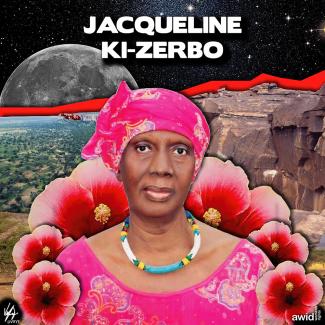
Jacqueline was a pioneering Malian/Burkinabe feminist, nationalist and educator.
She taught English in Senegal, before being recruited in 1961 as an English teacher at the Lycée Philippe Zinda Kaboré in Ouagadougou, Burkina Faso. Through her activism, she was involved in the popular uprising of January 3, 1966. Between 1961 and 1966, Jacqueline was also responsible for the trade union press, Voices of the Teachers. She was appointed as the head of the Normal Course for Young Girls (now known as Nelson Mandela High School) until 1974, and dedicated herself to girls’ education and advancing women’s rights.
In 1984 she was awarded the Paul G. Hoffmann Award for outstanding work in national and international development.