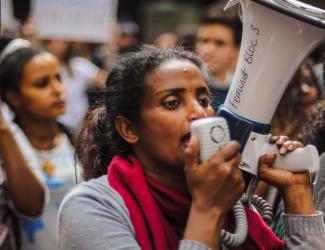



Anit-Racism Movement (ARM) / Flickr (CC BY-NC-ND 2.0)

Priority Areas

Supporting feminist, women’s rights and gender justice movements to thrive, to be a driving force in challenging systems of oppression, and to co-create feminist realities.

Resourcing Feminist Movements

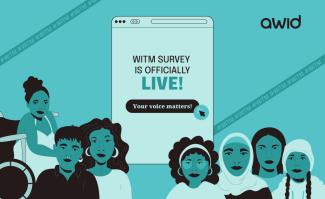
Banner image announcing that WITM Survey is live.


The “Where is the Money?” #WITM survey is now live! Dive in and share your experience with funding your organizing with feminists around the world.

Learn more and take the survey


Around the world, feminist, women’s rights, and allied movements are confronting power and reimagining a politics of liberation. The contributions that fuel this work come in many forms, from financial and political resources to daily acts of resistance and survival.


AWID’s Resourcing Feminist Movements (RFM) Initiative shines a light on the current funding ecosystem, which range from self-generated models of resourcing to more formal funding streams.

Through our research and analysis, we examine how funding practices can better serve our movements. We critically explore the contradictions in “funding” social transformation, especially in the face of increasing political repression, anti-rights agendas, and rising corporate power. Above all, we build collective strategies that support thriving, robust, and resilient movements.


Our Actions

Recognizing the richness of our movements and responding to the current moment, we:

  • Create and amplify alternatives: We amplify funding practices that center activists’ own priorities and engage a diverse range of funders and activists in crafting new, dynamic models  for resourcing feminist movements, particularly in the context of closing civil society space.

  • Build knowledge: We explore, exchange, and strengthen knowledge about how movements are attracting, organizing, and using the resources they need to accomplish meaningful change.

  • Advocate: We work in partnerships, such as the Count Me In! Consortium, to influence funding agendas and open space for feminist movements to be in direct dialogue to shift power and money.

Related Content

كيف ستعرضون وتعالجون المعطيات التي ستجمعونها في الاستطلاع؟

سيتم جمع المعطيات لأهداف إحصائية لتسليط الضوء على وضع التمويل للحركات النسوية العالمية وسيتم عرضها فقط بشكل إجمالي. لن تنشر AWID المعلومات عن اي منظمة محددة ولن تعرض أي من المعلومات التي ستمكّن من التعرّف على منظمة عن طريق موقعها أو صفاتها دون موافقة المنظمة.

Snippet Kohl - Panel “un”Inclusive Feminism | AR

Balloon Panel “un”Inclusive Feminism

حلقة نقاش | النسوية “غير” الشاملة: فتيات بلا صوت في الحركة النسوية الهايتية
مع نايكي ليدان وفيدورا بيير-لوي

YOUTUBE

Сколько ответов на опрос вы хотели бы получить?

Мы стремимся в общей сложности получить 2000 ответов, что почти вдвое больше, чем в последнем опросе, проведенном в 2011 году.

#4 - Sexting like a feminist Tweets Snippet AR

ان كنت نسوية عن حق، فإنك سترفضين التحقير الموجّه ضد الممارسات الجنسية الغرائبيّة

Image of a tweet. Text says: The revolution in your pants will not be televised... unless you're into that kind of thing. Which we can discuss... viva.

تَلفَزَتُنا للثورة تحت حزامك مشروطة بطبيعة رغباتك

Snippet - WITM Our objectives - PT

Os nossos objetivos da pesquisa WITM:

1

Fornecer a membres da AWID, parceires do movimento e financiadores uma análise atualizada, robusta, baseada em fatos e orientada para a ação das realidades do financiamento de movimentos feministas e do estado atual do ecossistema do financiamento feminista.

2

Identificar e demonstrar oportunidades para transferir mais recursos de maior qualidade para a organização feminista, expor soluções falsas e interromper tendências que fazem com que o financiamento não seja bem-sucedido e/ou se mova contra a justiça de género e objetivos feministas interseccionais.

3

Articular visões, propostas e objetivos feministas para a justiça no financiamento.

Participe da Pesquisa!

Add your own propositions

Please take a look at the existing propositions for inspiration before submitting your own idea. Someone might already be thinking along the same lines! Send your proposition to contribute@awid.org.

We will review and include new propositions on this webpage as they come.

Snippet - CSW69 - Full Calendar - EN

This image shows a full list of AWID at CSW69 activities

Snippet - CSW69 - What Can Feminist Movements Learn - EN

What Can Feminist Movements Today Learn from Beijing 1995?

✉️ By registration only. Register here 

📅 Wednesday, March 12, 2025
🕒 6.30–8:00pm EST

🏢 Church Center of the United Nations, 777 United Nations Plaza, New York, NY 10017

🎙️Co-facilitated by: Inna Michaeli, Co-Executive Director

Organizer: Jass, Gender at Work, and Count Me In! Consortium

Snippet - WCFM Movement and Struggle - EN

Movement in focus:

Filter your search by funders’ priority support areas that speak to your organizing efforts

Snippet - WITM INFOGRAPHIC_1_EN_2 Annual budget size

In 2023, feminist and 
women's rights organizations 
had a median annual budget of

In contrast, over $1 billion went 
to three anti-rights groups in 2021-2022, 
with funding for anti-gender networks still rising.

Snippet - COP30 - 6th International Rights of Nature Tribunal - EN

6th International Rights of Nature Tribunal: A New Pledge for Mother Nature

Where frontline organizers lead and corporations are held accountable.

📅 Tuesday, November 11, 2025
📍 Online and at the Universidade Federal do Pará, Belém

More info here

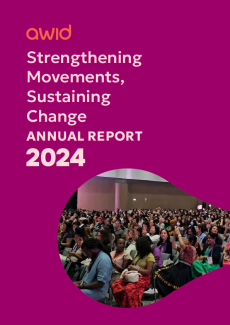
2024: Strengthening Movements, Sustaining Change

From the rising right in many countries and the flurry of funding cuts hitting hard civil society of the Global Majority, to the ongoing genocide in Gaza, the intensification of violent conflicts in Sudan, and climate crisis in many parts of our planet, we are facing real forces of fascism and a world order of impunity. This makes our opportunities to come together and build solidarity particularly valuable and imperative for our survival as a global feminist community. Of course, in 2024, the 15th AWID International Forum finally happened, and what a powerful space it was. 

Download the full 2024 Annual Report


As we look ahead, we build on the powerful calls to action made by feminists at the AWID Forum; Together we can build a world where justice, liberation and care are not aspirations but realities. 

Download the full 2024 Annual Report

Snippet - COP30 - Partner intro - EN

This campaign is held by 8 partner organizations across continents, building feminist alternatives to the climate crisis, ecocides and genocides.

Umyra Ahmad

Biography

Umyra Ahmad is a Malaysian feminist with a background in international and regional advocacy, and human rights education. In AWID, she works on advancing rights related to gender and sexuality at the UN. Prior to joining, she was a programme officer at IWRAW Asia Pacific, where she supported regional, national and grassroots organizations in using UN treaty body mechanisms as a tool for state accountability and access to justice. In Malaysia, she works with queer and refugee collectives and supports coordination of various mutual aid initiatives.

Position
Advancing Universal Rights and Justice Advocacy Lead
Add to stories
Off

Snippet - Intro WD2026_EN

Co-Creating a Political Home for Feminist Movements

From 27 - 30 April, 2026, AWID will be at the Women Deliver 2026 Conference, co-creating a political home with feminist and gender justice movements that is rooted in transnational care and solidarity. 

In a time when fascism and militarization continue to rise globally, feminist connection and solidarity across borders is what we truly need.  We are organizing multiple spaces at Women Deliver and online to connect movements with each other in conversations to build feminist agendas of solidarity and action. 

Christine Hayhurst

Biography

With over 30 years of finance experience, Christine has devoted her career to furthering nonprofit missions on a global scale. Her contributions extend to serving as Treasurer on the Board of an NGO. Christine joined AWID in 2007 as Controller and in 2023 took on the role as Director of Finance. During her spare time she enjoys traveling, gardening and hiking.

Position
Director of Finance
Add to stories
Off

AWID Forum: Co-creating Feminist Futures

In September 2016, the 13th AWID international Forum brought together in Brazil over 1800 feminists and women’s rights advocates in a spirit of resistance and resilience.

This section highlights the gains, learnings and resources that came out of our rich conversations. We invite you to explore, share and comment!


What has happened since 2016?

One of the key takeaways from the 2016 Forum was the need to broaden and deepen our cross-movement work to address rising fascisms, fundamentalisms, corporate greed and climate change.

With this in mind, we have been working with multiple allies to grow these seeds of resistance:

And through our next strategic plan and Forum process, we are committed to keep developing ideas and deepen the learnings ignited at the 2016 Forum.

What happens now?

The world is a much different place than it was a year ago, and it will continue to change.

The next AWID Forum will take place in the Asia Pacific region (exact location and dates to be announced in 2018).

We look forward to you joining us!

About the AWID Forum

AWID Forums started in 1983, in Washington DC. Since then, the event has grown to become many things to many peoples: an iterative process of sharpening our analyses, vision and actions; a watershed moment that reinvigorates participants’ feminisms and energizes their organizing; and a political home for women human rights defenders to find sanctuary and solidarity.

Learn more about previous Forums

Related Content

Astitva Trust defiende los derechos de los grupos de las minorías sexuales

Astitva Trust defiende los derechos de los grupos de las minorías sexuales

En abril de 2014, el Astitva Trust y su Presidenta Laxmi Narayan Tripathi, destacada activista por los derechos de las personas trans*, presentaron una petición apoyando el reconocimiento de un tercer género por parte de la Corte Suprema de la India. Fue una decisión histórica y a través de ella la Corte reconoció todos los derechos constitucionales a las personas trans*, afirmando que: «Todo ser humano tiene derecho a elegir su género».


Pero aunque para la ley las personas trans* son ciudadanas en pie de igualdad, todavía se enfrentan a una discriminación social extrema. Astitva Trust es una organización comunitaria de minorías sexuales (en su mayoría hijras[1]) cuyo objetivo es erradicar el estima y la discriminación contra las personas LGBTQ* y particularmente contra la comunidad trans*. Trabaja con grupos de las minorías sexuales, defiende sus derechos, promueve su salud y su bienestar integral, y ayuda a mejorar su calidad y sus estándares de vida.
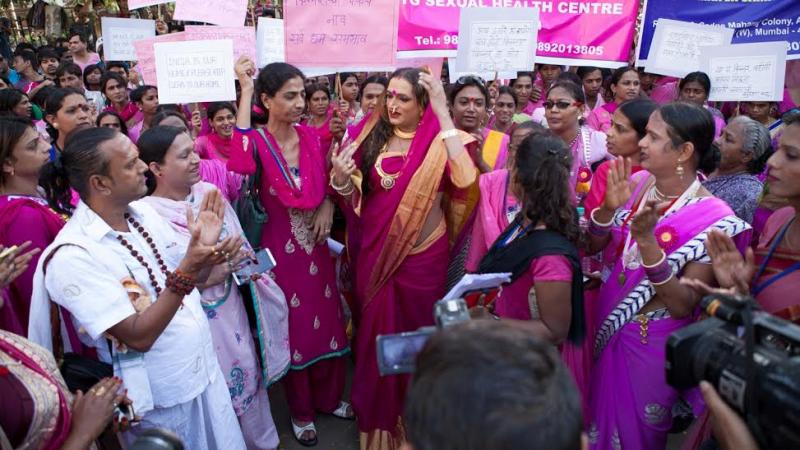
Entre los objetivos de Astitva se cuentan generar conciencia y difundir conocimientos acerca del VIH, el SIDA y otras enfermedades de transmisión sexual entre las minorías sexuales, promover el sexo más seguro, e incrementar el acceso a servicios de salud sexual comunitaria amigables. Hasta el momento, hay 4652 personas trans* registradas en Astitva y la organización mantiene contacto con 56 organizaciones trans* de la India, a las que apoya en numerosos aspectos.

Astitva es una de las fundadoras de la Integrated Network for Sexual Minorities [Red Integrada de Minorías Sexuales] cuyo consejo directivo integra; también es fundadora del Maharashtra Transgender Welfare Board [Comité para el Bienestar de la Población Trans* en Maharashtra], e integrante de su grupo de trabajo; y forma parte de la Asia - Pacific Transgender Network [Red Trans* de Asia y el Pacífico], y de la Asia Pacific Network of Sex Workers [Red de Trabajadoras/es Sexuales de Asia y el Pacífico].

En abril de 2015 y junto con el parlamentario Trichy Shiva, Astitva trabajó para lograr una histórica aprobación unánime del Proyecto de Ley por los Derechos de las Personas Trans* en la Rajya Sabha,[2] que reconoce la igualdad de derechos para las personas tras*. El paso siguiente es lograr su aprobación por parte de la Lok Sabha[3], para que se convierta en ley.


Escucha la charla de TEDx de Laxmi Narayan Tripathi (en inglés)


[1] Hijra es un término que se utiliza particularmente en la India para referirse a una persona trans*
[2] Cámara Alta del Parlamento de la India
[3] Cámara Baja del Parlamento de la India
Source
AWID

Astitva Trust travaille avec des groupes représentant diverses minorités sexuelles

Astitva Trust travaille avec des groupes représentant diverses minorités sexuelles

En avril 2014, l’Astitva Trust et son présidente Laxmi Narayan Tripathi, une éminente activiste des droits des personnes transgenres, ont lancé une pétition pour soutenir un jugement rendu par la Cour suprême de l’Inde qui reconnaissait l’existence d’un troisième genre. Cette décision est historique,  elle prouve que la Cour a accordé l’intégralité des droits constitutionnels à des personnes transgenres. Par ce décret, la Cour affirme ainsi que « tout être humain a le droit de choisir son genre ».


Si la loi leur confère le même statut qu’aux autres citoyen-ne-s, les personnes transgenres sont encore confrontées à une discrimination extrêmement forte dans la société indienne dominante. L’Astitva Trust, une organisation communautaire qui rassemble différentes minorités sexuelles (principalement des hijras[1]), vise à supprimer la stigmatisation et la discrimination qui frappe les LGBTQ* et tout particulièrement la communauté transgenre. L’organisation travaille avec des groupes représentant diverses minorités sexuelles pour mener des campagnes en faveur de leurs droits, de leur santé et de leur bien-être au sens large. Elle contribue également à l’amélioration de la qualité de leur niveau de vie.

Parmi les objectifs du Trust figurent notamment la sensibilisation des minorités sexuelles au VIH/SIDA et aux autres maladies sexuellement transmissibles et la diffusion des connaissances sur ce thème, la promotion de pratiques sexuelles plus sûres et la transformation des services de santé sexuelle pour la communauté en services plus accueillants. Pour l’instant, Astitva compte 4 652 membres transgenres et travaille en réseau avec 56 organisations transgenres indiennes qu’elle aide dans de nombreux domaines.

L’organisation est co-fondatrice et membre du conseil d’administration de l’Integrated Network for Sexual Minorities (réseau intégré pour les minorités sexuelles). Elle a également fondé le Maharashtra Transgender Welfare Board (conseil de la protection sociale des personnes transgenres du Maharashtra), auquel elle participe au titre de membre du groupe de travail. Enfin, le Trust est membre du Réseau transgenre d'Asie-Pacifique (site en anglais) et du Réseau des professionnel-le-s du sexe d’Asie-Pacifique (site en anglais).

En avril 2015, Astitva (avec l’appui du parlementaire Trichy Shiva) a plaidé en faveur de l’adoption historique et unanime du « Rights of Transgender Persons Bill » (« projet de loi sur les droits des personnes transgenres ») à la Rajya Sabha[2], appelant ainsi à l’égalité des droits des personnes transgenres. L’étape suivante consiste désormais à faire adopter ce projet de loi par la Lok Sabha[3] pour qu’il devienne une véritable loi.


Écouter le discours de Laxmi Narayan Tripathi sur TEDx (en anglais)


[1] Le terme Hijra est utilisé, particulièrement en Inde, pour faire référence aux personnes transgenres
[2] La Chambre haute du Parlement indien
[3] La Chambre basse du Parlement indien
Region
Asie
Asie du Sud
Source
AWID

Astitva Trust defends the rights of sexual minorities groups

Astitva Trust defends the rights of sexual minorities groups

In April 2014, the Astitva Trust along with its President Laxmi Narayan Tripathi, a prominent transgender rights activist, petitioned in support of an Indian Supreme Court judgement that would recognize a third gender. It was a landmark ruling, the Court granting all constitutional rights to transgender persons. "It is the right of every human being to choose their gender,” the Court stated.


Yet even though legally transgenders are equal citizens, they still face extreme discrimination in mainstream society. The Astitva Trust, a community-based organisation of sexual minorities (mainly hijras[1]), aims to eradicate stigma and discrimination of LGBTQ* and especially the transgender community. The organisation works with sexual minority groups, campaigning for their rights, promoting their health and general well-being, helping to improve their living standards and quality of life.

Some of the objectives of the Trust include raising awareness and increasing knowledge of HIV and AIDS and other sexually transmitted infections among sexual minorities; promoting safer sex; and increasing access to community friendly sexual health services. Astitva has so far registered 4652 transgender persons and has networked with 56 transgender organisations in India, providing support in numerous areas.

The organisation is a co-founder and part of the governing board of the Integrated Network for Sexual Minorities, a founder and working group member of Maharashtra Transgender Welfare Board, and a member of both the Asia - Pacific Transgender Network and the Asia Pacific Network of Sex Workers.

In April 2015, Astitva (along with Member of Parliament Trichy Shiva) pushed for a historical unanimous passing of the Rights of Transgender Persons Bill in Rajya Sabha,[2] calling for equal rights of transgender people. Next step is to have it passed in Lok Sabha[3] so the Bill can become law.


Listen to Laxmi Narayan Tripathi TEDx Talk


[1] Hijra is a term used particularly in India to refer to a transgender individual
[2] Upper House of Parliament of India
[3] Lower House of Parliament of India
Region
Asia
South Asia
Source
AWID

Where does AWID get its funding?

AWID’s work is made possible through the financial support of a wide range of donors including multilateral and bilateral agencies, private foundations and women’s funds.

View a list of our current donors

I am a women human rights defender (WHRD) and am currently under threat. Where can I go for help?